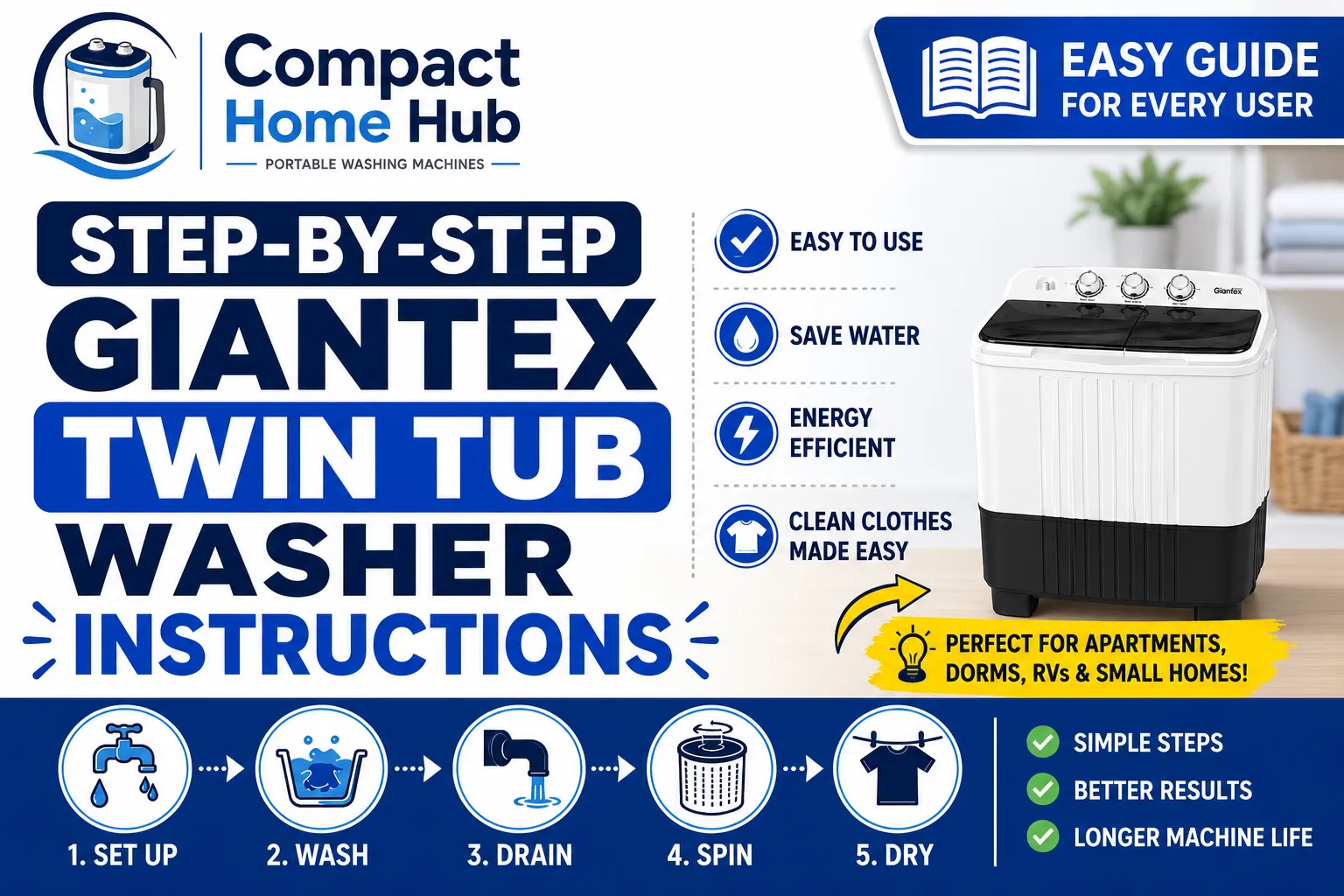
If you are looking for Giantex Twin Tub Washing Machine Instructions, this guide explains how to set up the washer, connect the water inlet and drain hoses, wash and rinse clothes, and use the separate spin compartment to remove excess water. A Giantex twin tub washer requires you to move clothes manually from the wash tub to the spin tub, so understanding each control and step can help you operate it correctly.
Before getting started, check your washer’s model number and user manual. Giantex offers different twin tub models, and their washing capacity, controls, timers, and drainage systems may vary. The instructions below use the GX11048US-DK-PF as a reference where model-specific details are provided.
Important: Giantex sells different twin-tub washing machine models. Their washing capacities, spinner capacities, drainage systems and control settings may differ. Check your exact model number before following model-specific instructions.
About This Giantex Washing Machine Guide
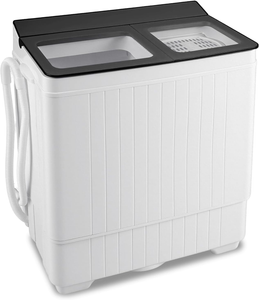
This is an independent, unofficial operating guide based on available Giantex product information, model-labelled instruction manuals and general appliance guidance.
It is intended to make the washing, rinsing, spinning and maintenance process easier to understand. It does not replace the original manufacturer’s instruction manual.
Always follow the safety instructions and operating limits supplied with your exact Giantex model.
Identify Your Giantex Twin Tub Washing Machine Model
Before using your machine, identify its model number. You can usually find it on the product identification label, packaging or original instruction booklet.
Giantex offers different twin-tub washing machines. Although their basic operation is similar, specifications and controls are not necessarily identical.
Need a Portable Washer for Your Home or RV?
If you are comparing Giantex with other compact washing machines, explore our [Portable Washing Machine Buying Guide] to compare washer types, capacities, features, and space requirements before choosing one.
Giantex GX11048US-DK-PF Specifications
The following specifications are listed for the GX11048US-DK-PF model.
| Specification | Manufacturer-listed information |
|---|---|
| Model | GX11048US-DK-PF |
| Washing capacity | 12 lb |
| Spin capacity | 8 lb |
| Wash timer | 0–15 minutes |
| Spin timer | 0–5 minutes |
| Wash settings | Soft, Normal and Drain |
| Drainage | Gravity drainage |
| Washing power | 260W |
| Spinning power | 140W |
| Voltage | 110–120V |
| Frequency | 60Hz |
These specifications apply to this identified model, not every Giantex twin-tub washer.
Where to Find the Model Number
- Check the product identification label on the washer.
- Look at the original packaging or purchase documents.
- Check the instruction booklet supplied with the machine.
- Contact Giantex support if you cannot identify the model.
Check the Washing and Spin Capacities
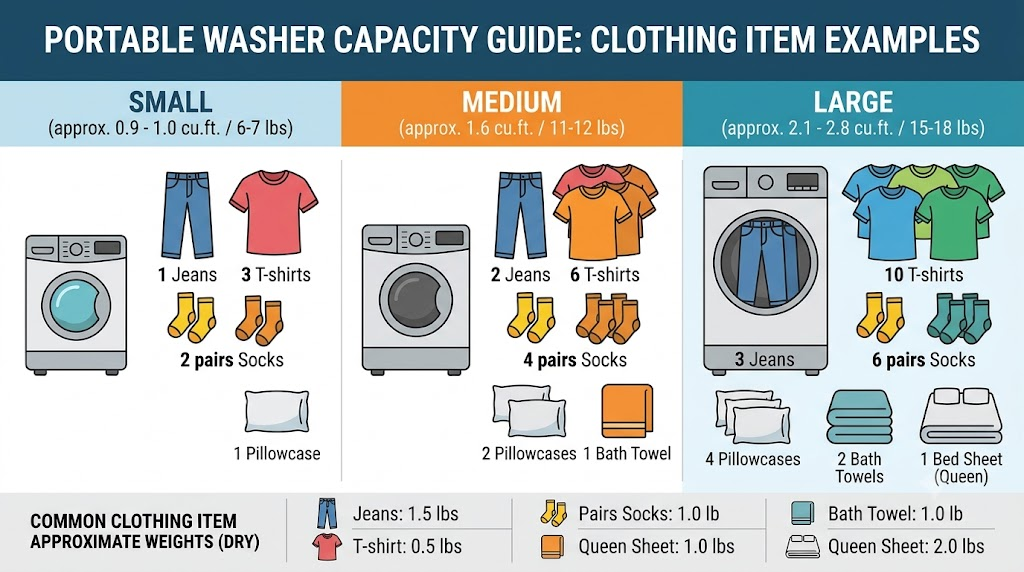
A twin-tub washer has two separate capacity limits.
- Wash capacity: The maximum dry laundry weight permitted in the washing compartment.
- Spin capacity: The maximum laundry weight permitted in the spinning compartment.
The spin capacity is often lower than the wash capacity. For example, the GX11048US-DK-PF supports a 12 lb wash load and an 8 lb spin load.
Do not assume that you can transfer the entire washing load into the spinner at once.
Gravity Drain vs Drain Pump
Giantex machines may have different drainage arrangements.
A gravity-drain model relies on the drain hose being positioned correctly so wastewater can flow out of the machine. The GX11048US-DK-PF manual specifies positioning its outlet hose below the machine’s base.
Other models may have different drainage arrangements. Check the exact manual before changing the hose position or using a drainage control.
Understanding the Giantex Washer Controls and Parts
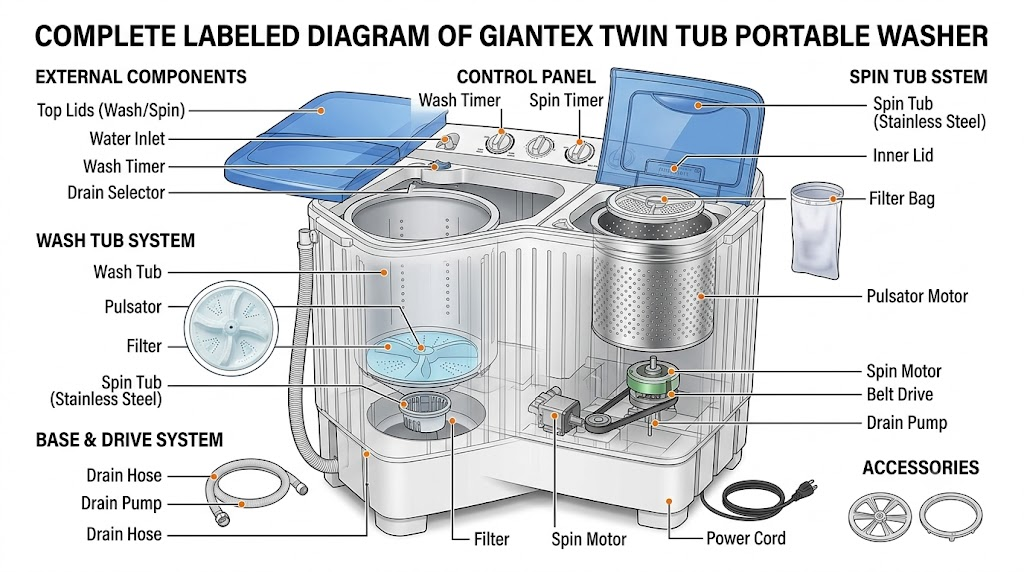
Before operating the washer, identify the main components.
1. Wash Tub
The wash tub is the larger compartment used for washing and rinsing clothes. It contains water, detergent and laundry during the wash process.
2. Spin Tub
The smaller compartment extracts excess water from washed and rinsed clothes.
You need to transfer clothes manually from the wash tub to the spin tub.
3. Wash Timer
The wash timer controls how long the washing compartment operates.
The maximum timer setting depends on your model.
4. Wash Selector
Some Giantex models have three settings:
- Soft or Gentle: For suitable delicate laundry.
- Normal: For regular laundry.
- Drain: For emptying wastewater.
Use the actual labels printed on your machine.
5. Spin Timer
The spin timer controls how long the spin compartment operates.
Do not exceed the timer range specified in your model’s manual.
6. Water Inlet and Drain Outlet
The water inlet supplies clean water to the wash compartment. The drain outlet removes wastewater.
7. Spin Safety Cover
The safety cover holds clothes in position during spinning. Install it as instructed before starting the spin cycle.
Understanding how a portable washing machine works will also help you understand the washing, rinsing, draining and spinning process.
How to Set Up a Giantex Twin Tub Washing Machine
Correct installation helps reduce vibration, water leakage and drainage problems.
Step 1: Position the Washer on a Level Surface
Place the machine on a firm, stable and level floor.
Avoid soft carpets, unstable platforms and sloped surfaces. Make sure there is sufficient room around the machine for ventilation, operation and hose connections.
Step 2: Connect the Water Inlet Hose
- Identify the water inlet on the machine.
- Attach the supplied inlet hose according to the manual.
- Connect the other end to a suitable water source.
- Check that the connections are secure.
- Watch for leaks when filling the washer for the first time.
Some models allow manual water filling if a suitable faucet connection is unavailable.
Step 3: Position the Drain Hose
Place the drain hose securely in an appropriate sink, bathtub or floor drain.
For the GX11048US-DK-PF gravity-drain model, the manufacturer-labelled manual specifies positioning the outlet hose below the machine’s base.
Do not apply this positioning instruction to another model unless its manual confirms the same drainage arrangement.
Step 4: Check the Electrical Connection
Use the electrical supply specified on the machine’s rating label and in the original manual.
The GX11048US-DK-PF manual specifies a grounded 110–120V, 60Hz outlet.
Keep electrical connections away from water and never operate the machine with a damaged plug or power cord.
How to Use a Giantex Twin Tub Washing Machine
Follow these steps for a normal laundry load. Where the instructions differ from your model’s manual, follow the manufacturer’s instructions.
Step 1: Sort Your Laundry
Separate clothes according to color, fabric type and care-label instructions.
Remove objects from pockets and close zippers to help prevent damage.
Avoid mixing delicate garments with heavy items that require a different washing treatment.
Step 2: Load the Wash Tub
Open the washing compartment and place the laundry inside.
Do not pack clothes tightly. Leave sufficient space for water and clothes to move during agitation.
Never exceed the dry laundry weight limit specified for your model.
Step 3: Add Water
Fill the wash tub using the inlet hose or another permitted filling method.
Follow the water-level markings or the high, medium and low settings provided on your machine.
For the GX11048US-DK-PF, its manual instructs users to fill the wash tub so that water covers the clothes.
Do not overfill the compartment.
Step 4: Add Laundry Detergent
Use a detergent suitable for your washer and laundry.
A low-sudsing HE liquid detergent can be a practical choice when permitted by the manufacturer’s instructions.
Follow the detergent label and start with an appropriate quantity for the load size and water conditions.
Avoid excessive detergent because too much foam can make rinsing difficult.
Step 5: Select the Wash Setting
Choose the appropriate wash setting using the selector.
- Soft or Gentle: For suitable delicate items.
- Normal: For everyday clothing.
- Drain: Used to empty wastewater on models with this selector.
Check the fabric care labels before selecting a wash setting.
Step 6: Set the Wash Timer
Turn the wash timer to the desired duration.
For the GX11048US-DK-PF, the listed wash timer range is 0–15 minutes.
The appropriate setting depends on the load size, fabric and soil level. Do not assume that one timer setting is correct for every type of laundry.
Step 7: Drain the Dirty Water
When the wash cycle is complete, drain the wastewater.
On models with a Drain selector, turn the selector to Drain as instructed in the manual.
For gravity-drain models, make sure the hose is correctly positioned and that water can flow freely.
Wait until the wash water has drained before proceeding to rinsing.
How to Rinse Clothes in a Giantex Twin Tub Washer
Rinsing removes detergent residue remaining in the clothes after washing.
Step 1: Refill with Clean Water
After draining the dirty wash water, refill the wash tub with clean water according to the machine’s water-level guidance.
Step 2: Run the Rinse Process
Use the washing compartment to agitate the clothes in clean water.
Follow the original manual for the appropriate selector and timer settings.
Step 3: Drain the Rinse Water
Drain the water completely after rinsing.
If clothes still contain noticeable detergent foam, another rinse may be necessary.
Do not use excessive detergent in the original wash cycle, as this can make rinsing more difficult.
How to Use the Giantex Spin Dryer
The spin compartment removes excess water from clothes after washing and rinsing.
It is not a heated clothes dryer.
Step 1: Transfer Clothes to the Spin Tub
Move the washed and rinsed clothes from the wash tub to the spin tub.
Check the spinner’s maximum capacity before transferring the load.
For the GX11048US-DK-PF, the listed spin capacity is 8 lb.
Step 2: Distribute Clothes Evenly
Spread the clothes evenly around the spin compartment.
Uneven loading can cause excessive vibration and poor spinning performance.
If the load becomes unbalanced, stop the machine and redistribute the clothes before restarting.
Step 3: Install the Safety Cover
Place the supplied safety cover over the clothes as shown in the model’s instructions.
Close the spin lid before operating the machine.
Never operate the spinner without the required safety cover.
Step 4: Set the Spin Timer
Turn the spin timer to the desired setting within the range specified for your model.
For the GX11048US-DK-PF, the listed spin timer range is 0–5 minutes.
Never open the lid or reach into a moving spin compartment.
Step 5: Remove and Air-Dry Clothes
Wait until the spinning stops completely.
Remove the clothes and hang them on a suitable drying rack or clothesline.
The spin compartment removes excess water, but clothes normally remain damp.
Spin-Drying vs Heated Drying
There is an important difference between spin-drying and heated drying.
A spin compartment uses centrifugal force to remove water from fabric. It does not normally heat the clothes or dry them completely.
A genuine washer-dryer appliance has a separate drying function.
Therefore, a Giantex twin-tub washer with a spin compartment should not be advertised or described as a complete washer-dryer unless the exact model includes a genuine drying function.
What Detergent Should You Use in a Giantex Washer?
Use a detergent suitable for your model and the amount of laundry being washed. Low-sudsing detergent can help prevent excessive foam in compact washing machines. HE liquid detergent is often a suitable option when permitted by the manufacturer.
Avoid adding detergent without measuring it. The correct amount depends on:
- Laundry weight.
- Detergent concentration.
- Water hardness.
- Soil level.
- Manufacturer recommendations.
If excessive foam remains after washing, reduce the detergent quantity in subsequent loads and rinse the clothes as needed. Do not assume that the same tablespoon quantity works for every Giantex model or detergent brand.
The right detergent quantity depends on load size, detergent concentration and water conditions. Read our guide on how much detergent to use in a portable washing machine for additional guidance.
Which Clothes Can You Wash in a Giantex Twin Tub Washer?
Many everyday garments can be washed in a twin-tub washer if their fabric care labels permit machine washing.
Examples include:
- Cotton T-shirts.
- Polyester clothing.
- Everyday shirts.
- Lightweight trousers.
- Suitable towels.
- Workout clothes.
- Pillowcases.
Use extra care with delicate fabrics, wool, silk, lace and bulky bedding.
Always check the clothing care label and the machine’s capacity before washing an item.
Large comforters, heavy blankets and oversized bedding may exceed the machine’s capacity.
Common Mistakes When Using a Giantex Twin Tub Washer
| Mistake | Why it causes problems | What to do |
|---|---|---|
| Overloading the wash tub | Clothes may not move freely | Reduce the load |
| Exceeding spinner capacity | Poor water extraction and vibration | Follow the spin weight limit |
| Uneven spinner loading | Creates imbalance | Redistribute clothes evenly |
| Too much detergent | Creates excessive foam | Measure detergent carefully |
| Incorrect drain hose position | Prevents proper drainage on gravity-drain models | Follow model-specific instructions |
| Forgetting the safety cover | Creates a safety risk | Install the cover before spinning |
| Opening the lid while spinning | Exposes users to moving parts | Wait for the machine to stop |
How Long Does a Giantex Washing Machine Take?
The total laundry time depends on several factors:
- Wash timer setting.
- Water filling time.
- Drainage time.
- Number of rinses.
- Spin timer setting.
- Load size.
The wash and spin timers operate separately on many Giantex twin-tub machines.
For example, the GX11048US-DK-PF lists a wash timer range of 0–15 minutes and a spin timer range of 0–5 minutes.
These timer ranges do not represent the complete laundry time. Filling, draining, rinsing and manually transferring clothes add extra time.
How to Clean and Maintain a Giantex Twin Tub Washer
Regular cleaning helps keep the machine in good condition.
1. Clean the Lint Filter
Remove lint and fabric debris from the filter according to your model’s instructions.
Rinse it and reinstall it securely.
2. Clean Both Tubs
Remove remaining laundry and water after use.
Wipe the inside of the wash and spin compartments with a suitable soft cloth.
Follow the manual for any recommended cleaning procedure.
3. Inspect the Hoses
Check the inlet and drain hoses for kinks, cracks, loose connections and visible damage.
Replace damaged hoses with suitable compatible parts.
4. Dry the Machine After Use
Remove standing water where possible and allow the compartments to dry.
Leave the lids open when safe and practical to allow moisture to escape.
5. Inspect the Power Cord
Check the plug and cord for visible damage.
Do not operate the machine if the electrical components appear damaged.
Unplug the machine before cleaning or maintenance.
Common Giantex Twin Tub Washer Problems and Solutions
| Problem | Possible cause | What to check |
|---|---|---|
| Washer does not start | Power supply or timer issue | Check the outlet, plug and timer |
| Washer does not drain | Incorrect hose position or blockage | Check hose routing and drain outlet |
| Spin tub does not rotate | Overloading or imbalance | Reduce and redistribute the load |
| Clothes remain wet | Insufficient spinning or unbalanced load | Check spinner capacity and load distribution |
| Excessive vibration | Uneven surface or unbalanced laundry | Level the machine and redistribute clothes |
| Water leakage | Loose or damaged hose | Inspect connections and hoses |
| Excessive foam | Too much detergent | Reduce detergent and rinse if necessary |
| Machine stops during operation | Possible electrical or safety issue | Stop operation and consult the model manual |
If the machine continues to malfunction, stop using it and contact Giantex support or a qualified appliance technician.
Never bypass safety switches or attempt electrical repairs without the appropriate expertise.
Giantex Twin Tub Washing Machine Safety Tips
Follow these precautions whenever operating the washer:
- Use the electrical supply specified by the manufacturer.
- Keep plugs and electrical connections dry.
- Never use a machine with a damaged power cord.
- Do not reach into a moving spin compartment.
- Install the spin safety cover before spinning.
- Never exceed the specified wash or spin capacity.
- Unplug the machine before cleaning or maintenance.
- Keep children away from the machine during operation.
- Do not wash clothes contaminated with gasoline, solvents or other flammable substances.
- Stop using the machine if you notice burning smells, unusual electrical sounds or visible damage.
Always refer to the original manual for additional model-specific safety instructions.
Frequently Asked Questions
How do I use a Giantex twin tub washing machine?
Connect the hoses according to the model instructions, load clothes into the wash tub, add water and detergent, and select the wash setting. Drain and rinse the clothes, transfer them to the spin tub, install the safety cover and run the spin timer.
How do I drain a Giantex twin tub washer?
The drainage method depends on the model. Models with a Drain selector use that control to empty wastewater. Gravity-drain models require the drain hose to be positioned correctly so water can flow out.
How much laundry can I put in a Giantex spin tub?
Check the spin capacity printed in your model’s manual. For example, the GX11048US-DK-PF has a listed spin capacity of 8 lb, which is lower than its 12 lb wash capacity.
Why are my clothes still wet after spinning?
Possible reasons include an overloaded spin tub, unevenly distributed laundry or an insufficient spin duration. Check the load weight and redistribute clothes evenly before restarting the cycle.
Does a Giantex twin tub washer completely dry clothes?
No. Its spin compartment extracts excess water through centrifugal force. Clothes normally remain damp and need air-drying or a separate clothes dryer.
Can I wash and spin clothes at the same time?
Some Giantex twin-tub models have separate wash and spin controls that allow independent operation. Whether simultaneous use is permitted should be confirmed in your exact model’s manual.
Do Giantex twin tub washers need permanent plumbing?
Many portable models use temporary water inlet and drain connections rather than permanent plumbing. Check the installation instructions and your property’s rules before setting up the machine.
How often should I clean the lint filter?
Check the filter regularly and remove lint according to the manufacturer’s maintenance instructions. Cleaning frequency depends on laundry volume and the type of fabrics being washed.
Final Tips for Operating Your Giantex Washer
A Giantex twin-tub washer requires a little more manual involvement than a fully automatic washing machine, but its separate washing and spinning compartments make it practical for smaller laundry loads.
The most important things are to identify your exact model, follow its washing and spin capacity limits, position the hoses correctly, use an appropriate detergent quantity and balance clothes properly in the spin compartment.
Remember that the spin tub removes excess water rather than completely drying clothes. Allow sufficient time for air-drying after every wash.
If your washer develops a drainage, spinning or electrical problem, check the model-specific troubleshooting instructions before attempting any repair.
For additional help, explore our portable washing machine guides and troubleshooting resources.
New to portable washers? Read our Portable Washing Machine Buyer’s Guide before setting up your Giantex washer to understand capacity, features, and what to look for when choosing a model.
Why This Unofficial Guide Is Better Than the Official Manual
Official manuals usually tell you what to do.
This guide explains:
- Why each step matters
- What beginners often do wrong
- How much detergent actually works
- Which fabrics you should avoid
- How to reduce vibration
- How to improve washing performance
- How to extend your washer’s lifespan
- How to save water and electricity
If you’re searching for giantex twin tub washing machine instructions, this guide covers everything from setup to maintenance.
What Is a Giantex Twin Tub Portable Washer?
A Giantex twin tub portable washer is a compact washing machine designed for:
- Apartments
- Dorm rooms
- RVs
- Tiny homes
- Vacation cabins
- Camping setups
- Homes without traditional laundry hookups
Unlike automatic washers, it has two separate tubs. One tub washes clothes. The other spins water out. Since both tubs work separately, you move clothes manually between them. Wondering whether a twin tub is the right choice? Compare Twin Tub vs Single Tub Washing Machines to see which design best fits your needs.
The biggest advantage?
You can wash one load while spinning another, making laundry much faster. If you’re new to compact laundry appliances, learn what a portable washing machine is and how it differs from a traditional washer.
Main Parts You Should Know
Before using the machine, identify its major parts.
- Wash tub
- Spin tub
- Water inlet
- Drain hose
- Wash timer
- Spin timer
- Drain selector (on some models)
- Lint filter
- Power cord
- Spin cover
How to Set Up Your Giantex Washer
Setup only takes a few minutes. If you’re new to portable washers, follow this step-by-step guide to learn how to use a portable washing machine, from connecting the water supply to draining, rinsing, and spin-drying clothes.
Step 1: Place the Washer on a Flat Surface
Always keep the washer level. A tilted machine causes:
- Excessive vibration
- Water leakage
- Poor spinning
- Extra noise
Avoid:
- Thick carpet
- Uneven floors
- Wooden boxes
- Sloped balconies
Example: A concrete laundry room floor gives much better stability than soft carpet.
Step 2: Position the Drain Hose
Place the drain hose inside:
- Utility sink
- Bathtub
- Floor drain
Make sure it cannot fall out during draining.
Step 3: Connect the Water Supply
Most Giantex models include:
- Inlet hose
- Faucet adapter
If your faucet doesn’t fit, you may need a universal faucet adapter. Never over-tighten the connection.
Understanding the Two Tubs
Many first-time users think both tubs wash clothes. They don’t.
Wash Tub
Purpose:
- Washing
- Soaking
- Rinsing
Spin Tub
Purpose:
- Removing water
- Speeding up drying
The spin tub does not wash clothes.
If you’re having trouble connecting the inlet hose, check our Portable Washing Machine Faucet Adapter Guide for compatible faucet types and installation tips.
Step-by-Step Giantex Twin Tub Washing Machine Instructions
Step 1: Sort Laundry
Separate:
- Whites
- Colors
- Delicates
- Heavy fabrics
Benefits:
- Prevents color bleeding
- Protects delicate fabrics
- Improves cleaning
Example: Don’t wash a new red T-shirt with white towels.
Step 2: Load the Wash Tub
Avoid stuffing clothes. Leave room for movement.
Good load: About 70–80% full. Too many clothes reduce cleaning performance.
Step 3: Fill with Water
Fill until clothes float freely. Too little water causes:
- Poor cleaning
- Extra wear
- Motor strain
Too much water wastes water.
Step 4: Add Detergent
Use:
- HE liquid detergent
- Low-sudsing detergent
Avoid using too much.
Excess foam:
- Reduces washing action
- Leaves residue
- Requires extra rinsing
Example: For a small load, one tablespoon is usually enough. For medium loads, use two tablespoons.
Step 5: Set the Wash Timer
Typical recommendations:
- Light clothing: 6 minutes
- Normal clothes: 10 minutes
- Towels: 12 minutes
- Jeans: 15 minutes
Very dirty clothes may benefit from soaking before washing.
Step 6: Drain Dirty Water
After washing:
- Open the drain
- Wait until water completely empties
Never move the washer while it’s full.
Step 7: Rinse
Fill with clean water. Run another wash cycle for 3–5 minutes. Repeat if necessary.
Step 8: Transfer Clothes
Move clothes from wash tub to spin tub. Spread them evenly. Uneven loads create vibration.
Step 9: Install the Spin Cover
The spin cover holds clothes in place. Never operate without it.
Step 10: Start the Spin Cycle
Recommended spin time:
- Shirts: 2 minutes
- Pants: 3 minutes
- Towels: 4–5 minutes
After spinning, hang clothes immediately.
Want to understand what’s happening inside your washer? Learn how a portable washing machine works with a simple step-by-step explanation.
Washing Capacity Guide
Don’t overload. Approximate examples:
- 6–8 T-shirts
- 2 bath towels
- 3 jeans
- Small bedding
- Baby clothes
Heavy comforters are generally too large.
Best Detergent for Giantex Twin Tub Washers
Choose detergents that produce fewer suds.
Recommended:
- HE liquid detergent
- Portable washer detergent
- Mild laundry detergent
Avoid:
- Hand washing powder
- Excess detergent
- Bleach unless the fabric allows it
Example: If you notice lots of bubbles after washing, you’re probably using too much detergent.
Using the right amount of detergent helps improve cleaning performance and prevents excess suds. Read our guide on how much detergent to use in a portable washer.
Which Clothes Can You Wash?
Safe:
- Cotton
- Polyester
- T-shirts
- Jeans
- Towels
- Workout clothes
- Baby clothes
- Pillowcases
Use caution with:
- Wool
- Silk
- Lace
- Heavy blankets
Always check the clothing care label.
Common Beginner Mistakes
Many online guides skip these practical mistakes.
| Common Mistake | Problem | Result / Solution |
|---|---|---|
| Overloading | Clothes cannot circulate properly inside the wash tub. | Result: Poor cleaning performance and uneven washing. |
| Uneven Spin Load | Clothes are not evenly distributed in the spin tub. | Solution: Redistribute the clothes evenly before starting the spin cycle. |
| Too Much Detergent | Excess detergent creates too many suds and leaves soap residue. | Solution: Use the recommended amount of low-sudsing detergent. |
| Forgetting the Spin Cover | Clothes move freely during the spin cycle. | Result: Excessive noise, vibration, and poor spinning performance. |
| Twisted Drain Hose | The drain hose is kinked or bent. | Solution: Straighten the drain hose to allow water to drain properly. |
How Long Does a Wash Take?
Typical timeline:
- Fill: 3 minutes
- Wash: 10 minutes
- Drain: 2 minutes
- Rinse: 5 minutes
- Spin: 3 minutes
Total: About 25–30 minutes. This is often faster than waiting for a shared apartment laundry room.
Real-Life Example
Imagine you’re living in a one-bedroom apartment in Chicago.
You have:
- Work clothes
- Gym clothes
- Kitchen towels
Instead of carrying laundry downstairs, you:
- Wash clothes in the kitchen.
- Drain into the sink.
- Spin dry.
- Hang them overnight.
The entire process finishes before dinner. That’s why portable twin tub washers remain popular among apartment renters.
Cleaning the Washer
Clean after every few loads.
- Wash the Lint Filter: Remove lint. Rinse under running water. Reinstall.
- Clean the Wash Tub: Run clean water through the machine. Wipe dry.
- Clean the Exterior: Use Soft cloth and Mild soap and avoid harsh chemicals.
Maintenance Tips
Regular maintenance extends machine life.
- Keep the lid open after washing.
- Dry both tubs completely.
- Clean the drain hose monthly.
- Inspect power cord regularly.
- Never store water inside.
- Remove lint after every wash.
- Avoid direct sunlight for long periods.
Example: Leaving the lid closed after every wash encourages mold growth.
Troubleshooting Guide
| Problem | Possible Causes | Solution |
|---|---|---|
| Washer Doesn’t Start | • Power plug disconnected• Timer not set• Electrical outlet issue | Ensure the power plug is securely connected, set the wash or spin timer, and test the electrical outlet with another appliance. |
| Washer Won’t Drain | • Drain hose kinked• Hose positioned too high• Blocked drain outlet | Straighten the drain hose, lower it to the proper height, and clear any blockage from the hose or drain outlet. |
| Excessive Vibration | • Uneven floor• Overloaded machine• Uneven spin load | Place the washer on a level surface, reduce the load size, and redistribute clothes evenly in the spin tub. |
| Clothes Still Wet After Spinning | • Short spin cycle• Overloaded spin tub• Poor load balance | Increase the spin time, reduce the amount of laundry, and balance the load before restarting the spin cycle. |
| Water Leaks | • Loose hose connection• Damaged hose• Improper drain hose placement | Tighten all hose connections, replace damaged hoses, and ensure the drain hose is securely positioned in a sink or floor drain. |
Safety Tips
Always remember these safety rules.
- Keep children away during operation.
- Never touch electrical parts with wet hands.
- Unplug after use.
- Don’t overload the machine.
- Don’t wash items soaked with gasoline or solvents.
- Use indoor electrical outlets only.
- Avoid extension cords whenever possible.
Energy and Water Efficiency
A Giantex twin tub washer typically uses less water and electricity than a full-size washer because:
- Smaller loads require less water.
- Wash cycles are shorter.
- The spin tub removes more water, reducing drying time.
Example:
If you wash a few outfits every couple of days instead of waiting for one large load, you can avoid wasting water on half-empty full-size machines.
Who Should Buy a Giantex Twin Tub Washer?
It’s an excellent choice for:
- Apartment renters
- College students
- RV travelers
- Tiny home owners
- People without laundry hookups
- Small families
- Vacation homes
It may not be ideal for:
- Large households
- King-size comforters
- Heavy weekly laundry loads
- Anyone wanting a fully automatic washing experience
Still deciding? Explore the complete Portable Washing Machine Pros and Cons before making your purchase decision.
FAQs
Q. How much detergent should I use?
Use only a small amount of low-sudsing detergent. Too much detergent creates excess foam and makes rinsing harder.
Q. Can I wash blankets?
Small lightweight blankets are usually fine. Large comforters and thick blankets can overload the wash tub.
Q. Why is the machine shaking during spinning?
The clothes are likely unevenly distributed in the spin tub. Stop the cycle, rearrange the load evenly, and restart.
Q. Do I need plumbing?
No permanent plumbing is required. Most users connect the inlet hose to a faucet and place the drain hose in a sink, bathtub, or floor drain.
Q. Can I leave clothes in the spin tub?
It’s better to remove clothes immediately after spinning to reduce wrinkles and prevent odors.
Q. Can I use fabric softener?
Yes, but use it during the rinse stage rather than the wash cycle for the best results.
Q. How often should I clean the lint filter?
Check and clean it after every few loads to maintain good washing performance.
Final Verdict
If you’re looking for giantex twin tub washing machine instructions, the official booklet only scratches the surface. In daily use, success depends on proper loading, using the right amount of detergent, balancing clothes in the spin tub, and keeping the machine clean after every few loads. Those simple habits improve cleaning results, reduce vibration, and help the washer last longer.
For apartment dwellers, RV owners, students, and anyone without a traditional laundry setup, a Giantex twin tub portable washer offers an affordable and practical solution.
While it requires a little manual effort compared to a fully automatic machine, it rewards users with faster smallload laundry, lower water consumption, and the flexibility to wash clothes almost anywhere with access to a faucet and drain. Following these unofficial instructions will help you get the best performance from your washer from day one.
Still Deciding Whether a Portable Washer Is Right for You?
A twin-tub washer offers separate washing and spin compartments, but it may not suit everyone. Read our guide to the [pros and cons of portable washing machines] to understand the benefits and limitations before buying.
Recommended Reading:
- Right Detergent Quantity for Portable Washing Machine
- 15 Must-Have Portable Washer Accessories in 2026
- Portable Washer Installation Cost in 2026
- Giantex Portable Washing Machine Review: EP23113 Pros, Cons and Performance

Sourabh researches and writes about home appliances, kitchen gadgets, and common appliance problems to help readers make smarter buying decisions. He specializes in Portable washing machines and appliance troubleshooting guides.
At compactHomeHub, Sourabh focuses on creating easy-to-understand content that simplifies technical appliance issues into practical solutions. His goal is to help users save time, avoid costly mistakes, and choose the right appliances with confidence.