If you’re living in an apartment, RV, dorm, tiny home, or rental property, you’ve probably wondered whether a portable washing machine is a smart investment. These compact appliances promise convenience, lower laundry costs, and the ability to wash clothes at home without needing a full-size washer.
But are they actually worth buying?
In this guide, we’ll cover the complete portable washing machine pros and cons, explain who should buy one, who should avoid one, and help you decide whether a portable washer is the right choice for your lifestyle.
What Are the Portable Washing Machine Pros and Cons?
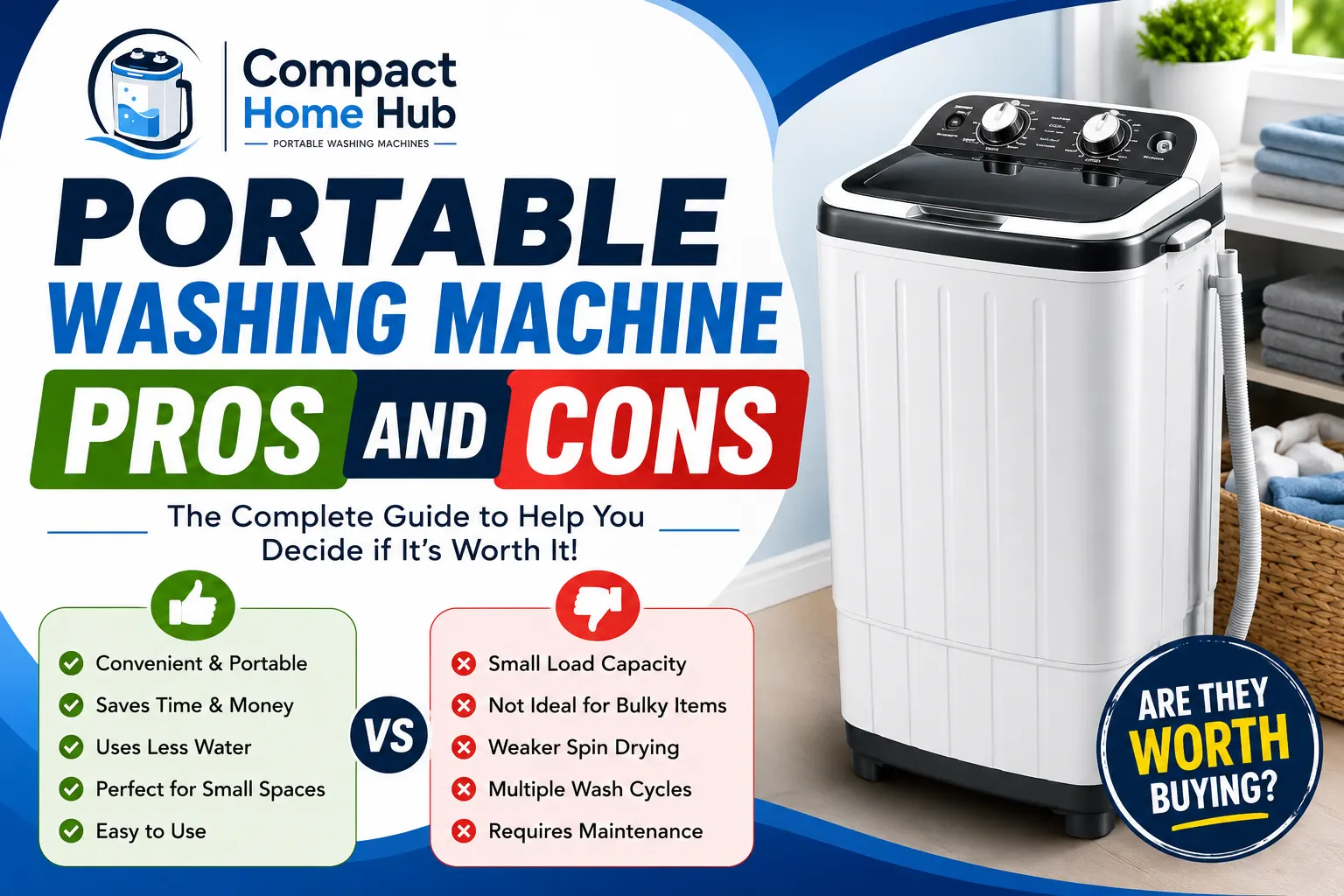
The biggest advantages of portable washing machines are convenience, affordability, space-saving design, lower water usage, and the ability to do laundry at home without a dedicated laundry room.
The biggest disadvantages are smaller load capacity, longer overall laundry time, limited cleaning power compared to full-size washers, manual setup requirements, and the inability to wash large items such as comforters.
For most apartment dwellers, students, RV owners, and small households, a portable washing machine can be a worthwhile investment that saves both time and money.
Recommended reading: How Does a Portable Washing Machine Work? Step-by-Step
Portable Washing Machine Pros and Cons Comparison Table
| Pros | Cons |
| Saves trips to laundromats | Small load capacity |
| Affordable to operate | Cannot wash large comforters |
| Apartment-friendly | Requires setup before use |
| Uses less water | Longer total laundry time |
| Lower electricity consumption | Some apartment restrictions |
| Convenient for small households | Limited spin performance |
| Easy to store | Possible hose leaks |
| Great for RVs and tiny homes | Can be noisy |
| Gentle on clothing | Not suitable for large families |
| Provides laundry freedom | Less powerful than full-size washers |
What Is a Portable Washing Machine?
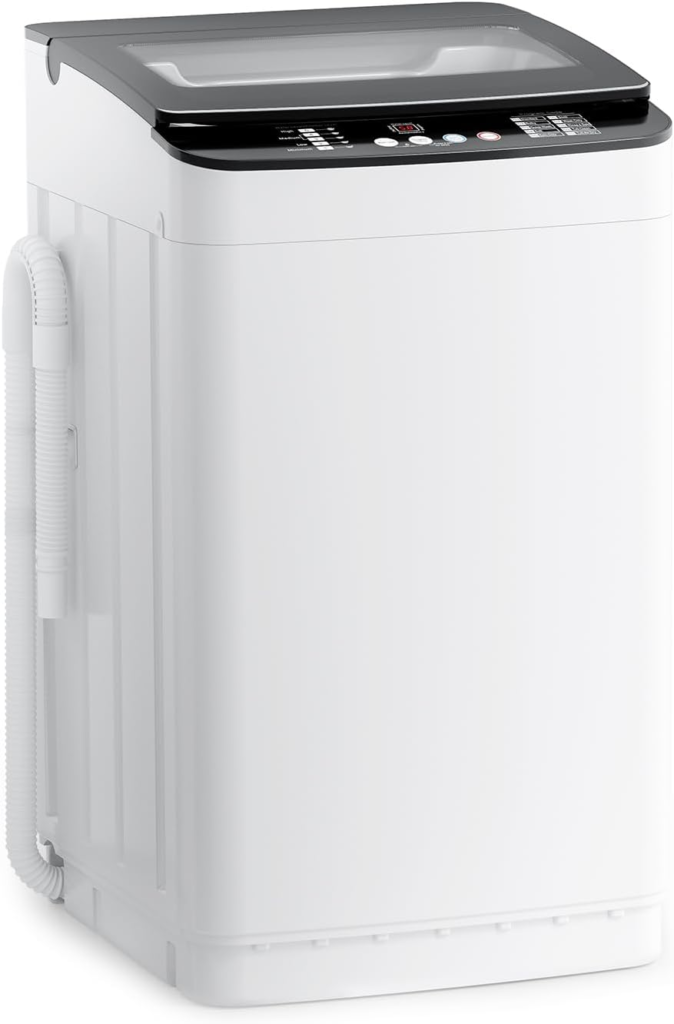
A portable washing machine is a compact washer designed for homes that don’t have permanent laundry hookups. Unlike traditional washing machines, portable units connect temporarily to a kitchen or bathroom faucet and drain water into a sink or bathtub.
Most portable washers are mounted on wheels, making them easy to move and store when not in use.
Common types include:
- Fully automatic portable washing machines
- Semi-automatic portable washing machines
- Twin-tub portable washing machines
- Compact washer-dryer combo units
Portable Washing Machine Pros
Let’s start with the benefits.
1. You Can Do Laundry Anytime
One of the biggest advantages is freedom. You have flexibility to wash clothes any time. You don’t have to:
- Wait for an available machine
- Drive to a laundromat
- Carry heavy laundry bags
- Follow apartment laundry schedules
2. Saves Money Over Time
Many apartment residents spend between $20 and $60 per month at laundromats. Let’s look at a simple example:
| Expense | Cost |
|---|---|
| Laundromat per month | $40 |
| Annual cost | $480 |
| Portable washer purchase | $250-$500 |
In many cases, the machine pays for itself within the first year. After that, you’re mainly paying for water and electricity. Understanding washing machine electricity consumption can help you estimate long-term savings more accurately.
3. Ideal for Apartments
Not every apartment has washer hookups. Portable washing machines solve that problem. Most models:
- Connect to standard faucets
- Roll on caster wheels
- Fit inside closets
- Store under counters
For apartment renters, this is often the easiest way to wash clothes at home. If you’re comparing different options, see our guide to the best washing machine for apartments.
4. Uses Less Water
Many portable washers consume significantly less water than older traditional machines. Benefits include:
- Lower utility bills
- Reduced water waste
- Environmentally friendly operation
Some compact models use less than half the water of conventional top-load washers.
5. Lower Electricity Consumption
Portable washers generally have smaller motors and shorter wash cycles. As a result, they often consume less electricity than full-size machines. This can help reduce energy costs throughout the year.
6. Great for Small Households
If you’re washing clothes for one or two people, a compact washer may be all you need. Portable washers work especially well for:
- Singles
- Couples
- College students
- Seniors
- Remote workers
- RV travelers
7. Easier Access Than Shared Laundry Rooms
Shared laundry rooms can be inconvenient. Having your own washer eliminates these frustrations. Common issues include:
- Machines occupied by neighbors
- Long wait times
- Dirty washers
- Broken equipment
- Security concerns
8. Excellent for RVs and Tiny Homes
Portable washing machines are particularly popular among RV owners, Van-lifers, Tiny home residents and Boat owners. Their compact footprint makes them ideal for limited living spaces.
9. Gentler on Clothing
Having your own washer eliminates these frustrations. Many portable washers use lighter agitation than traditional top-load machines.
This may help:
- Reduce fabric wear
- Preserve colors
- Extend clothing lifespan
10. Less Laundry Pileup
When washing becomes easier, people tend to do smaller loads more frequently. That means:
- Fewer overflowing hampers
- Cleaner clothes available sooner
- Better household organization
For busy households, this is a major quality-of-life improvement.
Portable Washing Machine Cons
Now let’s discuss the drawbacks.
1. Small Load Capacity
This is the biggest limitation. Portable washers cannot handle the same amount of laundry as full-size machines. You may need:
- Multiple wash cycles
- More frequent laundry sessions
- Better load planning
Large families often find portable units too restrictive.
2. Difficult to Wash Bulky Items
Most portable washing machines struggle with:
- Comforters
- Heavy blankets
- Sleeping bags
- Large rugs
- King-size bedding
You’ll likely still need a laundromat for oversized items.
3. Longer Overall Laundry Process
Although wash cycles may be short, doing multiple loads can increase total laundry time.
For example: A family-sized load in a full-size washer might take one cycle. The same amount of laundry may require three or four cycles in a portable washer.
4. Manual Setup Is Required
Unlike permanently installed washers, portable models require setup before use. Typical setup includes:
- Connecting the faucet adapter
- Attaching the water hose
- Positioning the drain hose
While not difficult, it can become repetitive.
5. Some Apartments Restrict Their Use
Certain apartment communities prohibit portable washers. Before buying one:
- Review your lease
- Check HOA rules
- Ask property management
Ignoring these rules could result in penalties.
6. Limited Spin Drying Performance
Portable washers often have smaller spin motors. As a result:
- Clothes may remain damp
- Drying takes longer
- More air drying may be necessary
This is especially noticeable in humid climates.
7. Potential Hose Leaks
Improper connections can cause:
- Water spills
- Floor damage
- Minor flooding
Quality hoses and proper installation greatly reduce this risk.
8. More Noise in Small Spaces
Portable washers operate close to living areas. In small apartments, you may hear:
- Water movement
- Spin cycles
- Motor vibration
Higher-end models tend to be quieter.
9. Not Ideal for Large Families
Families with four or more people usually generate too much laundry for a compact washer. Constantly running multiple loads can become inconvenient.
10. Lower Cleaning Power Than Full-Size Models
Although modern portable washers clean surprisingly well, they generally cannot match:
- Premium front-load washers
- Large-capacity top-loaders
- Commercial laundry equipment
Heavily soiled work clothes may require extra attention.
Are Portable Washing Machines Worth It?
For many Americans, yes. A portable washing machine is worth it if:
- You live in an apartment
- You rent your home
- You use laundromats frequently
- You have limited space
- You live alone or with one other person
- You own an RV or tiny home
The convenience alone can justify the purchase.
Who Should Buy a Portable Washing Machine?
Portable washers are ideal for:
- Apartment Renters: Especially those without laundry hookups.
- College Students: Perfect for dorms and student housing where permitted.
- RV Owners: Compact design makes travel easier.
- Tiny Home Residents: Helps maximize living space.
- Seniors: Reduces trips to laundromats and carrying heavy laundry baskets.
- Couples and Singles: Capacity is usually sufficient for one or two people.
Who Should Avoid a Portable Washing Machine?
Portable washers may not be the best choice if:
- You have a large family
- You frequently wash bulky bedding
- You already own a full-size washer
- Your apartment prohibits portable appliances
- You need commercial-level cleaning performance
In these situations, a traditional washer is often the better investment.
Hidden Costs Most Buyers Don’t Consider
Many reviews overlook these factors.
- Faucet Adapters: Some sinks require special adapters.
- Replacement Hoses: Hoses eventually wear out.
- Drying Costs: If your portable washer has limited spin performance, you may spend more on drying.
- Storage Space: Even compact units require some storage room.
- Maintenance: Periodic cleaning helps prevent mold and odors.
Tips for Getting the Best Results from a Portable Washer
Follow these simple practices:
- Avoid overloading the drum
- Use high-efficiency detergent
- Balance loads evenly
- Clean filters regularly
- Leave the lid open after washing
- Inspect hoses monthly
- Wash smaller loads more frequently
These habits improve performance and extend machine life.
FAQs: Portable Washing Machine Pros and Cons
Q. What are the biggest portable washing machine pros and cons?
The biggest advantage is convenience and cost savings. The biggest disadvantage is limited load capacity.
Q. Can a portable washing machine replace a regular washer?
For singles and couples, yes. For large families, usually no.
Q. Do portable washing machines use a lot of electricity?
No. Most portable models consume significantly less electricity than full-size washers.
Q. Can I wash jeans and towels in a portable washer?
Yes. Most portable washers can handle jeans, towels, shirts, and everyday clothing.
Q. Are portable washing machines safe for apartments?
Generally yes, but always check apartment rules before purchasing one.
How long do portable washing machines last?
A quality portable washer can often last between 5 and 10 years with proper care.
Final Verdict:
After evaluating all the portable washing machine pros and cons, the conclusion is simple: portable washers are an excellent solution for people who need convenient laundry access in small spaces.
They’re affordable, practical, water-efficient, and ideal for apartment living. While they can’t completely match the power and capacity of a full-size washer, they provide tremendous value for singles, couples, students, RV owners, and renters.
If your biggest challenge is finding a convenient way to do laundry at home, a portable washing machine can be one of the smartest appliance purchases you make. You can also read our complete portable washing machine buying guide before making a final decision.
Recommended Reading:
- Portable Washing Machine vs Laundromat Cost: Which Option Saves More Money in 2026?
- Twin Tub vs Single Tub Washing Machine: Which Is Better for Apartments, RVs, and Families?
- How Does a Portable Washing Machine Work? Step-by-Step

Sourabh researches and writes about home appliances, kitchen gadgets, and common appliance problems to help readers make smarter buying decisions. He specializes in Portable washing machines and appliance troubleshooting guides.
At compactHomeHub, Sourabh focuses on creating easy-to-understand content that simplifies technical appliance issues into practical solutions. His goal is to help users save time, avoid costly mistakes, and choose the right appliances with confidence.