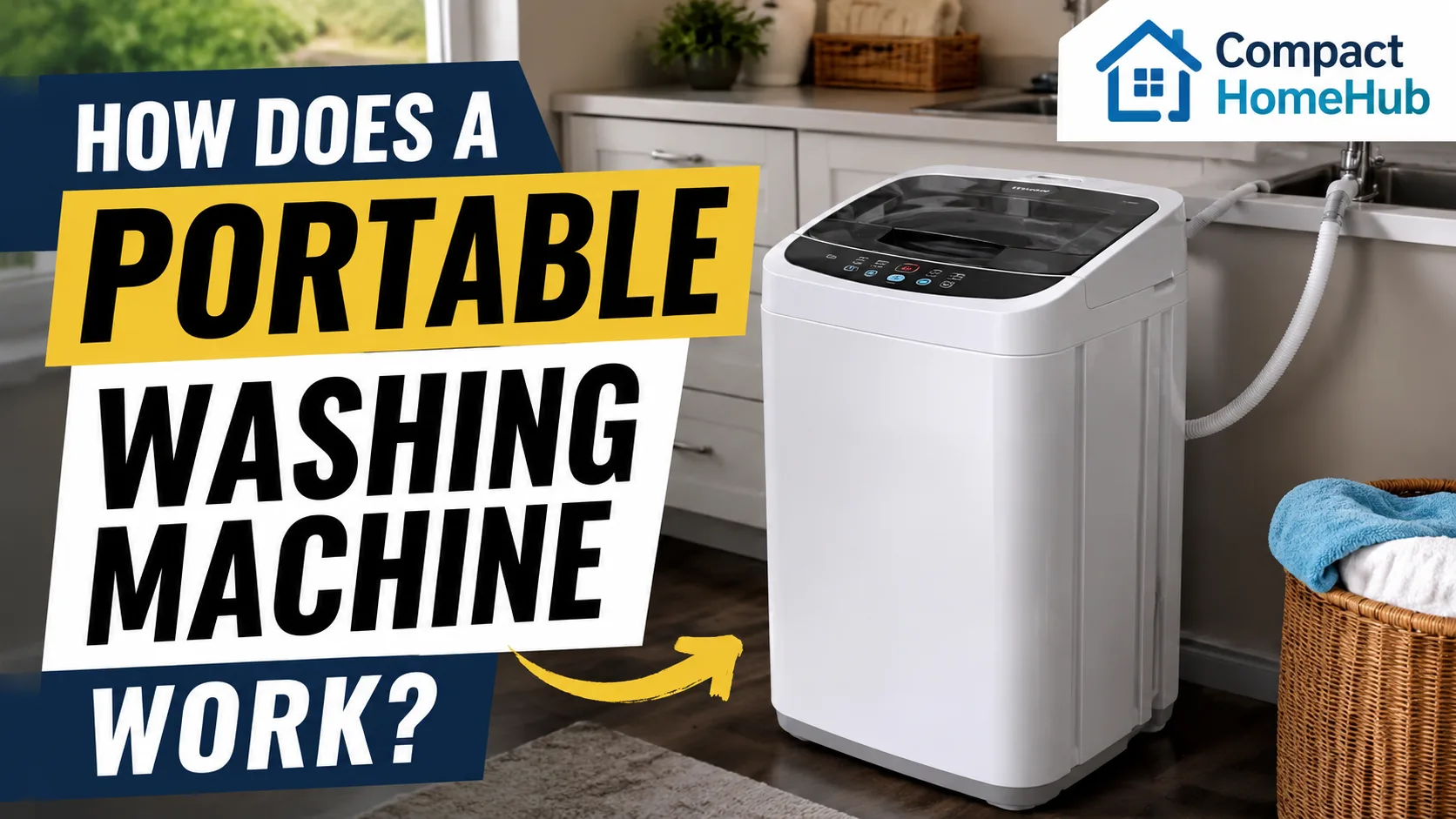
Portable washing machines have become a popular solution for Americans who live in apartments, RVs, dorm rooms, tiny homes, or houses without dedicated laundry hookups. Rising laundry costs, busy schedules, and limited living space have encouraged many people to look for convenient alternatives to traditional washers.
If you’ve ever wondered, “How Does a Portable Washing Machine Work?” you’re not alone. At first glance, these compact appliances may seem too small to handle serious laundry tasks. However, modern portable washers can clean clothes surprisingly well while using less water, less electricity, and far less space than full-size washing machines.
How Does a Portable Washing Machine Work?
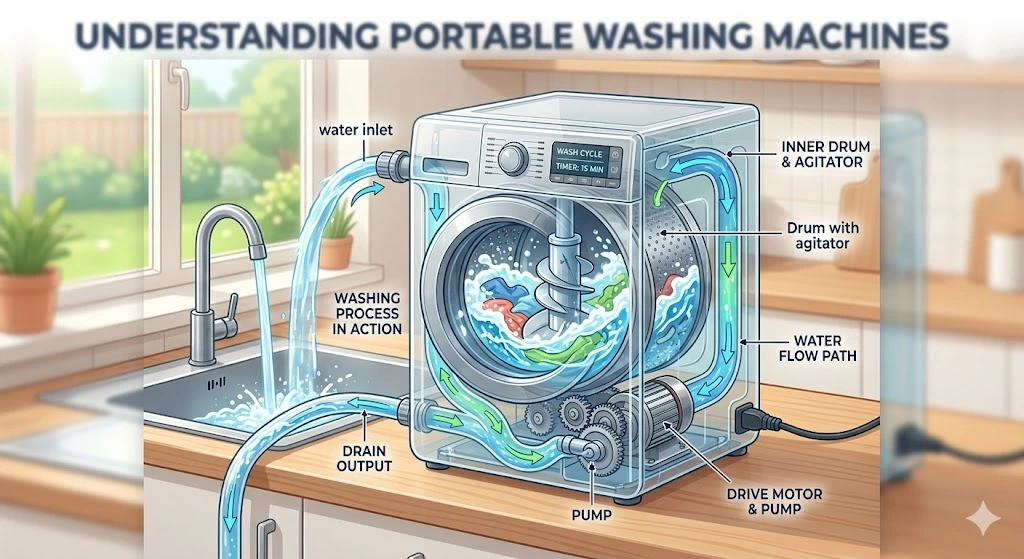
A portable washing machine works by drawing water from a faucet or manual fill source, mixing that water with detergent, and moving clothes around using an agitator, impeller, or pulsator.
This movement loosens dirt, stains, and odors from fabrics. After washing, the machine drains the dirty water through a drain hose and then spins the clothes at high speed to remove excess moisture. The result is clean clothing that’s ready for air drying or a dryer.
What Is a Portable Washing Machine?
A portable washing machine is a compact washer designed for small living spaces. Unlike traditional washing machines, portable models usually don’t require permanent plumbing connections.
Most portable washers can easily roll into a kitchen or bathroom when needed and then be stored away after use.
Common users include:
- Apartment renters
- College students
- RV owners
- Tiny home residents
- Vacation cabin owners
- People without laundry hookups
Portable washing machines generally come in four types:
- Fully automatic portable washers
- Semi-automatic portable washers
- Twin tub washers
- Manual portable washers
Each type works slightly differently, but the basic washing process remains the same. If you’re new to portable laundry appliances, learn full details of Portable Washing Machine.
How Does a Portable Washing Machine Work? Step-by-Step Process
To understand how a portable washing machine works, let’s look at each stage of the washing cycle.
Step 1: Connecting the Washer to Water
Most portable washers connect directly to a standard kitchen or bathroom faucet. A quick-connect adapter attaches to the faucet and allows water to flow into the machine.
The process usually takes less than two minutes:
- Connect the inlet hose to the faucet.
- Secure the adapter.
- Turn on the water.
- Select the wash cycle.
Some compact models also allow manual filling with a bucket if a faucet connection isn’t available.
Step 2: Filling the Wash Tub
Once connected, the machine begins filling with water. Sensors inside many modern portable washers monitor water levels automatically.
The washer determines:
- How much water is needed
- Load size requirements
- Selected wash cycle settings
Smaller loads use less water, which helps reduce utility costs. Typical water usage ranges from 8 to 20 gallons per load, compared with 30 to 45 gallons for some traditional top-load washers.
If you’re mainly washing small loads such as baby clothes, a baby washing machine can be a convenient option for handling frequent laundry without running a full-size machine.
Step 3: Adding Detergent
Users add detergent directly into the wash tub or designated detergent compartment. Because portable washers use less water, manufacturers often recommend high-efficiency (HE) detergent.
Using too much detergent can create excessive foam and reduce cleaning performance. A little detergent usually goes a long way.
Step 4: The Agitation Process
This is where the actual cleaning happens. Many people asking “How Does a Portable Washing Machine Work?” are really asking how such a small machine can remove dirt effectively.
The answer lies in agitation. The machine continuously moves clothes through soapy water using one of three systems:
Agitator System: An agitator is a central spindle that twists back and forth.
Benefits:
- Strong cleaning power
- Effective stain removal
- Faster wash cycles
Drawbacks:
- Can be rougher on delicate fabrics
Impeller System: An impeller is a low-profile disc at the bottom of the tub.
Benefits:
- Gentle on clothes
- More energy efficient
- Allows larger loads
Drawbacks:
- May struggle with heavily soiled items
Pulsator System: Common in compact and portable washers.
Benefits:
- Creates strong water currents
- Uses less water
- Provides balanced cleaning performance
Most modern portable washing machines use impellers or pulsators because they maximize cleaning while keeping the machine compact.
Step 5: Dirt Removal
As clothes move through the detergent solution, dirt particles loosen from fabric fibers. The detergent works by:
- Breaking down oils
- Lifting stains
- Suspending dirt in water
The constant movement ensures detergent reaches every part of the clothing. During this stage, dirty water becomes filled with soil, sweat, body oils, and detergent residue.
Step 6: Draining Dirty Water
After washing is complete, the machine removes dirty water through a drain hose. Depending on the model, drainage occurs through Gravity drainage or Electric drain pump systems
The drain hose is usually placed inside:
- A sink
- Bathtub
- Floor drain
- Utility sink
The dirty water exits the machine completely before the rinse cycle begins.
Step 7: Rinsing the Clothes
Fresh water enters the machine again. The washer agitates the clothes a second time to remove remaining detergent.
Proper rinsing helps:
- Prevent skin irritation
- Remove detergent residue
- Keep clothes feeling soft
Many higher-end portable washers include multiple rinse cycles for improved cleaning performance.
Step 8: High-Speed Spin Cycle
After rinsing, the machine enters the spin cycle. This is one of the most important stages of the process. The drum spins rapidly, often between 700 and 1,200 RPM.
As the drum spins:
- Water is forced out of fabrics
- Moisture exits through drainage holes
- Clothing becomes significantly drier
A good spin cycle can remove up to 70% of remaining moisture.
Step 9: Clothes Are Ready for Drying
Once spinning is complete, clothes are ready for drying. Users typically:
- Hang clothes on drying racks
- Use clotheslines
- Place items in a dryer
Because the spin cycle removes much of the water, drying times are often shorter than expected.
Not sure how these compact machines clean clothes? Read our guide explaining how portable washing machines work.
Main Components Inside a Portable Washing Machine
Understanding the internal parts helps explain exactly how a portable washing machine works.
| Component | Function |
|---|---|
| Motor | Powers agitation and spinning |
| Wash Drum | Holds clothes and water |
| Water Inlet Valve | Controls incoming water |
| Drain Hose | Removes dirty water |
| Pump | Assists drainage |
| Control Panel | Manages wash settings |
| Lid Lock | Improves safety during operation |
| Suspension System | Reduces vibration |
| Pulsator or Impeller | Moves clothes during washing |
| Sensors | Monitor water levels and cycles |
All these parts work together to create a complete laundry cycle in a compact machine.
Best Portable Washing Machines in the USA
If you’re wondering not only “How Does a Portable Washing Machine Work?” but also which one to buy, these models are among the most popular options in the U.S. market.
1. BLACK and DECKER Portable Washer Model BPWM09W
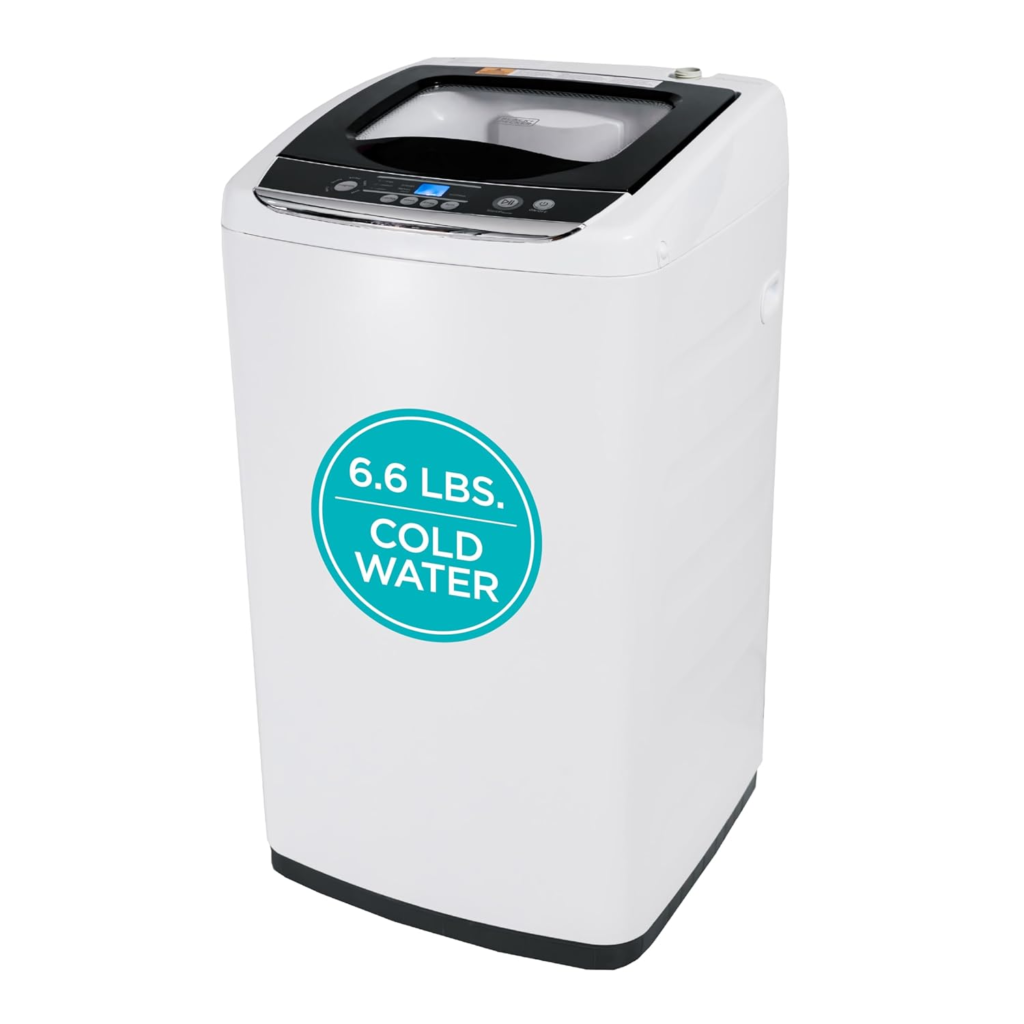
Best For: Small apartments and single-person households.
A compact fully automatic washer offering multiple cycle options while fitting into tight spaces.
Features
- 0.9 cubic foot capacity
- LED display
- Five wash cycles
- Child safety lock
- Stainless steel tub
| Pros | Cons |
| Compact size | Small load capacity |
| Easy setup | Not ideal for families |
| Quiet operation | Limited bedding capacity |
| Energy efficient | Slower than larger machines |
Customer Review:
- Positive: “Perfect for my studio apartment.”
- Negative: “I need to do more loads than expected.”
2. COMFEE Portable Washing Machine
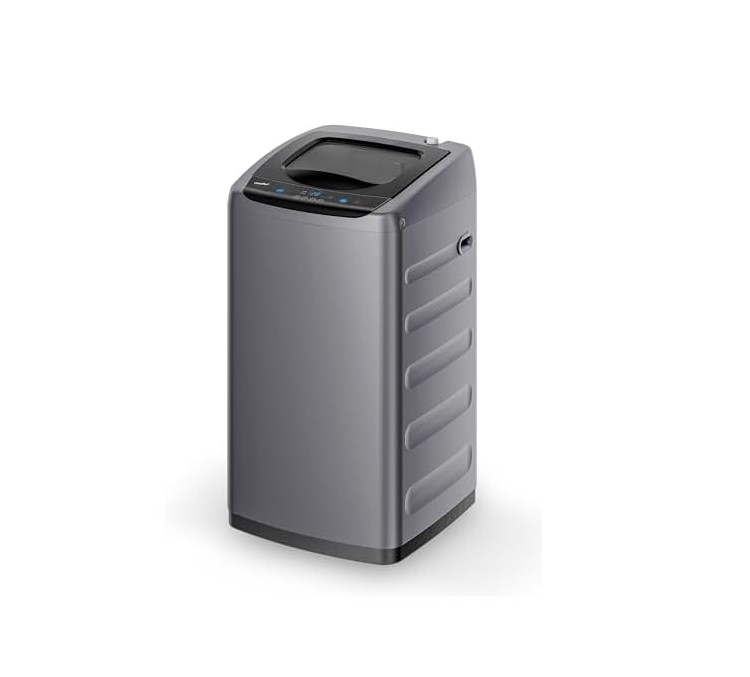
Best For: Apartment renters wanting convenience.
A fully automatic model known for reliable performance and user-friendly controls.
Features
- Multiple wash programs
- LED controls
- Compact footprint
- Child lock
- Energy-saving operation
| Pros | Cons |
| Easy to use | Can vibrate if overloaded |
| Efficient cleaning | Smaller drum |
| Affordable price | Limited heavy-duty performance |
| Quiet washing | Not ideal for large families |
Customer Review:
Positive : “Setup took less than ten minutes.”
Negative: “Heavy blankets are difficult to wash.”
3. Giantex Twin Tub Washing Machine
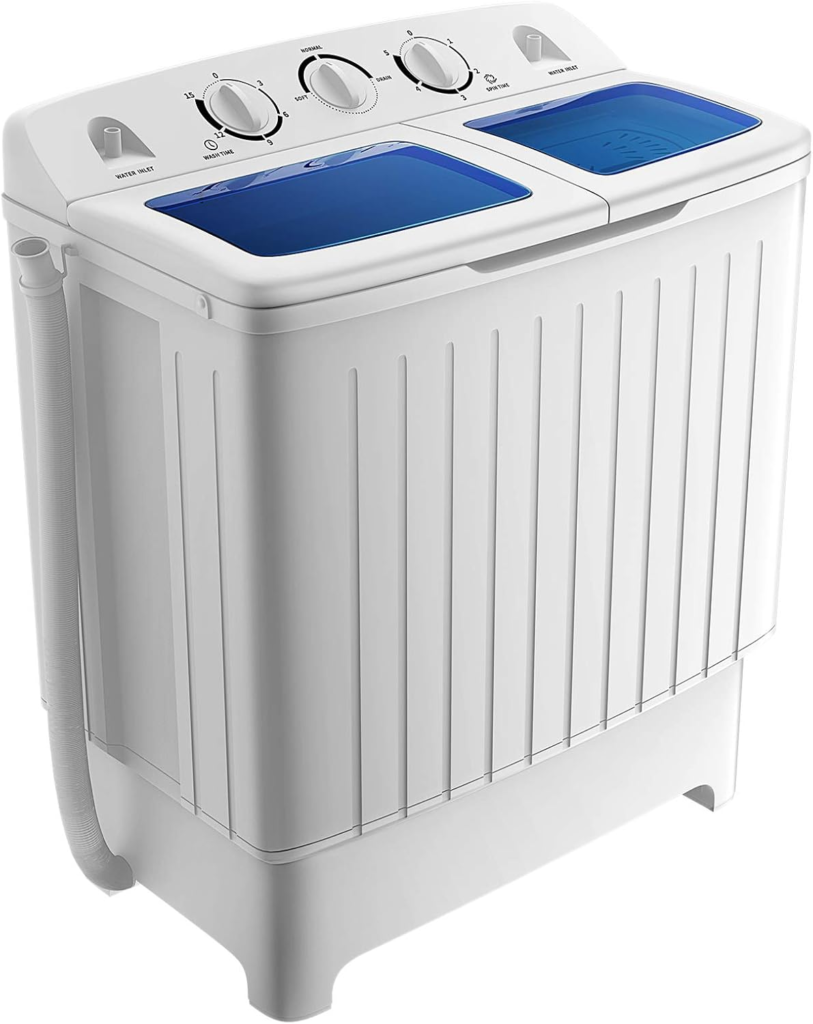
Best For: Users needing larger laundry capacity.
A twin tub system that allows washing and spinning simultaneously.
Features
- Separate wash and spin tubs
- High-powered motor
- Lightweight body
- Fast wash cycles
| Pros | Cons |
| Larger capacity | More manual operation |
| Budget friendly | Requires monitoring |
| Fast performance | Less convenient |
| Good for families | Takes more space |
Customer Review:
Positive : “Cuts my laundry time in half.”
Negative: “Not as convenient as a fully automatic washer.”
4. Panda Portable Washing Machine
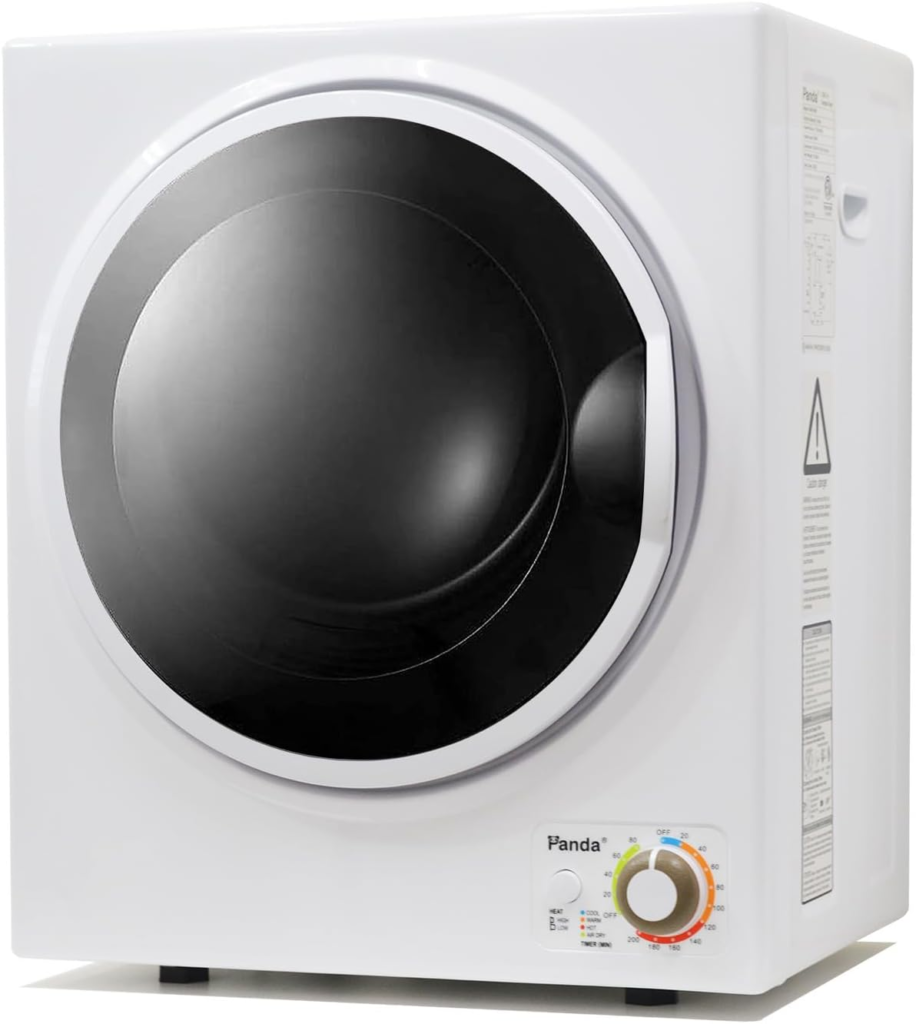
Best For: Frequent laundry users.
A premium portable washer with advanced wash cycles and strong cleaning performance.
Features
- Fully automatic operation
- Large capacity
- Multiple wash programs
- Stainless steel drum
| Pros | Cons |
| Excellent cleaning | Higher price |
| Large capacity | Heavier unit |
| Reliable performance | Requires storage space |
| Durable construction | Faucet adapter may need replacement |
Customer Review:
Positive “Feels like a full-size washing machine.”
Negative: “A little expensive compared to competitors.”
5. COSTWAY Portable Washer
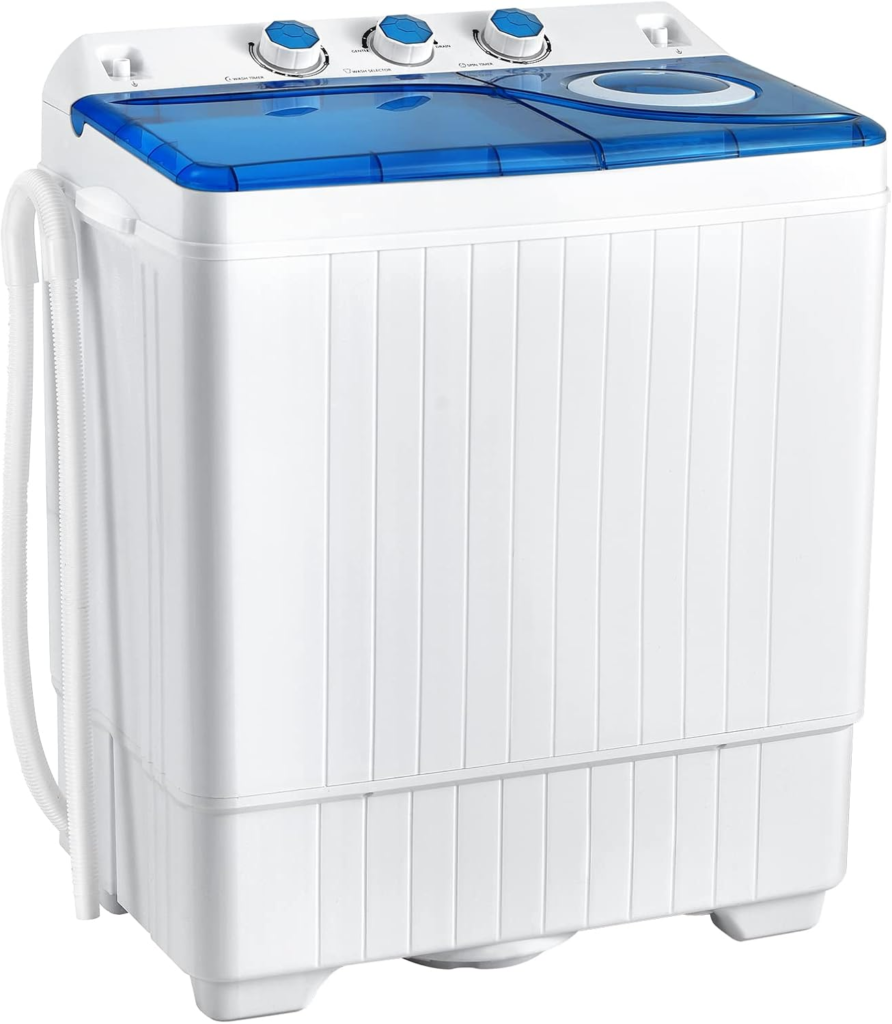
Best For: Budget buyers.
A simple compact washer that offers good performance for everyday laundry.
Features
- Portable design
- Multiple cycle options
- Easy controls
- Energy-efficient motor
| Pros | Cons |
| Affordable | Smaller capacity |
| Easy to move | Fewer premium features |
| Good cleaning performance | Basic controls |
| Ideal for beginners | Limited customization |
Customer Review:
Positive: “Excellent value for the price.”
Negative: “Wish it had more cycle options.”
Portable Washing Machine vs Traditional Washing Machine
| Feature | Portable Washer | Traditional Washer |
| Size | Compact | Large |
| Installation | Temporary hookup | Permanent plumbing |
| Capacity | Small to medium | Large |
| Water Usage | Lower | Higher |
| Electricity Usage | Lower | Higher |
| Portability | High | None |
| Purchase Cost | Lower | Higher |
| Apartment Friendly | Yes | Often No |
| Storage | Easy | Permanent location |
| Maintenance Cost | Lower | Higher |
For many renters, portable washers provide the perfect balance between convenience and affordability.
How Much Water and Electricity Does a Portable Washer Use?
One advantage often overlooked by competitors is utility savings.
Most portable washing machines use:
- 8–20 gallons of water per load
- 100–300 watts during operation
- 50% to 70% less water than older top-load washers
Average annual savings may include:
- Lower water bills
- Lower electricity bills
- Reduced laundromat expenses
- Fewer trips to shared laundry rooms
For apartment dwellers, these savings can add up quickly over several years.
Are Portable Washing Machines Worth It?
For many Americans, the answer is yes. A portable washing machine can save:
- Time
- Money
- Trips to the laundromat
- Apartment laundry fees
Portable Washing Machines is best for singles, couples, small families and renters. Now that you understand how these machines operate, you may also want to explore the advantages and disadvantages of portable washing machines before making a purchase.
However, large households that wash many bulky items every week may still benefit more from a traditional washer. The key is choosing a model that matches your laundry needs.
FAQs:
How Does a Portable Washing Machine Work?
A portable washing machine works by filling with water, mixing detergent, agitating clothes to remove dirt, draining dirty water, rinsing fabrics, and spinning clothes to remove excess moisture.
Do Portable Washing Machines Clean Clothes Well?
Yes. Modern portable washers can clean everyday clothing very effectively when used properly.
Do Portable Washers Need Plumbing?
No. Most models connect temporarily to a kitchen or bathroom faucet.
Can I Connect a Portable Washer to Any Sink?
Most sinks work, but some faucets may require a special adapter.
How Long Does a Portable Wash Cycle Take?
Most cycles take between 30 and 60 minutes.
How Much Water Does a Portable Washer Use?
Most portable washers use between 8 and 20 gallons of water per load.
Do Portable Washing Machines Use a Lot of Electricity?
No. Most models consume far less electricity than traditional washing machines.
Can Portable Washers Wash Blankets?
Small and medium blankets usually fit. Large comforters may exceed the machine’s capacity.
Can I Leave the Washer Connected All the Time?
Some users do, but manufacturers generally recommend disconnecting hoses when the machine is not in use.
How Long Do Portable Washing Machines Last?
With proper maintenance, many portable washers last between 5 and 10 years.
Are Portable Washing Machines Good for Apartments?
Yes. They are specifically designed for apartments, dorms, RVs, and other small living spaces.
Do Portable Washers Have Spin Cycles?
Yes. Most models include spin cycles that remove a significant amount of water before drying.
Recommended Reading:
- What Is a Portable Washing Machine? The Smart Laundry Solution for Small Spaces
- Portable Washing Machine Buyers Guide: 11 Things You Must Know Before Buying
- 10 Best Portable Washing Machine for Apartments 2026: Top Picks Reviewed & Compared
- Twin Tub vs Single Tub Washing Machine: Which Is Better for Apartments, RVs, and Families?
Final Verdict: How Does a Portable Washing Machine Work?
So, how does a portable washing machine work? The process is surprisingly simple. Water enters the machine through a faucet connection, detergent mixes with the water, and the washer agitates clothes to remove dirt and stains. After washing, the machine drains dirty water, rinses the fabrics, and spins the load at high speed to remove excess moisture.
For apartment renters, RV owners, college students, and anyone living in a small space, portable washing machines offer a practical and affordable alternative to traditional laundry setups. They use less water, consume less electricity, require minimal installation, and can save hundreds of dollars in laundromat costs over time.
While they may not replace a large family-sized washer, they provide more than enough cleaning power for most everyday laundry needs. If convenience, space savings, and lower utility costs matter to you, a portable washing machine can be one of the smartest appliances you add to your home.

Sourabh researches and writes about home appliances, kitchen gadgets, and common appliance problems to help readers make smarter buying decisions. He specializes in Portable washing machines and appliance troubleshooting guides.
At compactHomeHub, Sourabh focuses on creating easy-to-understand content that simplifies technical appliance issues into practical solutions. His goal is to help users save time, avoid costly mistakes, and choose the right appliances with confidence.