Most portable washing machine owners simply pour detergent into the tub and assume more soap means cleaner clothes. In reality, using too much detergent is one of the biggest reasons clothes come out stiff, sticky, or covered in residue. In this guide, you’ll learn the correct detergent quantity for every portable washer size, load type, and detergent type so you can get cleaner clothes while protecting your machine.
Mastering the right Detergent Quantity for Portable Washing Machine is the easiest way to prevent buildup, protect your fabrics, and keep your compact appliance running efficiently for years.
If you’re new to compact washers, start by learning how portable washing machines work to understand why they require much less detergent than traditional washing machines.
Key Takeaways
- Portable washing machines require less detergent than full-size washers because they use significantly less water.
- HE (High-Efficiency) detergent is the safest option for most portable washing machines since it creates fewer suds.
- Too much detergent can leave residue, create excessive foam, reduce cleaning performance, and shorten the life of your washer.
- Detergent quantity should match load size, washer capacity, water hardness, and soil level rather than using the same amount every time.
- Measuring detergent instead of guessing improves wash quality and saves money.
- Cleaning your portable washer regularly removes detergent buildup and keeps every wash cycle efficient.
- Starting with less detergent and increasing only when necessary produces the best long-term washing results.
What Is the Correct Detergent Quantity for Portable Washing Machine?
Detergent quantity for a portable washing machine is typically one-half to one-third of the amount recommended for a standard washing machine because portable models use less water.
Unlike conventional top-load or front-load washers that use large amounts of water, portable washing machines operate with compact wash tubs. Since less water is available to dissolve detergent, excessive soap quickly creates thick suds that are difficult to rinse away.
For example, if your regular washing machine requires about 2 tablespoons (30 ml) of HE liquid detergent for a medium load, a portable washing machine often needs only 1 tablespoon (15 ml) or even less.
This simple adjustment helps:
- Reduce detergent residue
- Prevent excessive foaming
- Improve rinsing
- Protect the drain pump
- Keep clothes soft after drying
Detergent quantity for a portable washing machine is typically one-half to one-third of the amount recommended for a standard washing machine because portable models use less water.
For more information on how compact washers function, read our guide on how portable washing machines work.
Why Do Portable Washing Machines Need Less Detergent Than Regular Washers?
Portable washing machines need less detergent because they use less water and have smaller wash drums than traditional washing machines.
The purpose of detergent is to suspend dirt and oils in water. When there is too much detergent relative to the available water, the detergent cannot rinse away completely.
Instead, it creates:
- Soap residue on clothing
- Excessive bubbles
- Longer rinse cycles
- Sticky fabric
- Unpleasant odors
- Mold buildup inside the washer
According to the U.S. Department of Energy, modern high-efficiency washers use 25% less energy and approximately 33% less water than older conventional models. Portable washing machines often use even less water than many HE machines, making detergent measurement even more important. — Source: U.S. Department of Energy, 2024
Likewise, Consumer Reports recommends using only the amount of detergent required by your machine because excess detergent reduces rinse performance and contributes to residue buildup. — Source: Consumer Reports, 2024
How Is Portable Washer Detergent Different from Regular Laundry Soap?
Portable washer detergent is not a special detergent; the difference lies in the quantity used rather than the detergent itself.
Many first-time owners believe they need a special detergent labeled “Portable Washer.” That’s usually unnecessary. Instead, manufacturers recommend using:
- High-Efficiency (HE) detergent
- Low-sudsing detergent
- Correct measured dosage
The goal is minimizing foam while maximizing cleaning.
For example, using two tablespoons of regular detergent in a compact washer may create so much foam that clothes float instead of tumbling properly. That reduces cleaning effectiveness.
Typical Detergent Quantity by Portable Washer Capacity
Detergent dosage should be adjusted according to the capacity of your portable washing machine.
The following table provides a practical starting point. Always check your owner’s manual first, then fine-tune based on your water hardness and laundry habits.
| Portable Washer Capacity | Small Load | Medium Load | Large Load |
|---|---|---|---|
| 0.9–1.2 cu. ft. | ½ tbsp | ¾ tbsp | 1 tbsp |
| 1.3–1.6 cu. ft. | ¾ tbsp | 1 tbsp | 1½ tbsp |
| 1.7–2.0 cu. ft. | 1 tbsp | 1½ tbsp | 2 tbsp |
These values assume HE liquid detergent.
Detergent dosage should be adjusted based on washer capacity, load size, fabric type, soil level, and water hardness rather than using the same amount for every load.
Washer capacity directly affects detergent dosage. Our portable washer capacity guide explains which size is best for apartments, RVs, and small homes.
Why Does Measuring Detergent Matter?
Measuring detergent improves cleaning performance while reducing detergent waste and machine wear.
Many detergent bottles encourage users to fill the cap to the first or second line. Unfortunately, those measurements are designed for larger washing machines. Portable washers need much less.
For example:
Instead of filling the detergent cap halfway, use a dedicated measuring spoon or graduated cup. This simple habit can:
- Save detergent every month
- Improve rinse quality
- Reduce stiff towels
- Prevent clogged drain hoses
- Reduce maintenance costs
According to the American Cleaning Institute, using more detergent than recommended does not improve cleaning performance and often makes rinsing more difficult. — Source: American Cleaning Institute, 2024
Measuring detergent with a measuring cup instead of pouring directly from the bottle improves wash quality, reduces waste, and helps extend the lifespan of a portable washing machine.
For additional maintenance advice, see our portable washing machine maintenance tips.
Why Does Using the Right Detergent Quantity Matter?
Using the correct detergent quantity improves cleaning performance, extends the life of your portable washing machine, and prevents common laundry problems.
Many laundry issues blamed on the washing machine are actually caused by detergent overuse. Let’s explore why correct dosing makes such a difference.
Better Cleaning Performance
Proper detergent quantity allows dirt and stains to remain suspended in water until they are rinsed away.
Too much detergent creates excessive suds that cushion fabrics instead of allowing them to rub gently against each other during agitation.
As a result:
- Dirt stays trapped in clothing.
- Rinse cycles become less effective.
- Whites may appear dull.
- Dark clothing can develop detergent streaks.
Ironically, using less detergent often results in cleaner clothes.
Softer Line-Dried Clothes
Correct detergent dosing helps line-dried clothes stay softer because less detergent residue remains in the fabric.
Many people blame outdoor drying for stiff clothing. In reality, detergent residue is often the hidden culprit.
When excess detergent dries inside fabric fibers, towels and cotton clothing become:
- Rough
- Crunchy
- Less absorbent
Reducing detergent by even 25–50% often produces noticeably softer laundry after just a few wash cycles. This is especially important for apartment dwellers who rely on drying racks or outdoor clotheslines.
Longer Washer Life
Using the proper detergent amount reduces internal buildup that can damage pumps, hoses, and drainage systems.
Excess detergent doesn’t simply disappear. Instead, it accumulates inside:
- Drain hoses
- Wash tub
- Pump housing
- Rubber seals
- Lint filters
Over time, this buildup traps lint and moisture, creating ideal conditions for mold growth and unpleasant odors.
According to appliance manufacturers, regular cleaning combined with proper detergent measurement helps reduce maintenance issues and improves long-term performance.
Lower Laundry Costs
Using less detergent saves money without sacrificing cleaning performance.
Many households unknowingly use twice the detergent required for every load.
For example:
If your detergent bottle contains enough detergent for 60 standard loads, careful measuring in a portable washing machine may extend that same bottle to nearly 100–120 compact loads, depending on washer size.
Over the course of a year, that can significantly reduce your laundry expenses while also reducing plastic bottle waste.
Better for the Environment
Using only the necessary amount of detergent reduces wastewater pollution and unnecessary chemical discharge.
Less detergent entering wastewater systems means fewer surfactants and cleaning chemicals must be treated before water is returned to the environment.
Combined with the lower water consumption of portable washing machines, proper detergent dosing supports more sustainable laundry habits.
How Much HE Detergent Should You Use in a Portable Washer?
HE (High-Efficiency) detergent is the recommended detergent type for most portable washing machines because it produces fewer suds and rinses more efficiently.
Portable washers have smaller drums, shorter wash cycles, and lower water consumption than conventional machines. Excessive suds reduce cleaning performance and may even interfere with proper draining.
HE (High-Efficiency) detergent is the recommended detergent type for most portable washing machines because it produces fewer suds and rinses more efficiently.
According to the American Cleaning Institute, HE detergents are specifically formulated to clean effectively while producing significantly fewer suds than regular detergents. — Source: American Cleaning Institute, 2024
Recommended HE Liquid Detergent Amount
| Load Size | HE Liquid Detergent |
|---|---|
| Small | ½ tablespoon (7–8 ml) |
| Medium | 1 tablespoon (15 ml) |
| Large | 1½ tablespoons (22 ml) |
| Extra Large (if machine allows) | 2 tablespoons (30 ml) |
Tip: Start with the smallest recommended amount. Increase only if your clothes remain visibly dirty after washing.
Can You Use Regular Laundry Detergent in a Portable Washing Machine?
Regular laundry detergent can be used in many portable washing machines, but HE detergent is usually the better choice because it creates fewer suds.
Some portable washer manufacturers allow standard detergent in reduced quantities, while others recommend only HE detergent. Always check your owner’s manual first.
If You Must Use Regular Detergent
Reduce the normal amount by approximately 50–70%. For example:
- Standard recommendation: 2 tablespoons
- Portable washer recommendation: about ¾–1 tablespoon
Never fill the detergent cap unless your manufacturer specifically recommends it.
How Much Liquid, Powder, or Pod Detergent Should You Use?
Different detergent types require different dosing because their concentration and dissolving behavior vary.
Liquid Detergent
Liquid detergent dissolves quickly and works well in cold water.
Recommended amount:
- Small load: ½ tablespoon
- Medium load: 1 tablespoon
- Large load: 1½ tablespoons
Best for:
- Daily laundry
- Mixed fabrics
- Cold water washing
Powder Detergent
Powder detergent generally requires slightly less than liquid detergent because excess powder may not dissolve completely in compact washers. Recommended amount:
- Small load: 1 teaspoon
- Medium load: 2 teaspoons
- Large load: 1 tablespoon
Best for:
- White clothing
- Mud stains
- Outdoor clothing
Laundry Pods
Laundry pods can work in portable washing machines, but they are often too concentrated for very small loads. Many portable washers use only a fraction of the water used by standard machines.
As a result:
- Pods may not dissolve completely.
- Residue may remain on clothes.
- Plastic film can stick inside the drum.
Unless your machine has a capacity above 1.8 cubic feet, liquid HE detergent is generally the safer choice.
How Does Washer Capacity Affect Detergent Quantity?
Washer capacity is one of the biggest factors determining how much detergent you should use.
Even identical loads require different detergent amounts depending on drum size.
| Washer Capacity | Typical Water Use | Recommended HE Detergent |
|---|---|---|
| Under 1.0 cu. ft. | 4–6 gallons | ½ tablespoon |
| 1.0–1.5 cu. ft. | 6–9 gallons | 1 tablespoon |
| 1.6–2.0 cu. ft. | 9–13 gallons | 1½ tablespoons |
Does Water Hardness Affect Detergent Quantity?
Water hardness affects detergent performance because minerals reduce detergent efficiency.
Hard water contains calcium and magnesium. These minerals reduce cleaning effectiveness by binding with detergent.
| Water Type | Recommended Detergent Quantity | Why? |
|---|---|---|
| Soft Water | Use slightly less detergent (reduce by about 10–20%). | Soap dissolves easily and creates more suds, so less detergent is needed for effective cleaning. |
| Moderately Hard Water | Use the standard recommended dosage. | Normal mineral levels allow detergent to work efficiently without adjustment. |
| Very Hard Water | Increase detergent slightly (about 10–20%), not double. | Hard water minerals reduce detergent effectiveness, so a small increase helps improve cleaning without causing excessive residue. |
You may also consider adding a water softener instead of increasing detergent dramatically.
According to the U.S. Geological Survey (USGS), approximately 85% of U.S. homes have hard water. — Source: USGS, 2023
How Much Detergent Should You Use for Different Types of Laundry?
Laundry type influences detergent quantity because different fabrics retain soil differently.
1. Everyday Clothing
Examples:
- T-shirts
- Jeans
- Socks
- Casual shirts
Recommended dosage: Normal HE detergent amount.
2. Towels
Towels absorb more detergent than clothing. Reduce detergent slightly if towels feel stiff after drying. Instead of increasing detergent, use warm water and an extra rinse.
3. Bedding
Sheets usually require:
- Larger load
- Slightly higher detergent amount
- Extra rinse cycle
Avoid exceeding manufacturer recommendations.
4. Baby Clothes
Baby clothing benefits from mild HE detergent. Avoid heavily scented products. When caring for sensitive skin, using the right amount of detergent is just as important as choosing one of the 10 Best Mini Washing Machines for Baby Clothes to keep their garments perfectly clean and irritation-free
Use:
- Smaller detergent amount
- Extra rinse
5. Delicate Fabrics
Silk, wool, and performance fabrics need minimal detergent. Excess soap becomes trapped inside delicate fibers.
What Happens If You Use Too Much Detergent?
Using too much detergent in a portable washing machine can cause excessive foam, detergent residue on clothes, unpleasant odors, and reduced cleaning performance.
Using too much detergent in a portable washing machine can cause excessive foam, detergent residue on clothes, unpleasant odors, and reduced cleaning performance.
Common Symptoms
- White streaks on dark clothing
- Sticky fabric
- Clothes feel stiff
- Soap smell after drying
- Excess bubbles
- Longer rinse cycles
- Mold growth
- Drainage problems
Why Too Much Detergent Makes Clothes Dirtier
This sounds backward. However, excessive suds cushion fabrics. Instead of rubbing against each other gently, clothes float in thick foam. Less friction means:
- Less stain removal
- More trapped dirt
- Poor rinsing
Consumer Reports repeatedly notes that detergent overuse is one of the most common laundry mistakes. — Source: Consumer Reports, 2024
How Can You Tell If You’re Using Too Little Detergent?
Too little detergent leaves oils, body soil, and stains behind because there isn’t enough cleaning agent to suspend dirt.
Signs include:
- Musty odor
- Dingy whites
- Oily collars
- Greasy towels
- Visible stains
- Clothing that smells clean initially but develops odor later
Fortunately, using slightly too little detergent is usually easier to correct than using far too much. Increase gradually not dramatically.
What Are the Most Common Detergent Mistakes Portable Washer Owners Make?
Most detergent problems come from incorrect measuring rather than using the wrong detergent brand.
Avoid these mistakes:
- Filling the detergent cap.
- Using regular detergent like HE detergent.
- Ignoring water hardness.
- Overloading the washer.
- Skipping maintenance cleaning.
- Mixing multiple detergents.
- Using pods in very small machines.
- Assuming “more detergent equals cleaner clothes.”
Small adjustments often improve laundry results immediately. Using too much detergent often leads to buildup inside the washer, so follow these portable washing machine maintenance tips to keep your appliance running efficiently.
Which Detergent Is Best for Portable Washing Machines?
The best detergent for portable washing machines is a concentrated HE liquid detergent with low sudsing properties.
Look for:
- HE logo
- Low-sudsing formula
- Cold-water compatibility
- Enzyme-based stain removal
- Fragrance-free option if sensitive skin is a concern
Avoid:
- Excessively foaming detergents
- Homemade soap mixtures
- Dishwashing liquid
- Hand-washing soap
Dish soap should never be used in a portable washing machine because it creates extreme amounts of foam.
Practical Tools That Make Detergent Measuring Easier
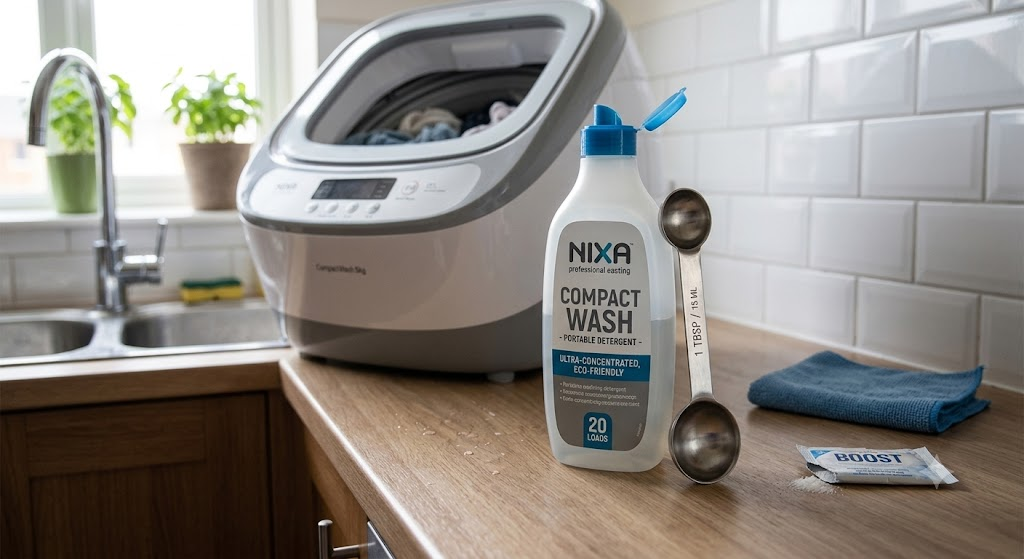
Using the right measuring tools improves consistency.
Recommended tools include:
- Measuring spoons
- Small graduated measuring cup
- HE detergent dispenser bottle
- Laundry dosing bottle
- Water hardness test strips
Free alternatives:
- Kitchen measuring spoon
- Medicine measuring cup
- Manufacturer’s measuring guide
For ongoing maintenance, read our portable washer cleaning guide.
What Should You Do Next to Improve Your Laundry Results?
Consistently measuring detergent, cleaning your washer, and adjusting detergent based on your laundry conditions will deliver better washing performance over time.
Perfect laundry isn’t about buying the most expensive detergent it’s about using the right amount every time. Small changes to your routine can prevent detergent buildup, reduce odors, and extend the life of your portable washing machine.
Let’s look at a simple maintenance routine you can start today. Using the correct detergent not only improves cleaning but also complements the energy savings discussed in our guide on how much electricity a portable washer uses.
Create a Simple Laundry Routine
A consistent routine helps you avoid the most common portable washer problems.
Before Every Wash
- Check the load size.
- Measure detergent instead of estimating.
- Separate heavily soiled clothes from lightly worn items.
- Empty pockets and close zippers.
- Use HE detergent whenever possible.
Once Every Month
- Run an empty hot wash with a washing machine cleaner or white vinegar (if recommended by your manufacturer).
- Clean the lint filter.
- Wipe the lid, drum, and rubber seals.
- Inspect the drain hose for buildup.
Every 3–6 Months
- Check water inlet filters.
- Inspect hoses for cracks or leaks.
- Verify that the washer is level.
- Clean the drain pump filter if your model includes one.
Following this schedule minimizes detergent residue and helps maintain efficient performance.
How Often Should You Clean Detergent Residue from a Portable Washer?
Most portable washing machines should be cleaned at least once a month to remove detergent residue, mold, and mineral deposits.
Even when you use the correct detergent quantity, small amounts of detergent, fabric softener, and lint gradually accumulate inside the machine. Signs your washer needs cleaning include:
- Musty smell
- Black spots around seals
- White detergent residue
- Slow draining
- Poor rinse performance
- Clothes smelling unpleasant after washing
According to the American Cleaning Institute, regular washing machine maintenance helps improve cleaning performance and reduces odor-causing buildup. — Source: American Cleaning Institute, 2024
Portable Washing Machine Detergent Dosage Chart
Use this table as a quick reference before every wash.
| Laundry Situation | Recommended HE Liquid Detergent |
|---|---|
| Small Load | ½ tablespoon |
| Medium Load | 1 tablespoon |
| Large Load | 1½ tablespoons |
| Heavy Soil | Add only ¼ tablespoon extra |
| Soft Water | Reduce by about 20% |
| Hard Water | Increase by about 10–20% |
| Delicates | ½ tablespoon |
| Towels | 1 tablespoon + Extra Rinse |
Remember: These are general recommendations. Always follow your portable washing machine manufacturer’s instructions if they differ.
Detergent Quantity for Portable Washing Machine Checklist
Before pressing the Start button, ask yourself these questions:
- Is the washer only about 75–80% full?
- Am I using HE detergent?
- Did I measure the detergent?
- Does the detergent match today’s load size?
- Is my water hard or soft?
- Do the clothes really need extra detergent?
- Did I clean the washer within the last month?
If you answered “Yes” to most of these questions, you’re already preventing many of the most common laundry problems.
FAQs
Q. Can I use laundry pods in a portable washing machine?
Yes, but only if your washer is large enough and the manufacturer approves them. Liquid HE detergent is generally a better choice for compact portable washers because it dissolves more reliably.
Q. Is one tablespoon of detergent enough?
For most portable washing machines, one tablespoon of HE detergent is sufficient for a medium-sized load.
Q. Why do my clothes still smell after washing?
Persistent odors usually result from:
- Too much detergent
- Washer mold
- Overloading
- Insufficient rinsing
- Leaving wet clothes inside the drum
Cleaning the washer and reducing detergent often solves the problem.
Q. Can too much detergent damage a portable washing machine?
Yes. Excess detergent creates foam buildup that can clog hoses, reduce pump efficiency, and leave residue inside the drum.
Q. Should I use fabric softener?
You can, but use it sparingly. Too much fabric softener also leaves residue inside compact washers. Many people replace it with white vinegar during the rinse cycle (only if permitted by the manufacturer).
Q. Which detergent works best in cold water?
Most modern HE liquid detergents are formulated specifically for cold-water washing and dissolve more easily than powder detergents.
Q. Does more detergent clean better?
No. Using more detergent does not automatically produce cleaner clothes. Once the recommended amount has been added, extra detergent mainly creates excess suds and makes rinsing more difficult.
Conclusion
Using the correct Detergent Quantity for Portable Washing Machine is one of the easiest ways to improve cleaning performance, reduce residue, and extend the life of your appliance.
The biggest mistake most owners make is assuming a portable washer needs the same amount of detergent as a full-size machine. In reality, compact washers use far less water, which means they also require much less detergent.
As a general rule:
- Start with ½–1 tablespoon of HE liquid detergent.
- Adjust based on load size, washer capacity, water hardness, and soil level.
- Measure detergent every time instead of pouring by eye.
- Clean your portable washing machine monthly to prevent residue buildup.
By following these simple habits, you’ll enjoy cleaner clothes, softer fabrics, lower detergent costs, and a portable washing machine that performs reliably for years.
If you’re looking to improve every aspect of your laundry routine, explore our related guides on:
- How Much Water Does a Portable Washer Use?
- Portable Washing Machine Buyers Guide
- Portable Washing Machine Maintenance Tips
- How to Use a Mini Foldable Washing Machine:

Sourabh researches and writes about home appliances, kitchen gadgets, and common appliance problems to help readers make smarter buying decisions. He specializes in Portable washing machines and appliance troubleshooting guides.
At compactHomeHub, Sourabh focuses on creating easy-to-understand content that simplifies technical appliance issues into practical solutions. His goal is to help users save time, avoid costly mistakes, and choose the right appliances with confidence.