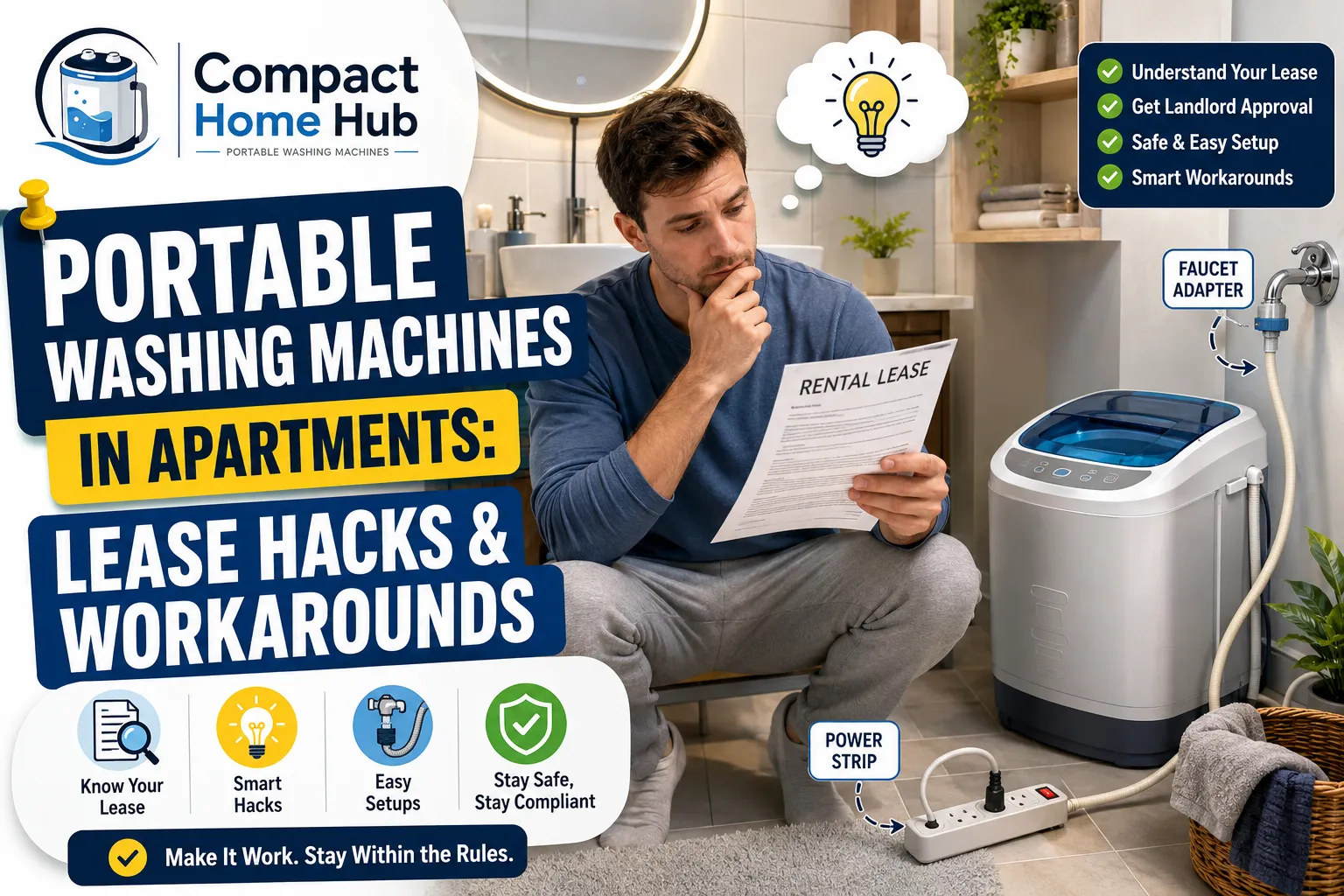
Living in an apartment doesn’t always mean you have access to an in-unit washer and dryer. Laundry rooms can be crowded, expensive, and inconvenient. That’s why many renters consider buying a portable washing machine. But before placing an order, one important question comes up:
Are Portable Washer in Apartment lease Allowed?
Yes, portable washing machines are allowed in many apartments, but it depends on your lease agreement and your landlord’s rules. Some apartment leases specifically prohibit washing machines because of water damage risks, plumbing concerns, or insurance requirements. Others allow portable washers if they connect temporarily to a sink and are stored after use. Always read your lease carefully and ask your landlord for written approval before using one.
Why Apartment Leases Restrict Portable Washing Machines
Apartment owners aren’t trying to make life difficult. They usually want to reduce expensive maintenance problems.
Common reasons include:
- Risk of water leaks
- Flooding neighboring apartments
- Drainage overflow
- Older plumbing systems
- Electrical overload
- Insurance policy requirements
- Increased water usage
- Mold caused by accidental leaks
A portable washer may seem harmless, but even a small leak can cause thousands of dollars in repairs.
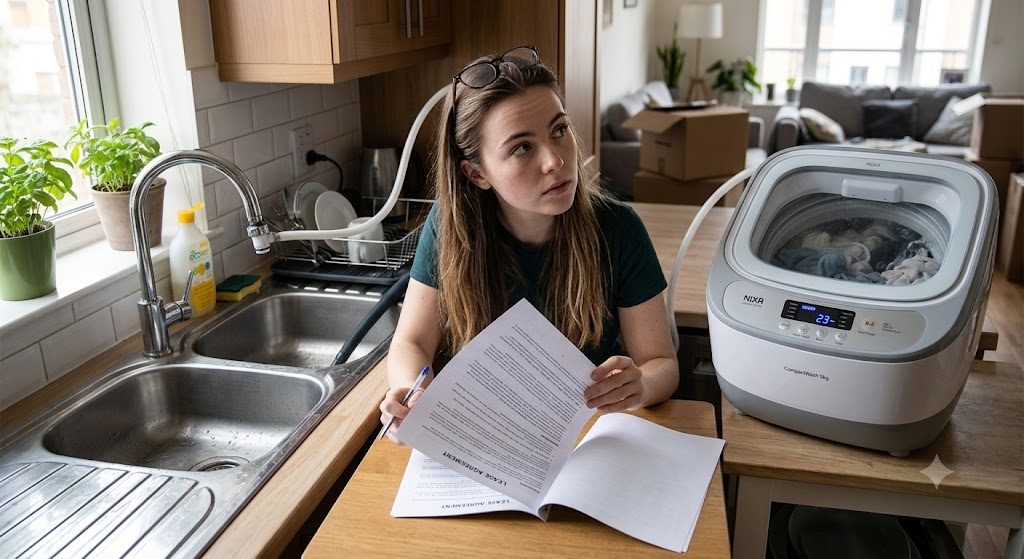
What Does a Typical Apartment Lease Say?
Many leases contain clauses like:
- No personal washing machines.
- No appliances connected to plumbing.
- No modifications to plumbing fixtures.
- Tenant is responsible for water damage caused by unauthorized appliances.
Some leases don’t specifically mention portable washers.
Instead, they use broader wording such as:
- “No additional water-using appliances.”
- “No unauthorized household appliances.”
If you cannot find anything related to laundry appliances, don’t assume they’re automatically allowed. Ask your landlord.
How to Check If Your Apartment Allows Portable Washers
Before purchasing one, follow these steps.
Step 1: Read Your Lease Carefully
Search for words like:
- Washing machine
- Laundry
- Appliances
- Water damage
- Plumbing
- Utility restrictions
Step 2: Contact Property Management
Email or call your leasing office.
Ask:
“I’m considering using a small portable washing machine that connects temporarily to my bathroom sink. Is this allowed under my lease?”
Written approval is much better than a verbal conversation.
Step 3: Ask About Conditions
Some landlords allow portable washers only if:
- They are used during daytime.
- They are connected only while washing.
- They are stored afterward.
- They have automatic shutoff protection.
- They are under a certain capacity.
Portable Washer in Apartment Lease: What Landlords Usually Look For
When evaluating a request, landlords often consider:
| Factor | Why It Matters |
|---|---|
| Washer size | Smaller machines reduce water usage. |
| Water connection | Temporary sink connections are safer than permanent plumbing. |
| Automatic shutoff | Helps prevent flooding. |
| Drain hose | Must drain securely into the sink. |
| Apartment age | Older buildings may have plumbing limitations. |
| Insurance | Some insurance policies prohibit tenant-installed washers. |
Apartment-Friendly Portable Washers
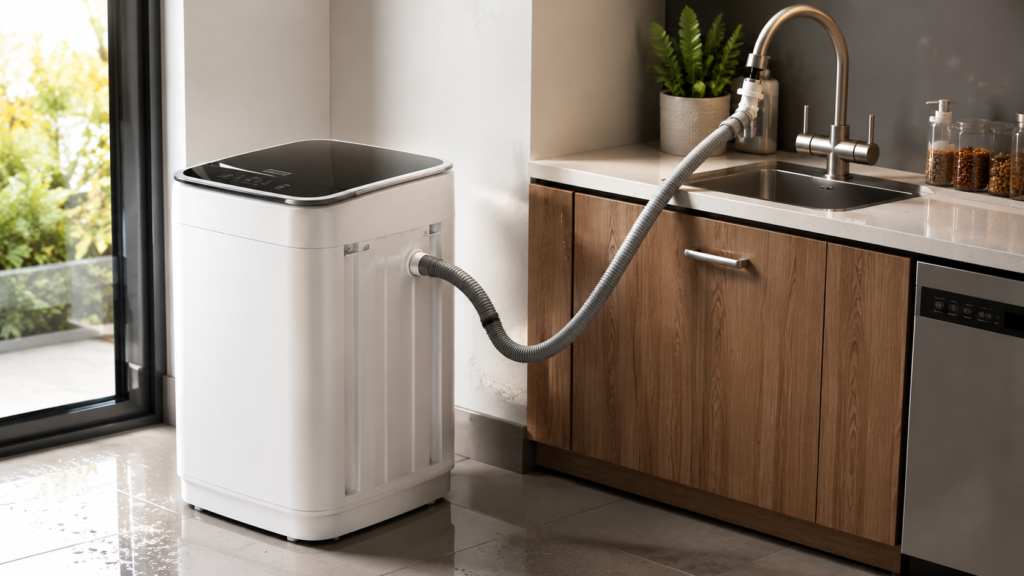
Generally, landlords are more comfortable with:
- Compact portable washers
- Sink-connected washers
- Twin-tub portable machines
- Fully automatic portable washers with quick-connect adapters
They usually dislike:
- Permanently installed washing machines
- DIY plumbing modifications
- Machines connected directly to building pipes
- Appliances left connected 24/7
Image Suggestion: Portable washer connected temporarily to a kitchen faucet.
How to Increase Your Chances of Getting Approval
Don’t simply ask:
“Can I use a washer?”
Instead, explain:
- It is portable.
- It uses a temporary faucet adapter.
- No plumbing modifications are needed.
- It stores in a closet after use.
- It includes overflow protection.
- You’ll supervise every wash cycle.
This gives landlords confidence.
Sample Email to Your Landlord
Subject: Request to Use a Portable Washing Machine
Hello,
I’d like permission to use a compact portable washing machine inside my apartment. It connects temporarily to the bathroom sink using a removable adapter and does not require permanent plumbing changes.
The unit includes automatic shutoff protection and will only be used while I’m home. After each load, it will be disconnected and stored.
Please let me know if this is permitted or if there are any specific requirements I should follow.
Thank you.
Lease Hacks That Actually Work
These aren’t ways to break your lease.
They’re practical ways to work within it.
1. Choose a Smaller Machine
Large portable washers use more water.
A compact model appears less risky.
2. Buy a Model With Leak Protection
Features landlords appreciate:
- Auto shutoff
- Overflow protection
- Pressure-resistant hoses
- Strong drain pump
3. Use a Waterproof Tray
Place the washer inside a washing machine drip tray. If a hose leaks, water stays contained.
Example: A tenant accidentally loosened the drain hose. Instead of flooding hardwood floors, the tray caught the water until the issue was fixed.
4. Never Leave It Running Unattended
One of the biggest concerns for landlords is an overflowing machine while nobody is home. Stay nearby during every wash cycle.
5. Disconnect It After Every Load
Leaving hoses attached increases leak risk. Disconnect everything after use.
6. Buy Renters Insurance
Many renters insurance policies help cover accidental water damage caused by tenants. That extra protection may also reassure your landlord.
Workarounds If Portable Washers Aren’t Allowed
Don’t panic. You still have options.
- Hand-Crank Portable Washers: These don’t connect to plumbing. Perfect for Small loads, Socks, Underwear and Baby clothes.
- Manual Wash Tubs: A wash tub combined with a spin dryer can clean clothes without violating appliance restrictions.
- Shared Laundry Services: Although less convenient, they eliminate lease concerns.
- Laundry Pickup Services: Many U.S. cities now offer wash-and-fold pickup services with app-based scheduling.
Mistakes That Can Get You Into Trouble
Avoid these common errors.
- Ignoring Your Lease: Even if your neighbor owns one, your lease still applies.
- Installing Permanent Plumbing: Never modify apartment plumbing yourself.
- Using Cheap Hoses: Low-quality hoses can burst. Replace worn hoses immediately.
- Overloading the Washer: Too many clothes increase vibration and water overflow.
- Washing While Away: Never leave your apartment with the washer running.
Can You Be Evicted for Using a Portable Washer?
Usually, no not immediately. Most landlords first issue:
- Warning notice
- Lease violation notice
- Request to remove the appliance
However, repeated violations or water damage could result in:
- Repair charges
- Loss of security deposit
- Lease termination
- Legal action in severe cases
Always comply if your landlord instructs you to remove the machine.
Questions to Ask Before Buying
Ask yourself:
- Does my lease allow portable appliances?
- Is my sink compatible?
- Can I supervise every wash?
- Do I have storage space?
- Is the drain hose long enough?
- Does the washer have automatic shutoff?
- Will the machine fit through apartment doors?
Benefits of Using a Portable Washer (When Allowed)
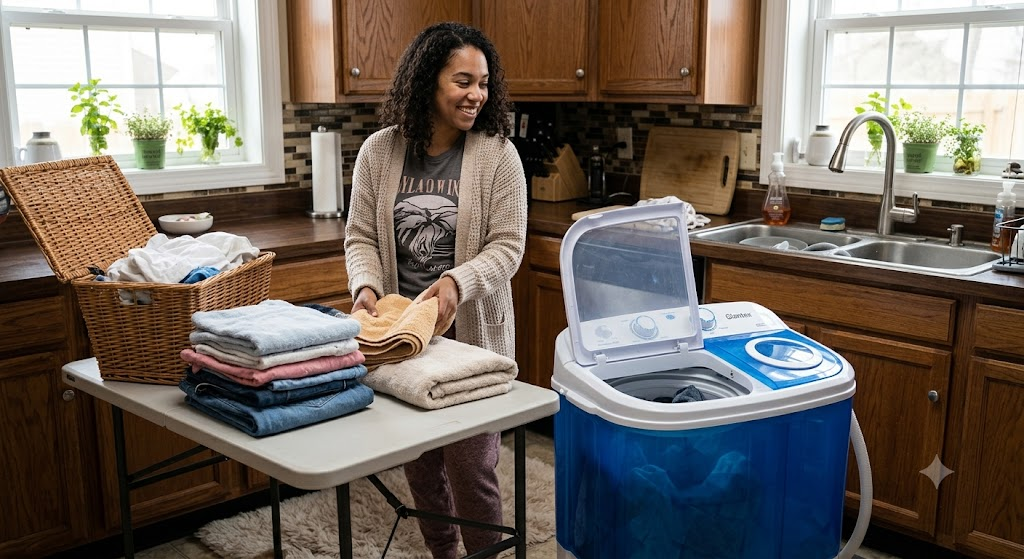
- Save Time: Instead of waiting hours for a shared laundry room, you can finish a load while cooking dinner.
- Lower Laundry Costs: Many apartment laundry rooms charge per wash and dry cycle. Over a year, a portable washer may save hundreds of dollars.
- Better Convenience: Wash clothes whenever you need them. No waiting for available machines.
- Cleaner Clothes: Shared laundry machines may contain detergent residue or dirt from previous users. Your own washer stays under your control.
- Gentle on Clothing: Portable washers typically use smaller loads, reducing wear on delicate fabrics.
When You Should Not Use a Portable Washer
Skip buying one if:
- Your lease clearly prohibits them.
- Your landlord has denied permission.
- Your apartment has weak plumbing.
- You cannot supervise wash cycles.
- You don’t have enough drainage space.
- Your electrical outlets are unsafe.
Ignoring these issues could cost far more than using a laundromat.
Frequently Asked Questions
Q. Is a portable washer considered a lease violation?
Only if your lease prohibits portable washing machines or your landlord has denied permission.
Q. Can I hide a portable washer from my landlord?
No. If discovered, you could face lease violations, repair charges, or removal requests. Transparency is always the better approach.
Q. Can portable washers damage apartments?
They can if hoses disconnect, drains overflow, or leaks go unnoticed. Proper setup and supervision greatly reduce the risk.
Q. Do all apartment complexes ban portable washers?
No. Many apartment communities allow them under certain conditions, especially modern buildings with updated plumbing.
Q. Can I use a portable washer in a studio apartment?
Yes, if your lease allows it and you have enough space for safe operation, drainage, and storage.
Final Thoughts
A portable washer in apartment lease situations isn’t automatically prohibited, but it’s never something you should assume is allowed. The safest approach is to read your lease carefully, ask your landlord for written approval, and choose a compact, apartment-friendly machine with leak protection and temporary sink connections.
Following the rules protects your security deposit, maintains a good relationship with your property manager, and gives you the convenience of doing laundry at home without risking costly damage or lease violations. By choosing the right machine and using it responsibly, many renters across the U.S. enjoy the benefits of portable laundry without any issues.
Reommended Reading:
- How to Connect a Sink Adapter for Portable Washer
- What Is a Portable Washing Machine?
- How Does a Portable Washing Machine Work? Step-by-Step
- Portable Washing Machine Buyers Guide

Sourabh researches and writes about home appliances, kitchen gadgets, and common appliance problems to help readers make smarter buying decisions. He specializes in Portable washing machines and appliance troubleshooting guides.
At compactHomeHub, Sourabh focuses on creating easy-to-understand content that simplifies technical appliance issues into practical solutions. His goal is to help users save time, avoid costly mistakes, and choose the right appliances with confidence.