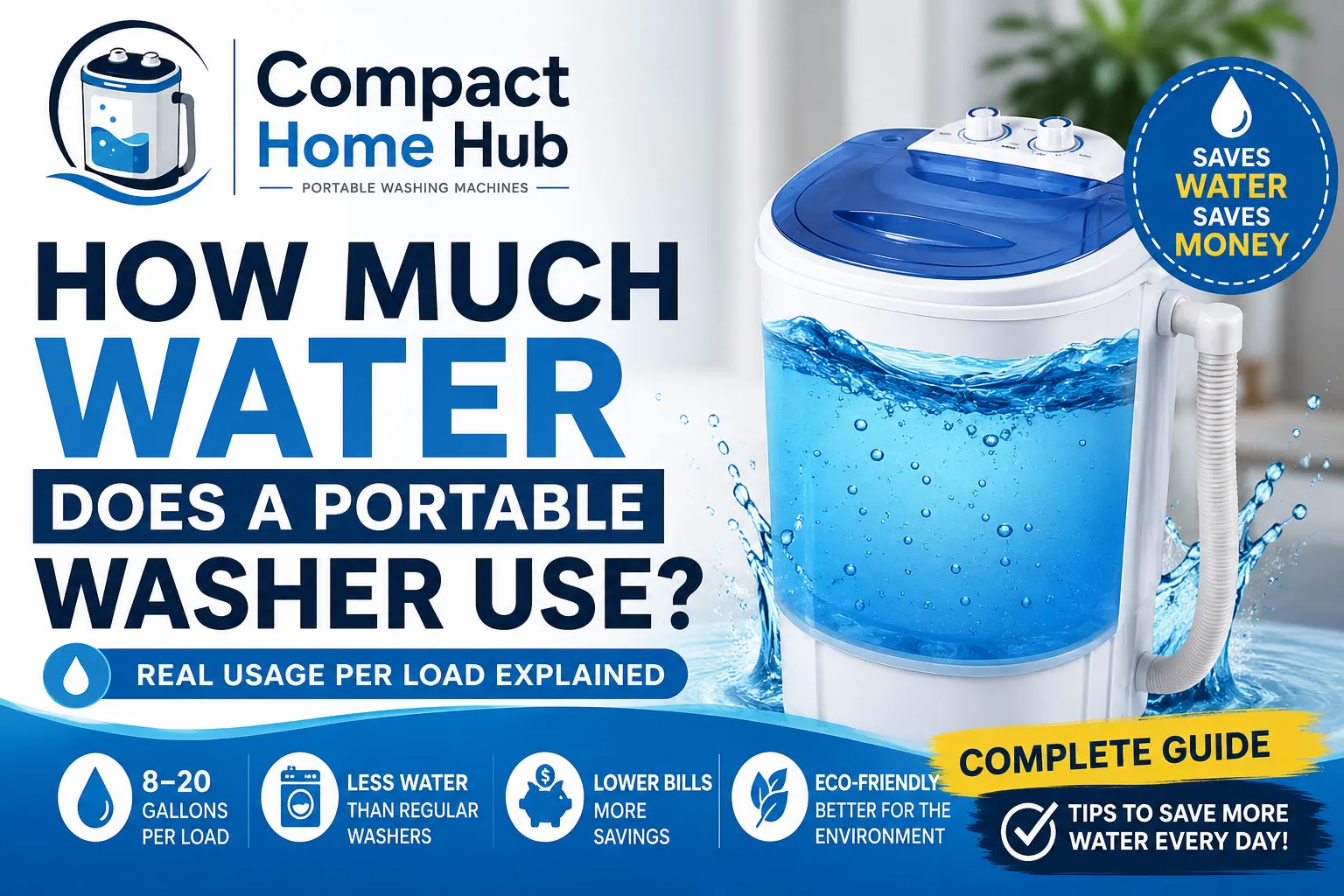
If you’re thinking about buying a portable washing machine, one of the biggest questions is: How Much Water Does a Portable Washer Use?
The good news is that portable washers typically use much less water than full-size washing machines, making them an excellent choice for apartments, RVs, dorm rooms, tiny homes, and anyone looking to lower utility bills.
If you’re still researching your options, check out our portable washing machine buying guide to learn what features matter most before you buy.
How Much Water Does a Portable Washer Use?
A portable washing machine typically uses 8 to 20 gallons of water per load, depending on its size, load capacity, wash cycle, and water level setting.
Here is a quick overview:
| Portable Washer Type | Average Water Usage Per Load |
|---|---|
| Compact Mini Portable Washer | 5–10 gallons |
| Standard Portable Washer | 8–15 gallons |
| Large Portable Washer | 15–20 gallons |
| Portable Twin Tub Washer | 10–18 gallons |
For comparison, many older traditional top-load washing machines use 30 to 45 gallons per load, while modern high-efficiency washers generally use 12 to 25 gallons per load.
That means a portable washer can reduce water consumption by 40% to 70% compared to many conventional machines.
Why Water Usage Matters
Most people focus on price and capacity when shopping for a portable washer. However, water consumption affects several important factors:
- Monthly utility bills
- Environmental impact
- RV and camping water storage
- Septic system load
- Apartment living convenience
- Energy costs for heating water
Since water and energy costs continue to rise across the United States, understanding portable washing machine water usage per load can help you save money throughout the machine’s lifespan.
Lower water bills are one reason many shoppers ask, are portable washing machines worth it for everyday laundry needs?
Understanding How Portable Washers Use Water
Portable washers work differently from full-size machines. Most models connect directly to a kitchen or bathroom faucet and fill only the amount of water needed for the selected load size. Because the drum is smaller, less water is required to:
- Saturate clothing
- Dissolve detergent
- Agitate fabrics
- Rinse garments effectively
A portable washer isn’t simply a smaller washing machine. It’s designed specifically to maximize cleaning while minimizing water consumption. To better understand why these machines use less water, it’s helpful to learn how a portable washing machine works.
How Much Water Does a Portable Washer Use
One of the biggest factors affecting water usage is drum size. Let’s break this down machine by machine, because “portable washer” covers a pretty wide range of products.
1. Manual and Foldable Washers
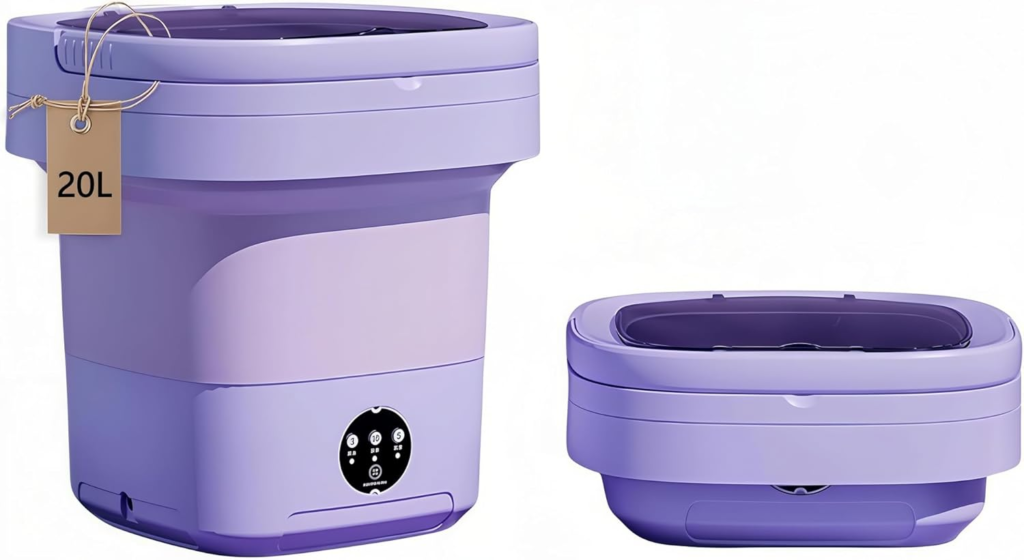
These are the smallest, lightest options on the market, and they sip water compared to everything else.
- Typical water use: 1 to 4 gallons per load
- Best for: Single items, delicates, travel, dorm rooms, or anyone testing out portable laundry for the first time
- How it works: You add water (often straight from a sink or jug), add detergent, and either crank a hand lever or let the unit pulsate for a few minutes
Some ultra-compact models use as little as 1 gallon for a small load of underwear or workout gear. That’s basically a bucket with extra steps, but it works.
2. Countertop Automatic Portable Washers
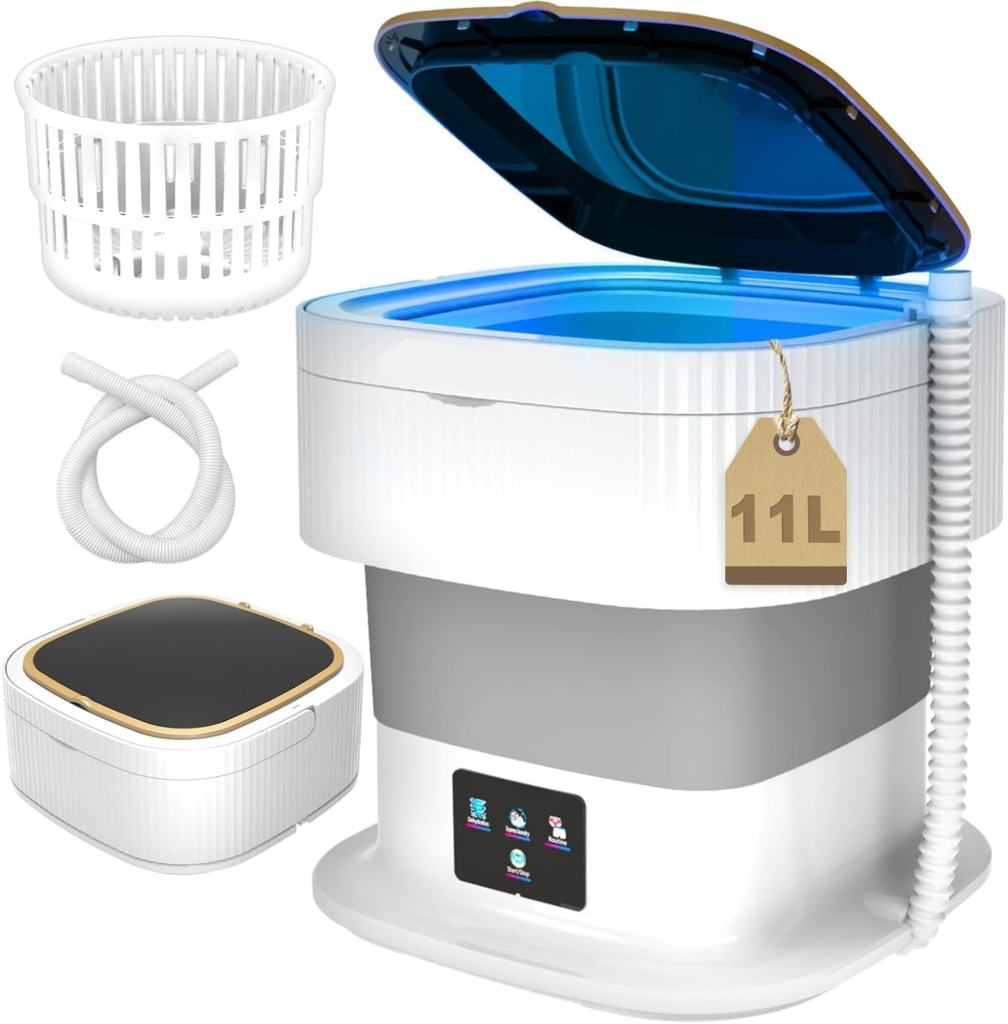
These look like mini versions of a regular washing machine and sit on a counter, table, or stand near your sink.
- Typical water use: 5 to 11 gallons per load
- Best for: Apartments, small households, people who want a “set it and forget it” experience without a big footprint
- How it works: Connects to your faucet with an adapter, fills automatically based on the water level setting you choose (small, medium, large)
This is where the portable washing machine water usage per load question gets really specific, because most countertop models give you three water level options. Picking the small setting for a half load instead of always running on large is one of the easiest ways to save water without thinking about it.
3. Twin Tub Portable Washers
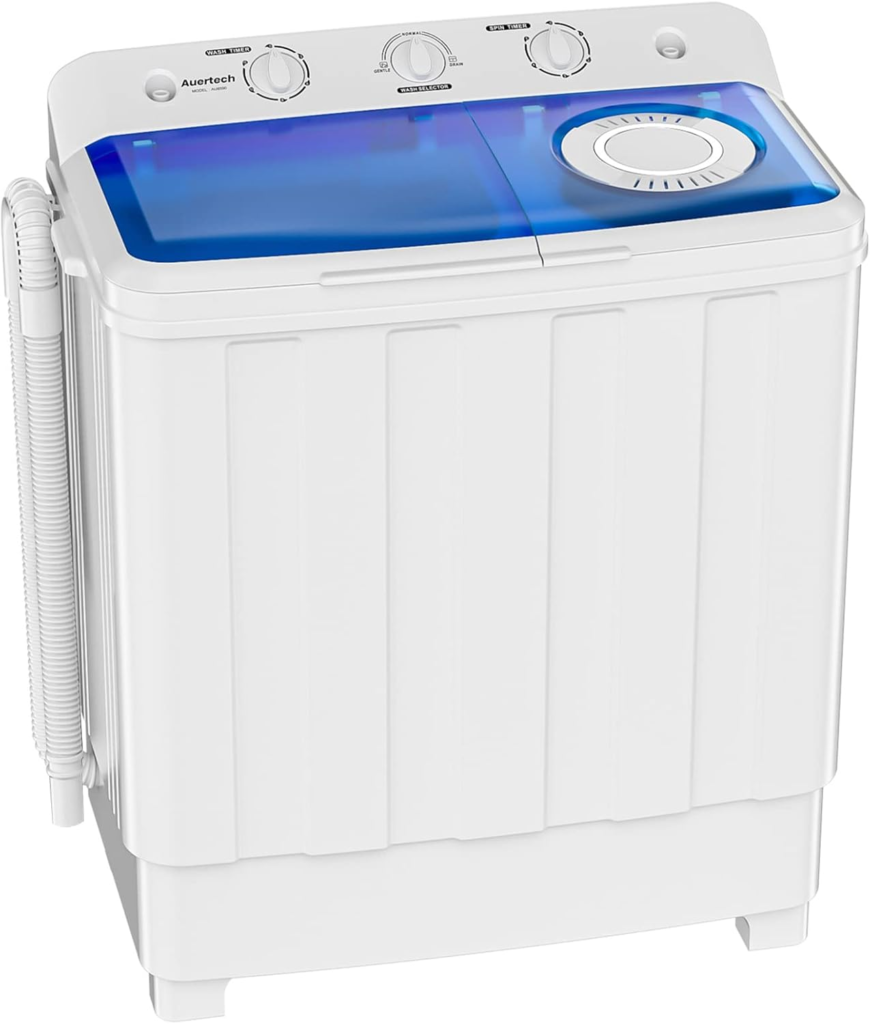
Twin tubs have two separate compartments: one for washing, one for spinning. You move clothes between them yourself.
- Typical water use: 10 to 15 gallons total per full cycle (roughly 8-12 gallons in the wash tub, 3-4 gallons in the spin tub for rinsing)
- Best for: RVs, larger households, people who want more control over wash and rinse times
- How it works: Fill the wash tub manually, run the wash timer, transfer clothes to the spin tub, then add a smaller amount of water for a rinse spin
Twin tubs are popular with RV owners because the two-tub design lets you wash a load while spinning out a previous one, which saves time on travel days. Water consumption is just one difference. See our complete portable washer vs regular washer comparison for a deeper look.
4. Larger Automatic Portable Washers (1.5-2.0 cu ft)
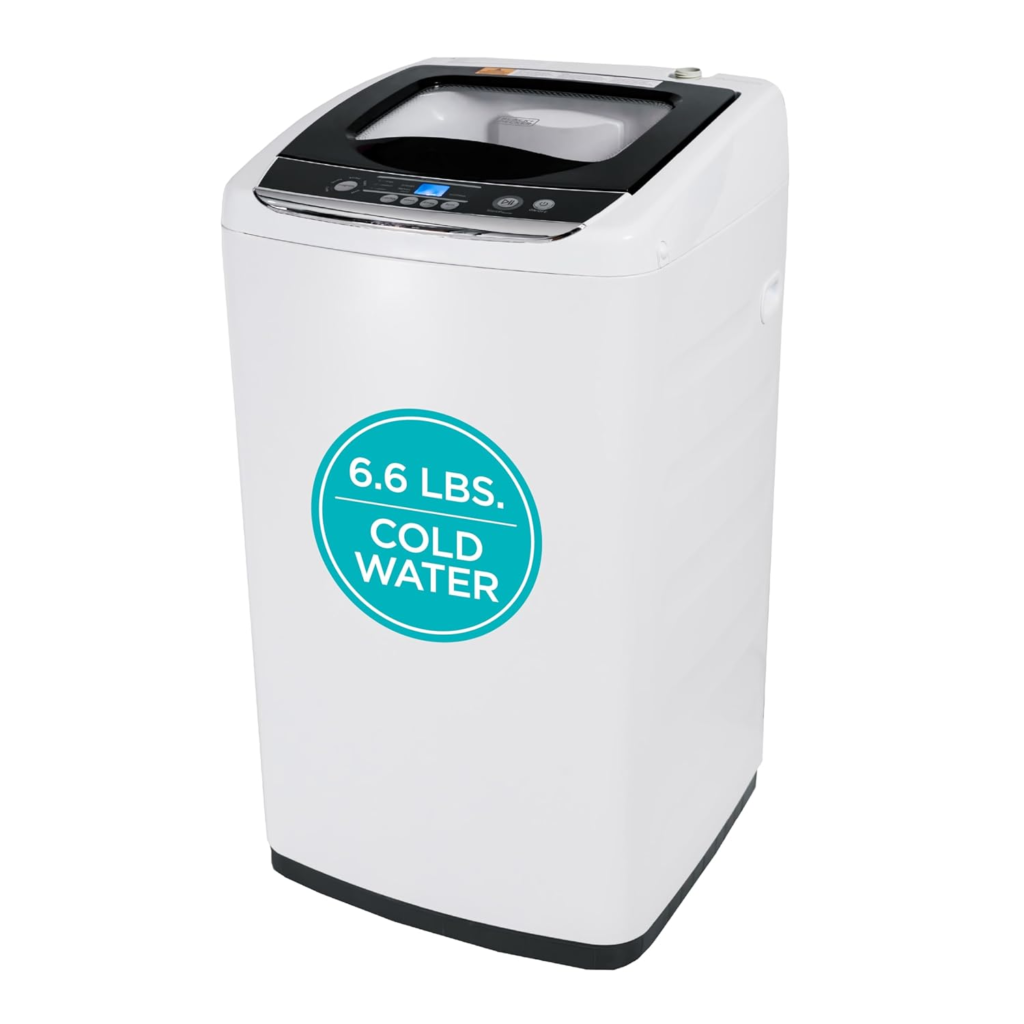
These are the biggest portables you’ll find, often marketed for small families.
- Typical water use: 15 to 22 gallons per load
- Best for: Couples or small families who do larger loads but still don’t have washer/dryer hookups
- How it works: Same automatic fill-and-go process as countertop models, just with a bigger drum and higher water level settings
Portable Washing Machine Water Usage Per Load
Here’s a simple table to keep all these numbers in one place.
| Washer Type | Water Use Per Load | Drum Size | Best Use Case |
| Manual/Foldable | 1-4 gallons | Under 0.5 cu ft | Travel, dorms, single items |
| Countertop Automatic | 5-11 gallons | 0.9-1.0 cu ft | Apartments, singles, couples |
| Twin Tub | 10-15 gallons | 0.7-1.0 cu ft (wash side) | RVs, larger households |
| Large Automatic | 15-22 gallons | 1.5-2.0 cu ft | Small families |
| Standard Top-Load (comparison) | 20-40 gallons | 3.5-5.0 cu ft | Households with hookups |
| HE Front-Load (comparison) | 7-20 gallons | 4.0-5.5 cu ft | Households with hookups |
A few things jump out when you look at this side by side. First, even the largest portable washers use less water than a standard top-loader. Second, a high-efficiency front-load washer can sometimes match a portable washer’s water use, but you’re paying a lot more upfront and you still need plumbing hookups, which most portable washer owners don’t have in the first place.
Capacity affects both performance and efficiency, but it’s also worth considering the overall portable washing machine pros and cons.
How Much Water Does a Washing Machine Use on a Quick Wash?
This is a slightly different question, and a useful one if you’re trying to squeeze every ounce of efficiency out of your machine. For most portable washers, a quick wash cycle uses 5–12 gallons of water. This is generally 20% to 40% less water than a normal cycle.
On a quick wash setting (sometimes called “speed wash” or “rapid wash”), most portable washers will:
- Use the lowest available water level setting, often 5-8 gallons for automatic models
- Cut the wash time down to 10-15 minutes instead of the usual 20-30
- Skip or shorten the soak phase
For twin tub machines, a quick wash usually means running the wash tub for 5-10 minutes instead of 15-20, and you can still control how much water goes in regardless of the time setting.
If you’re new to compact laundry appliances, start with our guide explaining what a portable washing machine is.
Quick wash cycles work best for:
- Lightly soiled clothing
- Gym clothes
- Work uniforms
- Small loads
- Recently worn garments
Because the cycle time is shorter, less water is needed for soaking and rinsing. However, heavily stained items may require a standard cycle for better cleaning performance.
If you’re mainly washing small loads such as baby clothes, a baby washing machine can be a convenient option for handling frequent laundry without running a full-size machine.
Water Usage Comparison: Portable Washer vs Traditional Washer
The difference in water consumption can be dramatic.
| Washer Type | Water Usage Per Load |
| Older Top Load Washer | 30–45 gallons |
| Standard Top Load Washer | 20–30 gallons |
| High-Efficiency Washer | 12–25 gallons |
| Portable Washer | 8–20 gallons |
| Mini Portable Washer | 5–10 gallons |
Real Numbers: What This Means for Your Water Bill
Let’s put this in dollars and cents, because that’s what most people actually care about.
The average U.S. household pays somewhere between $1.50 and $5.00 per 1,000 gallons of water. Let’s use $3.00 per 1,000 gallons as a middle-ground estimate.
If you run 5 loads of laundry a week:
- Standard top-loader (30 gallons/load): 150 gallons/week = roughly $0.45/week, or about $23.40/year just in water
- Countertop portable washer (8 gallons/load): 40 gallons/week = roughly $0.12/week, or about $6.24/year
That’s only about $17 a year in water savings, which isn’t life-changing. The bigger savings usually come from:
- Lower energy use (smaller motor, less heating needed for hot water)
- No laundromat trips, which can run $8-$12 per visit including drying
- No need for plumbing modifications or installation costs
If you’re currently doing laundry at a laundromat and switching to a portable washer, the water savings are just a bonus on top of much bigger savings on machine fees and gas money.
Curious about total savings? Compare portable washing machine vs laundromat cost to see how much you could save each year.
How to Reduce Portable Washing Machine Water Usage Per Load
Not every portable washer uses the same amount of water. Several variables influence actual consumption. A few things can push your actual water use up or down from the averages above.
1. Load Size
Larger loads require more water. Most machines automatically adjust water levels or allow users to select Small, Medium or Large. Choosing the correct setting prevents waste
2. Wash Cycle Selection
Different cycles use different amounts of water. Examples include Quick Wash, Normal, Heavy Duty, Delicates or Bedding. Heavy-duty cycles often use more water for improved cleaning.
3. Number of Rinse Cycles
Additional rinse cycles increase total water consumption. People with sensitive skin sometimes choose extra rinses to remove detergent residue.
4. Water Level Setting
Many portable washers allow manual adjustment. Using a large water level for a small load wastes water unnecessarily.
5. Fabric Type
Heavy fabrics absorb more water. Examples include Towels, Blankets, Sweatshirts or Denim. These items often trigger higher water usage than lightweight garments.
6. Fabric type.
Towels, jeans, and heavy fabrics soak up more water and may need a slightly higher fill level to get properly saturated and rinsed.
7. Water pressure from your source.
This won’t change how much water the machine uses, but it will change how fast the tub fills.
Are Portable Washers More Water Efficient?
In most situations, yes. Portable washers are among the most water-efficient laundry appliances available because:
- Smaller drum size
- Shorter wash cycles
- Lower fill requirements
- Reduced rinse volume
- Better load-size matching
This efficiency is one reason portable washers have become increasingly popular among environmentally conscious consumers and apartment dwellers.
Water Efficiency Depends More on User Habits Than Machine Size
User behavior and way to operate portable washer significantly affects actual water usage.
For example:
Person A washes one-half load every day.
Person B waits and washes a full load every three days.
Even if both own the same portable washer, Person B typically uses much less water annually because the machine operates more efficiently with properly sized loads.
In other words, the most water-efficient portable washer can still waste water if used inefficiently.
Tips to Reduce Water Use Even Further
Even though portable washers are already pretty efficient, here are a few ways to stretch that efficiency even more:
- Match the water level to the load. Don’t default to “large” out of habit.
- Pre-treat stains instead of relying on extra water. A little stain remover or a quick hand-scrub on a tough spot beats running a whole extra cycle.
- Reuse wash water for similar loads. If you’re washing two loads of lightly worn workout clothes, the same wash water (with fresh detergent added) can often handle both with twin tub models.
- Use cold water when you can. This doesn’t reduce gallons used, but it cuts the energy needed to heat that water, which is where a lot of the real savings hide.
- Run full loads. A portable washer running at half capacity twice uses more total water than one full load.
Common Mistakes That Increase Water Usage
Many people accidentally waste water without realizing it.
- Washing Tiny Loads
- Using Extra Rinse Cycles Unnecessarily
- Choosing Heavy-Duty Cycles for Everything
- Overloading the Washer
FAQs:
Q. How Much Water Does a Portable Washer Use?
Most portable washing machines use between 8 and 20 gallons of water per load. Small models may use as little as 5 gallons, while larger units may use up to 20 gallons.
Q. How Much Water Does a Washing Machine Use on a Quick Wash?
A quick wash cycle typically uses 5–12 gallons of water, depending on the machine’s capacity and settings.
Q. Are Portable Washers More Efficient Than Regular Washers?
Yes. Portable washers generally use 40% to 70% less water than many traditional top-load washing machines.
Q. Can a Portable Washer Handle Towels and Bedding?
Larger portable washers can handle towels and some bedding, although these loads generally require more water than everyday clothing.
Q. Do Portable Washers Save Money?
Yes. They can reduce both water and energy costs, especially for individuals, couples, apartment renters, and RV owners.
Q. Where does the water go after a portable washer cycle?
Most portable washers drain through a hose that you point into a sink, tub, or floor drain. The water doesn’t disappear into a separate system the way a hooked-up washer’s wastewater does.
Q. How much does it cost to run a washer for 1 hour?
The cost depends on your electricity rate and washer type. In the United States, most washing machines use between 0.3 and 2 kWh of electricity per load. At an average electricity rate of $0.15 per kWh, running a washer for one hour typically costs between $0.05 and $0.30. Portable washing machines usually cost less because they use smaller motors and shorter wash cycles.
Q. How much water do I put in my portable washing machine?
You should add enough water to cover the clothes while leaving room for them to move freely. Most portable washing machines have low, medium, and high water level settings. For best results, follow the manufacturer’s instructions and avoid overfilling the tub.
Q. How much water does a 7kg washing machine use?
A typical 7kg washing machine uses between 40 and 70 liters (10 to 18 gallons) of water per wash cycle. High-efficiency models often use less water, while older machines may use more.
Q. How much water does a 30-minute washing machine cycle use?
A 30-minute wash cycle generally uses between 20 and 50 liters (5 to 13 gallons) of water. The exact amount depends on the machine’s size, efficiency rating, and selected water level.
Q. What is the 30-minute laundry rule?
The 30-minute laundry rule means transferring clothes from the washer to the dryer or drying rack within 30 minutes after the cycle ends. This helps prevent odors, wrinkles, and mildew from developing in damp clothes.
Q. Is it okay if I leave my clothes in the washer for 4 hours?
Leaving clothes in the washer for 4 hours is usually okay, especially if the lid remains closed. However, the clothes may start to smell slightly damp. For the freshest results, remove laundry as soon as possible after the cycle finishes.
Q. What is the 3-3-3 rule for clothes?
The 3-3-3 rule is a simple wardrobe guideline suggesting that you create multiple outfits using three tops, three bottoms, and three pairs of shoes. It is commonly used for capsule wardrobes and travel packing rather than laundry care.
Q. Is 2 hours too long to wash clothes?
Yes, for most loads. Most modern washing machines complete a wash cycle in 30 to 90 minutes. If your machine regularly takes over 2 hours, check the selected cycle settings, water pressure, and load size.
Q. How often do Japanese do laundry?
Many Japanese households do laundry daily or every other day. Smaller living spaces, compact washing machines, and a preference for air-drying clothes often encourage more frequent laundry routines.
Q. How much water does a 20-minute shower use in liters?
A standard showerhead uses approximately 9 to 12 liters of water per minute. A 20-minute shower can therefore use between 180 and 240 liters of water. Low-flow showerheads may reduce usage to around 120 to 160 liters.
Q. Can I wash a comforter in a portable washer?
It depends on the washer’s capacity and the comforter’s size. Most compact portable washers can handle twin-size comforters, but larger queen- or king-size comforters may exceed the machine’s capacity. Always check the washer’s load limit before washing bulky bedding.
Final Verdict:
So, how much water does a portable washer use? Most fall between 5 and 22 gallons per load, with twin tubs and countertop automatics landing in the 5-15 gallon sweet spot for most everyday laundry. That’s a real cut compared to the 20-40 gallons a standard top-loader uses, and it adds up over a year of laundry, both in water savings and in the convenience of not needing a dedicated laundry room.
Compared with traditional washing machines that often use 30–45 gallons per load, portable washers offer substantial water savings without sacrificing convenience.
If you live in an apartment, dorm, RV, tiny home, or simply want to reduce utility bills, a portable washer is one of the most water-efficient laundry solutions available today.
Need help narrowing down your options? Our compact washer guide covers everything from size and capacity to performance and value.
Recommended Reading:
- Portable Washing Machine Buyers Guide: 11 Things You Must Know Before Buying
- 10 Best Portable Washing Machine for Apartments 2026: Top Picks Reviewed & Compared
- 10 Portable Washing Machine Pros and Cons: Are They Worth Buying in 2026?
- Portable Washer vs Regular Washer: Which One Is Better for Your Home?

Sourabh researches and writes about home appliances, kitchen gadgets, and common appliance problems to help readers make smarter buying decisions. He specializes in Portable washing machines and appliance troubleshooting guides.
At compactHomeHub, Sourabh focuses on creating easy-to-understand content that simplifies technical appliance issues into practical solutions. His goal is to help users save time, avoid costly mistakes, and choose the right appliances with confidence.