Picture this: it’s Sunday night, you have one clean pair of jeans left, and the laundromat closes in 20 minutes. If you live in an apartment, dorm, RV, or small home without washer hookups, you may be wondering, are portable washing machines worth it?
For many people, a portable washer can be a practical way to wash clothes at home, reduce trips to the laundromat, and save space. But it also comes with trade-offs, including smaller loads, manual setup, drainage requirements, and limited capacity for bulky items.
Whether a portable washing machine is worth buying depends on how much laundry you do, what you currently spend on laundry, how much space you have, and whether you have a convenient water and drainage setup. In this guide, we’ll compare the costs, capacity, convenience, limitations, and everyday practicality to help you decide if a portable washer makes sense for your home.
Are Portable Washing Machines Worth It?
A portable washing machine can be worth it if you regularly pay for laundromat laundry, live in a small home without washer hookups, or need to wash small loads at home.
It may not be worth buying if you already have inexpensive and convenient access to shared laundry, regularly wash large loads, or do not have a practical place for water supply and drainage.
The decision comes down to five things:
- How much you currently spend on laundry
- How often you wash
- How much laundry you have
- Whether you have a workable faucet and drain
- Whether you need to wash bulky items
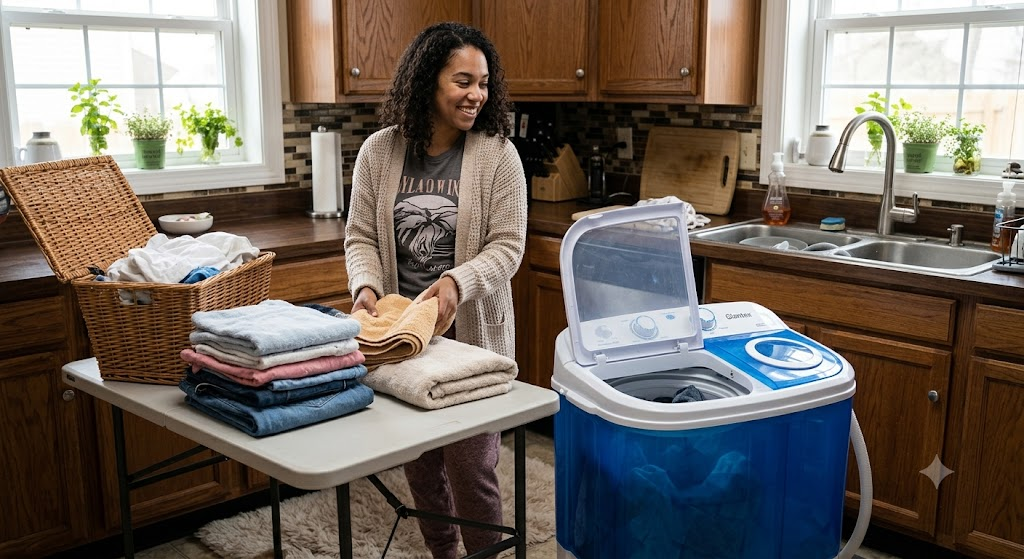
When Is a Portable Washing Machine Worth It?
| Situation | Is a Portable Washer Worth Considering? | Why |
|---|---|---|
| You visit a laundromat several times a month | Usually worth considering | You can move regular clothing loads home and reduce laundromat trips. |
| You live in an apartment without washer hookups | Often useful | A portable model can work from a sink or other suitable water source. |
| You wash small loads frequently | Useful | You do not need to wait until you have enough laundry for a full-size machine. |
| You live alone | Often practical | Smaller capacity is less of a limitation when laundry volume is low. |
| You live in an RV or tiny home | Potentially useful | Size and portability can matter more than full-size capacity. |
| You already have free laundry in your building | Less compelling | The convenience benefit may not justify buying and storing another appliance. |
| You regularly wash comforters and bulky bedding | Usually not enough by itself | Portable washers have capacity and drum-size limitations. |
| You have a family producing several large loads every week | Depends on capacity | A larger portable model may work, but a full-size washer may be more practical. |
When Is a Portable Washing Machine Not Worth It?
This section is important because the search query is “are they worth it?”, not “what are the benefits?”
A portable washer may not be the right choice if:
- You already have convenient, inexpensive access to a full-size washer.
- Your household produces several large loads every week.
- You regularly wash comforters, rugs or other bulky items.
- You have nowhere suitable to drain wastewater.
- Connecting and disconnecting the machine after every use would become annoying.
- You have very limited space even for a compact appliance.
- You expect a portable washer to completely replace both a washer and dryer.
That gives the article credibility instead of sounding like a sales pitch.
Portable Washer vs Laundromat: When Does It Pay for Itself?
| Cost Factor | Typical Range |
| Average laundromat trip | $8 to $15 (wash and dry, including detergent and travel time) |
| Trips per month | 4 to 8, depending on household size |
| Monthly laundromat spend | $32 to $120 |
| Average portable washer price | $120 to $350 (one-time cost) |
| Estimated electricity cost per load | $0.10 to $0.30 |
| Estimated water cost per load | Roughly $0.05 to $0.15 |
When Can a Portable Washer Pay for Itself?
The payback period depends on how much you currently spend at the laundromat, how many loads a portable washer replaces, and the machine’s purchase and running costs. For example, someone spending $60 or more per month at a laundromat could potentially recover the cost of a $350 portable washer over several months, but the actual break-even point will vary from household to household.
For a detailed comparison that considers purchase price, electricity, water, laundromat costs, transportation, and time savings, see our guide to portable washing machine vs. laundromat costs.
The Time Savings Can Matter Too
Cost is only part of the calculation. A typical laundromat trip can involve driving, waiting for machines, transferring loads, and folding clothes, which can turn laundry into a significant time commitment. If you do this several times a month, those trips can add up.
With a portable washer, you can start a load at home while cooking, working, or relaxing. You still need to load and unload the machine and handle drying, but you may spend less time traveling to and waiting at a laundromat.
For some households, that convenience may be an important part of whether a portable washing machine is worth the investmen.
How Much Laundry Can a Portable Washer Actually Handle?
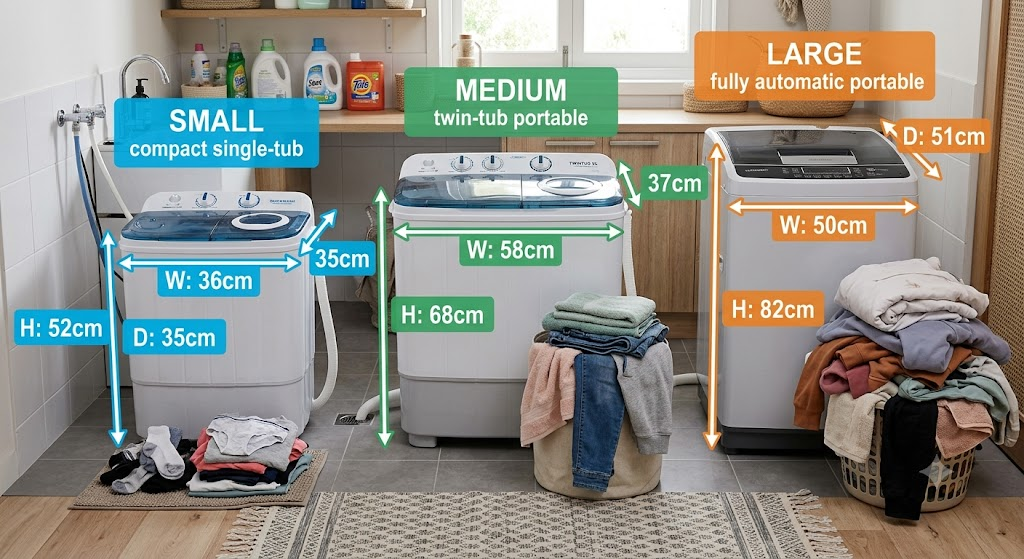
Portable washing machines come in several sizes, so the right capacity depends on how many people you are washing for and what type of clothes you normally wash. A small portable washer can work well for one person, while couples and small families may need a larger model to avoid running multiple loads.
| Household | Practical Portable Washer Capacity | What It Can Handle |
|---|---|---|
| One person | 0.8–1.3 cu. ft. | Everyday clothes, underwear, socks, shirts and a small number of towels |
| Couple | 1.3–1.6 cu. ft. | Regular clothing loads, towels and other lightweight laundry |
| Small family | 1.6–2.0+ cu. ft. | Larger clothing loads, towels and more frequent household laundry |
These are practical starting points rather than strict rules. Capacity in cubic feet and advertised weight capacity are not directly interchangeable, so do not choose a washer based only on the largest number shown in the product listing.
Why Towels and Jeans Change the Equation
A washer that handles a certain amount of lightweight clothing may handle considerably less when the load contains thick towels, jeans, sweatshirts or other heavy fabrics. These items take up more space and absorb more water, so filling the tub to its advertised maximum is not always practical.
For better cleaning, leave enough room for clothes to move freely through the water rather than packing the tub tightly.
What About Comforters and Bulky Bedding?
This is where portable washers have a clear limitation. Comforters, large blankets and bulky bedding can require much more space than their dry weight suggests. Even a relatively large portable washer may not be suitable for a bulky comforter.
If you regularly wash bedding, check the manufacturer’s recommendations before buying rather than assuming a higher capacity number means the machine can handle everything.
Don’t Simply Buy the Biggest Portable Washer
A larger washer is not automatically the better choice. It may take up more floor space, weigh more, cost more and be harder to store.
Instead, choose a capacity that matches your normal weekly laundry volume. If you live alone and mostly wash clothes, a compact model may be enough. If you share a home with a partner or children, spending more on additional capacity may reduce the number of loads you need to run.
For a more detailed breakdown of portable washer capacity, pounds vs. cubic feet, and how to choose the right size for your household, see our Portable Washing Machine Capacity Guide.
Portable Washing Machine vs Full-Size Washer
| Feature | Portable Washer | Full-Size Washer |
| Capacity | Small | Large |
| Cleaning Power | Good | Excellent |
| Price | Lower | Higher |
| Portability | Excellent | None |
| Water Use | Lower | Higher |
| Installation | Easy | Permanent |
If you’re deciding between both options, this comparison of portable and regular washers can help clarify which one fits your lifestyle.
The Hidden Downsides: Setup, Drainage and Storage
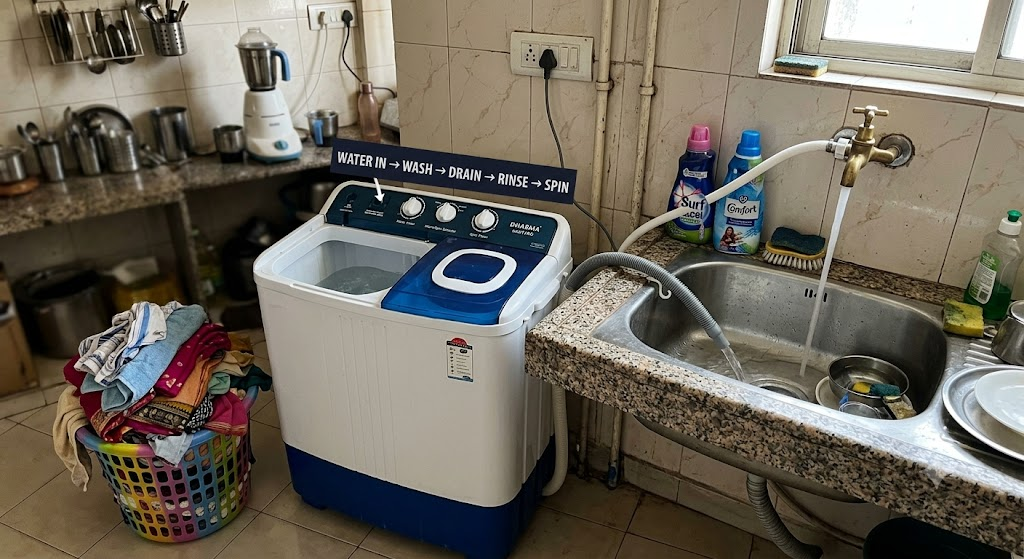
Portable washing machines can make laundry easier, but they are not as straightforward as using a built-in washer. Before buying one, it is worth understanding the setup, space requirements, manual work, and capacity limitations you may deal with in everyday use.
| Issue | What It Means in Real Use |
|---|---|
| Water connection | You may need to connect an inlet hose to a suitable faucet or manually add water, depending on the model. |
| Drainage | The washer needs a safe place to discharge wastewater, such as a sink, bathtub, or suitable drain. |
| Storage | If you cannot leave the washer in place, you may need to move and store it after each laundry session. |
| Twin-tub operation | With a twin-tub model, you usually need to transfer clothes manually from the wash tub to the spin tub. |
| Drying | A spin cycle removes excess water but does not completely dry clothes, so you will still need a drying area or clothes dryer. |
| Noise and vibration | Portable washers can vibrate during the spin cycle, particularly when the load is uneven or the machine is not positioned properly. |
| Small capacity | Smaller tubs mean you may need to run several loads instead of washing everything at once in a full-size machine. |
| Setup time | Models that require manual filling, draining, or hose connections can take more hands-on effort than a conventional washer. |
These limitations do not necessarily make a portable washer a bad choice. They simply mean you should match the machine to your space, laundry volume, and willingness to handle some manual setup. If you have a convenient water source, suitable drainage, and mostly wash small or medium loads, the trade-offs may be manageable. If you want large loads with minimal involvement, a full-size or fully automatic washer may be a better fit.
Want to estimate your running costs? See our guides on how much electricity a portable washer uses and how much water a portable washer uses to compare energy and water consumption.
How Well Do Portable Washing Machines Actually Clean?
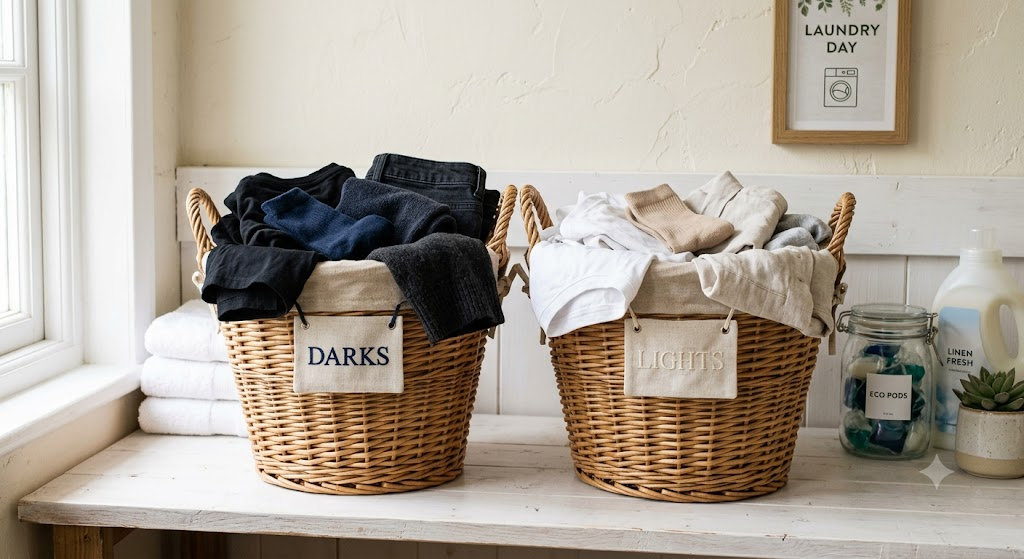
Portable washers can clean everyday clothes and small household loads surprisingly well when used correctly.
They are a good fit for regular clothing, towels, workout clothes, and baby clothes. However, bulky bedding, heavy blankets, and heavily soiled workwear can be difficult because of their smaller capacity.
The biggest mistake is overloading the tub. Smaller loads usually wash more effectively and give clothes enough room to move freely.
Which Type of Portable Washing Machine Is Worth Buying?
| Type | Best For | Main Trade-Off |
|---|---|---|
| Fully Automatic Portable Washer | People who want convenience | Usually costs more |
| Twin-Tub Washer | Buyers wanting washing + spin drying at a lower price | Requires manual transfer |
| Mini/Countertop Washer | Very small loads and extremely limited space | Limited capacity |
| Large Portable Washer | Couples and small families | Takes more space and is less portable |
How Noisy Are Portable Washing Machines?
Portable washers are not silent, but they are generally manageable in an apartment.
- Wash cycle: Usually produces a low humming sound.
- Spin cycle: Noticeably louder, especially with an unbalanced load.
- Reduce vibration: Place the washer on a thick rubber or yoga mat.
- Apartment tip: Run the machine during daytime to avoid disturbing neighbors.
- Stability: Wider bases and suction-cup feet can help reduce movement.
How to Set Up a Portable Washing Machine
If you’ve never used one before, the setup process can sound intimidating. In reality, most people get the hang of it in their first one or two loads. Here’s the basic process for a typical fully automatic portable washer:
- Roll the machine next to your sink or bathtub
- Attach the included faucet adapter to your tap (most kitchen and bathroom faucets are compatible)
- Connect the inlet hose to the adapter and the drain hose to your sink, tub, or a bucket
- Plug the machine into a standard outlet
- Add detergent, load your clothes, and select your cycle
- When finished, disconnect the hoses and roll the machine back into storage
One tip that doesn’t get mentioned enough: use a low-sudsing, HE (high efficiency) detergent. Regular detergent creates way too many suds for these smaller machines and can cause overflow or drainage issues.
Which Type of Portable Washing Machine Is Worth Buying?
| Type | Best For | Main Trade-Off |
|---|---|---|
| Fully Automatic Portable Washer | People who want convenience | Usually costs more |
| Twin-Tub Washer | Buyers wanting washing + spin drying at a lower price | Requires manual transfer |
| Mini/Countertop Washer | Very small loads and extremely limited space | Limited capacity |
| Large Portable Washer | Couples and small families | Takes more space and is less portable |
Who Should Buy a Portable Washing Machine?
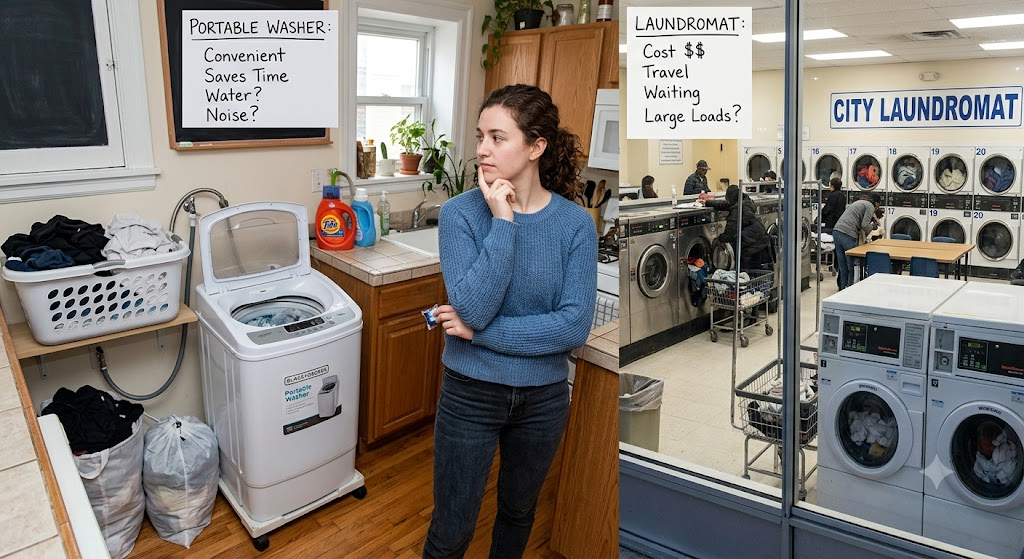
A portable washing machine makes the most sense when space, laundry access, or cost makes a full-size washer impractical. Consider one if you:
- Live in an apartment, dorm, RV, or rental without a traditional washer hookup
- Spend regularly on laundromat laundry and want to handle more loads at home
- Wash small loads frequently instead of waiting for enough clothes to fill a full-size washer
- Need to wash baby clothes, pet items, or workout clothes more often
- Have limited space and need a washer that can be stored when not in use
- Want a secondary washer for small or urgent loads while using a full-size machine for larger laundry
Who Should Skip a Portable Washing Machine?
A portable washer may not be the right fit if you:
- Have a household of four or more people with several large loads each week
- Regularly wash bulky items such as comforters, rugs, sleeping bags, or large blankets
- Already have convenient and inexpensive access to shared or in-unit laundry
- Do not have a practical water source or drainage location
- Do not want to deal with manual setup, moving the machine, or transferring clothes between tubs
- Need to wash large loads in one cycle rather than running multiple smaller loads
FAQs:
Q. Are Portable Washing Machines Worth It for Small Apartments?
Yes. A portable washing machine can be a practical option for a small apartment, especially if you do not have in-unit laundry, regularly use a laundromat, or have limited space. The main trade-offs are smaller loads, storage, drainage, and the amount of setup required.
Q. Do Portable Washing Machines Actually Clean Clothes Well?
Yes. A good portable washer can clean everyday clothing, towels, jeans, and other regular laundry effectively when you use the correct load size, detergent, and cycle. Very heavily soiled items may require additional treatment or a longer wash cycle.
Q. How Long Do Portable Washing Machines Last?
Lifespan varies by model, construction quality, frequency of use, and maintenance. Following the manufacturer’s load limits, keeping the machine clean, and storing it properly when required can help reduce wear.
Q. Can I Use a Portable Washing Machine Without a Faucet Hookup?
Some portable washers can be filled manually with a bucket or pitcher, while others are designed to connect to a faucet. Manual filling can work for occasional use, but it becomes less convenient if you wash several loads regularly.
Q. Do Portable Washing Machines Need a Drain?
Yes. The wastewater needs somewhere to go after the wash or rinse cycle. Depending on the model, you may be able to drain the machine into a sink, bathtub, or suitable household drain. Make sure the drain hose is secure before starting a cycle.
Q. Can Portable Washing Machines Wash Comforters and Blankets?
It depends on the washer’s capacity and the size and thickness of the item. Some larger portable washers can handle lightweight blankets or sheets, but bulky comforters may be too large. Always check the manufacturer’s recommendations before washing bulky bedding.
Q. Can You Wash Towels in a Portable Washing Machine?
Yes, but towels take up more space and absorb more water than lightweight clothing. Avoid overloading the tub, particularly with several large bath towels. A larger-capacity portable washer is generally more practical if towels are part of your regular laundry.
Q. Are Portable Washing Machines Noisy?
Portable washers can produce noise and vibration during the wash and spin cycles. How noticeable this is depends on the model, load balance, floor surface, and how securely the machine is positioned. An uneven load can make vibration more noticeable.
Q. Do Portable Washing Machines Use a Lot of Electricity?
Generally, portable washers use relatively little electricity compared with many full-size washing machines, but actual consumption varies by model, cycle, load size, and frequency of use. Your total running cost also depends on local electricity rates.
Q. How Much Water Does a Portable Washing Machine Use?
Water consumption varies considerably by washer type, capacity, cycle, and how the machine is filled. Fully automatic models may use different amounts of water than twin-tub or manually filled machines, so check the manufacturer’s specifications when comparing models.
Q. Can You Wash Baby Clothes in a Portable Washing Machine?
Yes. A portable washer can be useful for small baby-clothing loads, especially when you need to wash a few items without running a large full-size machine. Use an appropriate detergent and follow the clothing care labels.
Q. Can a Portable Washing Machine Replace a Full-Size Washer?
For some households, yes, but not for everyone. A portable washer can work as the main washing machine when you mainly wash small or medium loads and do not need to regularly wash bulky items. Larger families or households with frequent heavy laundry may find a full-size washer more practical.
Q. Are Portable Washing Machines Good for RVs?
They can be useful in an RV when space and laundry access are limited. Before buying one, check the available floor space, water connection, drainage arrangement, electrical requirements, and the machine’s weight.
Q. Can You Use Regular Laundry Detergent in a Portable Washing Machine?
Usually, but you should follow the manufacturer’s detergent recommendations. Using too much detergent can create excessive suds and make rinsing more difficult, particularly in smaller washers.
Q. Do Portable Washing Machines Need to Be Cleaned?
Yes. Regular cleaning helps prevent detergent residue, odors, and buildup inside the washer. Follow the manufacturer’s instructions for cleaning the tub, hoses, lint areas, and other components.
Final Verdict: Are Portable Washing Machines Worth It?
Final Verdict: Are Portable Washing Machines Worth It?
Portable washing machines can make sense when you lack convenient laundry access and mainly wash small to medium loads. They become more attractive if regular laundromat trips are costly or inconvenient.
However, they are less practical for large families, bulky bedding, or frequent heavy loads. Before buying, also consider where you will store the machine and how easily you can connect the water supply and drain.
Ultimately, whether a portable washer is worth it depends on your laundry needs, available space, setup, and the cost and convenience of your current laundry option.

Sourabh researches and writes about home appliances, kitchen gadgets, and common appliance problems to help readers make smarter buying decisions. He specializes in Portable washing machines and appliance troubleshooting guides.
At compactHomeHub, Sourabh focuses on creating easy-to-understand content that simplifies technical appliance issues into practical solutions. His goal is to help users save time, avoid costly mistakes, and choose the right appliances with confidence.