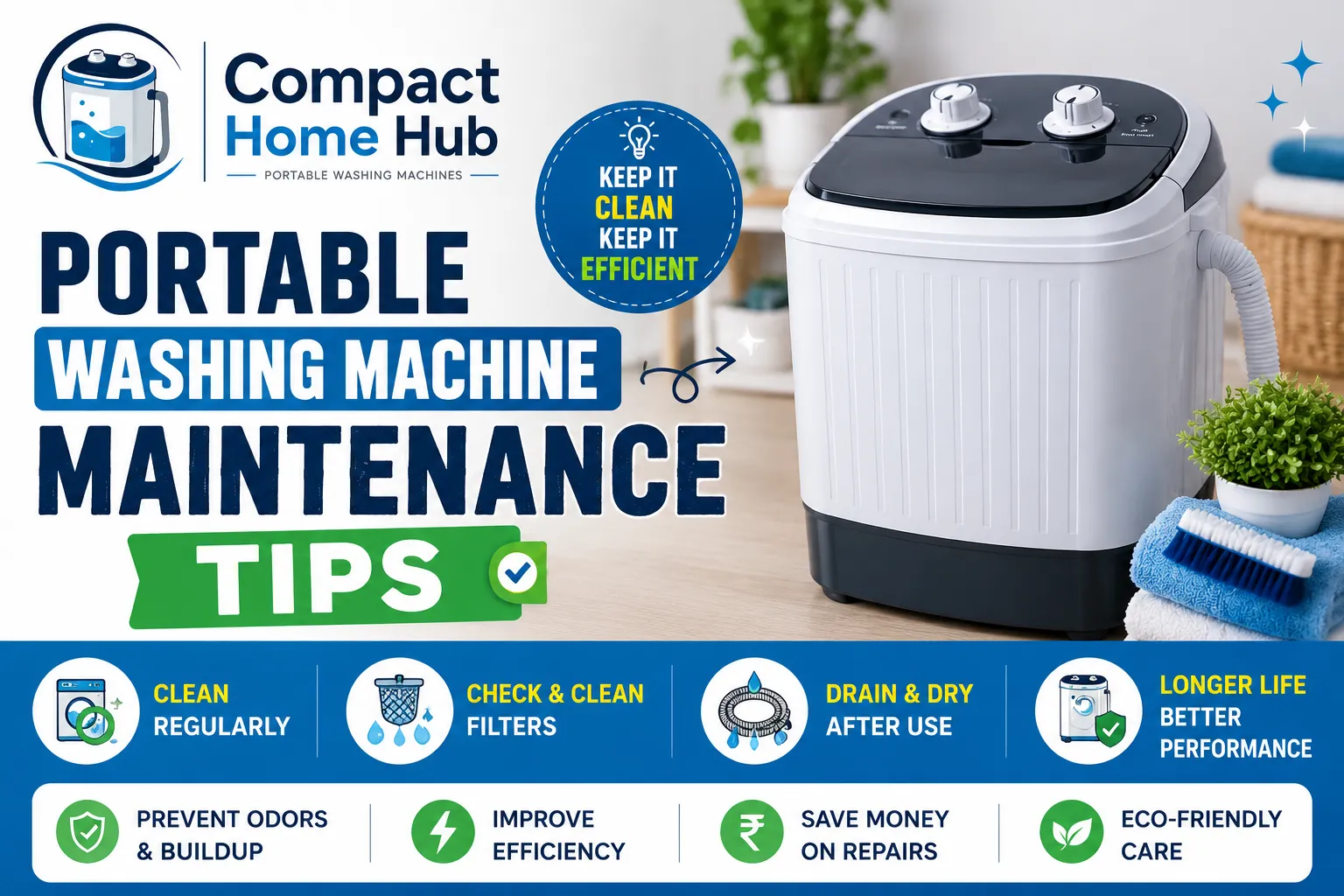
Portable washing machines are easy to maintain if you follow a few simple habits. Clean the drum every month, leave the lid open after every wash, inspect hoses regularly, avoid overloading, and use the correct amount of detergent. Most maintenance tasks cost less than $20 and can be done at home, while professional repairs usually cost between $80 and $300, depending on the problem. Proper maintenance can help your portable washer last 8 to 12 years and reduce expensive repairs.
Many people don’t think about maintenance until their washer starts smelling bad, leaking water, making strange noises, or leaving clothes dirty. The good news is that most of these problems are completely preventable.
In this guide, you’ll learn practical portable washing machine maintenance tips, understand which repairs you can safely do yourself, when it’s worth hiring a professional, how much repairs typically cost in the USA, and expert maintenance advice that goes beyond what most online guides cover.
Choosing a reliable model is only the beginning. If you want a machine that is easier to maintain and suited to your needs, see our recommendations for the best portable washing machines.
Why Portable Washer Maintenance Matters
Taking care of your portable washer offers several benefits.
- Extends machine life by several years
- Prevents mold and unpleasant odors
- Improves washing performance
- Saves electricity and water
- Reduces repair costs
- Protects your clothes from detergent residue
Example
Sarah from Chicago cleaned her portable washer once every month and replaced the inlet hose after five years. Her washer lasted over 10 years without major repairs. Her neighbor never cleaned the drum, and mold buildup damaged the machine within four years.
If you’re still shopping for a machine, check out our Portable Washing Machine Buyer’s Guide to learn which features improve reliability and reduce maintenance over time.
Daily Portable Washing Machine Maintenance Tips
These habits only take a few minutes. Understanding the internal components makes maintenance much easier. Learn more in our How Does a Portable Washing Machine Work? guide.
1. Leave the Lid Open
After every wash, leave the lid open for several hours.
Benefits:
- Prevents mildew
- Removes moisture
- Eliminates bad smells
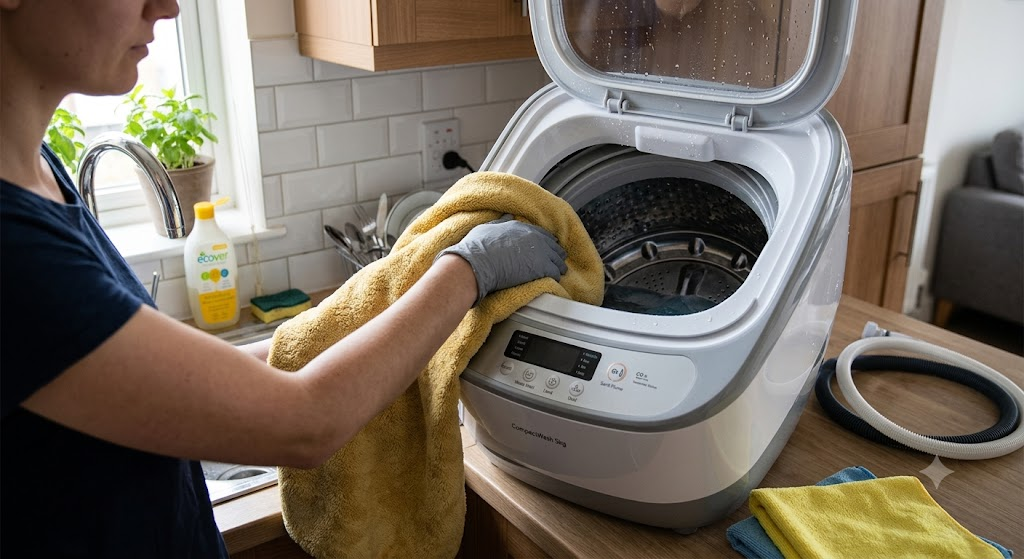
2. Wipe the Drum
Use a soft microfiber cloth to remove moisture inside the tub.
Don’t forget:
- Drum walls
- Rubber gasket
- Lid
- Detergent compartment
3. Drain All Water
Always empty remaining water before storing the machine. Standing water encourages:
- Mold
- Bacteria
- Rust
- Odors
Weekly Portable Washer Maintenance Tips
1. Clean the Lint Filter
Portable washers often have removable lint filters.
Steps:
- Remove filter
- Wash with warm water
- Remove lint
- Reinstall securely
A clogged filter reduces washing performance.
2. Check Water Hoses
Look for:
- Cracks
- Bulges
- Loose fittings
- Small leaks
Replacing a $15 hose is much cheaper than repairing water damage.
3. Clean the Exterior
Wipe the control panel and body using mild soap and water.
Avoid:
- Bleach
- Abrasive cleaners
- Steel wool
Monthly Portable Washing Machine Maintenance Tips
Monthly maintenance keeps the machine running like new.
1. Deep Clean the Drum
Run an empty hot-water cycle.
Add one of these:
- 2 cups white vinegar
- Washing machine cleaner tablet
- Manufacturer-approved cleaner
After the cycle:
Run another rinse cycle using plain water.
This removes:
- Soap residue
- Mineral deposits
- Mold
- Bacteria
Regular cleaning helps your washer stay water efficient. See how much water these machines actually use in our complete guide.
2. Clean the Faucet Adapter
Portable washers use faucet adapters that collect mineral buildup. Remove the adapter and soak it in vinegar for 30 minutes. This improves water flow.
3. Inspect the Drain Hose
Make sure the hose:
- Isn’t kinked
- Isn’t clogged
- Drains freely
Slow drainage may indicate partial blockage.
Every Six Months
These maintenance tasks are often overlooked.
1. Tighten Loose Connections
Check:
- Water inlet
- Drain hose
- Faucet adapter
- Wheels (if applicable)
Loose fittings eventually cause leaks.
2. Inspect Power Cord
Replace immediately if you notice:
- Frayed wires
- Burn marks
- Loose plug
Electrical problems should never be ignored.
3. Check Machine Level
Portable washers should sit perfectly level. An uneven machine causes:
- Excess vibration
- Walking during spin cycle
- Premature motor wear
Common Portable Washer Problems and DIY Fixes
1. Washer Smells Bad
Possible causes:
- Mold
- Standing water
- Dirty drum
DIY Solution
- Run vinegar cleaning cycle
- Dry interior
- Leave lid open
Estimated Cost: $5–10
2. Washer Doesn’t Drain
Possible causes:
- Clogged drain hose
- Blocked filter
DIY Solution
- Remove blockage
- Clean hose
Estimated Cost: Free
3. Washer Vibrates Too Much
Possible causes:
- Uneven floor
- Unbalanced load
- Machine overloaded
DIY Solution
- Redistribute clothes
- Adjust feet
Estimated Cost: Free
4. Washer Doesn’t Fill
Possible causes:
- Blocked faucet adapter
- Low water pressure
DIY Solution
- Clean adapter
- Check faucet
Estimated Cost: Free
5. Washer Leaves Soap on Clothes
Possible causes:
- Too much detergent
- Cold water
- Overloading
DIY Solution
- Reduce detergent
- Wash smaller loads
DIY Maintenance Checklist
You can safely do these jobs yourself.
✔ Clean drum
✔ Clean lint filter
✔ Clean faucet adapter
✔ Wipe gasket
✔ Inspect hoses
✔ Check power cord
✔ Level machine
✔ Remove drain blockage
These tasks require minimal tools.
Repairs Best Left to Professionals
Some repairs involve electrical parts or specialized tools.
Hire a professional for:
- Motor replacement
- Transmission repair
- Drain pump replacement
- Control board repair
- Wiring issues
- Water inlet valve replacement
- Bearing replacement
Attempting these repairs without experience may void the warranty.
DIY vs Professional Repair Comparison
| Maintenance Task | DIY | Professional Recommended |
|---|---|---|
| Drum cleaning | Yes | No |
| Hose replacement | Yes | No |
| Lint filter cleaning | Yes | No |
| Faucet adapter cleaning | Yes | No |
| Drain hose cleaning | Yes | No |
| Motor repair | No | Yes |
| Electrical repair | No | Yes |
| Control board repair | No | Yes |
| Bearing replacement | No | Yes |
Wondering if repairing your portable washer is still worth it? Compare the long-term costs of owning a portable washer versus using a laundromat.
USA Portable Washer Repair Cost Guide
Average repair prices vary by location.
| Repair | Average Cost (USA) |
|---|---|
| Diagnostic visit | $70–120 |
| Drain pump replacement | $120–220 |
| Water inlet valve | $90–180 |
| Hose replacement | $20–50 |
| Faucet adapter replacement | $10–25 |
| Belt replacement | $90–160 |
| Motor replacement | $180–350 |
| Control board repair | $180–400 |
| Full maintenance service | $90–180 |
Prices are averages and may vary depending on brand and city.
Portable Washer Installation Cost Guide
Most portable washing machines are designed for DIY installation.
DIY Installation
Typical cost: $0–25
You may only need:
- Faucet adapter
- Thread seal tape
- Adjustable wrench
Professional Installation
Typical cost: $80–200
Recommended when:
- Plumbing modifications are needed
- Special faucet connections are required
- Water supply needs upgrading
If replacing your current machine makes more sense than repairing it, explore our expert calculation on Portable Washer Installation Cost.
Maintenance Schedule
| Frequency | Task |
|---|---|
| After every wash | Dry drum and leave lid open |
| Weekly | Clean lint filter |
| Monthly | Deep clean drum |
| Monthly | Clean faucet adapter |
| Every 6 months | Inspect hoses |
| Every 6 months | Check electrical cord |
| Yearly | Replace worn hoses if needed |
Mistakes That Shorten Portable Washer Life
Many owners accidentally damage their machines.
Using Too Much Detergent
Portable washers require far less detergent.
Too much soap causes:
- Residue
- Mold
- Poor rinsing
Overloading
Small washers aren’t designed for oversized loads.
Instead of saving time, overloading:
- Stresses the motor
- Reduces cleaning quality
- Increases vibration
Ignoring Small Leaks
A tiny drip today can become major water damage next month.
Always investigate leaks immediately.
Storing While Wet
Never store the washer with water inside.
Pro Tips Most Maintenance Guides Don’t Mention
These practical tips are often missing from competitor articles.
- Use HE Detergent Only: High-efficiency detergent produces fewer suds and protects the pump.
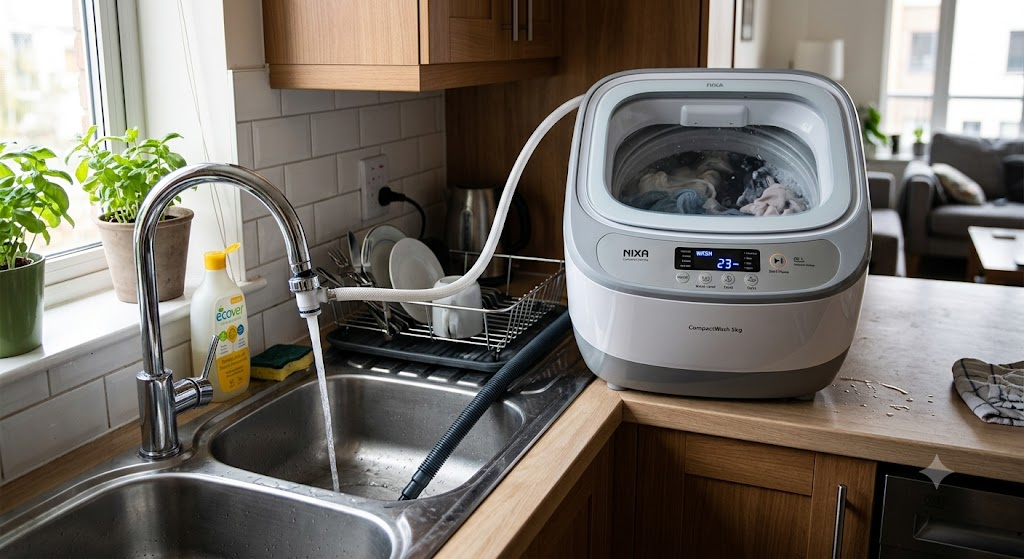
- Flush the Drain Hose Monthly: Run clean water through the drain hose using a faucet. This removes detergent buildup before it causes clogs.
- Replace Rubber Washers Every Two Years: The inexpensive rubber washers inside faucet adapters wear out over time.
- Vacuum the Bottom Vents: Dust can block ventilation around the motor.
- Keep the Machine Away From Direct Sunlight: Long-term UV exposure can weaken plastic parts and hoses.
- Store in a Climate-Controlled Area: Freezing temperatures may crack internal hoses and pumps.
How Long Should a Portable Washing Machine Last?
Average lifespan depends largely on maintenance.
| Maintenance Level | Expected Lifespan |
|---|---|
| Excellent | 10–12 years |
| Good | 8–10 years |
| Average | 6–8 years |
| Poor | 3–5 years |
Routine care makes a significant difference.
Signs It’s Time to Replace Instead of Repair
Replacement is often the better choice when:
- Repair costs exceed 50% of a new machine’s price.
- The motor has failed after many years of use.
- Replacement parts are no longer available.
- The washer leaks from the tub itself.
- Multiple major components fail within a short period.
For many portable washers priced between $200 and $500, replacing an older machine may be more cost-effective than paying for repeated professional repairs.
Frequently Asked Questions
Q. How often should I clean my portable washing machine?
Deep clean it once a month and wipe the drum dry after every load.
Q. Can I use bleach to clean a portable washer?
Yes, but only occasionally and according to the manufacturer’s instructions. White vinegar or a washing machine cleaner is usually sufficient for routine maintenance.
Q. What is the best detergent for portable washing machines?
HE (High-Efficiency) detergent is the best choice because it creates fewer suds and rinses more easily.
Q. Is professional maintenance necessary every year?
Not usually. If you regularly follow these portable washing machine maintenance tips, professional servicing is only needed when you notice performance issues or mechanical problems.
Q. Why does my portable washer smell even after cleaning?
The odor often comes from trapped moisture in the gasket, drain hose, or lint filter. Clean all these areas and leave the lid open after each wash.
Final Thoughts
Regular maintenance is the easiest and cheapest way to protect your investment in a portable washing machine. Simple habits like drying the drum, cleaning the lint filter, inspecting hoses, and running a monthly cleaning cycle can prevent most common problems before they become expensive repairs.
For basic upkeep, DIY maintenance is the best option because it’s inexpensive, easy, and only takes a few minutes each month. However, when you encounter electrical issues, motor failures, or control board problems, hiring a qualified technician is the safer and more cost-effective choice.
By following these portable washing machine maintenance tips, you’ll enjoy cleaner clothes, fewer breakdowns, lower repair costs, and a machine that continues performing reliably for many years.
Recommended Reading:
- What Is a Portable Washing Machine?
- How Much Electricity Does a Portable Washer Use?
- Portable Washer Installation Guide
- 10 Best Portable Washing Machine for Apartments 2026

Sourabh researches and writes about home appliances, kitchen gadgets, and common appliance problems to help readers make smarter buying decisions. He specializes in Portable washing machines and appliance troubleshooting guides.
At compactHomeHub, Sourabh focuses on creating easy-to-understand content that simplifies technical appliance issues into practical solutions. His goal is to help users save time, avoid costly mistakes, and choose the right appliances with confidence.