
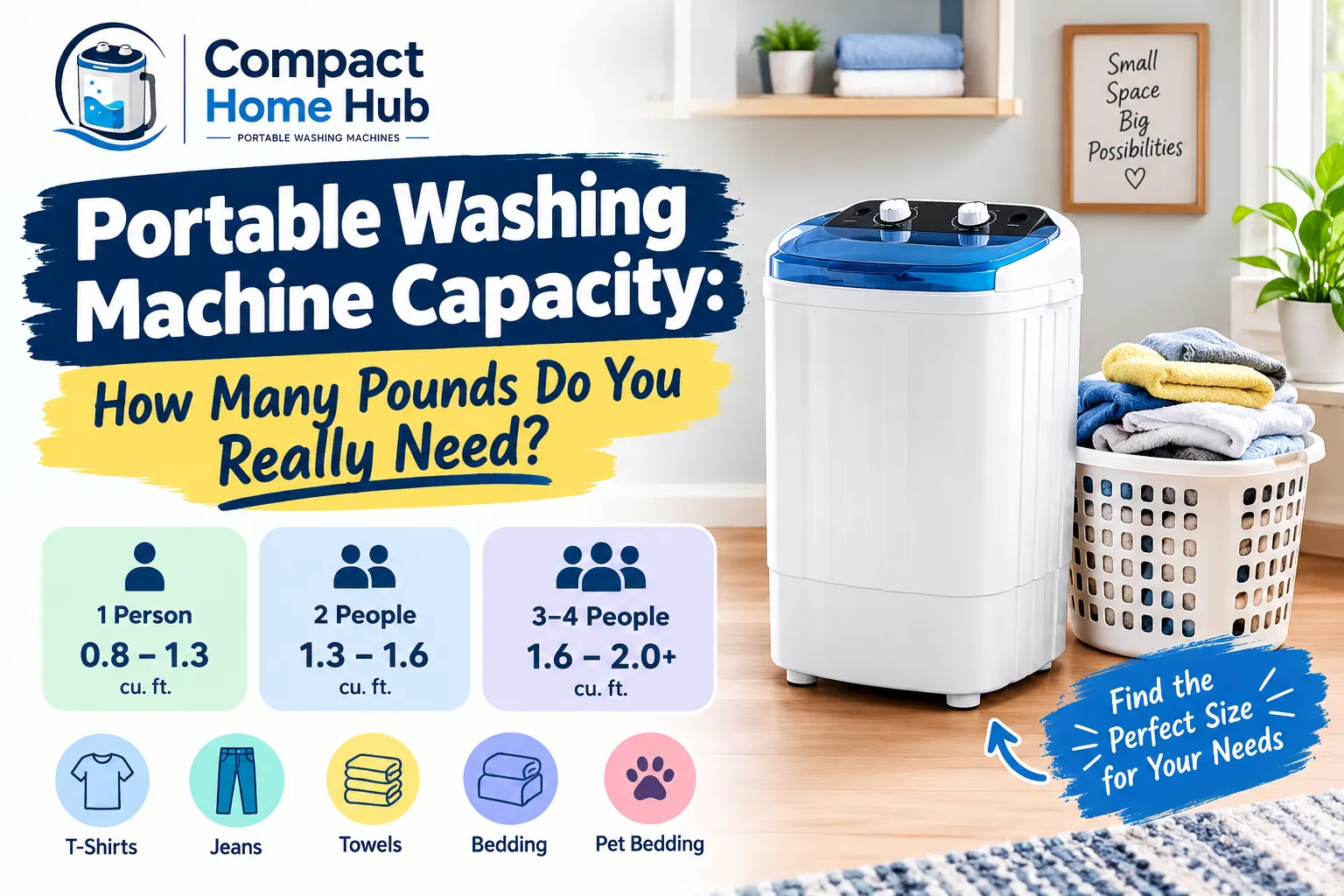
Choosing the right Portable Washing Machine Capacity can be confusing. Models range from around 0.8 to 2.0+ cu. ft., with different pound ratings depending on the machine.
For one person, 0.8–1.3 cu. ft. is usually enough. Couples may prefer 1.3–1.6 cu. ft., while households of three or four should consider 1.6–2.0+ cu. ft.
But bigger isn’t always better. Overloading a portable washer can reduce cleaning performance and cause problems during the spin cycle.
In this guide, we’ll explain portable washer capacity in pounds and cubic feet, show what different sizes can realistically wash, and help you choose the right capacity for your household, apartment, RV, dorm, or tiny home.
How Much Portable Washer Capacity Do You Need?
For most U.S. households:
- 1 person: 0.8–1.3 cu. ft. or roughly 6–10 lb
- 2 people: 1.3–1.6 cu. ft. or roughly 9–12 lb
- 3–4 people: 1.6–2.0+ cu. ft. or roughly 12–16+ lb
- Heavy laundry, towels or frequent bedding: 2.0–3.0 cu. ft. can make sense
- Very small countertop or travel washers: under 1.0 cu. ft. may work for a few garments at a time
But don’t choose based on cubic feet alone.
A 1.6-cu.-ft. washer might be rated for around 11 lb, while another portable machine with a larger drum may advertise a substantially different pound capacity. Current portable-washer listings demonstrate just how inconsistent the relationship can be.
If you want one simple recommendation: for a single adult, start around 1.0–1.3 cu. ft.; for a couple, 1.3–1.6 cu. ft.; and for three or four people, look at 1.6–2.0+ cu. ft.
What Does Portable Washing Machine Capacity Actually Mean?
Portable washing machine capacity tells you how much laundry the washer is designed to handle in one load. You’ll usually see capacity described in one of two ways:
- Cubic feet (cu. ft.) — the approximate volume of the wash tub.
- Pounds (lb.) — the maximum dry-laundry weight specified by the manufacturer.
A portable washer’s cubic-foot measurement describes the available space. The pound rating tells you how much dry laundry the manufacturer says the machine can handle. Those numbers are related, but they aren’t interchangeable.
Think of it like a suitcase. Two suitcases can have similar external dimensions, but one may be shaped more efficiently inside. Likewise, two washers with similar cubic-foot ratings can have different usable laundry capacities because of drum design, wash action, agitator or impeller design, and the manufacturer’s rating method.
That’s why you shouldn’t buy a portable washer simply because its listing claims a large number of pounds.
Pounds vs. Cubic Feet: Which One Should You Trust?
If you’re comparing two portable washers, look at both numbers.
Cubic feet helps answer: “How much physical room is inside?”
Pounds helps answer: “How much dry laundry is the machine designed to wash?”
The pound rating is particularly useful when you’re trying to estimate how many shirts, jeans or towels you can wash. However, the manufacturer’s owner’s manual should take priority over a retailer’s marketing description.
A good example is the BLACK+DECKER BPWM16W. Its current manufacturer information lists a 1.6-cu.-ft. tub and up to 11 lb of laundry, while product documentation also describes the machine as a 1.7-cu.-ft. model.
That small discrepancy is exactly why shoppers should check the model number and manufacturer’s documentation instead of relying on a marketplace headline.
Your washer’s capacity also affects how much detergent you should use, especially in smaller tubs.
Portable Washer Capacity Comparison
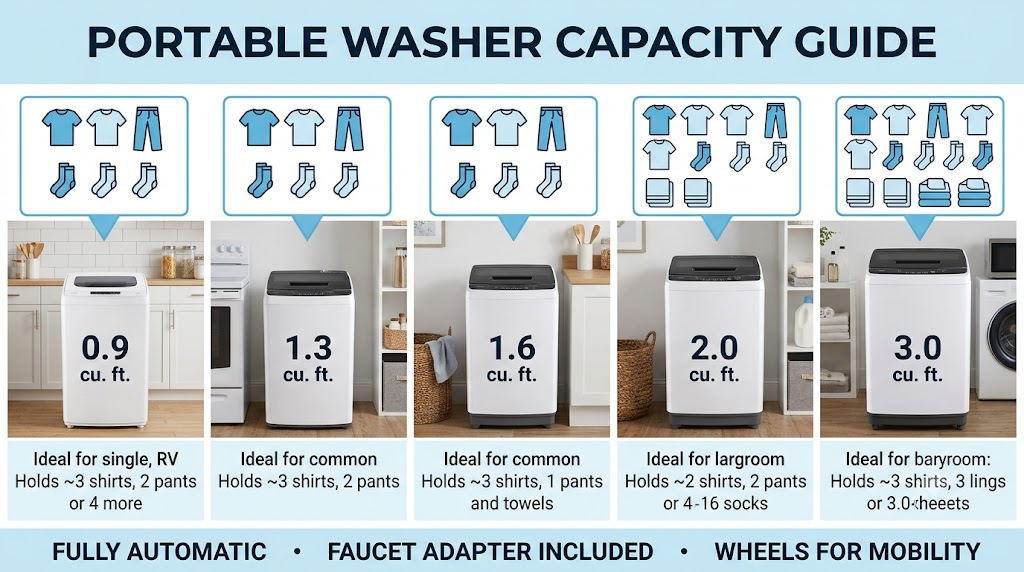
| Portable washer capacity | Approx. laundry range | Best for | Practical load |
|---|---|---|---|
| 0.8–1.0 cu. ft. | ~6–8 lb | One person, dorms, RVs | Small daily loads |
| 1.0–1.3 cu. ft. | ~8–10 lb | Singles, light laundry | Shirts, underwear, light pants |
| 1.3–1.6 cu. ft. | ~9–12 lb | Singles and couples | Normal clothing loads |
| 1.6–2.0 cu. ft. | ~11–16 lb | Couples, small households | Clothing + some towels |
| 2.0–2.5 cu. ft. | ~14–18 lb | Couples, small families | Larger clothing loads |
| 2.5–3.0+ cu. ft. | ~18–26+ lb on some models | Families and heavy laundry | Larger loads and selected bedding |
0.8–1.0 Cu. Ft.: Best for Very Small Loads
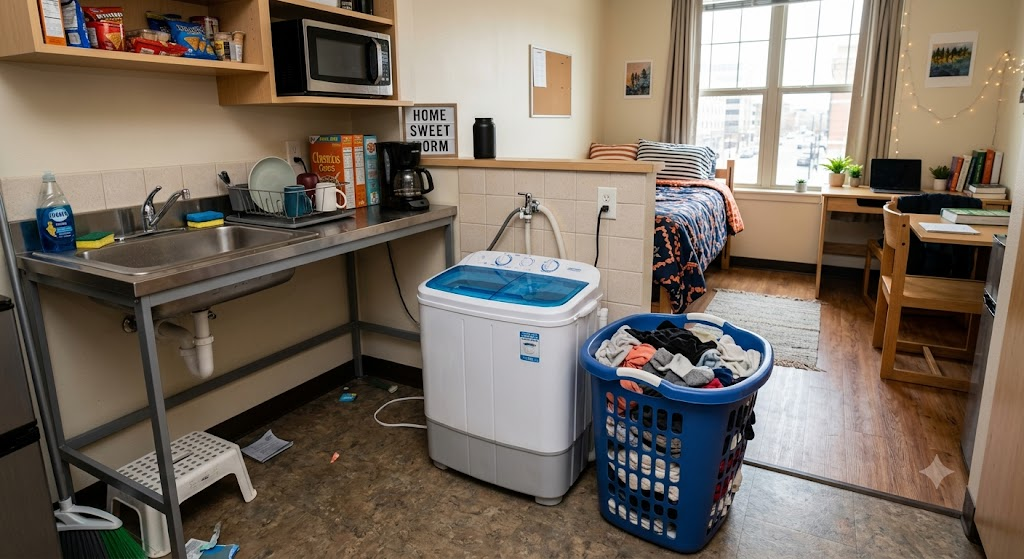
A 0.8–1.0-cu.-ft. portable washer is designed for people who value floor space more than laundry volume.
This size can make sense for:
- College students
- Single adults
- Studio apartment renters
- RV owners
- Van-life travelers
- People washing underwear and everyday clothing frequently
- Vacation rentals with very small laundry requirements
For example, a current 1.0-cu.-ft. Costway portable washer is listed at 8 lb capacity.
What can you wash?
A typical load might include:
- Several T-shirts
- Underwear
- Socks
- A pair of lightweight pants
- One or two small towels
The advantage is obvious: the machine takes up less space. The drawback is equally obvious: you’ll probably do laundry more often.
Buy this size if: space is extremely limited and you don’t mind frequent loads.
Skip this size if: you regularly wash jeans, towels, sheets or two people’s laundry together.
1.0–1.3 Cu. Ft.: The Sweet Spot for Many Singles
This is where portable washer capacity becomes much more practical for one person. A 1.0–1.3-cu.-ft. machine gives you more room without jumping into a much larger appliance.
It’s a sensible choice for:
- One adult
- Weekly laundry
- Apartment renters
- Seniors who want to avoid laundromat trips
- RV owners with regular laundry needs
- Budget-conscious shoppers
A 1-cu.-ft. portable washer is commonly associated with roughly 8 lb of laundry as a broad benchmark, although actual model ratings vary.
Example load
You could potentially wash:
- 6–8 T-shirts
- 1–2 pairs of jeans
- Underwear and socks
The exact combination matters because clothing weight varies dramatically. Eight lightweight summer shirts are very different from eight pairs of heavy denim jeans.
1.3–1.6 Cu. Ft.: Best for Couples and Larger Single-Person Loads
This is one of the most useful portable washer capacity ranges for apartment living. A machine around 1.6–1.7 cu. ft. can provide approximately 11 lb of rated laundry capacity on models such as the BLACK+DECKER BPWM16W. This gives you enough room for ordinary clothing without moving all the way to a full-size washer.
Best for
- Couples
- Single adults who wash once or twice a week
- Small apartments
- Tiny homes
- RV owners with adequate storage
- Parents washing children’s smaller loads
Example
A couple could split laundry into:
Load 1: shirts, underwear and socks
Load 2: jeans, heavier clothing and towels
That is generally more practical than trying to force everything into one overloaded tub.
1.6–2.0 Cu. Ft.: The Practical Upper Range for Many Apartments
Once you reach 1.6–2.0 cu. ft., you’re moving toward the larger end of conventional portable washers. A current BLACK+DECKER 2.0-cu.-ft. model is listed at 15.4 lb capacity.
This size can work well for:
- Couples
- Parents with small children
- Small families
- People who hate doing multiple loads
- Secondary laundry machines
- Apartment renters with enough floor space
The benefit is fewer cycles.
The trade-off is that a larger washer isn’t automatically better. It can be heavier, take up more room and require more water and storage space.
2.0+ Cu. Ft.: When You Need More Laundry per Load
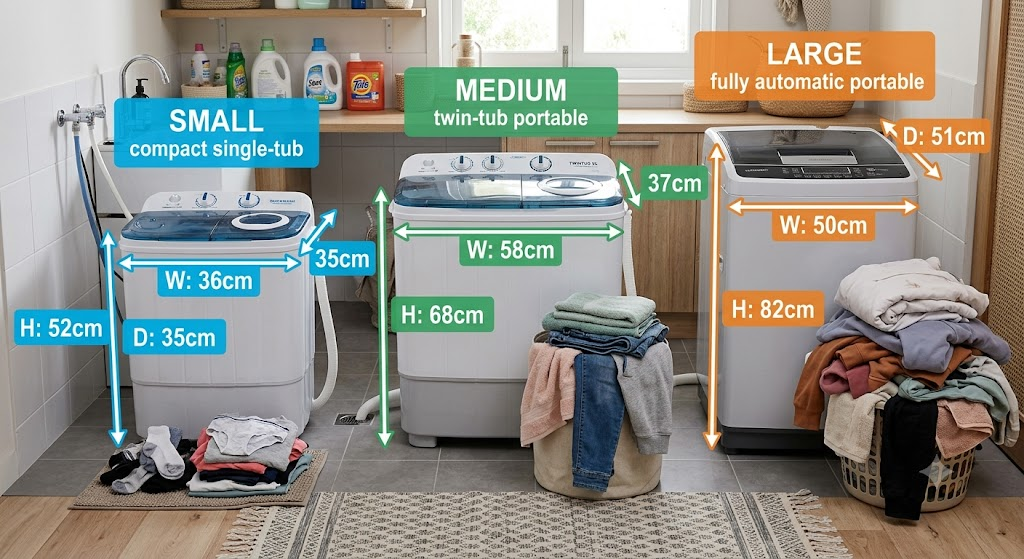
Some portable washers now reach 2.0, 2.4, 2.8 and even 3.0 cu. ft. This is where shoppers need to slow down. A large portable washer can look like a bargain because the listing advertises a huge pound capacity. But you still need to consider:
- Actual wash capacity
- Spin capacity
- Washer dimensions
- Water requirements
- Drain-pump capability
- Faucet compatibility
- Available floor space
- Electrical requirements
- Whether the machine is truly portable for your use case
For example, one current GE portable washer is listed at 2.8 cu. ft. and approximately 14 lb, while other machines in the same approximate volume category advertise higher pound ratings.
That’s why “2.8 cu. ft.” shouldn’t automatically translate in your mind to a particular number of pounds.
How Many Pounds Do You Need?
Here’s the easier way to decide.
| Household Size | Recommended Capacity | Choose This Size If You… | Smaller Capacity Works If… | Consider a Larger Washer If… |
|---|---|---|---|---|
| One Person | 0.8–1.3 cu. ft. | Do laundry once a week; wear heavier clothing; wash jeans frequently; have towels; want fewer loads | Wash every few days; live in a dorm or RV; have extremely limited storage | You regularly wash large or heavy loads |
| Two People | 1.3–1.6 cu. ft. | Have a typical amount of weekly laundry | — | Both people work out, wear uniforms, or generate lots of laundry; consider 1.6–2.0 cu. ft. |
| Three to Four People | 1.6–2.0+ cu. ft. | Need to handle larger weekly laundry loads | — | You regularly wash bath towels, queen bedding, heavy jeans, sweatshirts, children’s clothes, or pet bedding |
At that point, a compact or full-size washer may be more practical.
Whirlpool notes that compact washers generally fall around 1.5–3.5 cu. ft., while standard washers are generally much larger.
How Many T-Shirts Fit in a Portable Washer?
There’s no universal number because T-shirts vary in size and fabric weight.
As a practical starting point:
| Washer size | Approximate T-shirts |
|---|---|
| 0.8–1.0 cu. ft. | 5–8 |
| 1.0–1.3 cu. ft. | 7–10 |
| 1.3–1.6 cu. ft. | 9–13 |
| 1.6–2.0 cu. ft. | 12–16 |
| 2.0+ cu. ft. | 15+ depending on model |
These aren’t manufacturer guarantees. They’re planning estimates. If the shirts are thick cotton, oversized or heavily soiled, reduce the count.
How Many Jeans Fit?
Jeans are much heavier than T-shirts, so the number drops quickly.
As a rough practical guide:
- 0.8–1.0 cu. ft.: 1–2 pairs
- 1.0–1.3 cu. ft.: 2–3 pairs
- 1.3–1.6 cu. ft.: 3–4 pairs
- 1.6–2.0 cu. ft.: 4–5 pairs
- 2.0+ cu. ft.: potentially 5+ pairs depending on the machine’s rated weight
Don’t use the maximum number as your normal load.
Jeans need room to move, and denim becomes significantly heavier once wet.
How Many Towels Fit?
Towels are one of the easiest ways to expose an undersized portable washer. A bath towel can weigh around 1–2 lb dry depending on its size and thickness. Precision Appliance Leasing uses roughly 1–2 lb as a practical benchmark.
That means an 11-lb machine doesn’t necessarily mean “11 lb of anything.” Five thick bath towels could occupy far more physical space than a large pile of lightweight T-shirts.
For towels, prioritize drum volume and free movement, not just the advertised pound number.
How Much Can a Portable Washer Actually Wash?
This is where the advertised capacity and usable capacity separate. A manufacturer may say:
Maximum capacity: 11 lb
That doesn’t mean every 11-lb load is a good idea. A practical working load can be smaller, particularly when you’re washing bulky fabrics.
Precision Appliance Leasing recommends testing loads progressively and notes that a machine rated for 11 lb may be more practical around 8–9 lb in some circumstances.
That isn’t a universal rule for every washer. It’s a useful reminder that rated capacity isn’t the same thing as ideal everyday capacity.
A better rule
For everyday mixed laundry, aim for enough empty space that clothes can move freely. For bulky items, reduce the load further. For towels and denim, judge by both weight and physical volume.
Why You Shouldn’t Fill the Tub Completely
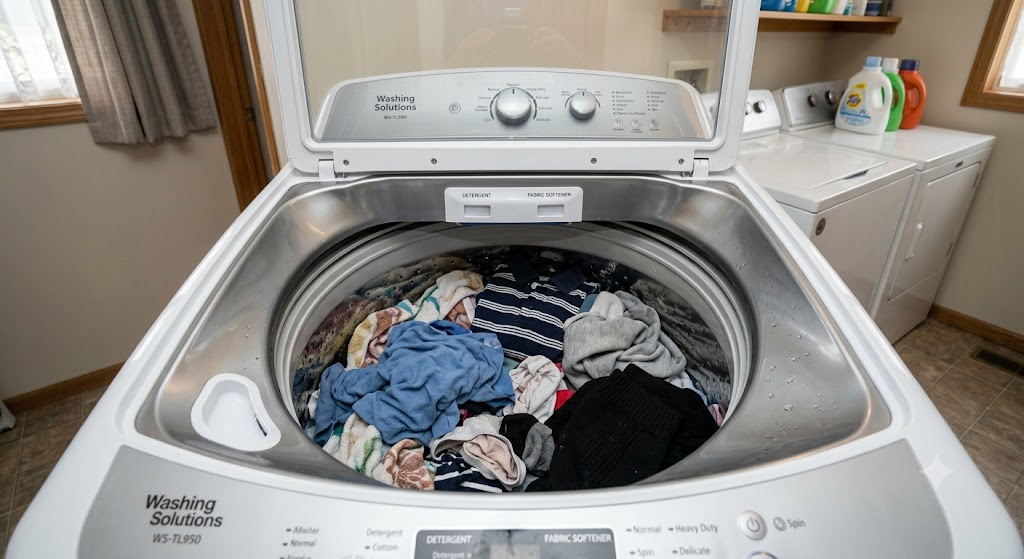
This is one of the biggest mistakes new portable washer owners make. A completely stuffed tub may technically close. That doesn’t mean the machine can wash effectively.
Laundry needs room to:
- Move through the water
- Mix with detergent
- Separate from other garments
- Tumble or circulate
- Drain properly
- Spin without excessive imbalance
An overloaded machine can also produce more vibration.
You may hear:
- Repeated banging
- Clicking
- Unusual motor strain
- Long spin cycles
- Repeated imbalance corrections
The clothes may also come out wetter than expected. A portable washer isn’t a suitcase where “if the lid closes, it fits.”
After selecting the right capacity, learning how to load and operate the machine correctly is just as important.
A Simple Portable Washer Loading Test
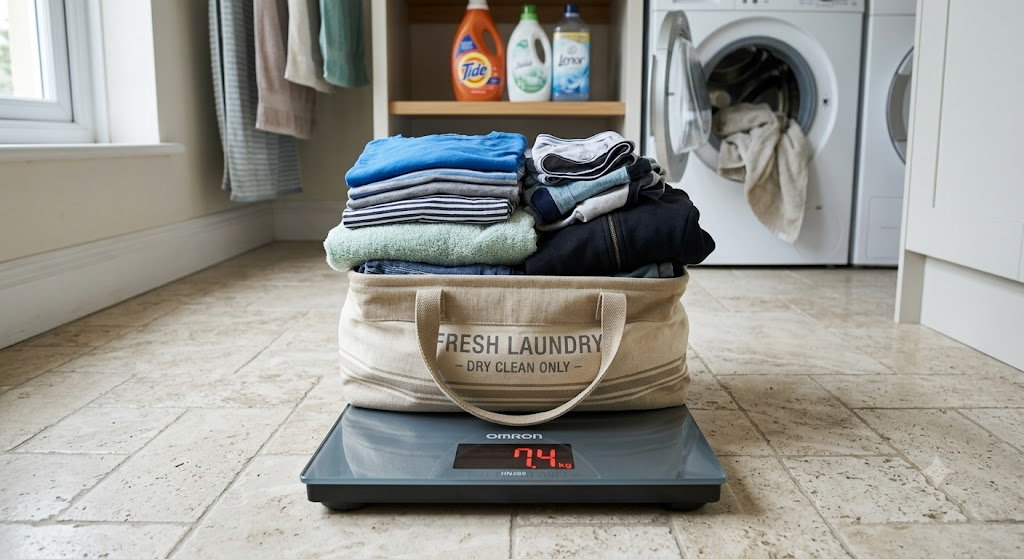
You don’t need laboratory equipment.
Try this:
Step 1: Weigh the dry laundry
Use a bathroom scale. Weigh yourself. Then weigh yourself while holding the laundry. Subtract the first number from the second.
Step 2: Start at 50%
If the machine is rated for 10 lb, begin with about 5 lb.
Step 3: Test around 75–80%
Add enough laundry to reach roughly 7.5–8 lb.
Watch:
- Wash movement
- Vibration
- Noise
- Drainage
- Spin performance
Step 4: Compare with the manufacturer’s maximum
Only approach the rated maximum if the manual permits that load type. This type of incremental test is also recommended in the Precision Appliance Leasing guide.
Stop if you notice:
- Excessive shaking
- Repeated imbalance
- Water spilling
- Very slow drainage
- Clothes coming out unusually wet
- Long or repeated spin attempts
Those signs can indicate that the load is too large for the machine or that installation/drainage is limiting performance.
Portable Washing Machine Capacity vs. Full-Size Washer
The difference becomes obvious when you compare the drums. Whirlpool places standard washers around 3.5–4.4 cu. ft. and large washers at 4.5+ cu. ft., while portable models can be dramatically smaller.
| Feature | Portable washer | Full-size washer |
|---|---|---|
| Typical capacity | ~0.8–3.0+ cu. ft. | ~3.5–5+ cu. ft. |
| Best for | Small loads | Family laundry |
| Floor space | Low | Higher |
| Installation | Often temporary | Usually permanent |
| Mobility | Possible | Usually no |
| Bulky bedding | Limited | Much better |
| Multiple loads | More likely | Less frequent |
| Best for renters | Often yes | Depends on hookups |
The biggest advantage of a portable washer isn’t capacity. It’s accessibility.
You can use one in an apartment without a traditional laundry room, in an RV, in some tiny homes, or as a secondary washer. Whirlpool specifically notes that portable machines can be disconnected and stored when they’re not being used.
Portable Washer Capacity Isn’t the Only Thing That Determines Load Size
A washer’s real-world capacity can be reduced by its installation. Precision Appliance Leasing points out that water pressure, drain height, hose routing and pump limitations can affect practical performance.
For example, a machine may be rated for a large load, but a poorly positioned drain hose can make drainage difficult. That’s why capacity should be considered together with:
Drainage
A portable washer needs somewhere for wastewater to go. A restricted or poorly positioned drain can create problems even with a modest load.
If a correctly sized load still leaves water in the tub, check the drain hose, filter and drain position before assuming the washer is overloaded
Water supply
A slow faucet or restrictive adapter can increase fill time.
Leveling
An unlevel machine can vibrate more during spin.
Faucet compatibility
Many portable washers connect to a kitchen or bathroom faucet with an adapter. If the faucet doesn’t accept the adapter properly, capacity won’t matter because the machine won’t be practical to use.
Electrical setup
Most electric portable washers are designed for standard U.S. household power, but always follow the specific manufacturer’s instructions.
Once you’ve chosen the right capacity, the next step is making sure your faucet, drain and floor setup can support the washer.
Twin-Tub Capacity Requires Extra Caution
Twin-tub portable washers can make capacity comparisons confusing. A listing might advertise:
18 lb washer + 10 lb spinner = 28 lb
That does not mean you can wash 28 lb of clothes at once. The washing tub and spin tub have separate capacities.
For example, a current Auertech-style twin-tub listing can advertise a combined capacity while separating wash and spin capacities.
When comparing a twin tub, always ask:
- What is the wash-tub capacity?
- What is the spin-tub capacity?
- Is the advertised number combined?
- How much laundry can be washed in one cycle?
- How many batches must be transferred to the spinner?
This distinction prevents one of the most misleading portable-washer shopping mistakes.
What Capacity Should RV Owners Choose?
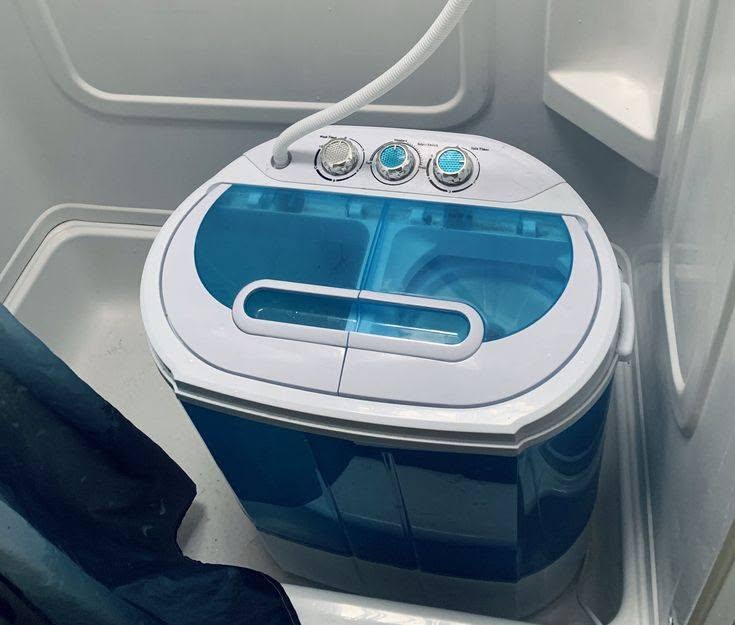
RV owners need to balance laundry capacity against storage and water availability. For one or two people:
1.0–1.6 cu. ft. is often a sensible starting point.
If you’re traveling full-time and washing frequently, a larger portable washer can reduce the number of loads. But there’s a second variable: water. If your RV has limited fresh-water capacity or you’re camping without full hookups, a huge washer may not actually make sense.
For RV use, consider:
- Washer size
- Weight
- Water consumption
- Drainage
- Storage
- Power requirements
- Ability to secure the machine while traveling
What Capacity Should Apartment Renters Choose?
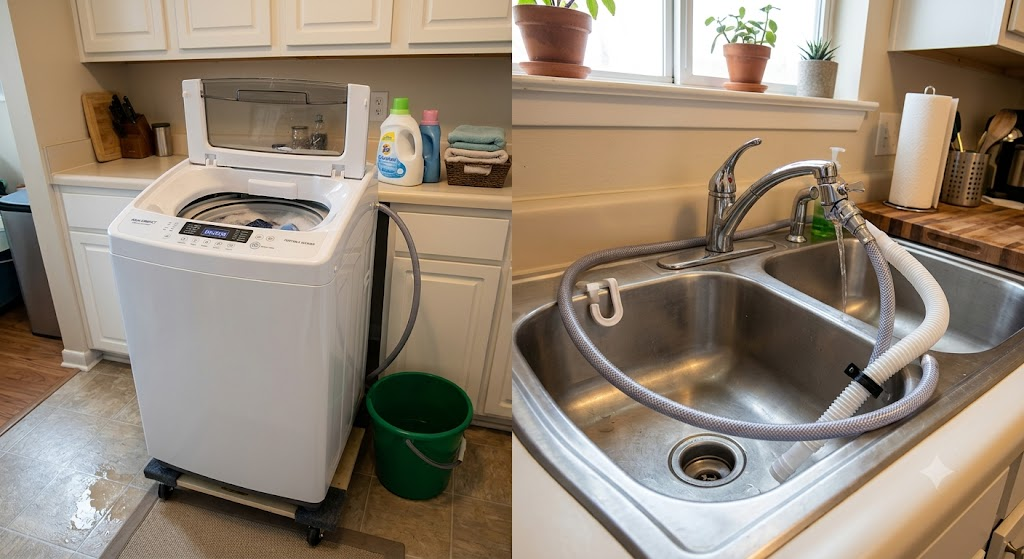
For a single apartment renter, 1.0–1.3 cu. ft. is often enough.
For couples, 1.3–1.6 cu. ft. is a safer starting point.
If you have three or more people, look toward 1.6–2.0+ cu. ft., but don’t automatically assume a portable washer will replace a full-size machine.
If you wash bulky bedding regularly, a laundromat or full-size machine may still be necessary. If your apartment doesn’t have traditional hookups, you can still use a portable washer with several different setup methods.
What Capacity Should College Students Choose?
Students usually don’t need huge capacity. A 0.8–1.2-cu.-ft. washer can make sense when:
- Laundry loads are small
- Storage is limited
- The student washes frequently
- The machine can be legally used in the housing
Before buying, check the dorm or rental rules. A washer that isn’t permitted is a very expensive piece of furniture.
What Capacity Should Seniors Consider?
Capacity isn’t the only concern. A smaller machine can mean:
- Easier loading
- Smaller laundry baskets
- Less bending
- More manageable loads
However, a machine that’s too small can create many additional laundry cycles. For someone who wants fewer loads, 1.3–1.6 cu. ft. may be a better compromise than buying the smallest machine available.
What About Pet Owners?
Pet bedding is deceptively bulky. A washer may handle a large number of shirts but struggle with one thick dog bed. For pet owners, look at the manufacturer’s guidance for bulky items instead of relying only on pound capacity.
A portable washer is usually better suited to:
- Pet towels
- Small washable blankets
- Lightweight bedding
Large pet beds may require a full-size washer or laundromat machine.
Portable Washer Capacity Buying Checklist
Before buying, check these 10 things:
- Rated capacity in pounds
- Tub capacity in cubic feet
- Wash-tub capacity for twin tubs
- Spin-tub capacity
- Machine dimensions
- Available space around the machine
- Faucet compatibility
- Drain requirements
- Warranty
- Manufacturer instructions for bulky loads
Don’t choose based on the biggest number in the product title.
A machine advertised as “28 lb” may actually have a much smaller wash tub if that figure combines washing and spinning capacity.
If budget is your main constraint, you can compare affordable portable washers by capacity, features and intended use.
Capacity Claims You Should Be Careful With
Be skeptical when a product listing:
- Gives pounds without explaining the wash/spin split
- Gives cubic feet without a corresponding load rating
- Calls a spin cycle a “dryer”
- Claims family-sized capacity in an extremely small machine
- Uses different capacity figures across the product title and specifications
- Doesn’t provide a clear owner’s manual
- Provides no manufacturer warranty information
The portable washer market includes a wide range of products, and current comparison data shows significant variation in how manufacturers and retailers present capacity.
FAQ
Q. Is 1.6 cu. ft. a good portable washer size?
Yes. A 1.6-cu.-ft. portable washer is a useful middle ground for singles and couples. For example, BLACK+DECKER rates its 1.6-cu.-ft. portable washer for up to 11 lb of laundry.
Q. How many pounds can a portable washing machine hold?
It depends on the model. Current portable washers range from very small machines rated around 6–8 lb to larger machines advertised at 20 lb or more. Some large portable models are listed at 2.8–3.0 cu. ft., but the corresponding pound ratings vary significantly.
Q. Is 1 cu. ft. enough for one person?
Usually, yes, if you wash small loads regularly. A 1-cu.-ft. portable washer rated around 8 lb can handle everyday clothing for one person, but towels, jeans and bedding will reduce the practical load size.
Q. Can a portable washer wash a queen comforter?
Usually not comfortably. A comforter takes up a lot of physical space even when it doesn’t weigh very much. For bulky bedding, a larger compact or full-size washer is usually safer.
Q. Should I fill my portable washer to the top?
No. Follow the manufacturer’s loading instructions and leave enough room for clothes to move freely. Overloading can reduce cleaning performance and increase vibration and imbalance.
Q. Is cubic feet or pounds more important?
Use both. Cubic feet tells you about available tub volume, while pounds gives you a dry-laundry weight limit. Neither number alone tells the complete story.
Q. What is the best portable washing machine capacity for two people?
For most couples, 1.3–1.6 cu. ft. is a sensible starting point. Move toward 1.6–2.0 cu. ft. if you wash less frequently or regularly handle towels and heavier clothing.
Bottom Line
The best portable washing machine capacity isn’t the biggest capacity you can afford. It’s the smallest machine that comfortably handles the laundry you actually generate.
For most people:
Single person: 0.8–1.3 cu. ft.
Couple: 1.3–1.6 cu. ft.
Three to four people: 1.6–2.0+ cu. ft.
Heavy laundry or bedding: Consider 2.0–3.0+ cu. ft., or move to a compact/full-size washer when portable capacity becomes restrictive. The most important lesson is this: don’t confuse maximum rated capacity with ideal everyday capacity.
A washer that leaves enough room for clothes to move can clean better than a larger washer that’s packed to the lid.
For most apartment renters, RV owners, students and small households, choosing a slightly larger portable washer and loading it conservatively is usually more practical than buying the smallest possible machine and running laundry constantly.

Sourabh researches and writes about home appliances, kitchen gadgets, and common appliance problems to help readers make smarter buying decisions. He specializes in Portable washing machines and appliance troubleshooting guides.
At compactHomeHub, Sourabh focuses on creating easy-to-understand content that simplifies technical appliance issues into practical solutions. His goal is to help users save time, avoid costly mistakes, and choose the right appliances with confidence.
4 thoughts on “Portable Washing Machine Capacity: How Many Pounds Do You Really Need?”