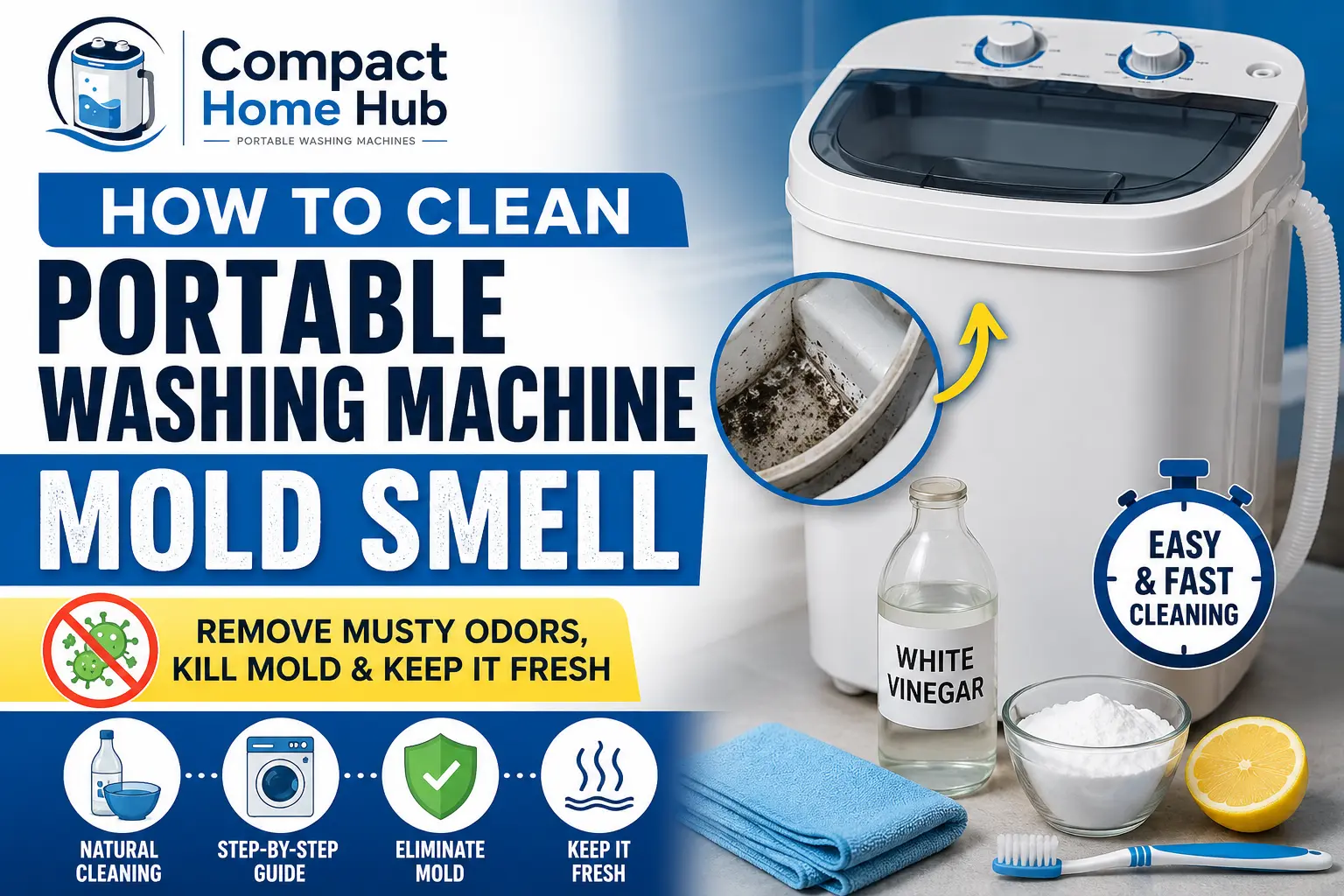
Nobody wants freshly washed clothes that come out smelling worse than when they went in. If your portable washing machine has a musty or moldy odor, don’t worry it’s a common problem, especially if you live in a humid area or keep the lid closed after every wash.
The good news? You can usually get rid of the smell in less than an hour using a few household items and some simple cleaning steps.
Before learning how to remove mold and odors, it’s helpful to understand how a portable washing machine works and why moisture can build up inside the drum and hoses.
How to clean portable washing machine mold smell?
To clean portable washing machine mold smell, empty the washer, wipe the drum and rubber seals, run a hot wash cycle with white vinegar, follow it with a baking soda rinse, clean the lint filter and drain hose, then leave the lid open until the machine is completely dry. Regular monthly cleaning helps prevent mold from coming back.
If the odor remains after one cleaning cycle, deep clean the drain hose, detergent compartment, and water inlet filter because mold often hides in these areas.
Why Does a Portable Washing Machine Smell Like Mold?
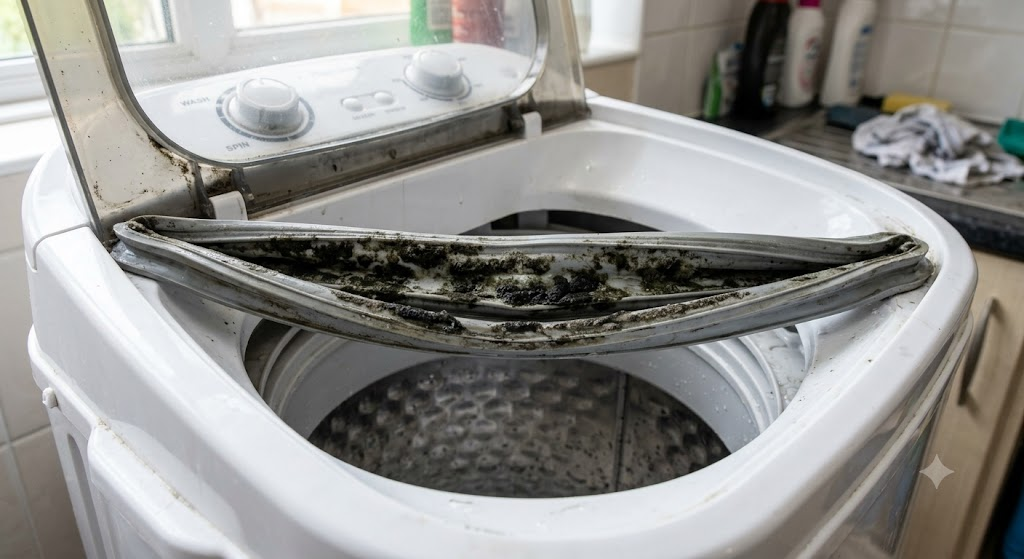
Mold loves three things:
- Moisture
- Warm temperatures
- Poor airflow
Unfortunately, a portable washing machine provides all three if it isn’t cleaned regularly.
Common causes include:
- Leaving wet clothes inside overnight
- Closing the lid immediately after washing
- Using too much detergent
- Fabric softener buildup
- Dirty drain hose
- Clogged lint filter
- Standing water inside the drum
Even if the drum looks clean, mold can grow where you can’t easily see it.
Signs Your Portable Washer Needs Cleaning
Don’t wait until the smell becomes unbearable.
Watch for these warning signs:
- Clothes smell musty after washing
- Black spots around the lid
- Slimy detergent dispenser
- Slow drainage
- Visible mold
- Dirty lint filter
- Unpleasant odor when opening the lid
If you notice even one of these signs, it’s time to clean portable washing machine mold smell before it gets worse.
Understanding how much water a portable washing machine uses can help explain why leftover water sometimes remains inside the drum or drain hose.
Supplies You’ll Need
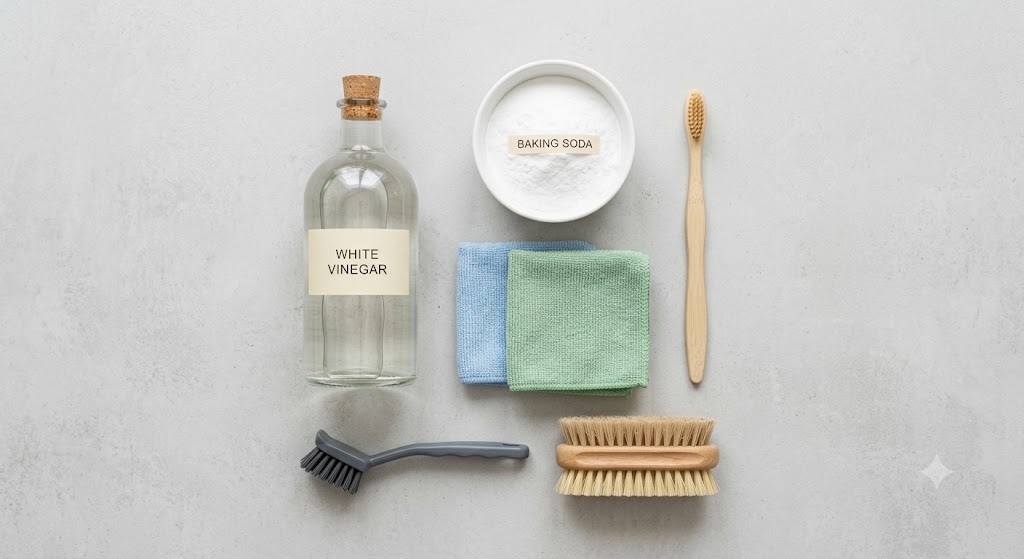
You don’t need expensive cleaners.
Gather these items:
- White vinegar
- Baking soda
- Soft microfiber cloth
- Old toothbrush
- Mild dish soap
- Small cleaning brush
- Warm water
- Rubber gloves
- Spray bottle
- Cotton swabs
Optional:
- Washing machine cleaner tablets
- Hydrogen peroxide
If you regularly connect your washer to a kitchen faucet, make sure you’re using the correct sink adapter for portable washer to avoid leaks during cleaning or normal use.
How to Clean Portable Washing Machine Mold Smell
Step 1: Unplug the Washing Machine
Safety comes first. Turn off the power. Disconnect the water hoses. Move the washer where you can easily reach every side.
Step 2: Clean the Drum
The drum is usually the biggest source of odor. Mix equal parts white vinegar and warm water. Dip a cloth into the solution. Wipe every surface inside the drum. Pay extra attention to:
- Drum holes
- Bottom edges
- Water level openings
Use an old toothbrush for stubborn dirt.
Step 3: Clean the Rubber Lid Seal
Many portable washers have rubber seals around the lid. Lift the folds gently. You’ll probably find:
- Soap residue
- Mold
- Hair
- Lint
Spray vinegar directly onto the seal. Let it sit for 10 minutes. Scrub gently with a toothbrush. Wipe dry.
This simple step removes one of the biggest sources of mold odor.
Step 4: Run a Vinegar Cleaning Cycle
Fill the washer with hot water and add 2 cups of distilled white vinegar and Run the longest wash cycle available.
The vinegar helps:
- Kill mold
- Dissolve soap buildup
- Remove odors
- Break down mineral deposits
Don’t add clothes during this cycle.
Step 5: Run a Baking Soda Cycle
After the vinegar cycle finishes. add ½ cup baking soda, Run another hot cycle.
Baking soda neutralizes remaining odors and freshens the drum. Using vinegar first and baking soda second works much better than mixing them together.
Step 6: Clean the Lint Filter
Many people forget this step. Remove the lint filter. Wash it with warm soapy water. Use a soft brush to remove lint buildup. Dry completely before reinstalling. A dirty filter can trap bacteria and cause unpleasant smells.
Step 7: Clean the Drain Hose
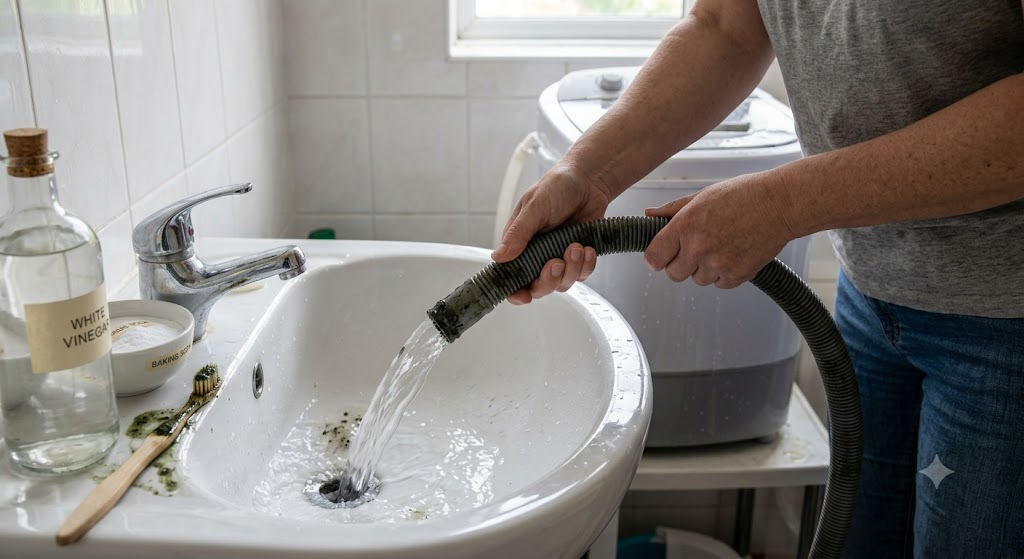
One area many cleaning guides skip is the drain hose. This is where standing water often collects. Disconnect the hose.
Flush warm water through it. If possible, pour a little vinegar through the hose. Use a flexible cleaning brush if needed.
Reconnect securely. Cleaning the drain hose often solves stubborn odors that won’t disappear after drum cleaning.
Step 8: Clean the Water Inlet Filter
Minerals and debris collect inside the inlet screens.
Turn off the water supply.
Remove the hoses.
Pull out the small mesh screens carefully.
Rinse under running water.
Replace them.
Better water flow also improves washing performance.
Step 9: Wipe the Exterior
Don’t forget the outside. Clean:
- Control panel
- Lid
- Handles
- Wheels
- Hose connections
Dust mixed with moisture can also create unpleasant odors.
Step 10: Let Everything Dry
This may be the most important step. Leave:
- Lid open
- Detergent compartment open
- Drain hose extended
Allow air to circulate for several hours. Never close the washer while it’s still damp.
Natural Cleaning vs Commercial Cleaners
Many homeowners ask whether natural cleaners work as well as commercial products. Here’s a quick comparison.
White Vinegar
Benefits:
- Affordable
- Removes odor
- Dissolves soap residue
- Eco-friendly
Best for monthly maintenance.
Baking Soda
Benefits:
- Neutralizes smells
- Gentle cleaning
- Safe for most washers
Best after vinegar cleaning.
Washing Machine Cleaner Tablets
Benefits:
- Convenient
- Removes heavy buildup
- Easy to use
Best every few months for deep cleaning.
Benefits of Cleaning Your Portable Washing Machine Regularly
Cleaning isn’t just about removing odors. It offers several benefits.
- Clothes Smell Fresh: Instead of smelling musty, towels come out clean and fresh every time.
- Better Washing Performance: Soap residue can reduce cleaning power. Removing buildup helps clothes rinse more effectively.
- Longer Machine Life: A clean machine puts less strain on pumps and hoses. That can help extend the life of your washer.
- Prevents Expensive Repairs: Regular maintenance reduces the chance of clogged hoses or damaged pumps.
- Improves Indoor Air Quality: Mold spores can spread through your laundry area. Cleaning helps keep your home healthier.
One reason portable washing machines are worth it is that regular maintenance keeps them running efficiently for years while saving trips to the laundromat.
Mistakes to Avoid
Many people accidentally make the problem worse. Different washer designs require slightly different cleaning routines. Compare twin tub vs single tub washing machines to understand the maintenance differences.Avoid these mistakes:
- Using too much detergent
- Mixing vinegar and bleach
- Closing the lid immediately
- Ignoring the drain hose
- Forgetting the lint filter
- Leaving wet laundry overnight
- Skipping monthly cleaning
How Often Should You Clean a Portable Washing Machine?
Usage matters.
- Light use: Once every month
- Average family: Every three weeks
- Heavy use: Every two weeks
If you notice any odor, don’t wait until your next scheduled cleaning.
How to Prevent Mold Smell from Coming Back
Prevention is much easier than deep cleaning.
Follow these habits:
- Leave the lid open after every wash.
- Empty clothes immediately.
- Use the correct amount of detergent.
- Clean the lint filter regularly.
- Wipe moisture from the drum.
- Flush the drain hose occasionally.
- Run a hot vinegar cycle every month.
These simple habits can keep your washer smelling fresh all year.
Frequently Asked Questions
Q. Why does my portable washing machine still smell after cleaning?
Hidden mold inside the drain hose, water pump, or rubber seals may still be causing the odor. Repeat the cleaning process and inspect these areas carefully.
Q. Can I use bleach?
Yes, but never mix bleach with vinegar. If you choose bleach, rinse the machine thoroughly before using any other cleaner.
Q. Is vinegar safe for portable washing machines?
For most portable washing machines, distilled white vinegar is safe when used occasionally for cleaning. Always check your owner’s manual for manufacturer recommendations.
Q. Can mold make clothes smell bad?
Yes. Even a small amount of mold inside the washer can transfer unpleasant odors to freshly washed clothes.
Q. How long does it take to clean portable washing machine mold smell?
Most cleaning sessions take 45 to 60 minutes, plus drying time.
Final Thoughts
If your washer has developed a musty odor, learning how to clean portable washing machine mold smell is one of the best ways to keep your laundry fresh and your appliance running efficiently. The process is simple, inexpensive, and requires only a few common household supplies.
The key is to go beyond the drum. Cleaning the rubber seals, lint filter, drain hose, and water inlet filter removes hidden mold that many people miss. Combined with good habits like leaving the lid open after each wash and cleaning the machine every month, you can clean portable washing machine mold smell and keep it from coming back.
A little maintenance today can save you from unpleasant odors, costly repairs, and rewashing your favorite clothes tomorrow.
Recommended Reading:
- How to Connect a Sink Adapter for Portable Washer: Here’s How to Find the Perfect Fit
- What Is a Portable Washing Machine? The Smart Laundry Solution for Small Spaces
- How Does a Portable Washing Machine Work? Step-by-Step
- Portable Washing Machine Buyers Guide: 11 Things You Must Know Before Buying

Sourabh researches and writes about home appliances, kitchen gadgets, and common appliance problems to help readers make smarter buying decisions. He specializes in Portable washing machines and appliance troubleshooting guides.
At compactHomeHub, Sourabh focuses on creating easy-to-understand content that simplifies technical appliance issues into practical solutions. His goal is to help users save time, avoid costly mistakes, and choose the right appliances with confidence.