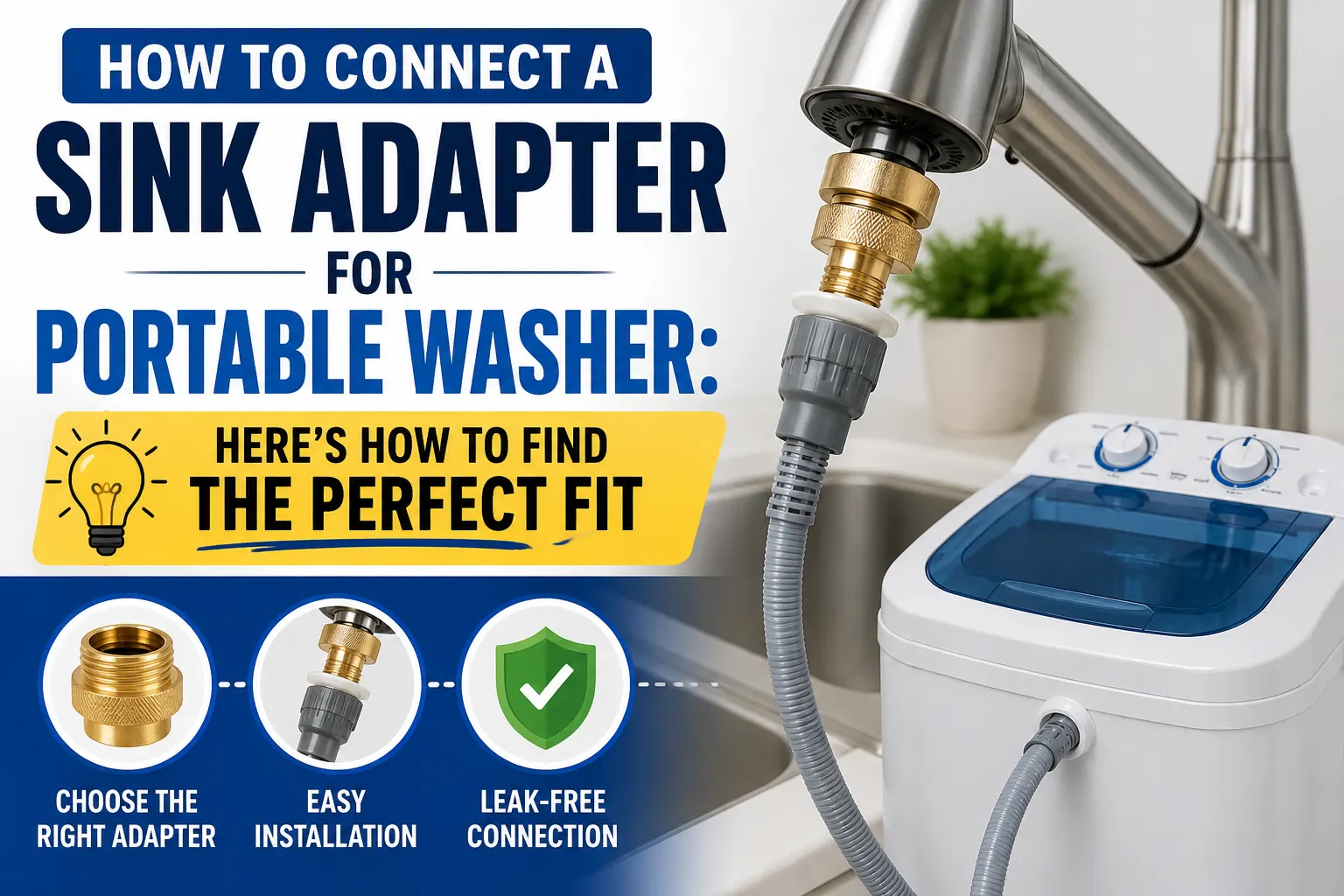
If you own a portable washing machine and your kitchen has a pull-out spray faucet, you’ve probably wondered if you can connect the two. The short answer is yes, but not directly in most cases. You’ll usually need a sink adapter for portable washer or a custom quick-connect adapter that matches your faucet’s hose and thread size.
This guide explains exactly how to do it safely, what adapters you need, what mistakes to avoid, and when you should use an alternative water connection.
Before purchasing any accessories, check out our portable washing machine buyer’s guide to make sure you’re buying compatible equipment.
Quick Answer
Can you connect a portable washing machine to a pull-out spray faucet?
Yes, but only if you use the correct sink adapter for portable washer that matches your faucet’s connection. Most pull-out faucets don’t have the standard threaded aerator used by portable washers. Instead, they use a flexible hose hidden inside the faucet, so you’ll need a compatible adapter or a special quick-connect fitting.
If your faucet isn’t compatible, the safest option is to install a separate utility faucet, laundry sink connection, or use a faucet specifically designed for portable washing machines.
Why Pull-Out Spray Faucets Are Different
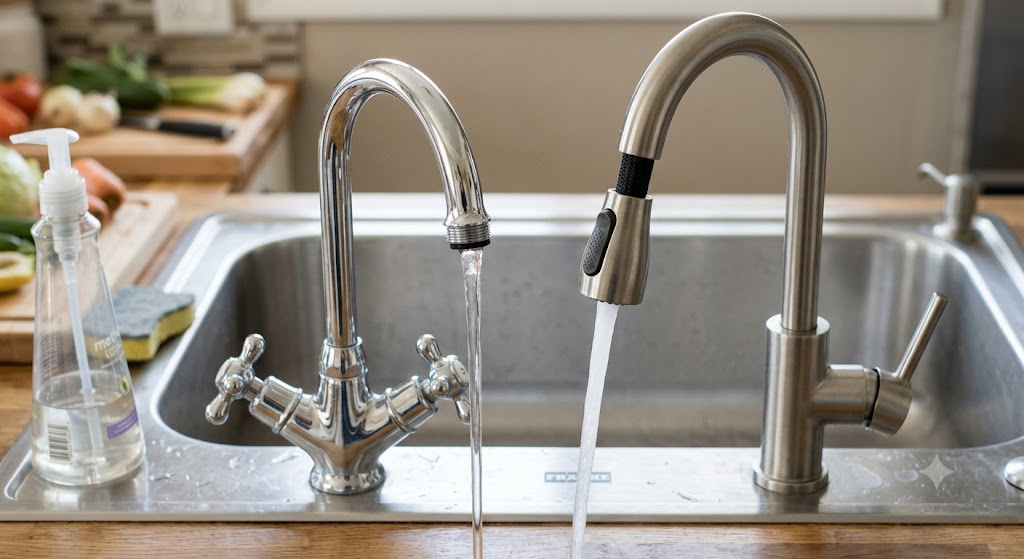
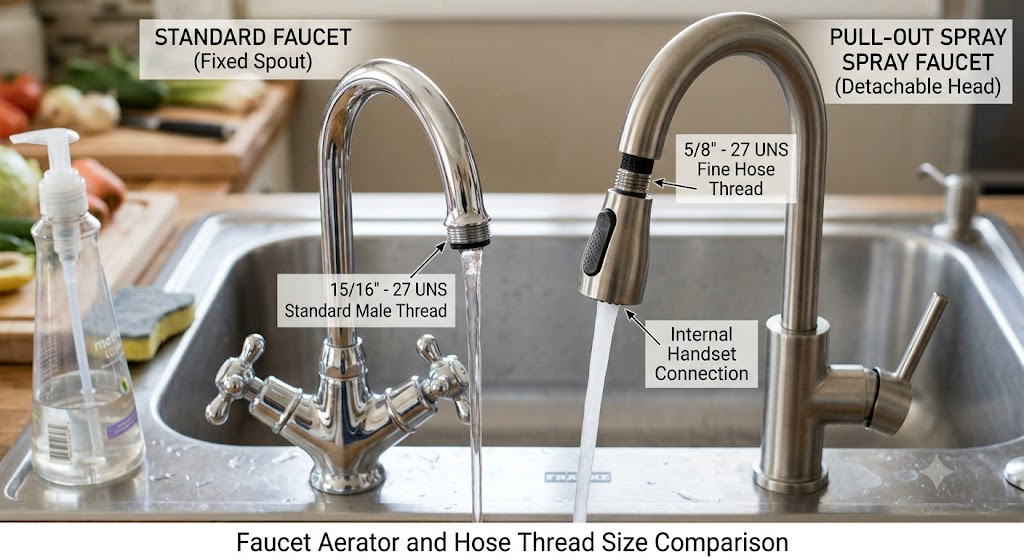
Many portable washing machines are designed to connect to a standard kitchen faucet with removable aerators. Pull-out spray faucets work differently.
Instead of water flowing through a fixed spout, the water travels through a flexible hose that slides in and out of the faucet body.
That creates three challenges:
- The faucet may not have standard aerator threads.
- The hose wasn’t designed to support a washing machine’s water pressure.
- Frequent connecting and disconnecting may shorten the life of the faucet.
This is why many manufacturers recommend avoiding permanent connections to pull-out faucets. Before connecting your washer, find out how much water a portable washing machine uses and whether your faucet can handle it.
What Is a Sink Adapter for Portable Washer?
A sink adapter for portable washer is a small connector that allows your portable washer hose to connect securely to a faucet.
Depending on your faucet, the adapter may include:
- Male or female thread adapter
- Quick-connect coupling
- Garden hose adapter
- Brass reducer
- Rubber sealing washer
High-quality brass adapters usually last much longer than plastic ones.
If you’re still shopping for a washer, explore our picks for the best portable washing machines for apartments, many of which include faucet adapters.
How to Check Whether Your Faucet Is Compatible
Before buying any adapter, inspect your faucet carefully.
Step 1: Remove the Spray Head
Unscrew the spray head from the pull-out hose. Some models twist off by hand. Others require an adjustable wrench.
Step 2: Identify the Thread Size
Measure the connection using a thread gauge or ruler. Common sizes include:
- 15/16″-27
- 55/64″-27
- M22
- M24
- G1/2
- 1/2″ IPS
Knowing the exact thread size prevents buying the wrong adapter.
Step 3: Check Your Portable Washer Hose
Most portable washers use:
- Quick-connect couplers
- Standard faucet adapter
- Garden hose thread (GHT)
The adapter must match both the faucet and washer hose.
Tools You’ll Need
Gather everything before starting. You’ll need:
- Sink adapter for portable washer
- Adjustable wrench
- Thread seal tape (PTFE tape)
- Soft towel
- Bucket
- Flashlight
- Rubber washers
Having spare washers is always a good idea because old ones often leak.
Step-by-Step: Connect a Portable Washing Machine to a Pull-Out Spray Faucet
Step 1: Turn Off the Faucet
Close the faucet completely. Dry the area with a towel.
Step 2: Remove the Spray Head
Unscrew the pull-out spray head carefully. Avoid twisting the hose.
Step 3: Install the Adapter
Attach the correct sink adapter for portable washer. Hand tighten first. Use a wrench only for the final quarter turn. Do not overtighten.
Step 4: Connect the Washer Hose
Snap or screw the portable washer hose onto the adapter. Confirm it locks securely.
Step 5: Check for Leaks
Turn the faucet on slowly. Inspect every connection. If you notice dripping:
- Tighten slightly.
- Replace the washer.
- Add thread seal tape.
Step 6: Start the Washing Machine
Run a short rinse cycle first. Watch the entire fill process. If everything stays dry, you’re ready to wash clothes.
Can Every Pull-Out Faucet Handle a Portable Washer?
No. Some manufacturers specifically advise against connecting portable washing machines to pull-out faucets.
Reasons include:
- Internal plastic fittings
- Lightweight hose construction
- Pressure spikes during fill cycles
- Warranty concerns
Always check your faucet manual before connecting.
When You Should NOT Use a Pull-Out Faucet
Avoid using your pull-out faucet if:
- The hose leaks.
- The faucet feels loose.
- Water pressure is very high.
- The hose retracts poorly.
- The faucet uses proprietary fittings.
- The manufacturer prohibits appliance connections.
In these cases, another water source is much safer.
Better Alternatives
If your faucet isn’t compatible, consider these options.
- Utility Sink: A laundry sink usually has threaded faucets that work perfectly.
- Standard Kitchen Faucet: Replacing the pull-out faucet with a threaded faucet makes connections much easier.
- Washing Machine Valve: Installing dedicated washing machine valves is the most reliable long-term solution.
- Garden Hose Adapter: Some apartments allow temporary outdoor connections.
Only use clean water sources.
Common Problems and Easy Fixes
Adapter Keeps Leaking
Possible causes:
- Missing rubber washer
- Wrong thread size
- Cross-threading
- Loose fitting
Solution: Replace the washer and reinstall carefully.
Washer Won’t Fill
Possible causes:
- Adapter blocked
- Hose kinked
- Water valve closed
Solution: Inspect every connection.
Low Water Pressure
Possible causes:
- Flow restrictor inside faucet
- Narrow adapter
- Partially clogged hose
Solution: Use a full-flow adapter whenever possible.
Faucet Hose Pulls Back During Washing
This happens because pull-out hoses are spring-loaded. Secure the hose gently so it cannot retract while the washer fills.
Safety Tips
Always keep these safety tips in mind.
- Never leave the washer unattended during the first fill.
- Disconnect the hose after every wash.
- Replace cracked rubber washers immediately.
- Inspect adapters every few months.
- Never force mismatched threads.
- Shut off the water if you notice leaks.
A few minutes of inspection can prevent expensive water damage.
Benefits of a Portable Washing Machine
One reason portable washers have become so popular in the USA is their flexibility. Here are several benefits of a portable washing machine that make them a smart investment.
- No Laundry Room Required: For Example If you live in a New York apartment, you can wash clothes in your kitchen instead of carrying laundry several blocks away.
- Saves Money: For example a family spending $30 every week at a laundromat could save over $1,500 per year.
- Saves Time: Instead of waiting for machines to become available, you can wash clothes while cooking dinner or working from home.
- Perfect for Renters: Most portable washers don’t require permanent plumbing changes. That’s ideal for apartments and rental homes.
- Uses Less Water: Most portable washers consume much less water than full-size machines. That can lower your utility bill over time.
- Easy to Store: Many models fit inside closets or roll beside a cabinet after use.
How to Choose the Right Sink Adapter for Portable Washer
Buying the correct adapter matters more than buying the cheapest one. Look for:
- Solid brass construction
- Rust resistance
- Quick-connect feature
- Leak-proof rubber washers
- Compatibility with your faucet thread
- High-pressure rating
Avoid universal adapters that don’t specify thread sizes.
Mistakes to Avoid
Many first-time users make the same mistakes.
Avoid these common errors.
- Buying an adapter without measuring threads
- Overtightening fittings
- Leaving the washer connected permanently
- Ignoring small leaks
- Running hot water beyond the washer’s rating
- Forgetting to reinstall the original spray head correctly
Maintenance Tips
A little maintenance keeps everything working smoothly.
Every month:
- Clean mineral deposits from the adapter.
- Inspect washers.
- Check hose connections.
- Replace worn O-rings.
- Clean faucet threads.
This takes only a few minutes but can extend the life of both your faucet and washing machine.
Frequently Asked Questions
Q. Can I connect any portable washer to a pull-out faucet?
Not always. Compatibility depends on your faucet’s thread size and whether a matching sink adapter for portable washer is available.
Q. Will using a portable washer damage my pull-out faucet?
It can if the faucet isn’t designed for appliance connections or if excessive force is applied to the hose.
Q. Do I need a plumber?
Usually not. Most homeowners can install the adapter themselves in less than 15 minutes.
Q. Can I leave the adapter installed all the time?
It’s better to remove it after each wash to reduce wear on the faucet and hose.
Q. What is the best material for a faucet adapter?
Solid brass is generally the best choice because it’s durable, corrosion-resistant, and creates a better seal than plastic.
Final Thoughts
Connecting a portable washing machine to a pull-out spray faucet is possible, but success depends on using the correct sink adapter for portable washer and making sure your faucet is compatible. While the process is straightforward, taking a few extra minutes to identify your thread size, inspect for leaks, and follow the manufacturer’s recommendations can save you from costly repairs later.
For most renters and apartment dwellers, this setup offers a convenient way to enjoy the many benefits of a portable washing machine, including saving time, reducing laundry costs, and avoiding trips to the laundromat. If your pull-out faucet isn’t suitable, don’t force the connection—using a utility sink or dedicated washing machine valve is a safer and more reliable solution in the long run.
With the right adapter, careful installation, and regular maintenance, your portable washer can become one of the most useful appliances in your home.
Recommended Reading:
- 15 Surprising Benefits of a Portable Washing Machine That Will Make You Want One Today
- 10 Best Portable Washing Machine for Camping: Top Picks for Clean Clothes Anywhere in 2026
- 10 Best Portable Washing Machine for RV 2026: Top Picks for Full-Time RV Living and Camping
- Portable Washing Machine vs Laundromat Cost: Which Option Saves More Money in 2026?

Sourabh researches and writes about home appliances, kitchen gadgets, and common appliance problems to help readers make smarter buying decisions. He specializes in Portable washing machines and appliance troubleshooting guides.
At compactHomeHub, Sourabh focuses on creating easy-to-understand content that simplifies technical appliance issues into practical solutions. His goal is to help users save time, avoid costly mistakes, and choose the right appliances with confidence.