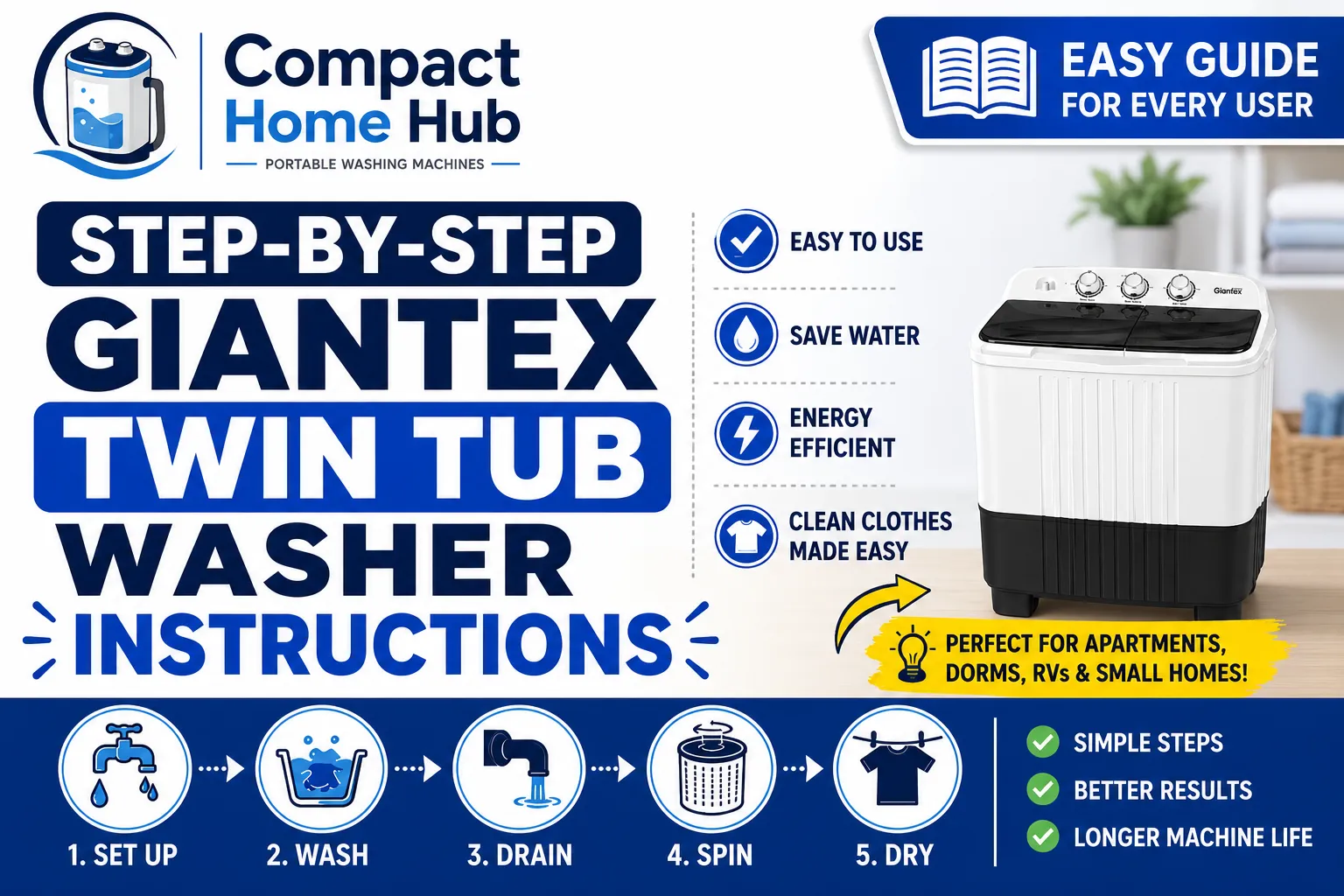
If you’ve just bought a Giantex twin tub portable washer and the official manual feels confusing, here’s the Giantex twin tub washing machine instructions:
To operate a Giantex twin tub portable washer, connect the water inlet hose, place the drain hose in a sink or drain, load clothes evenly into the wash tub, add water and detergent, set the wash timer (typically 6–15 minutes), drain the dirty water, refill for rinsing, transfer clothes to the spin tub evenly, secure the spin cover, and run the spin cycle for 2–5 minutes before air drying your clothes.
This unofficial guide explains every step in plain English, along with practical tips, common mistakes, troubleshooting advice, maintenance recommendations, and real-world examples that most official manuals don’t cover.
New to portable washers? Read our Portable Washing Machine Buyer’s Guide before setting up your Giantex washer to understand capacity, features, and what to look for when choosing a model.
Why This Unofficial Guide Is Better Than the Official Manual
Official manuals usually tell you what to do.
This guide explains:
- Why each step matters
- What beginners often do wrong
- How much detergent actually works
- Which fabrics you should avoid
- How to reduce vibration
- How to improve washing performance
- How to extend your washer’s lifespan
- How to save water and electricity
If you’re searching for giantex twin tub washing machine instructions, this guide covers everything from setup to maintenance.
What Is a Giantex Twin Tub Portable Washer?
A Giantex twin tub portable washer is a compact washing machine designed for:
- Apartments
- Dorm rooms
- RVs
- Tiny homes
- Vacation cabins
- Camping setups
- Homes without traditional laundry hookups
Unlike automatic washers, it has two separate tubs. One tub washes clothes. The other spins water out. Since both tubs work separately, you move clothes manually between them. Wondering whether a twin tub is the right choice? Compare Twin Tub vs Single Tub Washing Machines to see which design best fits your needs.
The biggest advantage?
You can wash one load while spinning another, making laundry much faster. If you’re new to compact laundry appliances, learn what a portable washing machine is and how it differs from a traditional washer.
Main Parts You Should Know
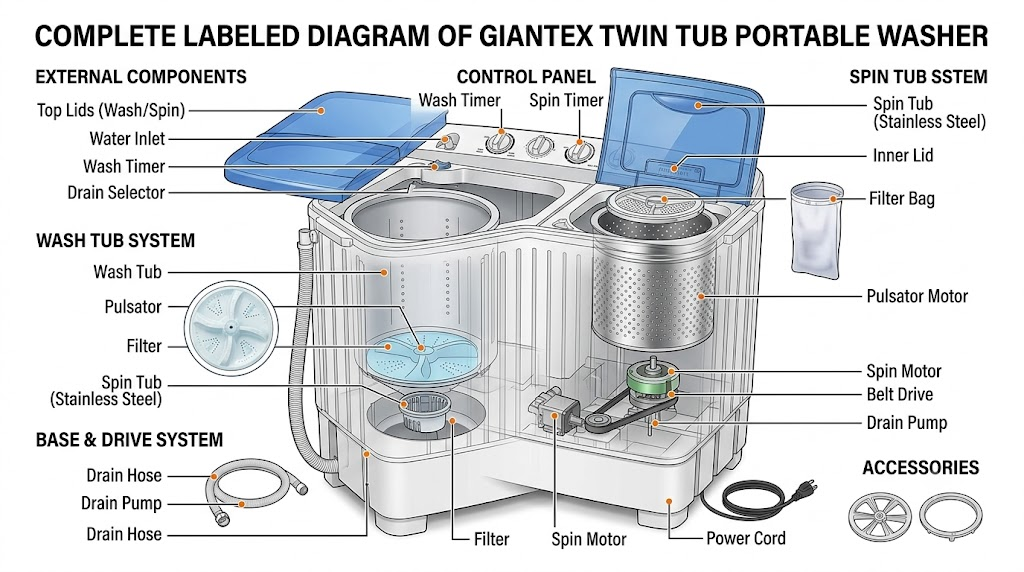
Before using the machine, identify its major parts.
- Wash tub
- Spin tub
- Water inlet
- Drain hose
- Wash timer
- Spin timer
- Drain selector (on some models)
- Lint filter
- Power cord
- Spin cover
How to Set Up Your Giantex Washer
Setup only takes a few minutes. If you’re new to portable washers, follow this step-by-step guide to learn how to use a portable washing machine, from connecting the water supply to draining, rinsing, and spin-drying clothes.
Step 1: Place the Washer on a Flat Surface
Always keep the washer level. A tilted machine causes:
- Excessive vibration
- Water leakage
- Poor spinning
- Extra noise
Avoid:
- Thick carpet
- Uneven floors
- Wooden boxes
- Sloped balconies
Example: A concrete laundry room floor gives much better stability than soft carpet.
Step 2: Position the Drain Hose
Place the drain hose inside:
- Utility sink
- Bathtub
- Floor drain
Make sure it cannot fall out during draining.
Step 3: Connect the Water Supply
Most Giantex models include:
- Inlet hose
- Faucet adapter
If your faucet doesn’t fit, you may need a universal faucet adapter. Never over-tighten the connection.
Understanding the Two Tubs
Many first-time users think both tubs wash clothes. They don’t.
Wash Tub
Purpose:
- Washing
- Soaking
- Rinsing
Spin Tub
Purpose:
- Removing water
- Speeding up drying
The spin tub does not wash clothes.
If you’re having trouble connecting the inlet hose, check our Portable Washing Machine Faucet Adapter Guide for compatible faucet types and installation tips.
Step-by-Step Giantex Twin Tub Washing Machine Instructions
Step 1: Sort Laundry
Separate:
- Whites
- Colors
- Delicates
- Heavy fabrics
Benefits:
- Prevents color bleeding
- Protects delicate fabrics
- Improves cleaning
Example: Don’t wash a new red T-shirt with white towels.
Step 2: Load the Wash Tub
Avoid stuffing clothes. Leave room for movement.
Good load: About 70–80% full. Too many clothes reduce cleaning performance.
Step 3: Fill with Water
Fill until clothes float freely. Too little water causes:
- Poor cleaning
- Extra wear
- Motor strain
Too much water wastes water.
Step 4: Add Detergent
Use:
- HE liquid detergent
- Low-sudsing detergent
Avoid using too much.
Excess foam:
- Reduces washing action
- Leaves residue
- Requires extra rinsing
Example: For a small load, one tablespoon is usually enough. For medium loads, use two tablespoons.
Step 5: Set the Wash Timer
Typical recommendations:
- Light clothing: 6 minutes
- Normal clothes: 10 minutes
- Towels: 12 minutes
- Jeans: 15 minutes
Very dirty clothes may benefit from soaking before washing.
Step 6: Drain Dirty Water
After washing:
- Open the drain
- Wait until water completely empties
Never move the washer while it’s full.
Step 7: Rinse
Fill with clean water. Run another wash cycle for 3–5 minutes. Repeat if necessary.
Step 8: Transfer Clothes
Move clothes from wash tub to spin tub. Spread them evenly. Uneven loads create vibration.
Step 9: Install the Spin Cover
The spin cover holds clothes in place. Never operate without it.
Step 10: Start the Spin Cycle
Recommended spin time:
- Shirts: 2 minutes
- Pants: 3 minutes
- Towels: 4–5 minutes
After spinning, hang clothes immediately.
Want to understand what’s happening inside your washer? Learn how a portable washing machine works with a simple step-by-step explanation.
Washing Capacity Guide
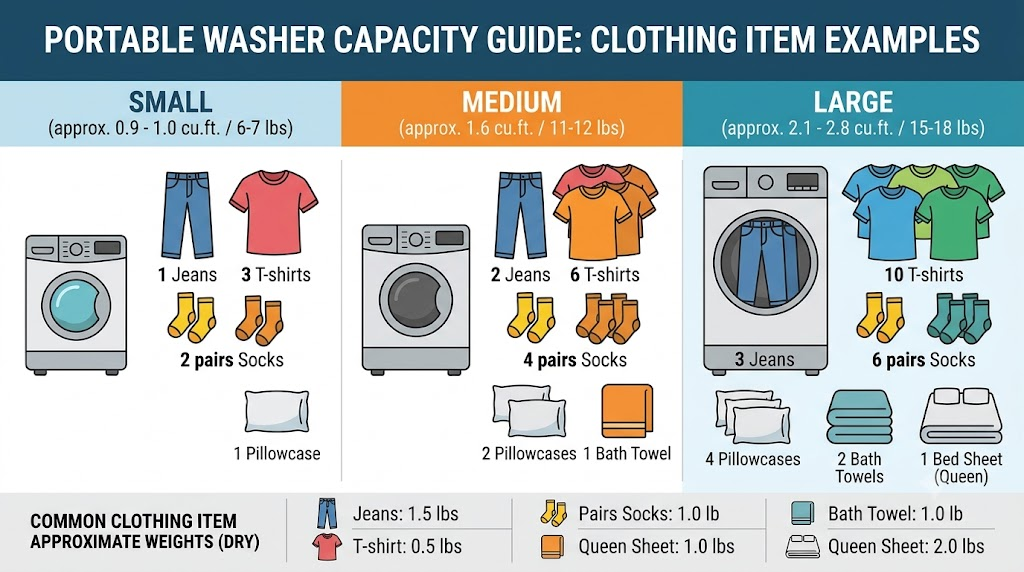
Don’t overload. Approximate examples:
- 6–8 T-shirts
- 2 bath towels
- 3 jeans
- Small bedding
- Baby clothes
Heavy comforters are generally too large.
Best Detergent for Giantex Twin Tub Washers
Choose detergents that produce fewer suds.
Recommended:
- HE liquid detergent
- Portable washer detergent
- Mild laundry detergent
Avoid:
- Hand washing powder
- Excess detergent
- Bleach unless the fabric allows it
Example: If you notice lots of bubbles after washing, you’re probably using too much detergent.
Using the right amount of detergent helps improve cleaning performance and prevents excess suds. Read our guide on how much detergent to use in a portable washer.
Which Clothes Can You Wash?
Safe:
- Cotton
- Polyester
- T-shirts
- Jeans
- Towels
- Workout clothes
- Baby clothes
- Pillowcases
Use caution with:
- Wool
- Silk
- Lace
- Heavy blankets
Always check the clothing care label.
Common Beginner Mistakes
Many online guides skip these practical mistakes.
| Common Mistake | Problem | Result / Solution |
|---|---|---|
| Overloading | Clothes cannot circulate properly inside the wash tub. | Result: Poor cleaning performance and uneven washing. |
| Uneven Spin Load | Clothes are not evenly distributed in the spin tub. | Solution: Redistribute the clothes evenly before starting the spin cycle. |
| Too Much Detergent | Excess detergent creates too many suds and leaves soap residue. | Solution: Use the recommended amount of low-sudsing detergent. |
| Forgetting the Spin Cover | Clothes move freely during the spin cycle. | Result: Excessive noise, vibration, and poor spinning performance. |
| Twisted Drain Hose | The drain hose is kinked or bent. | Solution: Straighten the drain hose to allow water to drain properly. |
How Long Does a Wash Take?
Typical timeline:
- Fill: 3 minutes
- Wash: 10 minutes
- Drain: 2 minutes
- Rinse: 5 minutes
- Spin: 3 minutes
Total: About 25–30 minutes. This is often faster than waiting for a shared apartment laundry room.
Real-Life Example
Imagine you’re living in a one-bedroom apartment in Chicago.
You have:
- Work clothes
- Gym clothes
- Kitchen towels
Instead of carrying laundry downstairs, you:
- Wash clothes in the kitchen.
- Drain into the sink.
- Spin dry.
- Hang them overnight.
The entire process finishes before dinner. That’s why portable twin tub washers remain popular among apartment renters.
Cleaning the Washer
Clean after every few loads.
- Wash the Lint Filter: Remove lint. Rinse under running water. Reinstall.
- Clean the Wash Tub: Run clean water through the machine. Wipe dry.
- Clean the Exterior: Use Soft cloth and Mild soap and avoid harsh chemicals.
Maintenance Tips
Regular maintenance extends machine life.
- Keep the lid open after washing.
- Dry both tubs completely.
- Clean the drain hose monthly.
- Inspect power cord regularly.
- Never store water inside.
- Remove lint after every wash.
- Avoid direct sunlight for long periods.
Example: Leaving the lid closed after every wash encourages mold growth.
Troubleshooting Guide
| Problem | Possible Causes | Solution |
|---|---|---|
| Washer Doesn’t Start | • Power plug disconnected• Timer not set• Electrical outlet issue | Ensure the power plug is securely connected, set the wash or spin timer, and test the electrical outlet with another appliance. |
| Washer Won’t Drain | • Drain hose kinked• Hose positioned too high• Blocked drain outlet | Straighten the drain hose, lower it to the proper height, and clear any blockage from the hose or drain outlet. |
| Excessive Vibration | • Uneven floor• Overloaded machine• Uneven spin load | Place the washer on a level surface, reduce the load size, and redistribute clothes evenly in the spin tub. |
| Clothes Still Wet After Spinning | • Short spin cycle• Overloaded spin tub• Poor load balance | Increase the spin time, reduce the amount of laundry, and balance the load before restarting the spin cycle. |
| Water Leaks | • Loose hose connection• Damaged hose• Improper drain hose placement | Tighten all hose connections, replace damaged hoses, and ensure the drain hose is securely positioned in a sink or floor drain. |
Safety Tips
Always remember these safety rules.
- Keep children away during operation.
- Never touch electrical parts with wet hands.
- Unplug after use.
- Don’t overload the machine.
- Don’t wash items soaked with gasoline or solvents.
- Use indoor electrical outlets only.
- Avoid extension cords whenever possible.
Energy and Water Efficiency
A Giantex twin tub washer typically uses less water and electricity than a full-size washer because:
- Smaller loads require less water.
- Wash cycles are shorter.
- The spin tub removes more water, reducing drying time.
Example:
If you wash a few outfits every couple of days instead of waiting for one large load, you can avoid wasting water on half-empty full-size machines.
Who Should Buy a Giantex Twin Tub Washer?
It’s an excellent choice for:
- Apartment renters
- College students
- RV travelers
- Tiny home owners
- People without laundry hookups
- Small families
- Vacation homes
It may not be ideal for:
- Large households
- King-size comforters
- Heavy weekly laundry loads
- Anyone wanting a fully automatic washing experience
Still deciding? Explore the complete Portable Washing Machine Pros and Cons before making your purchase decision.
FAQs
Q. How much detergent should I use?
Use only a small amount of low-sudsing detergent. Too much detergent creates excess foam and makes rinsing harder.
Q. Can I wash blankets?
Small lightweight blankets are usually fine. Large comforters and thick blankets can overload the wash tub.
Q. Why is the machine shaking during spinning?
The clothes are likely unevenly distributed in the spin tub. Stop the cycle, rearrange the load evenly, and restart.
Q. Do I need plumbing?
No permanent plumbing is required. Most users connect the inlet hose to a faucet and place the drain hose in a sink, bathtub, or floor drain.
Q. Can I leave clothes in the spin tub?
It’s better to remove clothes immediately after spinning to reduce wrinkles and prevent odors.
Q. Can I use fabric softener?
Yes, but use it during the rinse stage rather than the wash cycle for the best results.
Q. How often should I clean the lint filter?
Check and clean it after every few loads to maintain good washing performance.
Final Verdict
If you’re looking for giantex twin tub washing machine instructions, the official booklet only scratches the surface. In daily use, success depends on proper loading, using the right amount of detergent, balancing clothes in the spin tub, and keeping the machine clean after every few loads. Those simple habits improve cleaning results, reduce vibration, and help the washer last longer.
For apartment dwellers, RV owners, students, and anyone without a traditional laundry setup, a Giantex twin tub portable washer offers an affordable and practical solution.
While it requires a little manual effort compared to a fully automatic machine, it rewards users with faster smallload laundry, lower water consumption, and the flexibility to wash clothes almost anywhere with access to a faucet and drain. Following these unofficial instructions will help you get the best performance from your washer from day one.
Recommended Reading:
- Right Detergent Quantity for Portable Washing Machine
- 15 Must-Have Portable Washer Accessories in 2026
- Portable Washer Installation Cost in 2026
- Off-Grid Laundry: Running Your Compact Washer on Solar Power & Inverters

Sourabh researches and writes about home appliances, kitchen gadgets, and common appliance problems to help readers make smarter buying decisions. He specializes in Portable washing machines and appliance troubleshooting guides.
At compactHomeHub, Sourabh focuses on creating easy-to-understand content that simplifies technical appliance issues into practical solutions. His goal is to help users save time, avoid costly mistakes, and choose the right appliances with confidence.