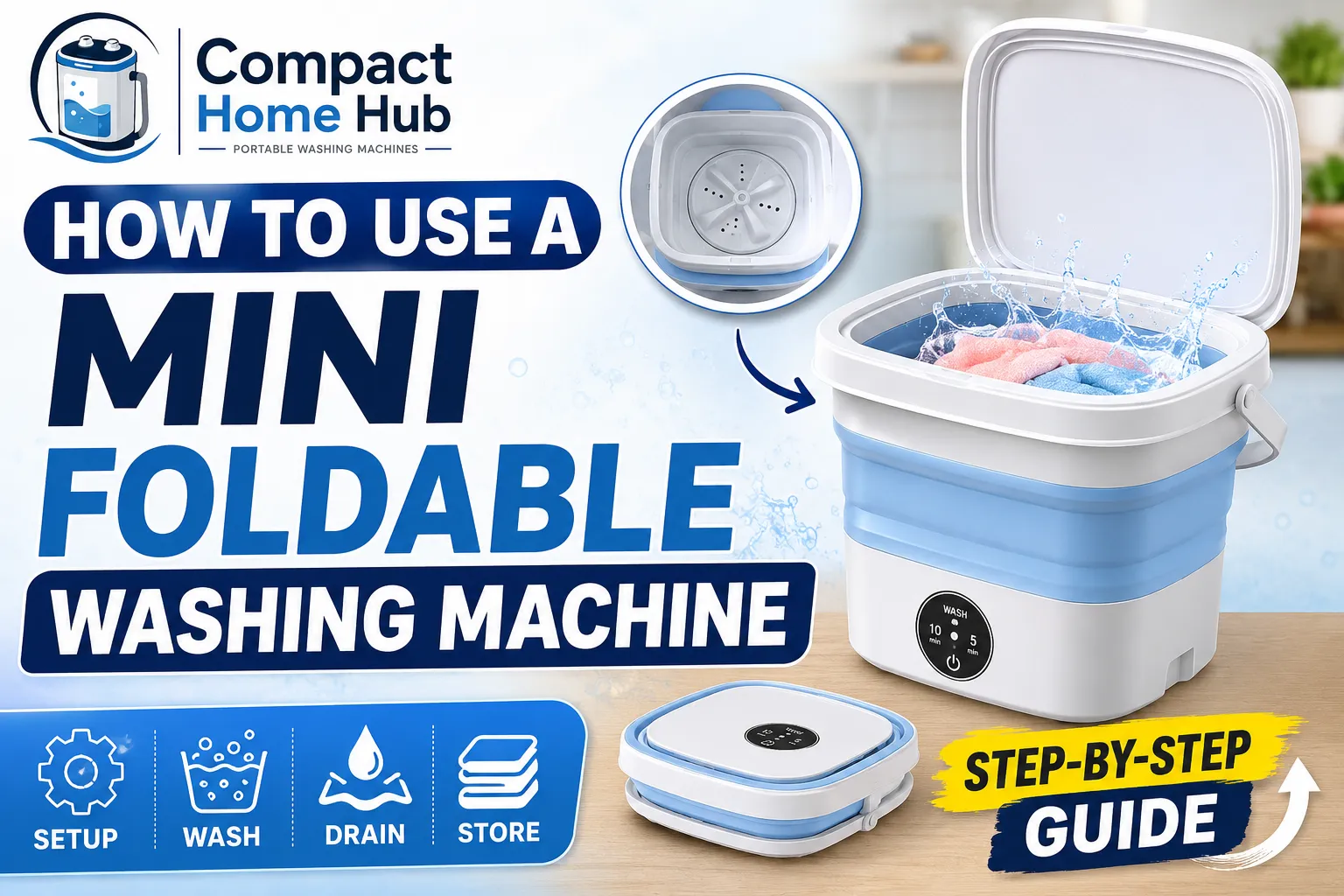
Mini foldable washing machines look simple to use, but many people unknowingly overload them, use too much detergent, or skip basic maintenance, which reduces cleaning performance. In this guide, you’ll learn exactly how to use a mini foldable washing machine, from the initial setup to washing, draining, cleaning, and storing it properly so you can get cleaner clothes and extend your washer’s lifespan.
What Is a Mini Foldable Washing Machine?
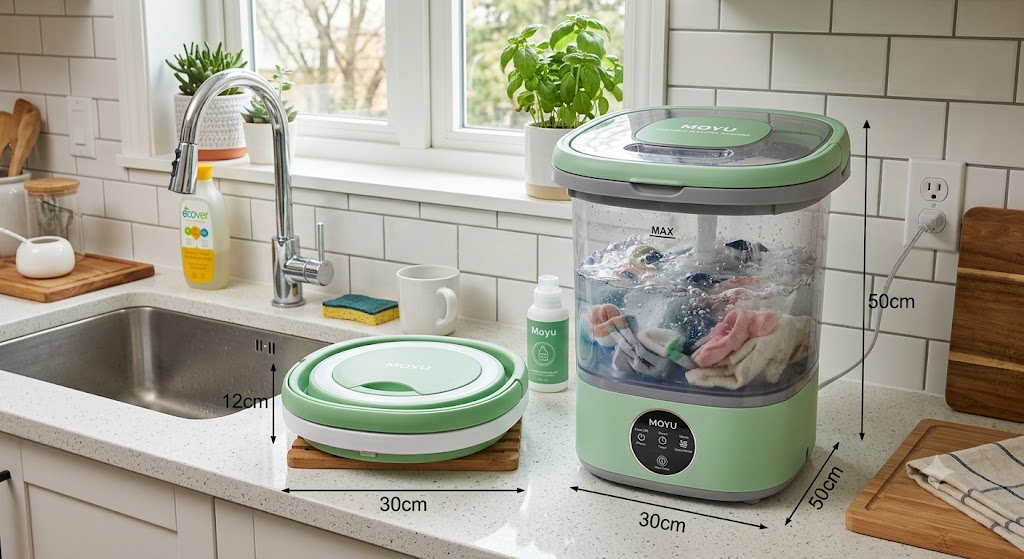
A mini foldable washing machine is a compact portable washer designed for small loads of lightweight clothes. Its collapsible tub or silicone body folds down for easy storage, making it useful in apartments, dorms, RVs, and while traveling.
These washers are best for underwear, socks, baby clothes, T-shirts, and other small loads. They are not intended to replace a full-size washing machine for regular family laundry.
Their main advantage is easy storage and convenience. However, capacity, washing performance, and spin-drying capability vary by model.
In short: a mini foldable washer is a practical option when you need to wash small loads without using a full-size machine.
How Does a Mini Foldable Washing Machine Work?
A mini foldable washing machine works by using a compact electric motor that creates water movement to remove dirt from lightweight fabrics.
Most models use an impeller or turbine at the bottom instead of a rotating drum. The motor circulates water mixed with detergent, gently agitating clothes to remove dirt and stains. The washing process typically follows these steps:
- Unfold the washer.
- Add clothes.
- Fill with water.
- Add detergent.
- Start the wash cycle.
- Drain the dirty water.
- Rinse the clothes.
- Air dry the garments.
Because of this simple design, these machines are ideal for quick daily washing rather than heavy-duty laundry. To better understand the washing process, read our detailed guide on how a portable washing machine works.
How to Use a Mini Foldable Washing Machine?
Mini foldable washing machines are ideal for people who frequently wash small amounts of laundry.
They are especially suitable for:
- Apartment residents
- College students
- RV owners
- Travelers
- Campers
- Tiny home owners
- Parents washing baby clothes separately
- Hostel residents
For example, many parents prefer using a mini washer exclusively for baby clothes to keep them separate from adult laundry and use gentle detergents. If you live in a small apartment, explore our recommendations for the best portable washing machine for apartments.
What Clothes Can You Wash?
Mini foldable washing machines work best with lightweight garments that allow enough room for water circulation.
Suitable items include:
- Baby clothes
- Underwear
- Socks
- T-shirts
- Hand towels
- Face towels
- Gym clothes
- Cloth diapers (lightly soiled)
- Pet towels
Avoid washing:
- Jeans
- Heavy blankets
- Comforters
- Hoodies
- Winter jackets
- Large bath towels
- Shoes
Mini foldable washing machines are best suited for baby clothes, underwear, socks, T-shirts, and other lightweight garments rather than heavy blankets, jeans, or comforters. If you’re planning to wash infant garments, check out our guide to the best mini washing machine for baby clothes to choose a model that’s gentle on delicate fabrics.
Typical Capacity Guide
Choosing the correct load size helps improve cleaning performance and prevents unnecessary stress on the motor.
| Capacity | Recommended Laundry | Best For |
|---|---|---|
| 3L | Socks, underwear | Travel |
| 5L | Baby clothes | Daily use |
| 8L | 5–8 lightweight garments | Small apartments |
| 10L | Daily laundry for one person | Frequent washing |
As a general rule, fill only 70–80% of the drum. Clothes need enough room to move freely during washing.
Why Is Using a Mini Foldable Washing Machine Correctly Important?
Using a mini foldable washing machine correctly improves washing performance, extends the machine’s lifespan, and reduces water and electricity consumption.
Many people assume these machines work like standard washing machines and overload them. However, foldable washers rely on free movement of clothes inside the tub to clean effectively.
Curious about operating costs? See how much electricity a portable washer uses and estimate your monthly running expenses.
1. Better Cleaning Performance
Proper loading allows water and detergent to circulate around every garment.
When clothes have enough space to move, dirt is removed more effectively, and detergent rinses away more easily. For example, washing six baby outfits in a 5-liter washer generally produces better results than squeezing in ten garments.
2. Longer Machine Lifespan
Overloading a foldable washing machine reduces washing performance, places extra strain on the motor, and may shorten the appliance’s lifespan.
Small portable motors are designed for light-duty washing. Regularly washing heavy items like jeans or blankets can cause overheating, vibration, and premature wear. Overloading a foldable washing machine reduces washing performance, places extra strain on the motor, and may shorten the appliance’s lifespan.
3. Lower Water Consumption
Mini foldable washing machines use significantly less water than full-size washing machines because they wash smaller loads.
Most models use approximately 5–12 liters of water per cycle, while many traditional washing machines consume 50–90 liters depending on the cycle.
Source: ENERGY STAR, 2024
This makes foldable washers an excellent choice for:
- RV travel
- Camping
- Apartments
- Areas with limited water supply
4. Lower Electricity Usage
Most foldable portable washing machines consume very little electricity because they use compact motors and shorter wash cycles.
Many models operate between 30 and 80 watts, which is similar to the electricity consumed by a household table fan. Their low power consumption makes them ideal for people using portable power stations or RV electrical systems.
If electricity consumption is important to you, see how much electricity a portable washing machine uses to estimate running costs.”
5. Better Hygiene for Baby Clothes
Using a separate mini washing machine for baby clothes helps reduce exposure to dirt, sweat, and detergent residues from adult clothing.
Although a portable washer doesn’t sterilize clothing, washing baby garments separately with a mild detergent helps maintain better hygiene and reduces skin irritation for newborns. Many pediatricians also recommend fragrance-free detergents during the first few months after birth.
What Are the Main Parts of a Mini Foldable Washing Machine?
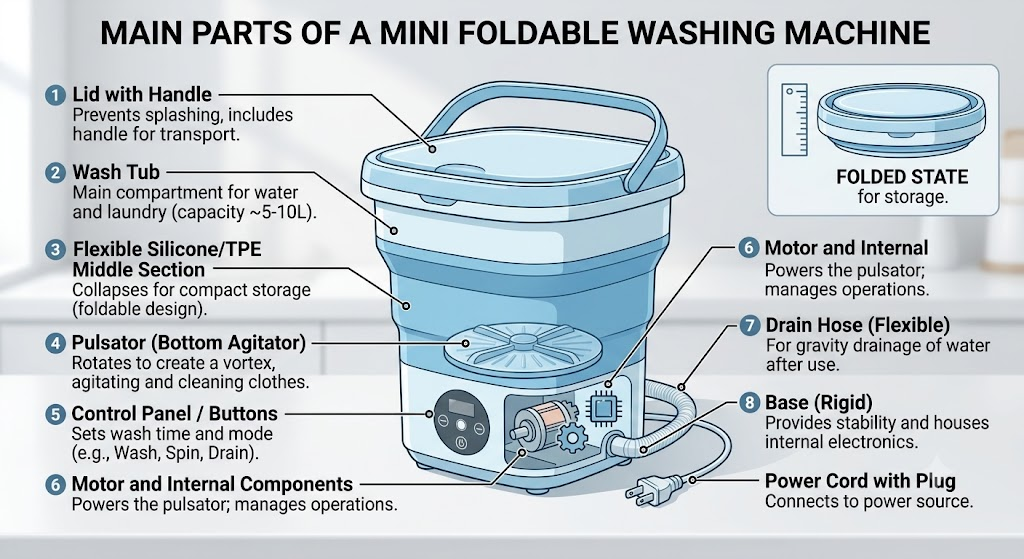
Understanding the main components of a mini foldable washing machine helps you operate it correctly and troubleshoot problems more easily.
1. Foldable Silicone Tub
The collapsible tub expands during washing and folds flat for storage, making it ideal for small living spaces.
2. Motor Base
The motor powers the impeller or turbine that creates water movement. Never immerse the motor base in water unless the manufacturer specifically states that it is waterproof.
3. Control Panel
Most machines include:
- Power button
- Timer
- Wash mode selection
- Drain function (on selected models)
4. Drain Hose
The drain hose removes dirty water after washing. Always place the hose lower than the machine during draining to allow gravity to empty the tub efficiently.
5. Power Adapter
Use only the original adapter supplied by the manufacturer. Using an incompatible adapter may damage the motor or void your warranty.
How Do You Set Up a Foldable Washing Machine Before First Use?
Setting up a mini foldable washing machine correctly ensures safe operation, better cleaning performance, and a longer lifespan. Before you wash your first load, take a few minutes to inspect the machine and prepare it properly.
Many first-time users make the mistake of placing the washer on an uneven surface or using an incorrect power adapter, which can lead to excessive vibration or poor performance.
New to portable washers? Read our portable washing machine buying guide to understand capacity, features, and the best type for your needs before making a purchase.
Step 1: Unfold the Washer Completely
Expand the silicone body until it locks into its full height. Make sure every side is fully extended and stable before adding clothes or water. A partially unfolded tub can affect water circulation and reduce washing efficiency.
Step 2: Place It on a Flat Surface
Always position the machine on a hard, level surface such as:
- Kitchen countertop
- Bathroom floor
- Laundry area
- Balcony floor
Avoid placing it on:
- Beds
- Carpets
- Uneven flooring
- Soft mats
A stable surface minimizes vibration and prevents accidental tipping.
Step 3: Connect the Power Adapter
Use only the adapter provided by the manufacturer. Plug it into a properly grounded electrical outlet. Never use damaged extension cords or incompatible adapters.
Step 4: Attach the Drain Hose
Ensure the drain hose is securely connected before filling the machine with water. Place the hose in a bucket, sink, or floor drain so dirty water can flow out easily after the wash cycle.
Step 5: Run a Cleaning Cycle
Before washing clothes for the first time, run one empty cycle with clean water. This removes manufacturing dust or residues that may remain inside the tub.
How Much Water Should You Add to a Mini Foldable Washing Machine?
The correct water level is enough to fully cover the clothes while leaving room for movement during washing.
Too little water prevents effective cleaning, while too much water reduces agitation and wastes water. Most foldable washing machines require between 5 and 12 liters of water, depending on their size.
| Machine Capacity | Approximate Water Needed |
|---|---|
| 3L | 3–5 liters |
| 5L | 5–7 liters |
| 8L | 8–10 liters |
| 10L | 10–12 liters |
For example, if you’re washing six baby outfits in a 5-liter machine, fill the water just above the top of the clothes.
How Much Detergent Should You Use?
Using a small amount of low-foam detergent produces the best cleaning results in a mini foldable washing machine.
Unlike full-size washers, portable machines contain much less water. Using too much detergent creates excessive foam that reduces cleaning efficiency and leaves residue on clothes.
As a general guideline:
- Small load: ½ teaspoon detergent
- Medium load: 1 teaspoon
- Full load: 1½ teaspoons
Liquid detergents dissolve more quickly than powders and are usually recommended for portable washers. For baby clothes, choose a fragrance free detergent designed for sensitive skin.
What Clothes Can You Wash Together?
Grouping similar fabrics improves washing performance and protects delicate garments.
Good combinations include:
- Baby clothes
- Socks
- Underwear
- T-shirts
- Face towels
- Gym wear
Avoid mixing:
- White clothes with dark colors
- Delicate fabrics with rough garments
- Towels with lint-sensitive clothing
Sorting laundry before washing also helps prevent color transfer.
How Do You Load Clothes Correctly?
Loading clothes evenly allows the impeller to move garments freely for better cleaning.
Do not compress clothes into the tub.
Instead:
- Loosen each garment.
- Spread clothes evenly.
- Leave about 20–30% empty space.
- Close the lid securely.
Using a mini foldable washing machine involves unfolding the unit, adding water and detergent, loading clothes within the recommended capacity, running the wash cycle, draining the water, and cleaning the machine after use.
How Long Should a Mini Foldable Washing Machine Run?
Most mini foldable washing machines clean everyday clothes within 10–20 minutes.
Recommended wash times:
| Laundry Type | Wash Time |
|---|---|
| Baby clothes | 10–12 minutes |
| Underwear | 10 minutes |
| Socks | 10–15 minutes |
| T-shirts | 15 minutes |
| Gym clothes | 15–20 minutes |
| Lightly soiled towels | 20 minutes |
Very dirty clothes may require a second wash cycle instead of extending a single cycle for too long.
How Do You Start the Wash Cycle?
Starting the wash cycle is simple once the machine is loaded correctly.
Follow these steps:
- Unfold the washer.
- Add clothes.
- Fill with water.
- Add detergent.
- Close the lid.
- Select the desired wash time.
- Press the Start or Power button.
During the wash cycle, avoid opening the lid unless the manufacturer specifically allows it. Observe the first wash to ensure there are no leaks or unusual vibrations.
How Do You Drain Water From a Foldable Washing Machine?
Draining the water immediately after washing prevents odors and prepares the clothes for rinsing.
Most machines include a drain hose at the bottom. To drain the water:
- Switch off the machine.
- Lower the drain hose into a sink or bucket.
- Allow gravity to empty the tub.
- Wait until all water has drained.
Some models include a dedicated drain button, while others rely entirely on gravity. If you are choosing between different drainage setups, learn about gravity drain vs pump drain before buying.
How Do You Rinse Clothes?
Rinsing removes leftover detergent from clothing after the wash cycle.
- Fill the tub again with clean water.
- Run another short cycle for about 5–10 minutes.
- If clothes still feel slippery, repeat the rinse cycle once more.
- Using less detergent during washing usually reduces the need for multiple rinses.
Can You Spin Dry Clothes?
Some mini foldable washing machines include a spin basket, while others require manual drying.
If your machine has a spin basket:
- Transfer clothes carefully.
- Do not overload the basket.
- Run the spin cycle for 2–5 minutes.
If your model doesn’t include spinning, gently squeeze excess water from clothes before hanging them to dry.
How Should You Dry Clothes After Washing?
Air drying is the safest method for clothes washed in a mini foldable washing machine.
Hang garments on:
- Drying racks
- Clotheslines
- Balcony rails
- Indoor laundry stands
Baby clothes should dry completely before storage to prevent mildew and unpleasant odors.
How Do You Fold and Store the Machine?
Proper storage keeps the washer clean and prevents mold inside the silicone tub.
Before folding:
- Drain all water.
- Wipe the inside dry.
- Leave the lid open for several minutes.
- Fold only after the tub is completely dry.
Store the washer in a cool, dry location away from direct sunlight. This simple habit helps extend the life of the silicone body and keeps the machine fresh between uses.
How Do You Clean a Mini Foldable Washing Machine After Use?
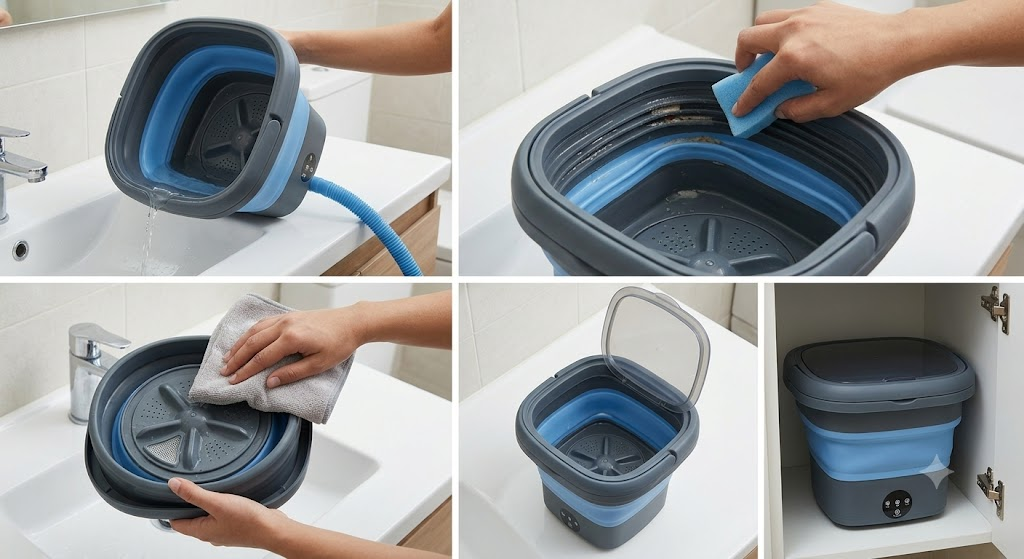
Cleaning a mini foldable washing machine after every use helps prevent mold, unpleasant odors, and detergent residue from building up inside the tub.
Leaving dirty water or moisture inside the machine encourages bacteria and mildew growth, especially in the foldable silicone sections. Spending just a few minutes cleaning the washer after each use can significantly extend its lifespan.
Cleaning a mini foldable washing machine after every use helps prevent mold, unpleasant odors, and detergent residue from building up inside the tub.
Follow these steps after every wash:
- Drain all remaining water.
- Wipe the inside with a soft microfiber cloth.
- Leave the lid open for 15–30 minutes.
- Dry the silicone folds thoroughly.
- Wipe the exterior before folding the machine.
How Often Should You Deep Clean the Machine?
Deep cleaning once every two to four weeks removes detergent residue, mineral deposits, and hidden bacteria.
If you use the washer daily, clean it every two weeks. Occasional users can deep clean it once a month. To deep clean:
- Fill the tub with warm water.
- Add one cup of white vinegar.
- Run a 10–15 minute wash cycle.
- Drain the water.
- Rinse with clean water.
- Dry the tub completely.
Avoid using harsh bleach unless the manufacturer specifically recommends it.
How Should You Maintain a Foldable Washing Machine?
Regular maintenance keeps your foldable washing machine running efficiently and helps prevent premature wear.
Good maintenance habits include:
- Wipe the machine dry after every wash.
- Check the drain hose for blockages.
- Inspect the power cable regularly.
- Store the washer in a dry location.
- Avoid placing heavy objects on the folded machine.
Simple maintenance takes only a few minutes but can help prevent costly repairs.
Monthly Maintenance Checklist
| Task | Frequency |
|---|---|
| Wipe interior | After every wash |
| Dry silicone tub | After every wash |
| Deep clean with vinegar | Every 2–4 weeks |
| Inspect drain hose | Monthly |
| Check power adapter | Monthly |
| Clean exterior | Monthly |
Why Is My Foldable Washing Machine Not Cleaning Clothes Properly?
Poor washing performance is usually caused by overloading, incorrect detergent usage, insufficient water, or lack of regular cleaning.
Fortunately, most issues can be fixed without replacing the machine.
| Problem | Possible Cause | Solution |
|---|---|---|
| Clothes still dirty | Overloaded tub | Reduce the load size |
| Too much foam | Excess detergent | Use less detergent |
| Machine vibrates | Uneven surface | Place on a flat floor |
| Bad smell | Moisture left inside | Dry the tub after use |
| Water won’t drain | Blocked drain hose | Clean the hose |
| Weak washing action | Low water level | Add more water |
What Are the Most Common Mistakes to Avoid?
Avoiding common mistakes helps improve washing results and protects your mini foldable washing machine from unnecessary damage.
The most common mistakes include:
- Overloading the machine.
- Washing heavy blankets or jeans.
- Using too much detergent.
- Folding the machine while still wet.
- Skipping regular cleaning.
- Using the wrong power adapter.
- Placing the washer on soft or uneven surfaces.
Overloading a foldable washing machine reduces washing performance, places extra strain on the motor, and may shorten the appliance’s lifespan.
Can You Wash Baby Clothes in a Mini Foldable Washing Machine?
Yes, mini foldable washing machines are excellent for washing baby clothes because they allow small, separate laundry loads using gentle wash cycles.
Parents often use a dedicated mini washer for:
- Baby bodysuits
- Bibs
- Burp cloths
- Socks
- Hats
- Cloth diapers (lightly soiled)
- Muslin cloths
For the best results:
- Use baby-safe detergent.
- Wash baby clothes separately.
- Avoid fabric softeners if your pediatrician advises against them.
- Dry clothes completely before storage.
Is a Mini Foldable Washing Machine Worth Buying?
A mini foldable washing machine is worth buying if you regularly wash small loads and have limited living space.
It is a practical solution for:
- Apartments
- Dorm rooms
- RVs
- Camping trips
- Hostels
- Frequent travelers
- Parents with newborn babies
However, it is not designed to replace a full-size washing machine for large families or heavy laundry.
Regular cleaning is important for preventing odors and mold, so see our guide on how to clean a portable washing machine for a deeper cleaning routine.
| Pros | Cons |
|---|---|
| ✅ Compact and lightweight design that’s easy to carry | ❌ Small washing capacity compared to standard washing machines |
| ✅ Foldable design makes storage easy in small spaces | ❌ Cannot wash heavy items like jeans, blankets, or comforters |
| ✅ Low electricity consumption helps reduce energy bills | ❌ Many models do not include a built-in spin dryer |
| ✅ Uses significantly less water than traditional washers | ❌ Most machines require manual draining after each wash cycle |
| ✅ Ideal for washing small daily loads such as baby clothes, socks, and underwear | ❌ Washing multiple loads takes longer than using a full-size washing machine |
| ✅ Affordable compared to conventional washing machines | ❌ Not suitable as the primary washer for large families |
| ✅ Perfect for apartments, dorms, RVs, camping, and travel | ❌ Limited washing power for heavily soiled clothes |
Still deciding whether to buy one? Read our in-depth guide on whether portable washing machines are worth it before making your decision.
Recommended Accessories
A few inexpensive accessories can make your washing experience easier and improve cleaning performance. Consider adding:
- Laundry mesh bags for delicate garments
- Baby-safe liquid detergent
- Foldable drying rack
- Portable laundry basket
- Drain hose extension
- Microfiber cleaning cloth
- Laundry sanitizer (when needed)
FAQs
Q. Can I wash jeans in a mini foldable washing machine?
Most manufacturers do not recommend washing jeans because they are heavy and can overload the motor.
Q. Can I use regular detergent?
Yes, but low-foam liquid detergent works better because it dissolves quickly and produces less residue.
Q. How much electricity does a mini foldable washing machine use?
Most models consume between 30 and 80 watts, making them much more energy-efficient than conventional washing machines.
Q. Can I wash shoes?
No. Shoes are usually too heavy and may damage the impeller or motor.
Q. Can I leave water inside the washer?
No. Always drain and dry the machine after every wash to prevent mold and unpleasant odors.
Q. How long does a mini foldable washing machine last?
With proper care and regular maintenance, a quality foldable washing machine can last several years. Actual lifespan depends on build quality, usage frequency, and maintenance.
Conclusion
Using a mini foldable washing machine is simple once you understand the correct setup and washing process. These compact appliances are an excellent solution for washing baby clothes, underwear, socks, travel clothes, and other lightweight garments while using far less water and electricity than traditional washing machines.
For the best results, avoid overloading the machine, use a low-foam detergent, follow the recommended wash cycle, and clean the washer after every use. With proper care and regular maintenance, your foldable washing machine can provide reliable performance for years.
If you’re trying to save money, compare portable washing machine vs laundromat cost to see which option is more economical over time.
Recommended Reading:
- How to Connect a Sink Adapter for Portable Washer
- What Is a Portable Washing Machine?
- How Does a Portable Washing Machine Work? Step-by-Step
- Portable Washing Machine Buyers Guide

Sourabh researches and writes about home appliances, kitchen gadgets, and common appliance problems to help readers make smarter buying decisions. He specializes in Portable washing machines and appliance troubleshooting guides.
At compactHomeHub, Sourabh focuses on creating easy-to-understand content that simplifies technical appliance issues into practical solutions. His goal is to help users save time, avoid costly mistakes, and choose the right appliances with confidence.
1 thought on “How to Use a Mini Foldable Washing Machine: Fast 5-Minute Routine”