A portable washing machine is supposed to make laundry easier, especially if you live in an apartment, have limited bathroom space, or don’t have a permanent washing-machine connection. But when the wash finishes and you find a tub full of dirty water, the convenience disappears pretty quickly.
If your Portable Washing Machine Not Draining, don’t assume the drain pump has failed. In many cases, the problem is much simpler: a kinked hose, blocked drain, clogged filter, incorrect hose position, or even a blocked sink drain.
The good news is that you can check most of these problems yourself before spending money on a repair.
Why Is My Portable Washing Machine Not Draining?
If your portable washing machine is not draining, first unplug the machine and check the drain hose for kinks, bends, blockage and incorrect positioning. Then check the sink or floor drain where the water is going. If the hose is clear, clean the washer’s lint filter or pump filter if your model has one.
If the machine hums during the drain cycle but water doesn’t move, a blocked or failing drain pump is a strong possibility. If there is no pump sound at all, the problem could involve the pump, wiring, control system or a safety switch.
Do not immediately open the machine and start removing electrical components. Start with the external drainage path because that’s easier, safer and often where the problem actually is.
If you are dealing with repeated washer problems, understanding how a portable washing machine works can make troubleshooting much easier.
What Causes a Portable Washing Machine Not Draining?
The most common causes are:
- Kinked or crushed drain hose
- Blocked drain hose
- Drain hose positioned incorrectly
- Clogged sink or bathroom drain
- Dirty lint filter or pump filter
- Small clothing item stuck near the pump
- Blocked drain-pump impeller
- Weak or failed drain pump
- Unbalanced or overloaded wash load
- Machine-specific error or safety condition
- Incorrect installation
- Internal wiring or control problem
Portable Washing Machine Not Draining
The important thing is to diagnose the problem in the right order. There’s no point replacing a ₹1,000-plus pump when a ₹0 blockage in the hose is stopping the water.
1. Check the Drain Hose First
This should be your first inspection. A blocked, kinked, or incorrectly positioned hose is one of the first things to check when troubleshooting drainage problems.
The drain hose carries wastewater from the washing machine to your sink, bathroom drain, bucket or other drainage point. If that hose gets bent or squeezed behind the machine, water may drain very slowly or not drain at all. Pull the machine forward and inspect the entire hose.
Look for:
- Sharp bends
- Kinks
- Crushed sections
- Twisted hose
- Dirt or lint blocking the opening
- Hose trapped underneath the machine
- Hose pushed too far into a drain
- A hose loop that is unnecessarily high
A portable washer usually has a much smaller pump than a full-size washing machine. That means it has less ability to overcome excessive resistance or a badly arranged drain hose.
Quick test
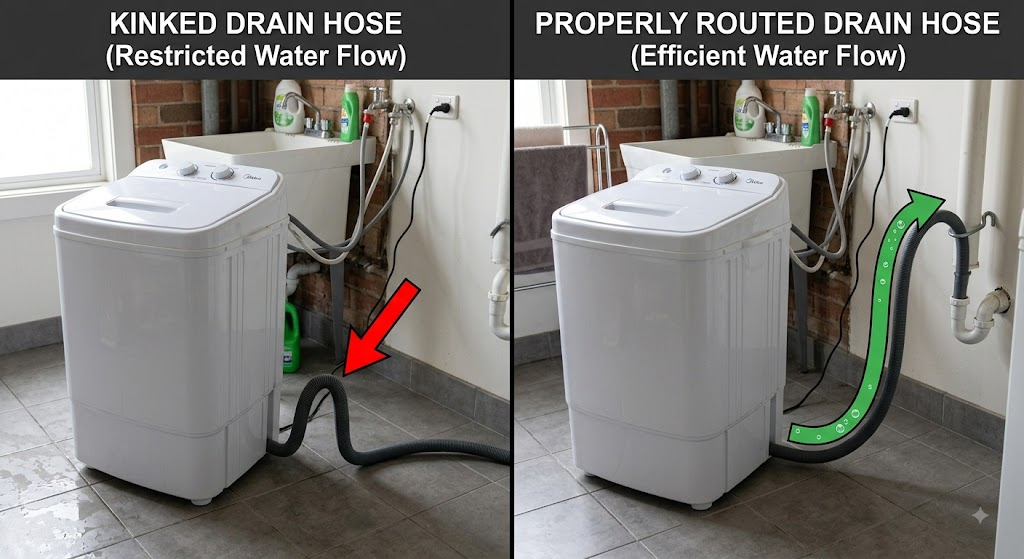
Unplug the machine. If your model allows you to safely disconnect the drain hose, place its end over a large bucket or suitable floor drain. Do not put your hands near the machine’s electrical components.
If water suddenly flows freely when the hose is positioned correctly, the machine itself may be fine. Your previous drain setup may have been restricting the flow.
2. Make Sure Your Sink or Bathroom Drain Isn’t Blocked
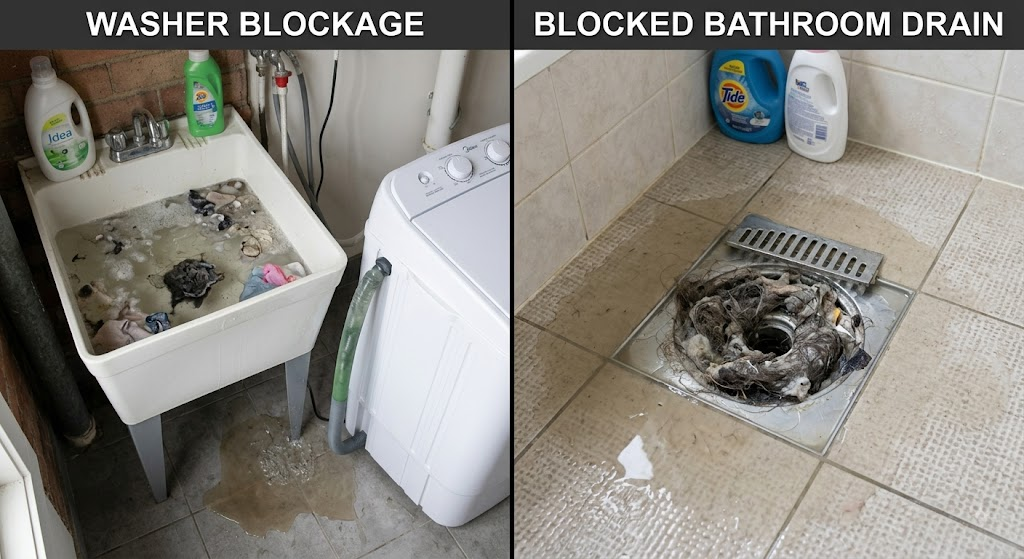
This is particularly important in Indian homes because portable washing machines are often placed in bathrooms, utility areas, balconies or kitchens. You may think the washing machine isn’t draining when the actual problem is the house drain.
For example, suppose your portable washer is draining into a bathroom floor drain. If hair, soap residue and dirt have accumulated around the drain, the washer may pump water out correctly, but the water cannot leave the drain quickly enough. The same thing can happen when draining into a kitchen sink.
Simple test
Remove the washing machine drain hose from the sink or drain. Pour a bucket of water into the same drain. If the water collects instead of flowing away normally, clean the household drain before blaming the washing machine. This distinction is important:
Washer not pumping water = washing machine problem.
Water leaving the washer but backing up at the sink/drain = plumbing problem.
GE’s troubleshooting guidance similarly recommends checking the household drain when a washer doesn’t drain properly.
3. Check Whether the Drain Hose Is Too High
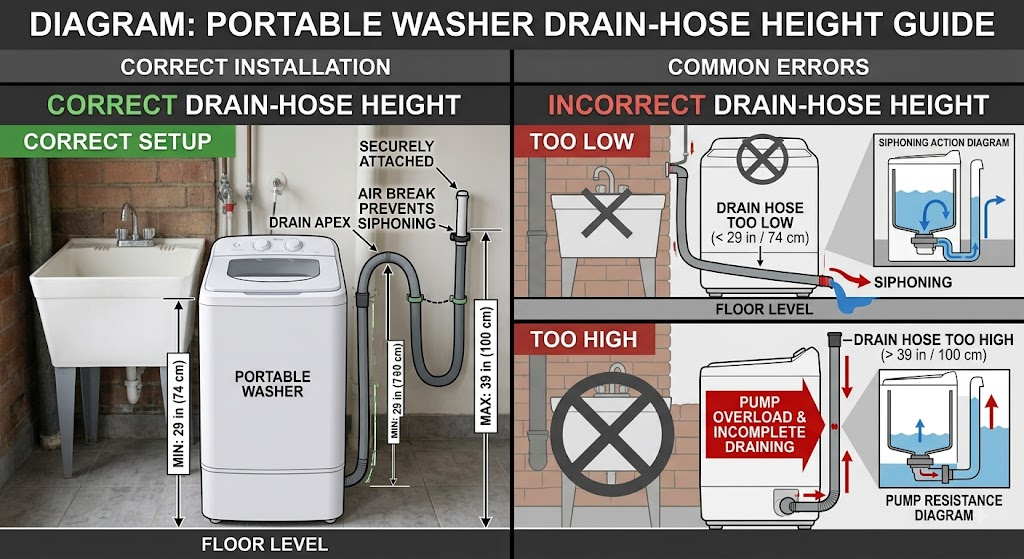
Portable washing machines use a pump to move water out of the tub. That pump has limits. If you’ve routed the hose too high to reach a sink or elevated drain, the pump may struggle. This can happen when someone places a portable washer on a platform or stand and then routes the drain hose unusually high.
Don’t assume that raising the hose is always better. The exact permitted drain height depends on the washer. Check your owner’s manual before changing the installation.
For example, GE states that compact or portable washers can have lower maximum pumping heights than full-size machines, while Haier provides model-specific hose-position guidance.
A common setup mistake
You may place the portable washer on a raised platform because the bathroom floor is uneven, then hang the drain hose over a high sink. That can increase the load on the drain pump.
If your washer drains normally when the hose is lower but struggles when connected to the higher drain point, the hose height deserves serious attention.
4. Clean the Lint Filter or Pump Filter
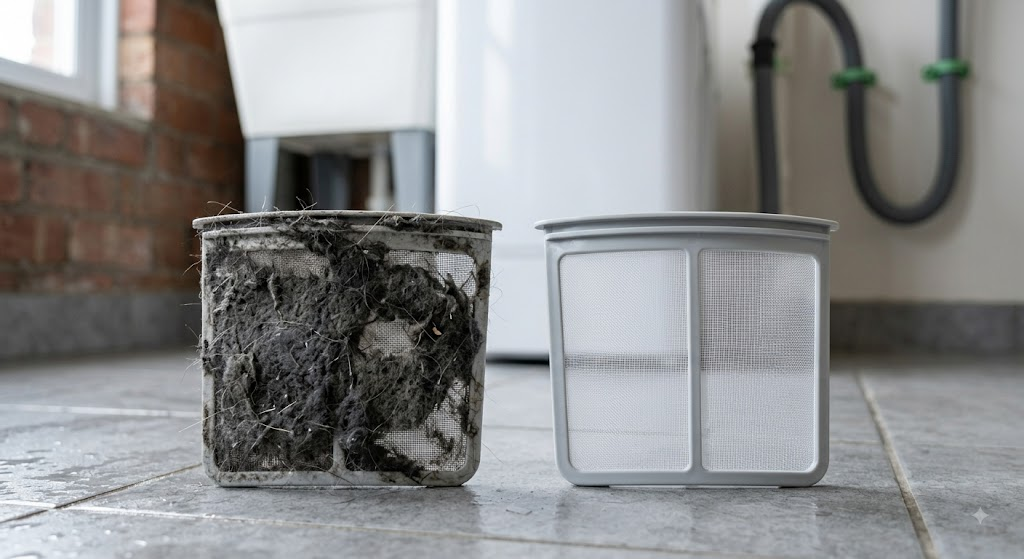
If the hose looks fine, check whether your portable washer has a filter. Depending on the model, the filter may be:
- Inside the wash tub
- Near the agitator
- Around the drain outlet
- Behind a small access cover
- Near the drain-pump area
Not every portable washer has the same filter arrangement, so don’t blindly remove panels. Check your user manual first.
Lint, hair, threads, detergent residue and small pieces of fabric can accumulate over time. A heavily blocked filter can reduce water flow and eventually stop drainage.
What should you look for?
Remove the filter according to the manufacturer’s instructions and check for:
- Hair
- Lint
- Threads
- Tissue paper
- Small socks
- Coins
- Buttons
- Plastic pieces
- Detergent residue
Wash the removable filter under running water and clean it gently. Don’t use excessive force because small plastic filter components can break.
Regular portable washer maintenance can help prevent lint, detergent residue, and other buildup from restricting water flow.
5. Check for a Small Object Blocking the Drain Pump
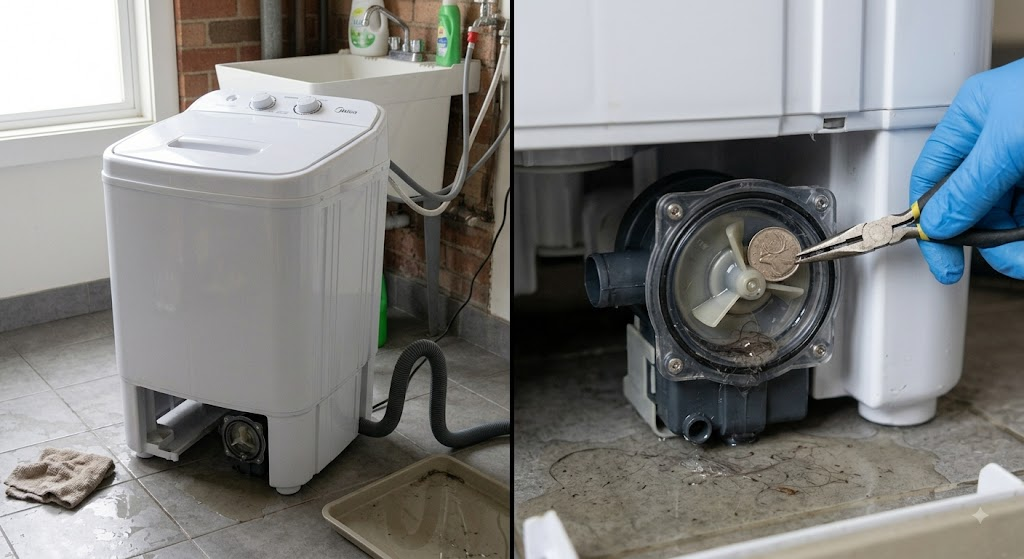
This is one of the problems people often overlook. Small objects can escape from clothing pockets or work their way into the drainage path. Think about what you commonly carry in your pockets:
- Coins
- Hair clips
- Small toys
- Buttons
- Safety pins
- Tissue
- Small pieces of plastic
A tiny object can become lodged near the drain-pump inlet or impeller. Engineer Fix also identifies objects and debris around the pump and drain path as potential causes of drainage failure.
Don’t start dismantling the pump immediately
If your portable washer has an accessible pump filter, use the manufacturer’s procedure. If reaching the pump requires removing the bottom or rear panel, stop and check the manual first.
A portable washing machine contains electrical connections, moving parts and potentially trapped water. Opening the machine without knowing what you’re doing can turn a simple blockage into a damaged appliance or an electrical-safety problem.
6. Listen to the Washing Machine During the Drain Cycle
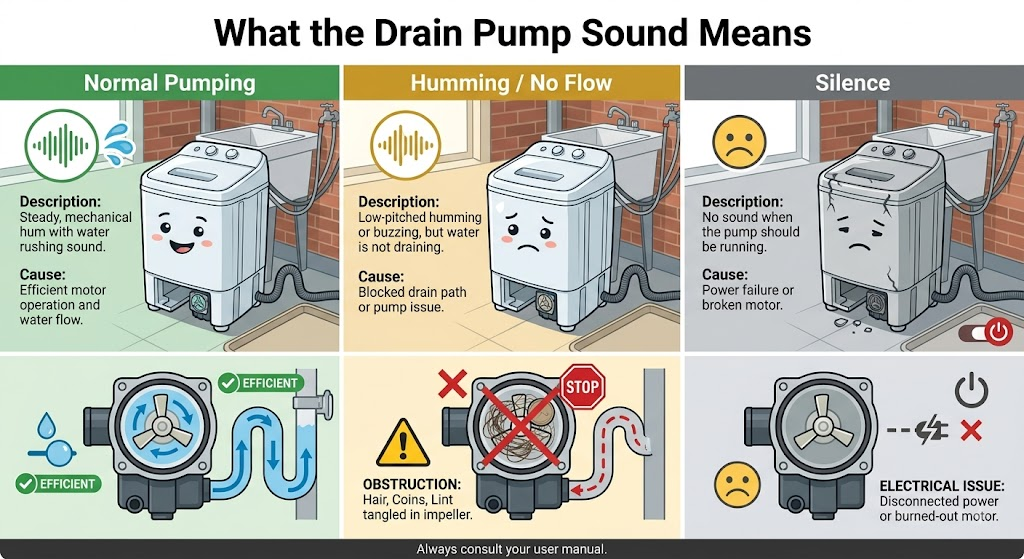
This is one of the most useful troubleshooting tricks. Your ears can give you a clue about what is happening.
Situation 1: You hear the pump running and water is moving
Good news. The pump is probably working. If drainage is still slow, look for:
- Partially blocked hose
- Incorrect hose position
- Blocked household drain
- Dirty filter
- Excessively high drain point
Situation 2: You hear humming but little or no water comes out
This can indicate that the drain pump is receiving power but something is preventing the impeller from moving water. A blockage around the pump is one possibility.
A weak or damaged pump is another. Don’t immediately assume the pump needs replacement. Check the hose and filter first.
Situation 3: You hear nothing
If the washer should be draining but you hear absolutely nothing, several possibilities exist:
- Pump isn’t receiving power
- Pump has failed
- Control system isn’t activating the pump
- Lid/door safety condition isn’t satisfied
- Machine has detected an error
- Wiring problem
This is where model-specific troubleshooting becomes more important. Understanding the differences between twin tub and single tub washing machines can help explain why drainage works differently between these designs.
7. Check Whether the Machine Is Overloaded or Unbalanced
This is more relevant to some portable washers and twin-tub machines than others, but it shouldn’t be ignored. If you have packed the tub tightly with clothes, the machine may struggle during the drain or spin stage.
Portable washers have smaller tubs. A load that looks perfectly reasonable in a large washing machine may be too much for a compact washer. Heavy items can also collect on one side.
For example: Jeans, Towels, Bedsheets and thick cotton clothes can become surprisingly heavy when wet.
Try this
If there is standing water:
- Stop the machine.
- Unplug it.
- Remove some clothes if it is clearly overloaded.
- Redistribute the remaining clothes.
- Follow the machine’s drain/spin instructions.
- Check whether drainage improves.
GE also lists an unbalanced wash load among conditions worth checking when a washer does not drain properly.
8. Twin-Tub Portable Washing Machine Not Draining
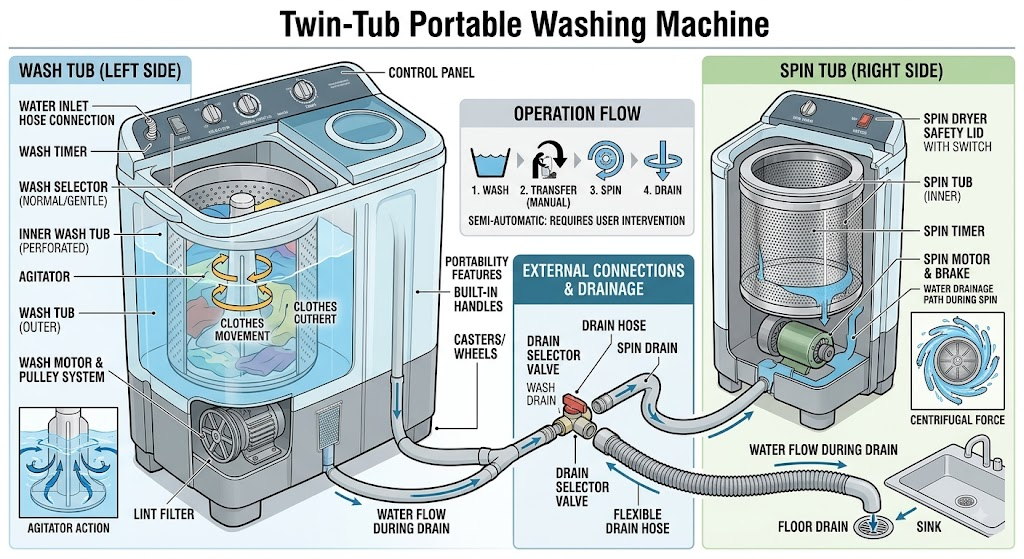
Twin-tub machines deserve separate attention because their design is different. A typical twin-tub portable washer has:
- One tub for washing
- A separate tub for spinning
Depending on the model, you may manually move clothes from the wash tub to the spin tub. If the wash tub isn’t draining, check:
- Drain hose
- Drain selector or drain knob
- Drain hose position
- Internal lint filter
- Blockage around the outlet
- Water level
- Pump, if your model uses one
Some twin-tub machines rely on gravity-assisted drainage rather than a powerful automatic pump. That means the hose position can be even more important.
What if the spin tub also has water?
If water remains in the spin tub, don’t assume the wash-tub drain is the only problem. Check the machine’s specific drainage design and whether the spin tub has its own drain path.
Avoid pouring excessive water into a tub simply to “test” it when the existing water has nowhere to go. You don’t want to turn a drainage problem into a bathroom flood.
9. Fully Automatic Portable Washing Machine Not Draining
Fully automatic portable washers are different from basic twin-tub machines. They normally control washing, rinsing, draining and spinning automatically. So if the machine stops with water inside, there may be an error code or a cycle-related problem.
Check the display
If your machine shows an error code, don’t guess what it means. Search the exact error code in your owner’s manual.
For example: Brand + model number + error code
is much more useful than searching only “portable washing machine not draining.” The model number is usually printed on a label on the rear, side or another designated area of the appliance. Write it down. It will make troubleshooting, warranty claims and spare-part searches much easier.
10. The Drain Pump May Be Failing
If you’ve checked:
- Drain hose
- Hose height
- Sink/drain
- Filter
- Obvious blockages
- Load size
- Machine settings
and the washer still refuses to drain, the pump becomes a more likely suspect. A drain pump has the simple job of moving wastewater out of the machine, but it can fail mechanically or electrically.
A drain pump has the simple job of moving wastewater out of the machine, but it can fail mechanically or electrically.
Signs of a possible pump problem
You may notice:
- Loud humming
- Grinding noise
- Pump runs but barely moves water
- Pump works intermittently
- Water drains very slowly
- Machine stops with water remaining
- Drainage gets worse over time
- Burning smell or unusual electrical smell
A humming pump that doesn’t move water can point toward a jammed impeller or a pump that has lost its ability to move water effectively. At this stage, repair may be necessary.
If the machine is under warranty, don’t open the appliance yourself unless the manufacturer specifically instructs you to do so. Contact the authorised service centre instead.
A Better Way to Diagnose the Problem
Instead of randomly trying things, use this simple decision process.
Step 1: Is there water inside the tub?
If no, drainage probably isn’t your actual problem.
If yes, continue.
Step 2: Is the drain hose kinked?
If yes, straighten it and test again.
If no, continue.
Step 3: Is the sink or floor drain blocked?
Test the household drain separately. If blocked, clean it. If clear, continue.
Regular cleaning helps prevent lint, detergent residue, and buildup from affecting the washer’s performance.
Step 4: Is the washer filter dirty?
If your model has an accessible filter, clean it.
If clear, continue.
Step 5: Does the pump make a sound?
Water-moving sound: investigate hose positioning and restrictions.
Humming: investigate blockage or pump failure.
No sound: investigate the pump, electrical supply, control system or safety condition.
Step 6: Does it still fail?
Stop DIY troubleshooting if accessing internal electrical or pump components is required. At this point, check the manual and contact the manufacturer or a qualified appliance technician.
Why Your Portable Washer May Drain Slowly Rather Than Stop Completely
A slow drain is actually useful information. A completely blocked hose often causes water to stop moving altogether. A partially blocked path can produce a different symptom:
- Drainage starts normally
- Water leaves slowly
- Tub still contains water after the cycle
- Spin cycle may not start properly
- Problem becomes worse over several weeks
This often points toward a restriction rather than a completely dead pump. Lint and detergent residue can gradually build up inside the drainage path. That’s why cleaning isn’t something you should do only after the machine stops working.
What Not to Do When Your Portable Washer Won’t Drain
Some troubleshooting advice online is unnecessarily aggressive. Avoid these mistakes.
- Don’t keep running the machine repeatedly: If water isn’t draining, repeatedly starting the drain cycle won’t magically repair a blockage. It may also put unnecessary strain on the pump.
- Don’t put your hand into a running machine: Always unplug the appliance before inspecting anything that could expose you to moving or electrical components.
- Don’t randomly cut or modify the drain hose: A hose modification that seems clever today can create leakage or drainage problems later.
- Don’t force objects into the hose: You could push a blockage deeper into the machine.
- Don’t replace the pump without diagnosis: A pump isn’t always the problem. Replacing it before checking the hose, filter and household drain is simply wasting money.
- Don’t ignore unusual smells: A burning smell, melted-plastic smell or repeated electrical tripping is not a normal drainage problem. Stop using the appliance and get it checked.
How to Prevent a Portable Washing Machine From Not Draining
Prevention is boring until you’re standing in front of a washing machine full of dirty water. A few simple habits can reduce the chance of drainage problems.
Clean the filter regularly
How often depends on the machine and how frequently you wash. If you wash clothes frequently or have a lot of lint-producing fabrics, inspect the filter more often.
1. Empty pockets
Before putting clothes into the machine, check pockets for:
- Coins
- Paper
- Tissues
- Small plastic objects
- Hair clips
That 10-second check can prevent a surprisingly annoying repair.
2. Don’t overload the machine
Follow the manufacturer’s recommended load capacity. Portable doesn’t mean “stuff it until the lid barely closes.”
3. Keep the drain hose straight
Make sure the hose isn’t crushed against a wall, cabinet or the back of the washer.
4. Keep the receiving drain clean
If you use a bathroom floor drain or sink, clean it regularly.
5. Use the correct amount of detergent
Too much detergent can leave residue and create excessive foam. Follow the detergent and washer manufacturer’s recommendations.
6. Inspect the hose periodically
Check for:
- Cracks
- Soft spots
- Leaks
- Kinks
- Loose connections
Replacing a damaged hose is far cheaper than dealing with water damage. A few simple habits can reduce the chance of drainage problems.
Portable Washing Machine Not Draining After Washing Clothes
If the machine drains during one cycle but doesn’t drain after another, think about what changed.
Ask yourself:
- Was the second load heavier?
- Did you wash towels or bedsheets?
- Did a small item disappear?
- Did you move the machine?
- Did you change the hose position?
- Did you connect it to another drain?
- Did the machine become unusually noisy?
This information can help identify the cause.
For example, if the washer drains perfectly with a small clothes load but struggles with towels, the issue could involve load size, water weight or an already weak drainage system.
Portable Washing Machine Not Draining Into Sink
If your portable washer drains into a sink, check three things first:
- The hose isn’t kinked.
- The hose isn’t positioned too high for your model.
- The sink drain itself is clear.
Also make sure the hose is secure. You don’t want to discover that your “washing machine drainage problem” was actually a loose hose spraying grey water across the kitchen floor.
If you’re using a faucet adapter for the water supply, remember that the water-inlet connection and drain connection are separate issues. Fixing a faucet connection won’t solve a blocked drain hose.
Portable Washing Machine Has Water Left After Spin
A small amount of residual moisture can be normal in some machines, but a tub containing a significant amount of water after the cycle isn’t something to ignore.
Check:
- Drain hose
- Filter
- Pump area
- Load balance
- Cycle selection
- Error code
- Machine manual
If the machine repeatedly leaves substantial water behind, don’t simply remove the water manually after every wash and call it solved. That’s treating the symptom rather than the problem.
When Should You Call a Technician?
You should stop DIY troubleshooting when:
- The machine trips the electrical breaker
- You smell burning
- The power cord or plug becomes hot
- Water is leaking near electrical components
- The drain pump needs internal access
- The pump appears damaged
- The machine repeatedly shows an error code
- The washer is still under warranty
- You’ve checked the external drainage path and the problem remains
A portable washing machine is compact, but that doesn’t mean every part is safe for a DIY repair. If the machine needs electrical testing or pump replacement, an authorised service professional is the sensible option.
FAQs
Why is my portable washing machine not draining?
The most common causes are a blocked or kinked drain hose, clogged filter, blocked household drain, incorrectly positioned hose or a problem with the drain pump.
How do I unblock a portable washing machine drain hose?
Unplug the machine, disconnect the hose according to the manufacturer’s instructions and inspect it for visible blockage. Make sure the hose is not kinked or crushed before reconnecting it.
Why does my portable washer hum but not drain?
A humming sound with little or no water movement can indicate a blocked pump or a failing drain pump. Check the external hose and accessible filter first.
Can too many clothes stop a portable washer from draining?
Yes, an overloaded or badly balanced load can interfere with the drain or spin stage on some portable washing machines. Reduce the load and redistribute the clothes.
Why does my portable washer drain slowly?
A partially blocked hose, dirty filter, restricted pump or blocked sink/floor drain can cause slow drainage.
Can I drain my portable washer into a bathroom drain?
Many portable washers can discharge into a suitable bathroom drain, but you must follow the washer manufacturer’s instructions for hose positioning and height.
Why is there still water in my portable washer after spinning?
Check the drain hose, filter, pump area, load balance and error codes. If the machine repeatedly leaves a significant amount of water, it may need service.
Should I replace the drain pump?
Not immediately. Check the drain hose, household drain and accessible filter first. Pump replacement makes sense only when the pump itself has been diagnosed as faulty.
Is it safe to open a portable washing machine?
Only if you understand the machine and the manufacturer permits the procedure. Always unplug it first. For electrical or pump repairs, professional service is safer.
Final Verdict
If your Portable Washing Machine Not Draining, don’t panic and don’t order a new pump immediately.
Start with the simple things:
Drain hose → receiving drain → hose height/position → filter → blockage → pump symptoms → professional repair.
Most importantly, diagnose the problem instead of guessing.
If water isn’t leaving the machine at all, find out whether the blockage is in the washer’s drainage path or in the sink/bathroom drain. If the pump hums but doesn’t move water, investigate a blockage or pump problem. If there’s no pump sound, the issue may be electrical or related to the machine’s controls.
And if you notice burning smells, electrical problems or signs of internal damage, stop troubleshooting and get the machine serviced.
A portable washer is meant to save you time and effort. Five minutes of sensible troubleshooting is usually better than spending money on a part you don’t actually need.
Recommended Reading:
- What Is a Portable Washing Machine? The Smart Laundry Solution for Small Spaces
- Portable Washing Machine Buyers Guide: 11 Things You Must Know Before Buying
- 10 Best Portable Washing Machine for Apartments 2026: Top Picks Reviewed & Compared
- Twin Tub vs Single Tub Washing Machine: Which Is Better for Apartments, RVs, and Families?

Sourabh researches and writes about home appliances, kitchen gadgets, and common appliance problems to help readers make smarter buying decisions. He specializes in Portable washing machines and appliance troubleshooting guides.
At compactHomeHub, Sourabh focuses on creating easy-to-understand content that simplifies technical appliance issues into practical solutions. His goal is to help users save time, avoid costly mistakes, and choose the right appliances with confidence.