

A portable washer is supposed to make laundry easier, not leave you staring at a tub full of wet clothes. If your portable washing machine is not spinning, the good news is that the problem is often caused by something simple such as an overloaded load, an unbalanced drum, a lid that isn’t properly closed, or a drainage problem. More serious causes include a worn belt, failed capacitor, motor problem, or control-board fault.
This guide explains how to diagnose the problem step by step, including Comfee, Giantex, Auertech, Zeny, and Kuppet portable washing machines. It also explains what different symptoms mean, which fixes are safe to try yourself, and when it’s smarter to stop troubleshooting and call for service.
Understanding how a portable washing machine works can make it easier to identify whether the problem is related to the wash motor, spin cycle, drain system, or load balance.
Why Is My Portable Washing Machine Not Spinning?
The most common reasons a portable washing machine won’t spin are:
- Overloaded or unbalanced laundry: Remove some clothes and redistribute the remaining items evenly.
- Lid or safety switch problem: The washer may refuse to spin if it doesn’t detect a properly closed lid.
- Drainage problem: Many washers won’t enter the spin cycle while water remains in the tub.
- Blocked drain hose or filter: A restriction can prevent the washer from completing the drain stage.
- Broken or loose drive belt: The motor may run while the spin basket remains still on belt-driven models.
- Failed motor capacitor: A common symptom is a humming motor that doesn’t start spinning.
- Motor or coupling failure: The motor may be unable to transfer power to the basket.
- Control or timer problem: The washer may stop before reaching the spin cycle.
- Incorrect spin settings: Some twin-tub machines require the spin timer and selector to be set separately.
Start with the easy checks first: reduce the load, redistribute the clothes, close the lid firmly, make sure the washer is level, and confirm that water has completely drained. If it still won’t spin, move on to the hose, filter, belt, lid switch, and other components.
What Does “Not Spinning” Actually Mean?
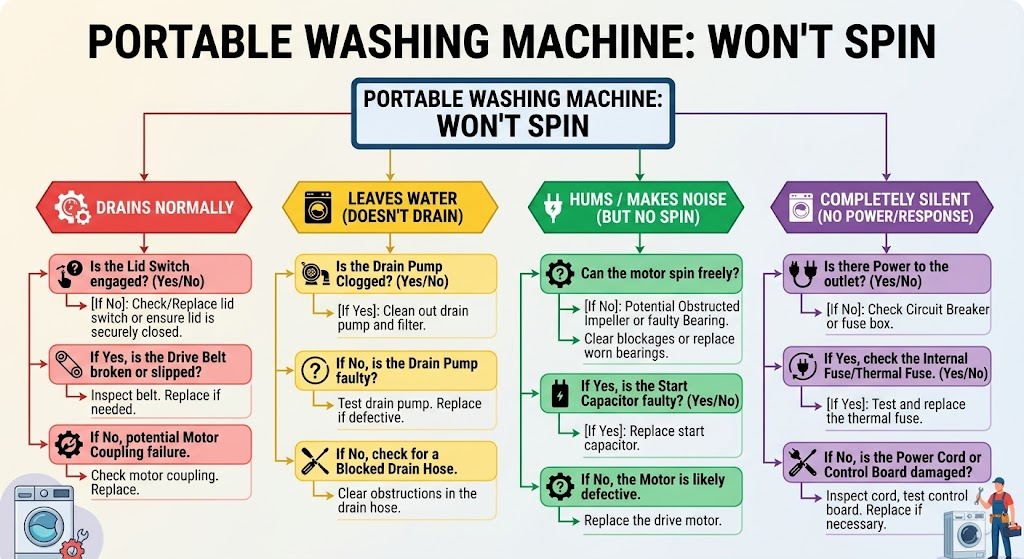
Before taking anything apart, identify exactly what the washer is doing. A portable washing machine not spinning can behave in several different ways, and each symptom points toward different causes.
1. The washer washes but won’t spin
If the wash or agitation cycle works normally but the spin cycle doesn’t start, focus on:
- Lid or safety switch
- Spin timer or control
- Drainage
- Overloaded load
- Unbalanced load
- Spin motor
- Drive belt on belt-driven models
2. The washer spins but stops quickly
This can indicate:
- Unbalanced clothes
- Excessive load
- Lid switch interruption
- Motor overheating
- Mechanical resistance
- Drainage not completing
3. The washer drains but doesn’t spin
This symptom is particularly useful because it tells you that at least part of the drainage system is working.
Possible causes include:
- Faulty lid switch
- Drive belt problem
- Motor capacitor
- Spin timer
- Motor
- Mechanical obstruction
4. The washer won’t drain and won’t spin
Start with drainage rather than the motor. Check:
- Drain hose
- Hose position
- Filter
- Pump
- Obstruction
- Remaining water in the tub
Many portable washers won’t proceed to spinning while water remains inside.
5. The washer hums but doesn’t spin
A humming sound with no rotation often points toward:
- Motor capacitor
- Jammed motor
- Mechanical obstruction
- Belt problem
- Motor problem
Don’t keep running the washer repeatedly if the motor is humming without turning. A stalled motor can overheat.
First: Try These 7 Simple Fixes
Before opening the cabinet or buying replacement parts, go through these checks.
1. Remove some clothes
Portable washers have relatively small motors and spin baskets. Overloading them can prevent the washer from reaching the correct spin speed.
Remove about one-third to one-half of the load and try again.
For example, if you’ve put several towels, jeans, and a heavy sweatshirt into a small portable washer, the combined weight may be too much during spin.
2. Redistribute the clothes
Don’t simply remove clothes and restart.
Open the lid and spread the remaining clothes evenly around the tub.
A single heavy towel can become saturated with water and collect on one side of the basket. That creates an imbalance during high-speed rotation.
3. Close the lid firmly
Portable washers often have a safety mechanism that prevents the spin basket from rotating when the lid is open.
Close the lid completely and try the spin cycle again.
Don’t bypass the safety switch. It exists to prevent injuries from a rapidly rotating basket.
4. Check whether water remains inside
Look inside the tub.
If there’s still a significant amount of water, don’t immediately assume the spin motor has failed.
Check the drain hose and filter first.
5. Check the drain hose
Make sure the hose:
- Isn’t kinked
- Isn’t crushed behind the washer
- Isn’t blocked
- Isn’t routed unnecessarily high
- Hasn’t been pushed into a position that restricts water flow
6. Make sure the washer is level
A portable washer sitting on an uneven surface can vibrate excessively during spin. Adjust the feet if your model has them and make sure the machine sits firmly on the floor.
7. Power reset the machine
Unplug the washer. Wait several minutes and reconnect it. Then try a short cycle. A reset can clear a temporary electronic glitch, but it won’t repair a failed motor, belt, capacitor, or switch.
Portable Washing Machine Not Spinning
1. Portable Washing Machine Won’t Spin but Drains Normally
This is one of the most useful symptoms to identify.
If the washer drains normally but won’t spin, the problem is less likely to be a completely blocked drain system.
Start with these checks:
- Is the load balanced?
- Is the lid completely closed?
- Does the washer have a separate spin timer?
- Does the spin basket rotate freely by hand when unplugged?
- Can you hear the motor running?
- Does the washer hum?
- Is the drive belt intact, if your model uses one?
Why the lid switch matters
The washer may drain successfully but still refuse to spin if the safety switch doesn’t detect that the lid is closed. Don’t assume that because the lid looks closed, the switch is working. A loose, damaged, misaligned, or failed switch can interrupt the spin function.
What you can safely check
With the washer unplugged:
- Inspect the lid for physical damage.
- Check whether the lid closes normally.
- Look for a damaged plastic actuator.
- Check for visible debris around the switch area.
Don’t defeat or bypass the safety mechanism.
2. Portable Washing Machine Won’t Spin and Leaves Water Inside
If your washer leaves water inside after the cycle, fix the drainage problem first. The spin problem may simply be a consequence of the washer not completing its drain stage.
1. Check the drain hose
Look for:
- Kinks
- Crushing
- Clogs
- Excessive bends
- Incorrect positioning
Disconnecting a hose can release trapped water, so keep a bucket and towels nearby.
2. Check the filter
If your model has an accessible lint or pump filter, clean it according to the manufacturer’s instructions.
Common debris includes:
- Lint
- Hair
- Coins
- Small socks
- Fabric pieces
- Paper
- Other objects left in pockets
3. Check the pump
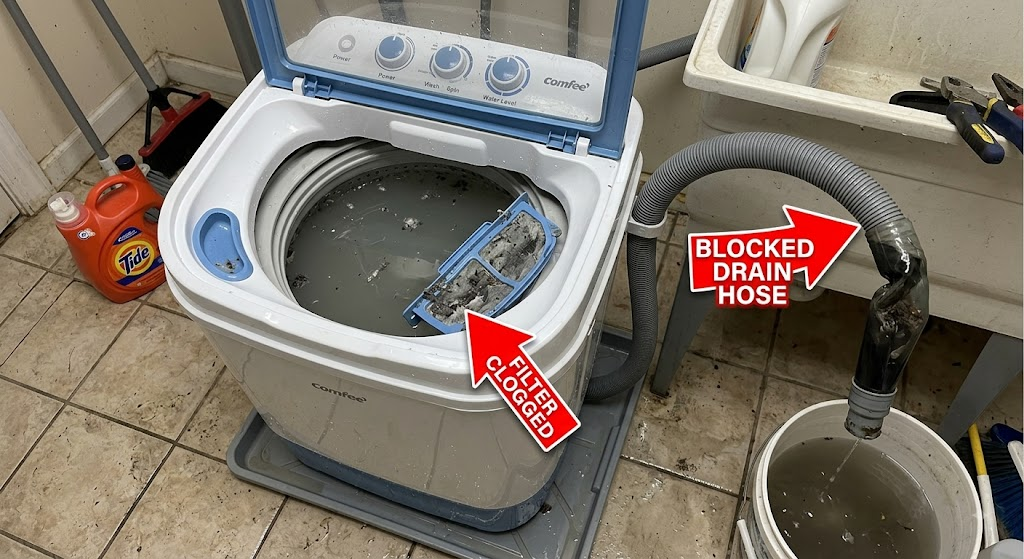
A pump that hums but doesn’t move water may be blocked or damaged. If the pump is completely silent, there may be an electrical or control issue.
The important point is that “won’t spin” and “won’t drain” can be connected problems, rather than two separate failures.
3. Portable Washing Machine Hums but Doesn’t Spin
A humming washer deserves more attention. If you hear the motor humming but the basket doesn’t rotate, the motor may be receiving power but unable to start or turn the load.
Possible causes include:
- Failed motor capacitor
- Jammed mechanism
- Broken belt
- Motor problem
- Mechanical obstruction
- Excessive load
Don’t keep restarting it
Repeatedly running a stalled motor isn’t a smart diagnostic technique. If the motor is energized but cannot rotate, it can generate heat. Unplug the washer and allow it to cool before performing further checks.
Check whether the basket moves freely
With the washer unplugged, gently try rotating the appropriate basket by hand. If it feels completely jammed, don’t force it.
A mechanical obstruction or bearing/motor problem may require professional inspection. If it rotates freely but the motor only hums during a cycle, an electrical or drive-system problem becomes more likely.
4. Overloaded or Unbalanced Load
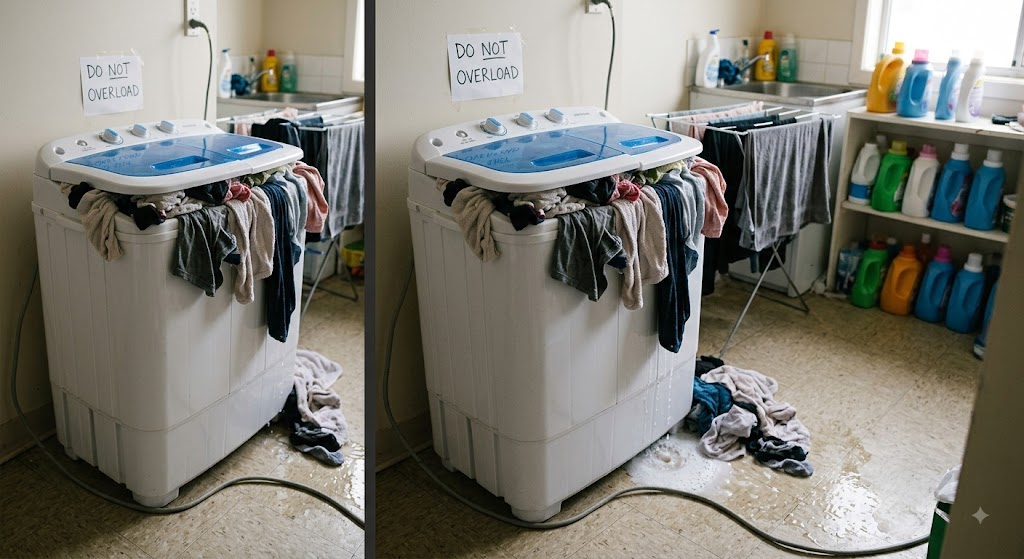
This is one of the first things you should check because it’s simple and costs nothing to fix. Portable washers are particularly sensitive to load distribution because their smaller tubs have less room for clothes to spread out.
Signs of an unbalanced load
You may notice:
- Loud banging
- Strong vibration
- Washer movement
- Spin starts and stops
- Spin doesn’t start at all
- Clothes piled on one side
How to fix it
Stop the cycle. Open the lid after the basket has completely stopped. Spread clothes evenly around the basket. Remove heavy items if necessary. Then restart the spin cycle.
Example
Suppose you’re washing:
- One large bath towel
- Two jeans
- Three T-shirts
The towel can absorb a lot of water and become much heavier than the other items. During spin, it may collect on one side and throw the basket out of balance.
Adding several smaller items isn’t always the answer. In a small washer, removing the heavy item may be better.
6. Lid and Safety Switch Problems
The lid switch is a safety component, not just another electrical part.
The washer uses it to determine whether it is safe to spin.
If the machine believes the lid is open, it may prevent spinning even though everything else works.
Symptoms of a lid-switch problem
You may notice:
- Washer fills normally
- Wash cycle works
- Drain cycle works
- Spin won’t start
- Lid appears closed
- Pressing or moving the lid changes the behavior
Some machines may also make a click when the switch engages.
What to do
Inspect the lid and switch area for obvious damage.
Make sure nothing is preventing the lid from closing completely.
If the switch appears damaged or faulty, replace it with the correct manufacturer-approved part or have it serviced.
Do not bypass the lid switch.
That turns a frustrating laundry problem into a safety problem.
7. Drive Belt Problems
Some portable washers use a belt-driven motor system. Others use different drive arrangements. If your particular model uses a belt, a loose, worn, or broken belt can prevent the spin basket from turning.
Signs of a belt problem
Typical symptoms can include:
- Motor sound but no basket rotation
- Weak or inconsistent spinning
- Squealing
- Rubber smell
- Belt visibly damaged
- Basket doesn’t turn during the cycle
A broken belt can explain why the washer appears to operate normally but doesn’t transfer motor power to the spin mechanism.
Should you replace it yourself?
Only if your model’s manual supports the procedure and you’re comfortable working on appliances.
Always:
- Unplug the washer.
- Follow the manufacturer’s service instructions.
- Use the correct replacement part.
- Don’t work around exposed wiring while the washer is connected to power.
Don’t assume every portable washer has a replaceable belt. Some models use different drive systems.
8. Motor and Capacitor Problems
This is where troubleshooting becomes more complicated. A portable washer motor needs enough starting torque to begin rotating. Some motors use a capacitor to provide that starting assistance.
A failed capacitor can produce a classic symptom:
The washer hums, but the basket doesn’t spin. However, humming does not prove that the capacitor is bad. Other problems can create similar symptoms.
Possible motor-related causes
- Failed capacitor
- Motor winding failure
- Mechanical resistance
- Loose electrical connection
- Overheating
- Failed motor
- Control-board problem
A weak motor can also increase electricity consumption because the machine may work harder when components such as the motor are worn or struggling.
Should you replace the capacitor yourself?
Be careful.
Capacitors can retain electrical charge, and incorrect replacement can create an electrical hazard or damage the machine. If the washer is under warranty, contact the manufacturer first. If you’re not experienced with electrical appliance repair, this is a good point to stop DIY troubleshooting.
9. Drainage Problems Can Prevent Spinning
Drainage deserves its own section because it is easy to overlook. A washer may refuse to spin because it hasn’t successfully completed the drain stage.
Common drainage causes
- Kinked drain hose
- Blocked drain hose
- Dirty filter
- Blocked pump
- Failed drain pump
- Incorrect hose positioning
- Foreign object obstruction
The Danby troubleshooting guide similarly identifies drain restrictions and a washer full of water as reasons a portable washer may fail to spin.
A simple diagnostic test
If your model supports a spin-only cycle:
- Make sure the tub is empty of excess water.
- Check the drain path.
- Close the lid.
- Run the spin-only function.
- Observe what happens.
If it spins when empty but not with clothes, suspect load size or balance. If it doesn’t spin even when empty, look more closely at the lid switch, drive system, motor, timer, or control system.
Regular portable washer maintenance can help you catch buildup, worn components, and other problems before they affect the spin cycle.
Comfee Portable Washing Machine Not Spinning
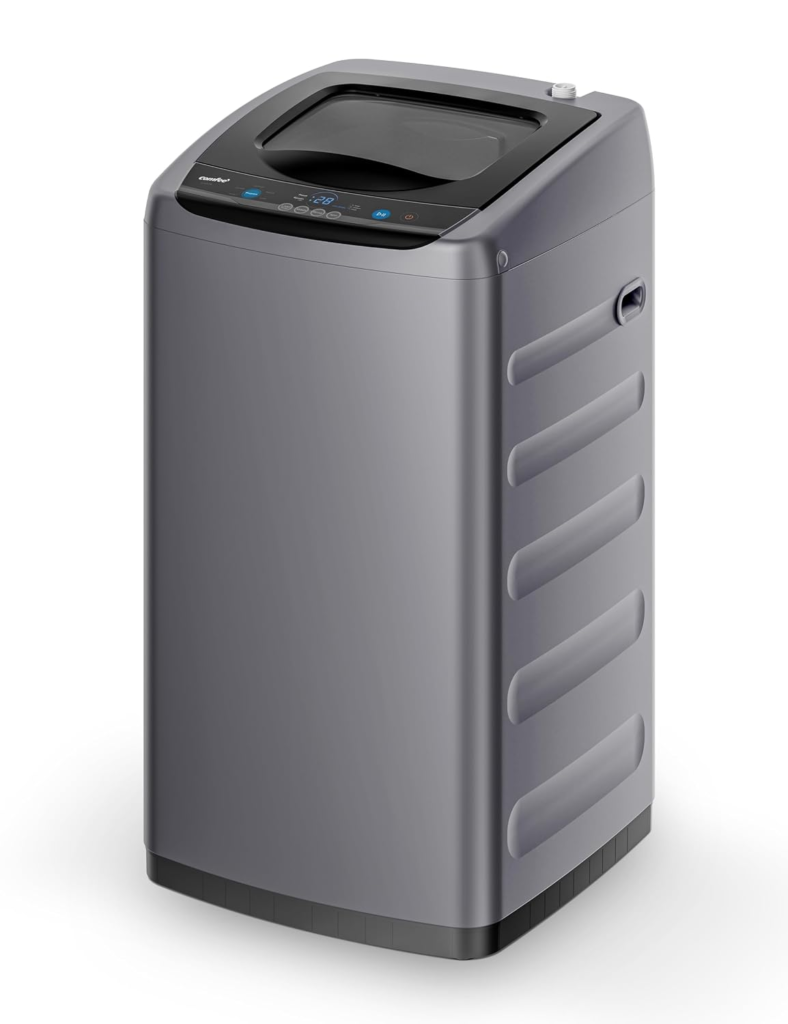
If you’re searching for Comfee portable washing machine not spinning, start with the same basic checks rather than immediately assuming the motor has failed.
Check the load
Remove excess clothing and redistribute what’s left. Comfee-specific troubleshooting guidance also identifies overloaded or unbalanced loads as a common reason for a spin failure.
Check drainage
If water remains inside:
- Inspect the drain hose.
- Check accessible filters.
- Look for blockages.
- Confirm that water can leave the machine properly.
Check the lid
Make sure the lid closes completely and the safety mechanism engages.
Check the power
If the machine is turning off or resetting, check the outlet and circuit rather than assuming the spin mechanism is defective.
Check the drive system
Some Comfee models use different drive arrangements, so don’t automatically assume your machine has a belt. Use your exact model number and owner’s manual to identify the drive system before ordering parts.
When to stop
If the washer:
- Smells burned
- Trips the breaker repeatedly
- Has damaged wiring
- Has a seized drum
- Has a suspected control-board failure
stop troubleshooting and contact Comfee support or a qualified appliance technician.
Giantex Portable Washing Machine Not Spinning
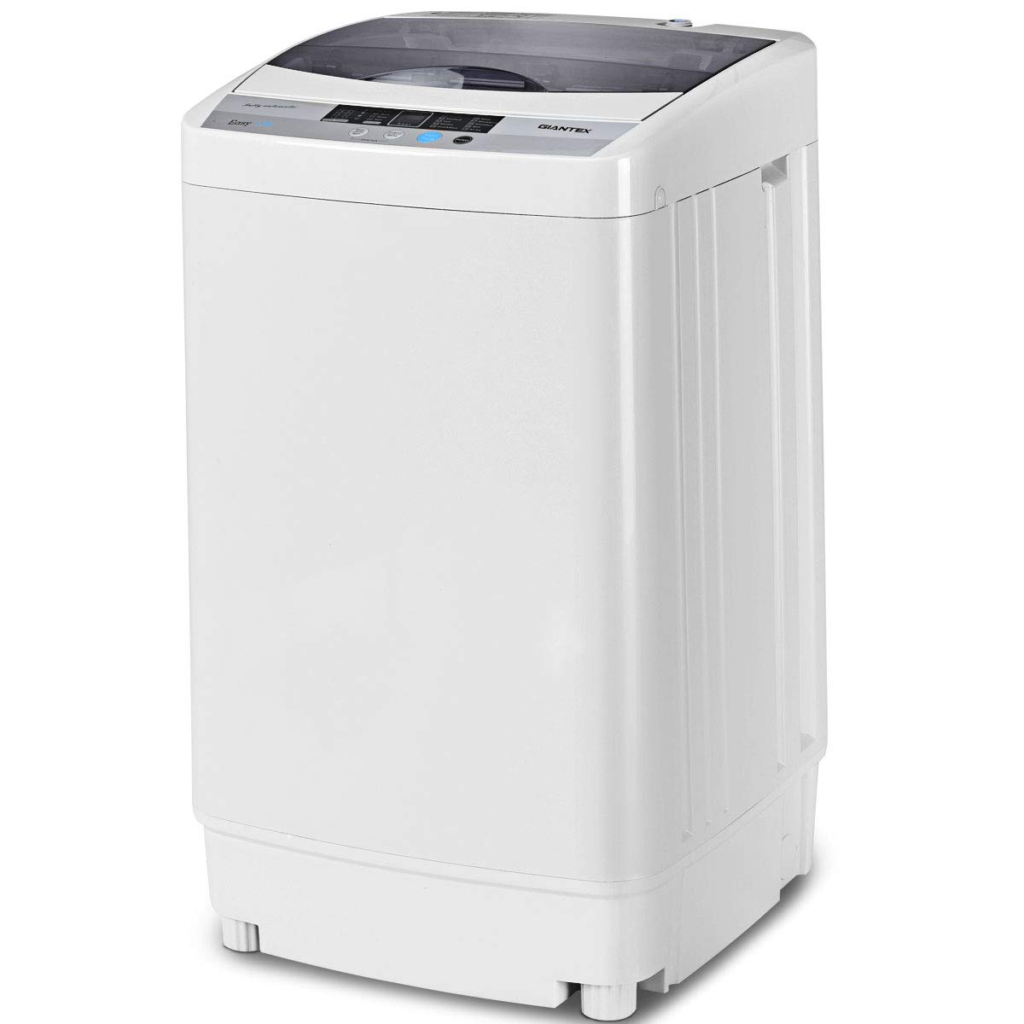
For a Giantex portable washing machine not spinning, begin with the universal checks:
- Reduce the load.
- Redistribute clothing.
- Close the lid.
- Check the drain hose.
- Check for standing water.
- Confirm the correct spin setting.
- Make sure the machine is level.
Giantex sells several portable and twin-tub designs, so troubleshooting can vary by model. That’s important: don’t buy a capacitor, belt, timer, or motor simply because another Giantex owner had that problem. Find your exact model number first.
If it’s a twin-tub model
Check whether you’re using the spin tub correctly. Twin-tub machines have separate wash and spin compartments, so the spin process isn’t identical to a fully automatic washer. Make sure the clothing is distributed evenly inside the spin tub and that the spin timer is actually engaged.
Auertech Portable Washing Machine Not Spinning
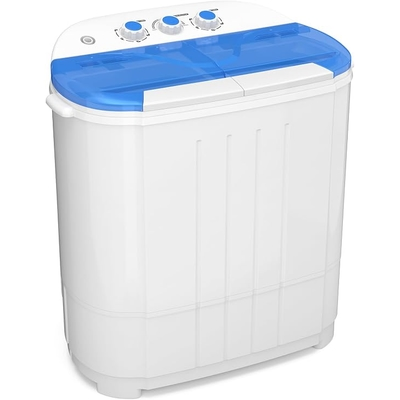
If you’re dealing with an Auertech portable washing machine not spinning, check the spin lid, spin timer, load balance, and excess water first. Auertech’s own manual specifically lists the following checks for a non-working spin cycle:
- Ensure the spin lid is closed.
- Check the spin timer.
- Remove excess water from clothes.
- Balance the load in the spin basket.
It also advises stopping use and contacting customer service if troubleshooting doesn’t resolve the problem.
Auertech troubleshooting order
For an Auertech twin-tub machine, I would check:
- Spin lid: Make sure it’s fully closed.
- Spin timer: Confirm that the timer is actually set.
- Clothing distribution: Don’t pack everything into one side.
- Excess water: Very wet, heavy clothing can make the spin basket difficult to balance.
- Mechanical/electrical problems: If the basic checks fail, move to manufacturer support rather than bypassing safety components.
Zeny Portable Washing Machine Not Spinning
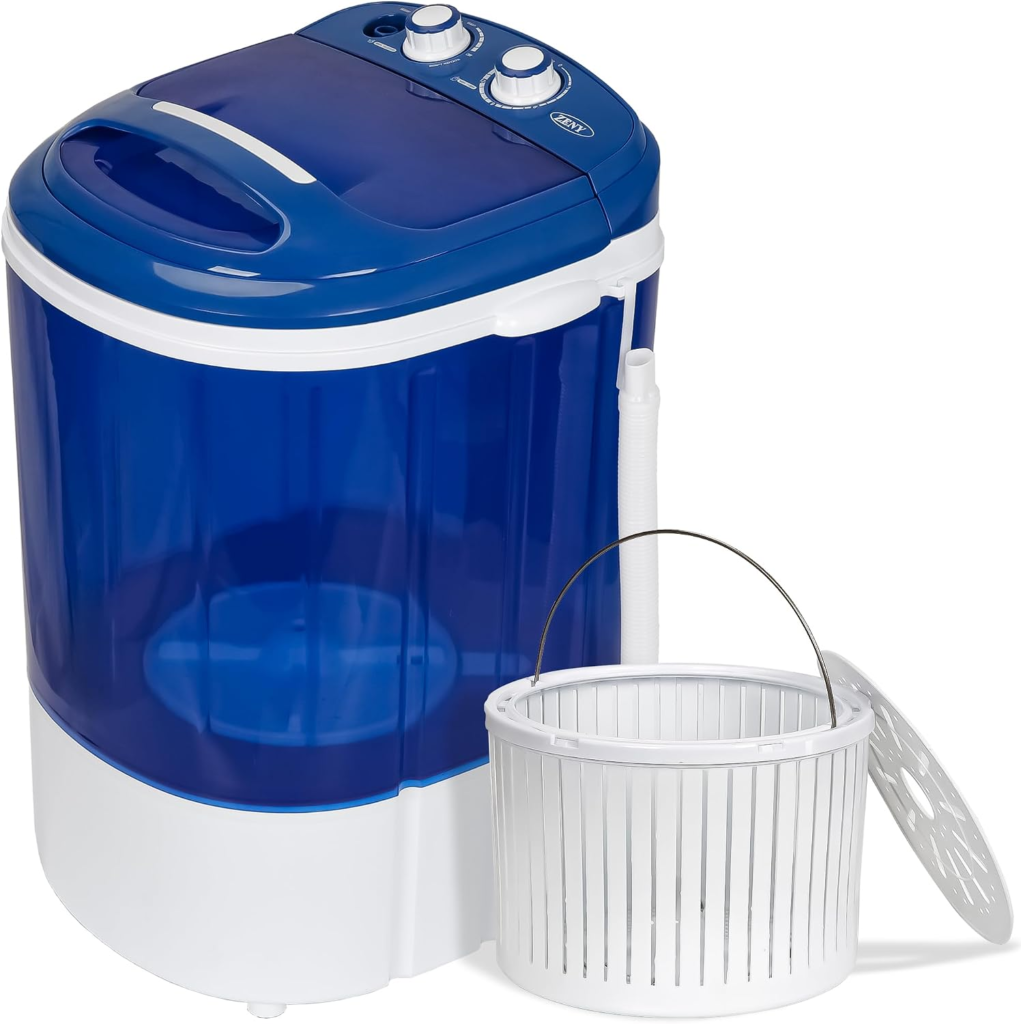
For a Zeny portable washing machine not spinning, first identify whether you’re using a twin-tub or another design.
Then check:
- Load size
- Load balance
- Spin timer
- Lid
- Drainage
- Basket movement
- Unusual noises
If it spins slowly
A slow spin can be caused by an overloaded or poorly balanced basket. Remove some clothes and try again.
If it makes a humming sound
Stop the machine and unplug it. A humming motor with no rotation can indicate a capacitor, motor, belt, or mechanical issue depending on the model. Don’t open the electrical compartment unless you know exactly what you’re doing.
Kuppet Portable Washing Machine Not Spinning
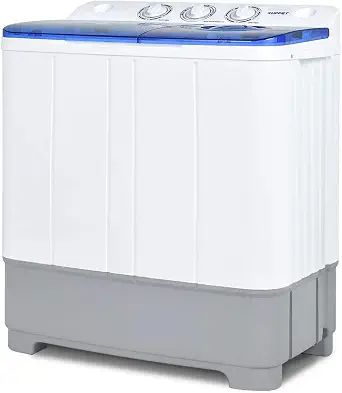
If you’re searching for Kuppet portable washing machine not spinning, use the same symptom-first approach.
Kuppet twin-tub washer
Check:
- Spin timer
- Spin lid
- Load balance
- Drainage
- Basket capacity
- Foreign objects
- Excessively heavy clothing
A common mistake with twin-tub machines is putting too much wet laundry into the spin side. Remember that the spin compartment is not designed to handle unlimited weight just because the clothes fit physically.
If the washer makes noise
Stop it and inspect the load first. A banging spin basket is often a balance problem, not a failed motor. If the basket remains stationary while the motor runs, the drive system deserves further investigation.
Brand Comparison: What Should You Check First?
| Brand | First checks | If those don’t work |
|---|---|---|
| Comfee | Load, drainage, lid, power | Drive system, motor/control |
| Giantex | Load, lid, drainage, spin setting | Model-specific drive components |
| Auertech | Spin lid, timer, load balance | Manufacturer service |
| Zeny | Load, balance, timer, drainage | Drive/motor inspection |
| Kuppet | Spin timer, lid, balance, drainage | Model-specific service |
| Other portable washers | Load, lid, drainage, power | Consult manual/service |
The important lesson is that brand names alone aren’t enough to diagnose a fault. Portable washers within the same brand can use different designs and components.
How to Tell Which Problem You Have
Use this quick diagnostic guide.
| What you see | Most likely areas to check |
|---|---|
| Washes but won’t spin | Lid switch, timer, load, drive system |
| Spins empty but not with clothes | Overload or imbalance |
| Won’t spin and water remains | Drain hose, filter, pump |
| Hums but doesn’t spin | Capacitor, motor, belt, obstruction |
| Completely silent during spin | Timer, switch, control, motor power |
| Loud banging | Unbalanced load or leveling |
| Spin starts then stops | Balance, overload protection, motor overheating |
| Basket is physically jammed | Mechanical obstruction or bearing/drive problem |
| Repeatedly trips breaker | Electrical fault; stop using it |
| Burning smell | Motor, belt, wiring or electrical fault; stop using it |
A Better Diagnostic Process
Instead of replacing parts randomly, work from the simplest explanation to the most expensive.
Step 1: Identify the symptom
Does it:
- Drain?
- Fill?
- Wash?
- Hum?
- Spin empty?
- Spin with clothes?
Step 2: Remove the load
Try an empty or very small load if your manufacturer’s instructions permit it.
Step 3: Check the lid
Make sure the safety mechanism can engage.
Step 4: Check drainage
No standing water should remain if the washer requires draining before spin.
Step 5: Listen
Different sounds provide clues:
- Hum: motor trying to start
- Click: switch or relay
- Grinding: mechanical issue
- Squealing: possible belt or bearing issue
- Silence: electrical/control/switch issue
Step 6: Check the manual
Use the exact model number. This matters because portable washers aren’t standardized internally.
Step 7: Decide whether DIY is appropriate
Simple load, hose, filter, and positioning problems are reasonable homeowner checks. Electrical and motor repairs are a different story.
When Should You Stop DIY Troubleshooting?
This is the part many online repair guides don’t emphasize enough. You should stop and seek professional help when:
- The washer repeatedly trips the circuit breaker.
- You smell burning plastic or electrical insulation.
- You see exposed or damaged wiring.
- The motor becomes extremely hot.
- The drum is mechanically seized.
- Water has reached electrical components.
- The control board appears damaged.
- You need to test live electrical circuits.
- You’re unsure how to safely discharge or replace a capacitor.
- The washer is still under warranty.
The Auertech manual explicitly recommends discontinuing use and contacting customer service if troubleshooting doesn’t resolve the problem.
When replacement makes more sense
Portable washers are relatively inexpensive compared with full-size machines. If a budget washer needs a costly control board, motor, or major mechanical assembly, compare the repair cost with the price of a replacement machine.
A $20 hose replacement is one thing. A $200 repair on a $250 washer is a completely different decision.
What Not to Do
Avoid these shortcuts:
Don’t bypass the lid switch
It’s a safety device.
Don’t keep running a humming motor
You could turn a simple fault into a more expensive motor problem.
Don’t overload the washer to “test” it
That’s not a useful diagnostic test.
Don’t randomly replace the capacitor
Humming doesn’t automatically mean the capacitor is bad.
Don’t use a replacement part based only on the brand
Use the exact model and part specifications.
Don’t work on live wiring
Unplug the appliance before performing any inspection that requires access to internal components.
Don’t ignore a burning smell
Stop using the machine.
How to Prevent a Portable Washer From Stopping During Spin
You can prevent many spin problems with a few habits.
Keep loads reasonable
Follow the manufacturer’s capacity recommendations.
Balance heavy items
Don’t put one giant wet towel or blanket into a small spin basket by itself.
Check pockets
Coins, clips, and small objects can cause blockages.
Keep hoses straight
Inspect both inlet and drain hoses periodically.
Clean filters
If your model has a user-accessible filter, clean it according to the manual.
Keep the washer level
A stable machine experiences less vibration.
Don’t ignore unusual noises
A small squeak is easier to investigate than a completely failed drive system.
FAQ
Why is my portable washing machine not spinning but it drains normally?
Start by checking the load, lid switch, spin setting, and drive system. If it drains normally, a blocked drain is less likely, although the washer could still have a control or safety-switch problem. A belt, motor, capacitor, or timer can also prevent spinning depending on the model.
Why does my portable washer hum but not spin?
A humming sound can indicate that the motor is receiving power but cannot start rotating. Possible causes include a failed capacitor, mechanical obstruction, motor problem, or drive-system fault. Unplug the washer and avoid repeatedly restarting it.
Why won’t my portable washer spin with clothes but spins empty?
The most likely starting points are overload and imbalance. Remove some clothes and redistribute the remaining laundry evenly. If it spins empty but consistently fails with normal loads, the motor or drive system may be struggling under load.
Why is my portable washing machine not spinning and full of water?
Check the drain hose, filter, pump, and hose position. Many portable washers won’t proceed to spin while water remains inside. Fix the drainage problem before investigating the spin motor.
How do I fix a Comfee portable washing machine not spinning?
Start with the load, drainage, lid, and power supply. Then check the drive system if your particular model uses one. Comfee troubleshooting guidance identifies unbalanced loads, drainage, lid mechanisms, power, belts on applicable models, and control issues among possible causes.
How do I fix a Giantex portable washing machine not spinning?
Check the load balance, lid, drainage, and spin controls first. Because Giantex sells multiple portable washer designs, use your exact model manual before inspecting or replacing internal parts.
Why is my Auertech portable washing machine not spinning?
For Auertech models, check that the spin lid is closed, the spin timer is set, excess water has been removed from clothing, and the load is balanced. These checks are also listed in Auertech’s troubleshooting instructions. (Auertech Washers Online)
Why is my Zeny portable washing machine not spinning?
Check the load, balance, spin timer, lid, and drainage system. If the machine hums but doesn’t rotate, stop using it and investigate the model-specific motor or drive system rather than repeatedly restarting it.
Why is my Kuppet portable washing machine not spinning?
For Kuppet twin-tub models, check the spin timer, spin lid, load size, balance, and drainage. If those checks don’t solve the problem, use the exact model manual or contact the manufacturer before attempting electrical repairs.
Can an overloaded portable washer stop spinning?
Yes. An overloaded or badly balanced load can prevent the spin basket from reaching the correct speed or cause the washer’s safety system to stop the cycle. Removing some clothing and redistributing the remaining items is the simplest first test.
Should I replace the motor capacitor myself?
Not unless you understand appliance electrical systems and the procedure specified for your exact model. A capacitor can present an electrical hazard, and humming doesn’t prove that the capacitor is the failed component.
Is a portable washing machine worth repairing?
It depends on the fault and the machine’s age and value. Simple problems such as clogged hoses, filters, belts, or certain switches may be worth repairing. Major control-board, motor, or mechanical repairs may not make financial sense on an inexpensive portable washer.
Final Verdict
When your portable washing machine is not spinning, don’t jump straight to the motor.
Start with the boring stuff because the boring stuff is often the answer: check the load, redistribute the clothes, close the lid, check the drain hose, make sure water has left the tub, and confirm the correct spin setting.
If the washer drains normally but still won’t spin, investigate the lid switch, timer, drive system, motor, and capacitor according to your specific model. If it hums without spinning, smells burned, trips the breaker, or has damaged wiring, stop using it rather than turning a repairable problem into a dangerous one.
The biggest mistake is treating every Comfee, Giantex, Auertech, Zeny, or Kuppet portable washing machine not spinning problem as if the machines were mechanically identical. They aren’t. Use the exact model number and manufacturer’s manual before ordering parts or opening the machine.
Recommended Reading:
- 10 Best Portable Washing Machine for Camping
- Portable Washing Machine Not Draining? 10 Ways to Fix It
- Portable Washer vs Full-Size Washer: Which One Is Better for Your Home?
- Off-Grid Laundry: Running Your Compact Washer on Solar Power & Inverters

Sourabh researches and writes about home appliances, kitchen gadgets, and common appliance problems to help readers make smarter buying decisions. He specializes in Portable washing machines and appliance troubleshooting guides.
At compactHomeHub, Sourabh focuses on creating easy-to-understand content that simplifies technical appliance issues into practical solutions. His goal is to help users save time, avoid costly mistakes, and choose the right appliances with confidence.