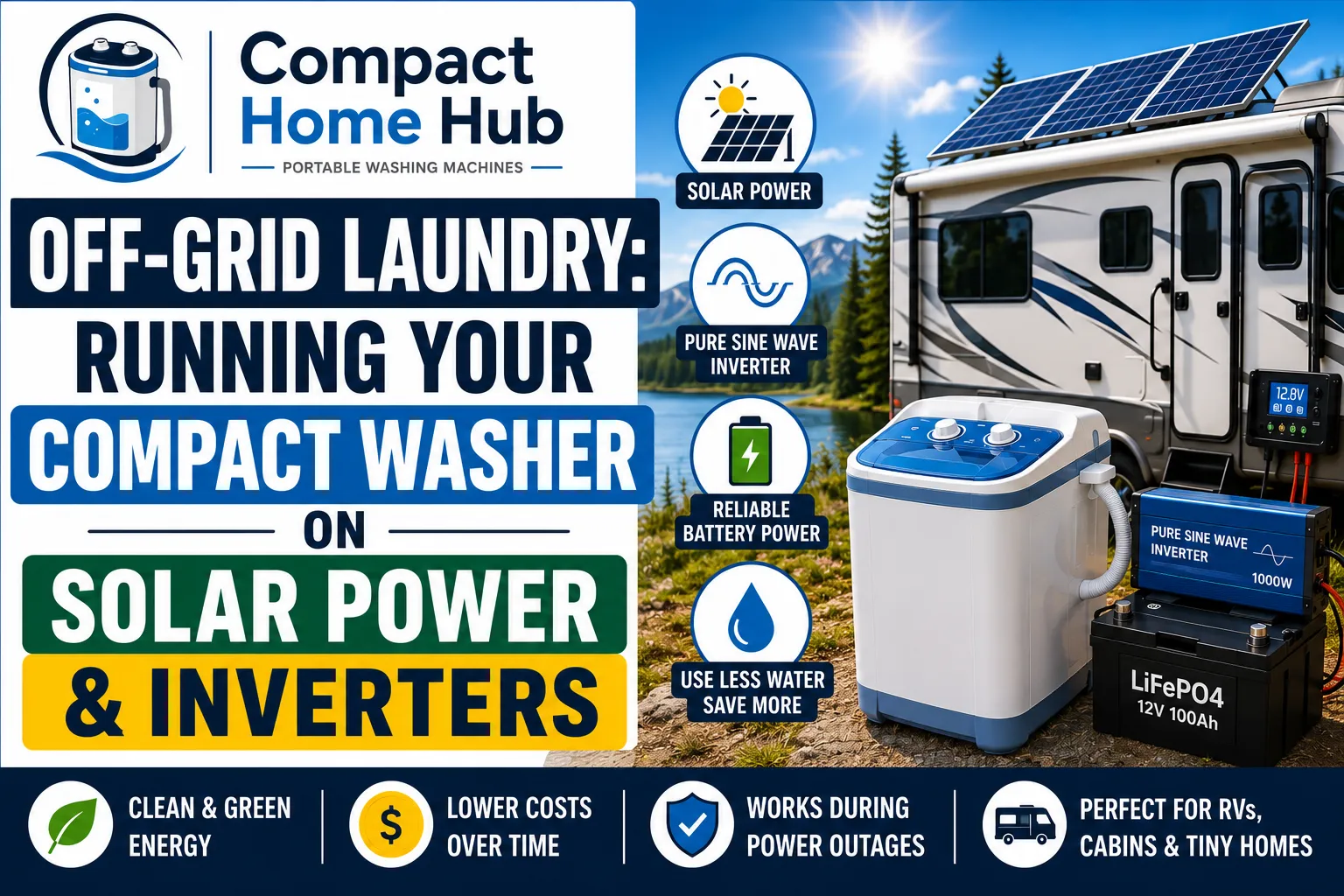
If you’ve ever wondered whether you can power a portable washing machine using solar energy, the answer is yes. A solar power portable washing machine setup is completely possible as long as your solar system is properly sized. Most compact washing machines use between 150 and 500 watts, making them a great match for solar panels, batteries, and pure sine wave inverters. With the right equipment, you can wash clothes in an RV, tiny home, cabin, boat, or even during a power outage without relying on the electrical grid.
Unlike traditional washing machines that require a dedicated household electrical connection and consume large amounts of water, compact portable washers are designed to be energy-efficient. Pairing one with a solar power system allows you to enjoy clean clothes almost anywhere the sun shines.
In this guide, you’ll learn how to choose the right solar setup, calculate power requirements, select the best inverter and battery, and avoid common mistakes. You’ll also find real-life examples to help you build a reliable off-grid laundry system that works for your lifestyle.
Why Choose a Solar Power Portable Washing Machine?
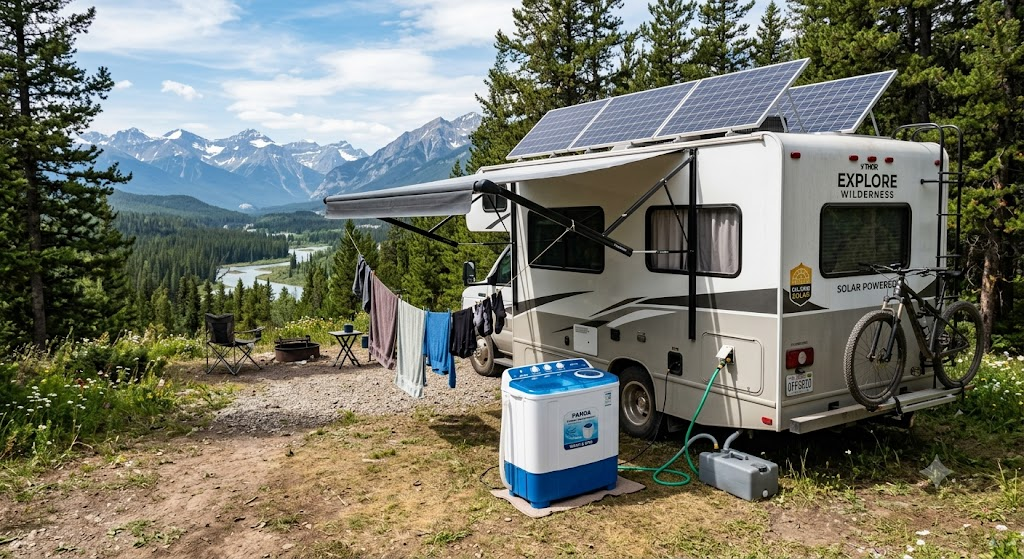
A portable washing machine already uses less electricity and water than a full-size washer. When you combine it with solar energy, the benefits become even greater.
Here are some of the biggest advantages.
1. Lower Electricity Bills
Every load you wash with solar energy reduces the amount of electricity you purchase from your utility company. While the initial investment in solar equipment can be significant, the long-term savings often make it worthwhile.
Example
If you wash four loads every week using solar power instead of grid electricity, you’ll reduce your annual energy usage and lower your utility costs over time.
2. Perfect for Off-Grid Living
A solar power portable washing machine is ideal for people who live or travel in places where grid electricity isn’t available.
Popular uses include:
- RVs
- Camper vans
- Tiny homes
- Off-grid cabins
- Boats
- Remote farms
- Hunting camps
Instead of searching for a laundromat, you can wash clothes whenever it’s convenient.
3. Better for the Environment
Solar energy is renewable and produces electricity without burning fossil fuels. Using solar power for laundry helps reduce greenhouse gas emissions and supports a cleaner environment.
4. Reliable During Power Outages
Storms, hurricanes, and winter weather can leave homes without electricity for several days. If your solar battery is charged, you can continue washing essential clothing even when the power grid is down.
5. Uses Less Water
Most portable washing machines use only 4–10 gallons of water per load, while many traditional washing machines require 20–40 gallons. This is especially helpful for RV owners and people who rely on limited freshwater supplies.
If you’re still deciding which model to buy, read our portable washing machine buyer’s guide to compare features, capacities, and buying tips before investing in an off-grid setup.
How Does a Solar Power Portable Washing Machine Work?
Many people think a washing machine can plug directly into solar panels. That’s not how it works. Instead, the electricity passes through several components before reaching the washer.
Solar Panels → Charge Controller → Battery → Pure Sine Wave Inverter → Portable Washing Machine
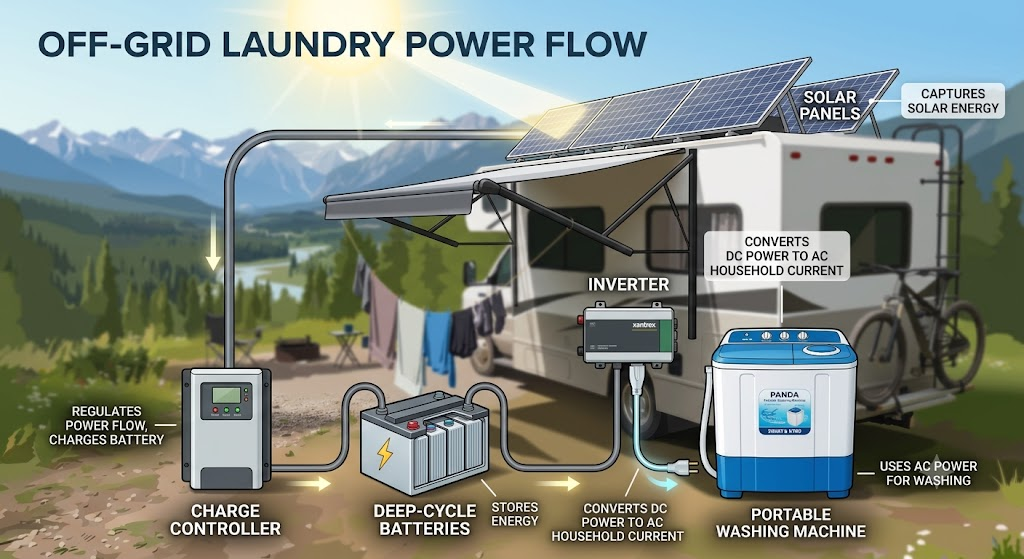
Here’s what each component does.
1. Solar Panels
Solar panels collect sunlight and convert it into electricity. The more sunlight your panels receive, the more electricity they produce.
2. Charge Controller
A charge controller regulates the electricity flowing into the battery. Without one, the battery could become overcharged and suffer permanent damage.
3. Battery
The battery stores electricity generated during the day. This stored energy lets you wash clothes:
- At night
- On cloudy days
- During power outages
4. Pure Sine Wave Inverter
Most portable washing machines require standard household AC electricity. The battery stores DC power. A pure sine wave inverter converts DC electricity into clean AC power that the washing machine can safely use.
5. Portable Washing Machine
Finally, the inverter powers the washing machine just like a regular wall outlet. If the inverter is properly sized, the washer will operate normally.
Can Every Portable Washing Machine Run on Solar?
Most portable washing machines can run on solar power, but not every model requires the same amount of electricity. Before buying equipment, always check the manufacturer’s specifications. Here are typical power requirements.
| Portable Washer Type | Typical Running Power |
|---|---|
| Mini Portable Washer | 120–200W |
| Compact Twin Tub Washer | 250–350W |
| Fully Automatic Portable Washer | 350–500W |
| Portable Washer with Built-In Heater | 800–1,500W |
Portable washers that heat water require much more electricity. If you’re planning an off-grid setup, choosing a cold-water washing machine is usually the better option because it significantly reduces power consumption.
Before sizing your solar system, check how much electricity does a portable washer use to estimate your daily energy requirements more accurately.
Understanding Power Consumption
Knowing how much electricity your washer uses helps you choose the right solar equipment.
Let’s look at an example.
Suppose your washing machine uses 300 watts and runs for 40 minutes.
Power calculation:
300W × 0.67 hours = 201 watt-hours (Wh)
Now add approximately 10% inverter losses.
201Wh + 20Wh ≈ 221Wh
That means one wash cycle uses roughly 220 watt-hours of electricity.
A 400W solar panel receiving full sunlight can generate this amount of energy in less than one hour under ideal conditions.
How Much Solar Power Do You Need?
There isn’t a single answer because every household has different laundry needs.
The size of your solar system depends on:
- Washing machine wattage
- Number of loads per week
- Available sunlight
- Battery size
- Other appliances running on the same system
1. Small Weekend Setup
Ideal for campers or occasional users.
Recommended equipment:
- 200W solar panel
- 100Ah battery
- 600W pure sine wave inverter
Suitable for:
- Socks
- T-shirts
- Towels
- Small clothing loads
2. Regular RV Setup
Perfect for couples traveling full time.
Recommended equipment:
- 400W solar panels
- 100–200Ah lithium battery
- 800W–1,000W pure sine wave inverter
Suitable for:
- Multiple loads every week
- Daily travel
- Extended camping
3. Full-Time Tiny Home Setup
Designed for larger households.
Recommended equipment:
- 600–800W solar array
- 200Ah or larger lithium battery
- 1,000W–1,500W pure sine wave inverter
This setup can support daily laundry while also powering lights, laptops, refrigerators, and other household devices.
Recommended Solar System Sizes
The following table can help you estimate the right system for your laundry needs.
| Washing Frequency | Solar Panels | Battery | Pure Sine Wave Inverter |
|---|---|---|---|
| One load per week | 200W | 100Ah | 600W |
| Two to three loads per week | 400W | 100–150Ah | 800W |
| Four to five loads per week | 600W | 200Ah | 1,000W |
| Daily washing | 800W | 200–300Ah | 1,500W |
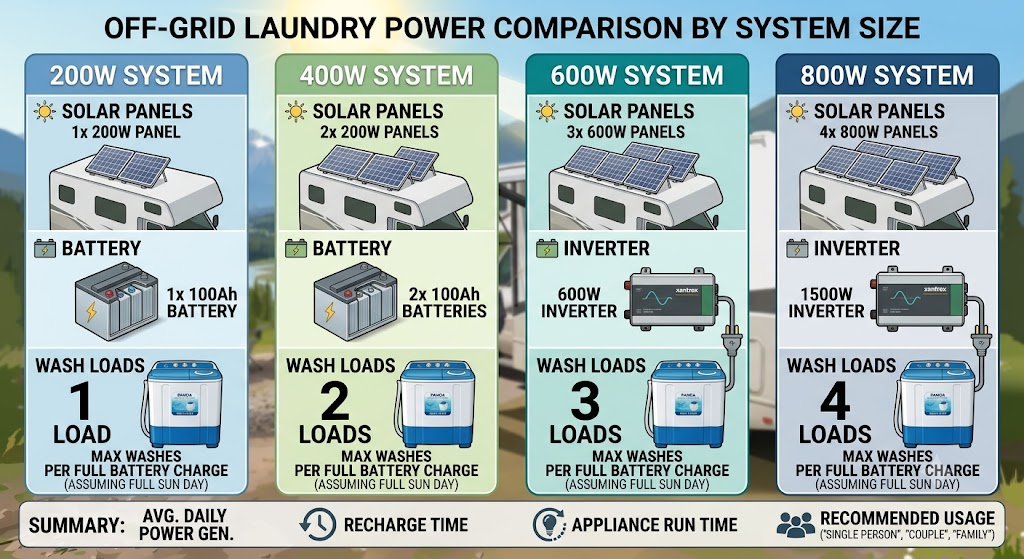
These recommendations assume average sunlight conditions in many parts of the United States. If you live in areas with frequent cloudy weather or heavy tree cover, consider increasing your solar panel capacity to ensure consistent performance.
Along with electricity usage, it’s also worth learning how much water does a portable washer use so you can plan your freshwater and gray-water capacity for off-grid living.
Factors That Affect Solar Laundry Performance
Even a well-designed system can perform differently depending on environmental conditions. Some of the biggest factors include:
1. Sunlight Hours
States like Arizona, Nevada, and New Mexico receive more annual sunshine than states in the Pacific Northwest. More sunlight means your panels can recharge batteries faster.
2. Panel Angle
Solar panels produce the most electricity when they’re angled toward the sun. Adjustable mounts are especially useful for RVs and portable systems.
3. Battery Health
Older batteries gradually lose storage capacity. Replacing aging batteries at the right time helps maintain reliable laundry performance.
4. Outdoor Temperature
Very hot or extremely cold temperatures can slightly reduce battery and solar panel efficiency. Lithium batteries generally perform better than lead-acid batteries across a wider range of conditions.
5. Washing Habits
Running one full load is usually more energy-efficient than washing several small loads. Washing during daylight hours also allows your system to use power directly from the solar panels instead of drawing only from the battery.
In the next section, we’ll cover how to choose the right pure sine wave inverter, compare lithium and AGM batteries, calculate battery runtime, explore real-world off-grid laundry setups, and learn the common mistakes that can reduce the efficiency of your solar power portable washing machine system.
Choosing the Right Inverter for a Solar Power Portable Washing Machine
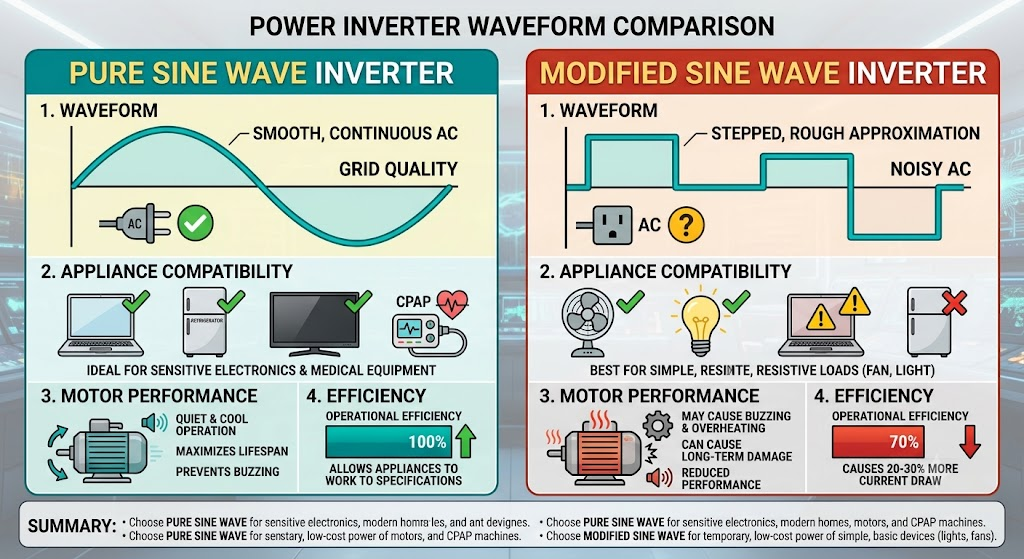
The inverter is one of the most important parts of your off-grid laundry system. It converts the DC electricity stored in your battery into the AC electricity your portable washing machine needs. Choosing the wrong inverter can lead to poor performance, unexpected shutdowns, or even damage to your appliance.
Pure Sine Wave vs. Modified Sine Wave
You’ll usually come across two types of inverters.
Pure Sine Wave Inverter
A pure sine wave inverter produces electricity that closely matches the power supplied by your home’s electrical outlets.
Benefits
- Safe for washing machine motors
- Runs more quietly
- Improves motor efficiency
- Reduces the risk of overheating
- Compatible with sensitive electronics
Modified Sine Wave Inverter
Modified sine wave inverters are less expensive but aren’t ideal for appliances with electric motors.
Possible issues include:
- Noisy operation
- Reduced motor life
- Lower efficiency
- Increased heat
- Startup problems
For a solar power portable washing machine, a pure sine wave inverter is the recommended choice.
What Size Inverter Do You Need?
The inverter should handle both the washer’s running power and its startup surge.
For example:
| Washing Machine Power | Recommended Inverter |
|---|---|
| 150W | 300–500W |
| 250W | 600W |
| 350W | 800W |
| 500W | 1,000W |
| 700W | 1,500W |
Always choose an inverter with extra capacity instead of buying one that exactly matches your washer’s wattage.
Example
A washing machine that normally runs at 350W may briefly require over 700W when the motor starts.
Best Battery Options for Off-Grid Laundry
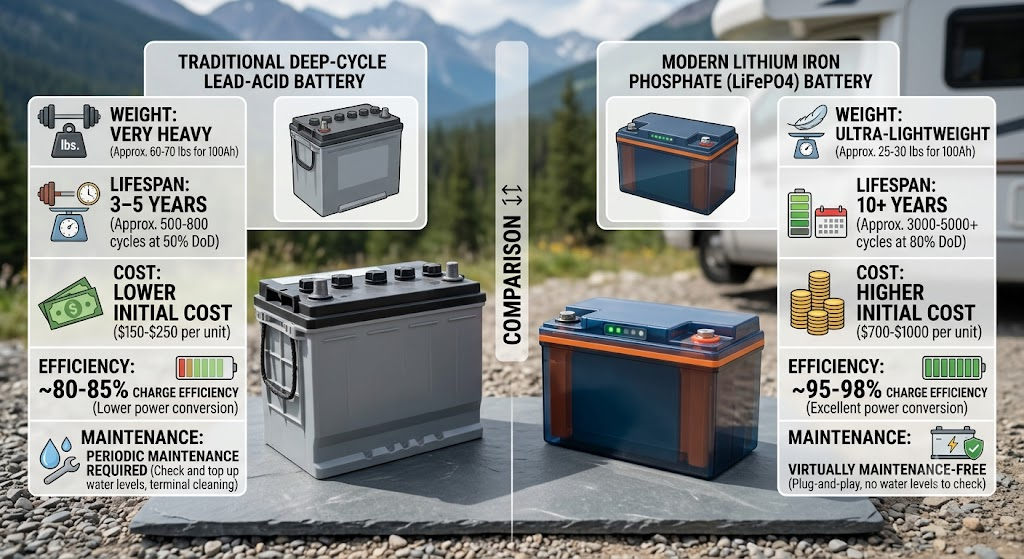
Your battery stores solar energy until you need it. The right battery depends on your budget, travel style, and expected usage.
Lithium (LiFePO4) Batteries
Lithium batteries have become the preferred choice for RVs and off-grid homes.
Pros
- Lightweight
- Long lifespan
- Fast charging
- High efficiency
- Can safely use most of the battery capacity
- Little maintenance
Cons
- Higher purchase price
Best for
- Full-time RV living
- Tiny homes
- Daily off-grid laundry
AGM Batteries
AGM batteries remain a popular budget-friendly option.
Pros
- Lower upfront cost
- Reliable
- Maintenance-free
Cons
- Heavier
- Shorter lifespan
- Lower usable capacity
Best for
- Weekend campers
- Occasional laundry
- Backup power systems
Not sure which style is more efficient? Read our twin tub vs single tub washing machine comparison to find the best option for your off-grid lifestyle.
How Long Will Your Battery Run a Portable Washer?
Let’s use a real-world example.
Battery:
- 12V
- 100Ah lithium
Available energy:
12 × 100 = 1,200Wh
Assuming approximately 90% usable capacity:
1,080Wh
Portable washer:
300W
Runtime:
1,080 ÷ 300 = 3.6 hours
If each wash cycle lasts around 40 minutes, you can complete about five to six loads before recharging the battery.
Estimated Battery Runtime
| Battery Size | 250W Washer | 350W Washer | 500W Washer |
|---|---|---|---|
| 100Ah Lithium | 5–6 loads | 4 loads | 3 loads |
| 200Ah Lithium | 10–12 loads | 8 loads | 6 loads |
| 100Ah AGM | 2–3 loads | 2 loads | 1–2 loads |
These are approximate values and will vary depending on battery condition, inverter efficiency, and wash cycle length.
Real-World Solar Laundry Setups
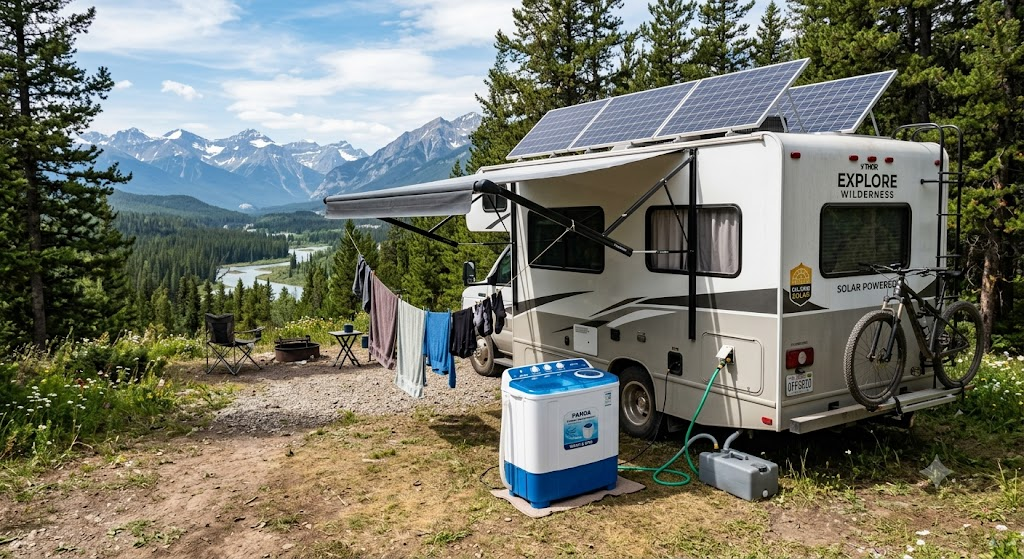
Here are three examples to help you understand how different systems work.
Example 1: Weekend Camper
Equipment
- 200W portable solar panel
- 100Ah AGM battery
- 600W pure sine wave inverter
- Mini portable washing machine
This setup is perfect for washing light clothing during weekend camping trips.
Example 2: Full-Time RV Couple
Equipment
- 400W rooftop solar panels
- 200Ah lithium battery
- 1,000W pure sine wave inverter
- Compact twin tub washer
This system supports several loads each week while also powering lights, laptops, and small kitchen appliances.
Example 3: Tiny Home Family
Equipment
- 800W solar array
- 300Ah lithium battery
- 1,500W inverter
- Fully automatic portable washer
This setup provides enough energy for daily laundry while supporting other household electrical needs.
If you’re building an RV solar laundry system, explore our picks for the best portable washing machine for RV travel and full-time camping.
Can You Run Other Appliances at the Same Time?
Yes, but remember that every appliance shares the same battery and inverter.
For example:
- LED lights: 10–20W
- Laptop: 60–100W
- Wi-Fi router: 10–20W
- Portable refrigerator: 50–100W
If your washing machine is using 350W and your refrigerator starts at the same time, your inverter must handle both loads.
Avoid running high-power appliances like:
- Electric heaters
- Hair dryers
- Coffee makers
- Microwaves
- Electric kettles
unless your solar system has enough capacity.
Tips to Reduce Solar Power Usage
Getting the most from your solar power portable washing machine isn’t just about buying bigger solar panels. Smart habits can significantly improve efficiency.
1. Wash During Peak Sunlight
Run laundry between late morning and mid-afternoon when your solar panels produce the most electricity.
This reduces battery usage.
2. Wash Full Loads
A full load uses less energy than several small loads.
Avoid washing just a few items unless necessary.
3. Use Cold Water
Heating water consumes far more electricity than the washing process itself.
Most everyday clothing washes well in cold water.
4. Air Dry Your Clothes
Electric dryers consume far more electricity than portable washing machines.
Drying clothes outdoors saves energy and extends fabric life.
5. Keep Solar Panels Clean
Dust, leaves, bird droppings, and pollen reduce panel efficiency.
Cleaning your panels every few weeks helps maintain maximum output.
6. Maintain Your Washer
Simple maintenance improves efficiency.
Remember to:
- Clean the lint filter
- Check hoses for leaks
- Inspect the drain pump
- Remove detergent buildup
- Leave the lid open after washing to prevent mold
Common Mistakes to Avoid
Many first-time off-grid users make the same mistakes. Avoiding them can save money and frustration.
1. Buying an Inverter That’s Too Small
An undersized inverter may shut down whenever the washing machine motor starts. Always allow extra capacity for startup surges.
2. Ignoring Battery Capacity
Some people buy enough solar panels but not enough battery storage. Without sufficient battery capacity, laundry becomes difficult during cloudy weather or after sunset.
3. Buying a Washer with a Built-In Heater
Heating water dramatically increases electricity consumption. For solar systems, cold-water models are much more practical.
4. Using Long, Thin Extension Cords
Low-quality extension cords can cause voltage drops and waste energy. Use heavy-duty cords with the correct gauge.
5. Forgetting Seasonal Changes
Winter provides fewer daylight hours in many parts of the United States. If your system performs well during summer, it may produce significantly less energy during winter.
5. Not Monitoring Power Usage
A simple battery monitor helps you track energy consumption and avoid unexpectedly draining your batteries.
Is a Solar Power Portable Washing Machine Worth It?
For many people, the answer is yes.
If you regularly travel, live off the grid, or want greater energy independence, a portable washer powered by solar energy offers convenience and long-term savings.
| Advantages | Disadvantages |
|---|---|
| ✅ Lower electricity costs over time | ❌ Higher upfront equipment cost |
| ✅ Freedom from laundromats, allowing you to do laundry anywhere | ❌ Performance depends on available sunlight |
| ✅ Continues working during power outages when paired with a charged battery | ❌ Batteries will eventually need replacement after several years |
| ✅ Environmentally friendly by using clean, renewable solar energy | ❌ Proper system sizing requires careful planning and calculations |
| ✅ Uses less water than many traditional washing machines | |
| ✅ Perfect for RVs, cabins, boats, tiny homes, and other off-grid locations | |
| ✅ Easy to expand by adding more solar panels or battery capacity as your energy needs grow |
For occasional campers, a simple 200W solar setup may be enough. For full-time off-grid living, investing in a larger solar array and lithium battery system provides a more dependable solution and makes everyday laundry much easier.
In the final part, we’ll cover frequently asked questions, a competitor comparison showing how this guide provides more value, and a detailed final verdict to help readers decide whether a solar power portable washing machine is the right investment for their off-grid lifestyle.
FAQs
Can I run a portable washing machine directly from solar panels?
No. A portable washing machine cannot usually run directly from solar panels because the power produced by the panels changes throughout the day. Most setups require a charge controller, a battery, and a pure sine wave inverter to provide stable AC electricity.
What size solar panel is needed for a solar power portable washing machine?
It depends on your washer’s power consumption and how often you do laundry.
As a general guideline:
- 200W solar panel – Occasional or weekend use
- 400W solar panels – Two to three loads per week
- 600W–800W solar panels – Frequent or daily washing
If your solar system also powers other appliances, you’ll need additional panel capacity.
Can I use a modified sine wave inverter?
Technically, some portable washing machines may work with a modified sine wave inverter, but it isn’t recommended. The motor may run hotter, produce more noise, and have a shorter lifespan.
A pure sine wave inverter is the safer and more reliable option.
How much battery capacity do I need?
A 100Ah lithium battery is enough for several laundry loads with most compact portable washers.
If you wash clothes daily or power multiple appliances, consider a 200Ah or larger battery.
Can I use a portable washer during cloudy weather?
Yes, as long as your battery has enough stored energy.
Cloudy weather reduces solar panel output, so having adequate battery storage helps keep your laundry routine uninterrupted.
Is a solar power portable washing machine good for RV living?
Absolutely.
Many RV owners choose portable washing machines because they:
- Save money on laundromats
- Reduce travel time
- Use less water
- Consume less electricity
- Fit easily inside RV storage compartments
When paired with rooftop solar panels, they create a convenient off-grid laundry solution.
Can I run a portable dryer on solar power?
A small spin dryer usually works well with a properly sized solar system because it uses relatively little electricity. However, traditional electric clothes dryers often consume 2,000 to 5,000 watts, making them impractical for most portable solar systems. Air drying clothes remains the most energy-efficient option.
How much electricity does a portable washing machine use?
Most portable washing machines use between 150W and 500W while running.
This is significantly lower than many full-size washing machines, making them ideal for off-grid solar systems.
Is a solar power portable washing machine worth buying?
If you live in an RV, tiny home, cabin, or frequently camp off-grid, the answer is usually yes. The combination of low power consumption, reduced water usage, and the ability to wash clothes almost anywhere makes it a smart long-term investment.
Expert Tips for Building a Reliable Solar Laundry System
If you’re planning to invest in a solar power portable washing machine, keep these expert tips in mind.
- Choose an ENERGY STAR®-style efficient washer whenever possible.
- Buy a pure sine wave inverter instead of the cheapest option.
- Leave room to expand your solar system in the future.
- Monitor battery charge levels regularly.
- Wash clothes during daylight to reduce battery drain.
- Use biodegradable detergents when disposing of gray water in approved areas.
- Inspect electrical connections every few months.
- Clean your solar panels regularly to maintain maximum output.
Small improvements in system design and maintenance can significantly increase efficiency and extend the lifespan of your equipment.
Image Suggestions
Adding relevant visuals can improve reader engagement and help explain technical concepts.
Include images such as:
- A portable washing machine beside an RV with rooftop solar panels.
- A diagram showing Solar Panel → Charge Controller → Battery → Inverter → Portable Washing Machine.
- Different types of portable washing machines, including mini, twin tub, and fully automatic models.
- A lithium battery connected to a pure sine wave inverter.
- A person cleaning solar panels on an RV.
- A comparison chart showing power consumption of portable vs. traditional washing machines.
- An off-grid cabin using a compact washer powered by solar energy.
Use descriptive alt text containing the keyword solar power portable washing machine where appropriate to improve image SEO.
Key Takeaways
Before purchasing a solar power portable washing machine, remember these important points:
- Most portable washing machines use between 150W and 500W, making them suitable for solar power.
- A pure sine wave inverter is the best choice for reliable operation.
- Lithium batteries provide better long-term performance than AGM batteries, especially for frequent use.
- Washing during peak sunlight hours improves overall system efficiency.
- Cold-water washing reduces energy consumption and allows for a smaller solar system.
- Properly sized solar panels, batteries, and inverters ensure dependable off-grid laundry year-round.
- Regular maintenance of both the washer and the solar equipment helps maximize lifespan and performance.
Final Verdict
A solar power portable washing machine is one of the most practical upgrades for anyone living off the grid or looking to reduce dependence on traditional electricity. Because portable washers consume relatively little power and water, they pair exceptionally well with modern solar systems. Whether you’re traveling full-time in an RV, living in a tiny home, staying in a remote cabin, or preparing for emergency power outages, a properly sized solar setup can provide reliable, convenient laundry without sacrificing comfort.
The key to success is choosing the right combination of solar panels, battery storage, and a pure sine wave inverter. Avoid undersizing your system, wash clothes during peak sunlight whenever possible, and select an energy-efficient, cold-water portable washer to maximize performance.
Although the initial investment is higher than relying on grid electricity or laundromats, the long-term benefits—lower energy costs, greater independence, reduced environmental impact, and the convenience of washing clothes almost anywhere—make it a worthwhile investment for many households.
With careful planning and the right equipment, a solar power portable washing machine can become a dependable part of your off-grid lifestyle for years to come.
Recommeded Reading:
- Right Detergent Quantity for Portable Washing Machine
- 15 Must-Have Portable Washer Accessories in 2026
- Portable Washer Installation Cost in 2026
- How to Use a Mini Foldable Washing Machine

Sourabh researches and writes about home appliances, kitchen gadgets, and common appliance problems to help readers make smarter buying decisions. He specializes in Portable washing machines and appliance troubleshooting guides.
At compactHomeHub, Sourabh focuses on creating easy-to-understand content that simplifies technical appliance issues into practical solutions. His goal is to help users save time, avoid costly mistakes, and choose the right appliances with confidence.