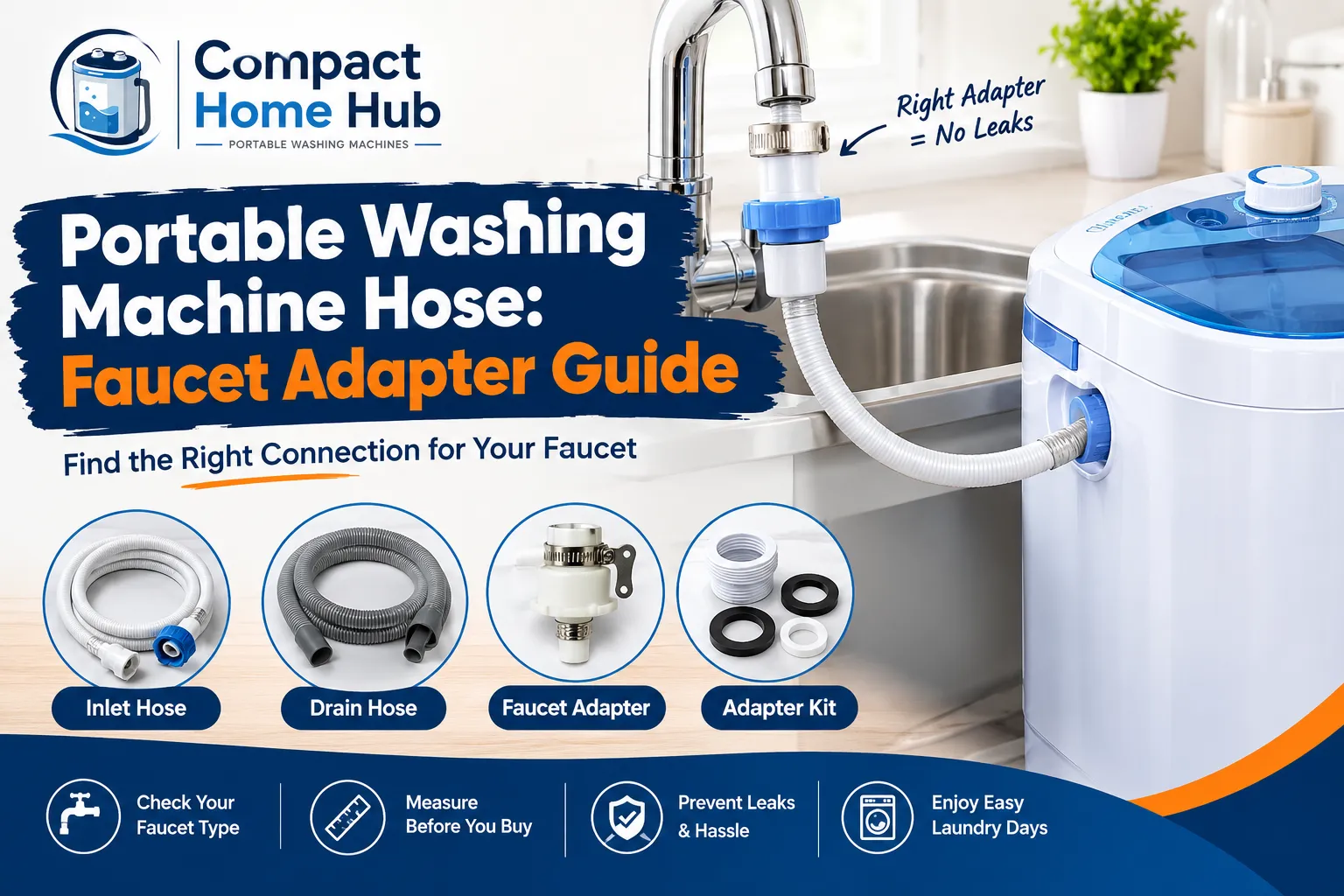
A portable washing machine can save you trips to the laundromat, but connecting it to your kitchen or bathroom sink isn’t always as simple as attaching a garden hose. Your faucet may have hidden threads, a removable aerator, a pull-down spray head, or a shape that won’t accept the adapter included with your washer.
The good news? You can usually figure out the right connection without buying several adapters and hoping one works.
This guide explains how to identify your faucet type, choose a compatible portable washing machine hose, measure the connection, fix common leaks, and decide when a different water hookup makes more sense.
The Quick Answer: Which Portable Washing Machine Hose Adapter Do You Need?
Most portable washing machines that fill from a sink need an inlet hose and a compatible faucet adapter. The correct adapter depends on your washer’s connector, the faucet’s design, and whether the faucet has removable aerator threads.
- Faucet with external threads: You may need an adapter with internal threads that screw over the faucet.
- Faucet with internal threads: You may need an adapter with external threads that screw into the faucet.
- Smooth, unthreaded faucet: A special clamp-on or manufacturer-approved connector may work, but many standard screw-on adapters won’t fit securely.
- Pull-down or pull-out spray faucet: The removable spray head may not provide a suitable connection. Check your washer manufacturer’s instructions before buying an adapter.
- Permanent washer hookup: A compatible water-supply connection may be more practical than a faucet adapter if the washer is designed for that installation.
Don’t buy a replacement hose based only on its length or the listing title. Match the hose to your washer’s inlet, the faucet adapter, the required water pressure, and the manufacturer’s instructions. GE, for example, describes a one-faucet connection that requires a removable aerator and a dedicated Unicouple assembly on compatible portable washers.
If you’re still comparing compact washers, explore our portable washing machine guides to find a model that suits your available space and laundry needs.
What Is a Portable Washing Machine Hose?
A portable washing machine hose carries water between the faucet or water supply and the washer. Depending on the machine, you may have a separate inlet hose, a drain hose, or a combined quick-connect assembly.
These parts have different jobs, so it’s important to identify which one you need before ordering a replacement.
1. Water inlet hose
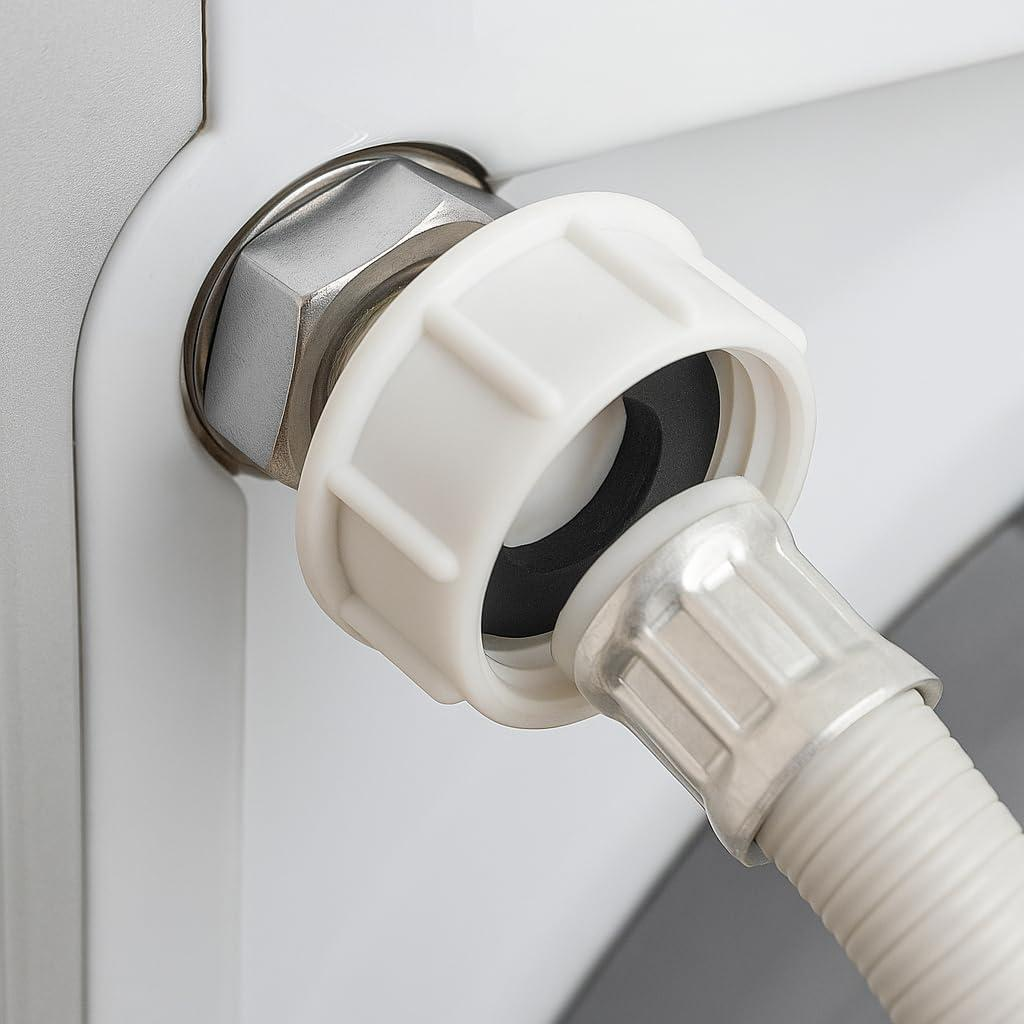
This hose brings fresh water into the washer. It usually connects to a water inlet at the back of the machine and to a faucet adapter or dedicated water supply at the other end.
Example: If the hose leaks where it attaches to the washer, the problem may be a worn rubber washer, damaged threads, or a cracked fitting.
2. Drain hose

This hose carries used water out of the washer and into a suitable sink, standpipe, or approved drain connection.
Example: If water spills over the sink during draining, check the drain hose position and sink drainage capacity before buying a new inlet hose.
3. Faucet adapter or quick connector

This fitting allows a compatible washer hose to connect to the faucet. Some adapters screw onto the faucet; others use a locking collar to connect the hose assembly.
Example: A threaded adapter may attach to the faucet, while a quick-connect collar lets you remove the hose after laundry day.
A portable washer may use a different arrangement from another model, even when both machines look similar. Check your owner’s manual before assuming that a universal hose will work.
Image suggestion: Show all three components in one labeled photograph, with the inlet hose, drain hose, and faucet adapter clearly identified.
How to Identify Your Faucet Type
Start by examining the faucet you plan to use. You don’t need plumbing experience; you just need to know what the end of the faucet looks like and whether its aerator can be removed.
1. Faucet with external threads
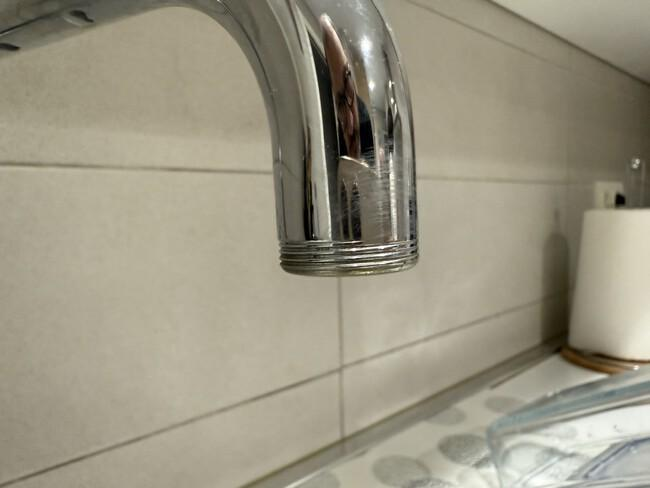
External threads look like small ridges on the outside of the faucet tip.
What to check:
- Unscrew the aerator if the faucet design allows it.
- Inspect the exposed threads for damage or mineral buildup.
- Compare the faucet’s thread size with the adapter specifications.
- Check that the adapter includes the correct sealing washer.
Which adapter fits? Usually, an adapter with internal threads that screw over the faucet’s external threads.
Why it matters: Correctly matched threads allow the adapter to seat evenly. A mismatched fitting may cross-thread, wobble, or leak even if it initially appears to fit.
2. Faucet with internal threads
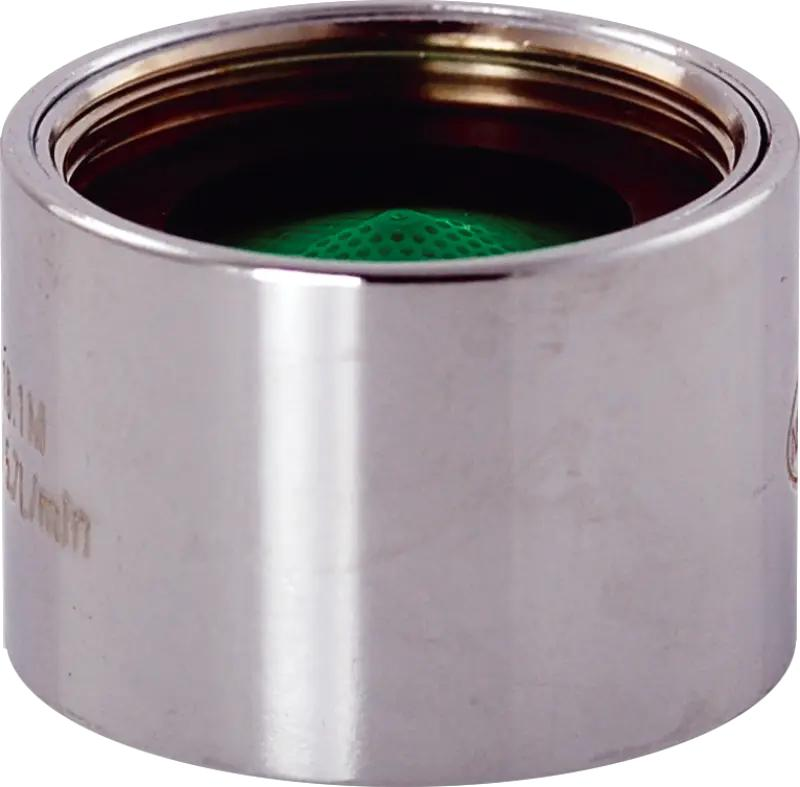
Internal threads sit inside the opening of the faucet after you remove a compatible aerator.
Which adapter fits? Usually, an adapter with external threads that screw into the faucet opening.
Some adapters are designed for both internal- and external-threaded faucets by using different sides or interchangeable washers. GE’s portable-washer instructions describe a supplied adapter with internal and external threads, along with optional O-rings to help establish a proper fit.
Important: Thread direction alone doesn’t establish compatibility. The thread diameter and pitch must also match.
3. Smooth, unthreaded faucet
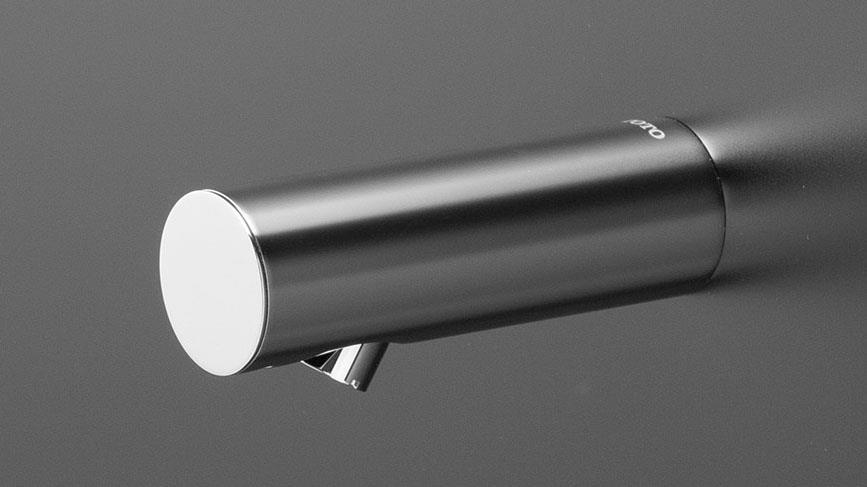
Many modern faucets have a smooth end with no exposed screw threads. The aerator may be recessed inside the spout, or the faucet may have a custom-shaped outlet.
Before purchasing an adapter:
- Look for a hidden or recessed aerator.
- Check whether the aerator can be removed using the faucet manufacturer’s recommended tool.
- Search for the faucet model’s aerator or adapter specifications.
- Ask the washer manufacturer whether it supports that faucet style.
A clamp-on connector isn’t automatically a safe substitute. Water pressure can push a poorly secured fitting off the faucet and spray water across the room.
4. Pull-down and pull-out spray faucets
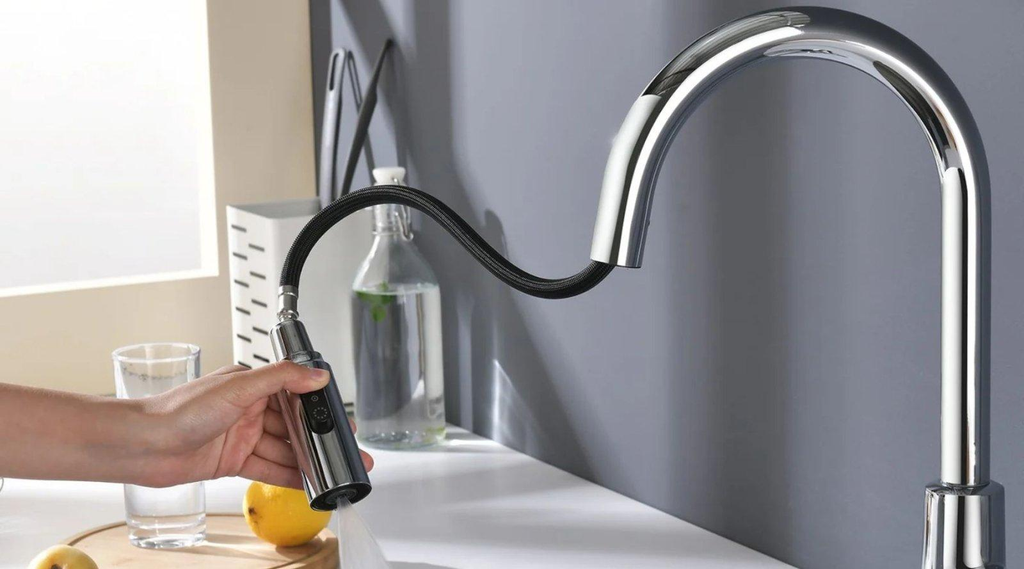
These faucets have a movable spray head connected to a hose. The spray head may contain a special connector or integrated aerator that won’t accept a typical portable washer adapter.
Best approach: Check the faucet and washer manuals before removing any parts. Don’t connect a washer to an exposed spray hose unless the manufacturers explicitly approve that arrangement.
For renters, this is especially important: an adapter that requires disassembling plumbing or leaving parts behind may not be suitable for a temporary setup.
5. Bathroom faucets and RV sinks
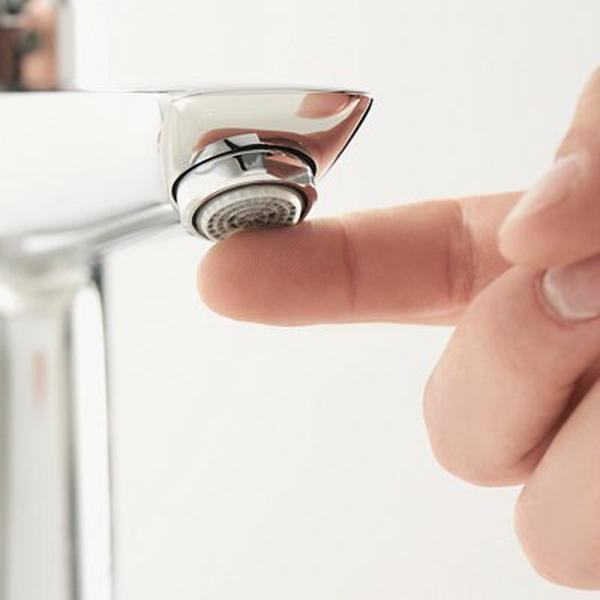
Bathroom faucets may be narrower than kitchen faucets, while RV and camper faucets can use compact or specialized fittings.
Measure the outlet and verify the adapter’s stated compatibility rather than assuming a kitchen faucet connector will fit. Also confirm that the faucet, plumbing, and drain can handle the washer’s intended water flow and discharge.
Portable Washing Machine Hose and Faucet Adapter Comparison
Use this table to narrow down the right type of connection. These are connection categories, not guaranteed fits for every washer or faucet.
| Faucet or hookup | Connection to look for | Main limitation |
|---|---|---|
| External-thread faucet | Adapter with matching internal threads | Thread size must match |
| Internal-thread faucet | Adapter with matching external threads | Thread diameter and pitch must match |
| Smooth faucet with hidden aerator | Compatible recessed-aerator adapter | May need a special removal tool |
| Pull-down spray faucet | Manufacturer-approved connection | Standard adapters often won’t fit |
| RV or compact faucet | Model-specific or measured adapter | Space and fitting sizes vary |
| Dedicated washer hookup | Compatible inlet hose and plumbing fitting | Must match washer specifications |
Before buying, confirm these four details: the washer inlet connection, the faucet thread type and size, the adapter’s sealing method, and the permitted water-supply arrangement.
How to Measure Your Faucet Before Buying an Adapter
One of the most common mistakes is buying an adapter because the product photo looks right. Two faucet tips can look almost identical but have different threads.
Follow these steps before placing an order.
Step 1: Remove the aerator if possible
The aerator is the small fitting at the end of many faucets. It mixes air into the water stream and may be removable.
- Turn off the faucet.
- Protect the faucet finish with a soft cloth.
- Try unscrewing the aerator by hand.
- If it’s stuck, use the faucet manufacturer’s recommended removal method rather than forcing it.
Some aerators are recessed or use special fittings, so a standard wrench may not work.
Step 2: Measure the opening or threads
Use a ruler or, preferably, a caliper to measure the diameter of the exposed threads or faucet opening.
Record:
- Outside diameter of external threads, if present.
- Inside diameter of internal threads, if accessible.
- Thread pitch, if specified by the adapter manufacturer.
- Available clearance around the faucet tip.
A measurement alone may not identify the exact thread standard. Take a clear photo of the faucet tip and compare it with the manufacturer’s compatibility chart.
Step 3: Check the washer-side connection
The faucet end isn’t the only connection that matters. Your replacement portable washing machine hose must also match the washer’s water inlet.
Look for the following in the owner’s manual:
- Hose connector type.
- Required washer or gasket.
- Approved water pressure and temperature.
- Whether the machine accepts a standard threaded inlet hose or a proprietary quick-connect assembly.
- Whether the manufacturer permits temporary faucet connections.
Step 4: Confirm the hose length
Measure the actual route from the faucet to the washer, allowing enough slack for movement without creating loops that can snag. A hose that’s too short may pull on the faucet or inlet valve. An excessively long hose can create kinks, trip hazards, or awkward storage.
Don’t stretch a hose to make it reach. Buy a compatible extension only if the manufacturer permits one. Image suggestion: A close-up showing calipers measuring a faucet’s outside diameter, alongside a ruler and the washer’s inlet connection.
Which Portable Washing Machine Hose Should You Buy?
The best choice depends on whether you’re replacing a damaged part, setting up a washer for the first time, or trying to connect a machine to a faucet that doesn’t match its supplied adapter.
Option 1: Original manufacturer hose and adapter
This is generally the safest starting point when the original part is available.
Buy it if:
- You want a direct replacement for a damaged or missing component.
- Your washer uses a proprietary quick-connect system.
- You want to follow the installation instructions for your exact model.
Skip it if:
- The original part is discontinued and the manufacturer confirms a compatible alternative.
- Your actual problem is a faucet mismatch that the original adapter cannot solve.
Example: A compatible replacement assembly may solve a leak caused by a damaged locking collar. A new hose alone won’t fix a cracked faucet adapter.
Before choosing a replacement hose, read our Zeny portable washing machine review to understand the machine’s setup and connection requirements.
Option 2: Universal faucet adapter kit
These kits may include multiple thread sizes, rubber washers, or connectors intended for different faucet designs.
Buy it if:
- Your faucet has a compatible threaded outlet.
- The seller provides dimensions and a clear compatibility chart.
- Your washer manufacturer allows third-party adapters.
Skip it if:
- The listing says “fits all faucets” without showing actual dimensions.
- Your faucet has a pull-down spray head or an unusual outlet.
- The adapter requires an improvised seal.
The word universal is a marketing description, not proof that every connection will fit.
Option 3: Replacement inlet hose
Choose a replacement inlet hose when the existing hose is cracked, kinked, leaking, or damaged at the connector.
Check its length, connection type, seals, pressure rating, and temperature rating against the washer manual. Don’t assume a hose made for a full-size washer is automatically appropriate for a portable model.
Option 4: Permanent water-supply connection
If you use your washer frequently, a permanent connection may reduce the hassle of attaching and removing the faucet adapter.
However, it may require compatible plumbing fittings, accessible shutoff valves, and permission from your landlord or RV manufacturer. Don’t modify plumbing unless you understand the requirements and have authorization.
How to Connect a Portable Washing Machine Hose to a Faucet
The exact process varies by washer model, but the following checklist covers a typical approved temporary setup.

Step 1: Prepare the faucet
Turn off the water and remove the aerator if the manufacturer’s instructions allow it. Clean away loose mineral deposits without damaging the threads.

Step 2: Install the faucet adapter
Position the correct washer or O-ring and thread the adapter on by hand. It should start smoothly. Stop if it binds or sits at an angle.

Step 3: Attach the inlet hose
Connect the portable washing machine hose to the designated water inlet. Check the manual for the correct inlet and tightening method.

Step 4: Secure the quick connector
If your washer uses a locking collar, follow the manufacturer’s instructions to engage it fully. Give the connection a gentle tug to confirm that it is locked.

Step 5: Test for leaks
Keep the washer unplugged until setup is complete. Turn on the water slowly as instructed, inspect every joint, and confirm that the drain hose is secured before starting a short cycle.
GE’s installation guidance stresses correct adapter placement, a secure quick connection, proper inlet selection, and careful tightening. It also warns that overtightening can damage the washer’s plastic inlet valve. Follow your own model’s instructions if they differ.
Why Is Your Portable Washing Machine Hose Leaking?
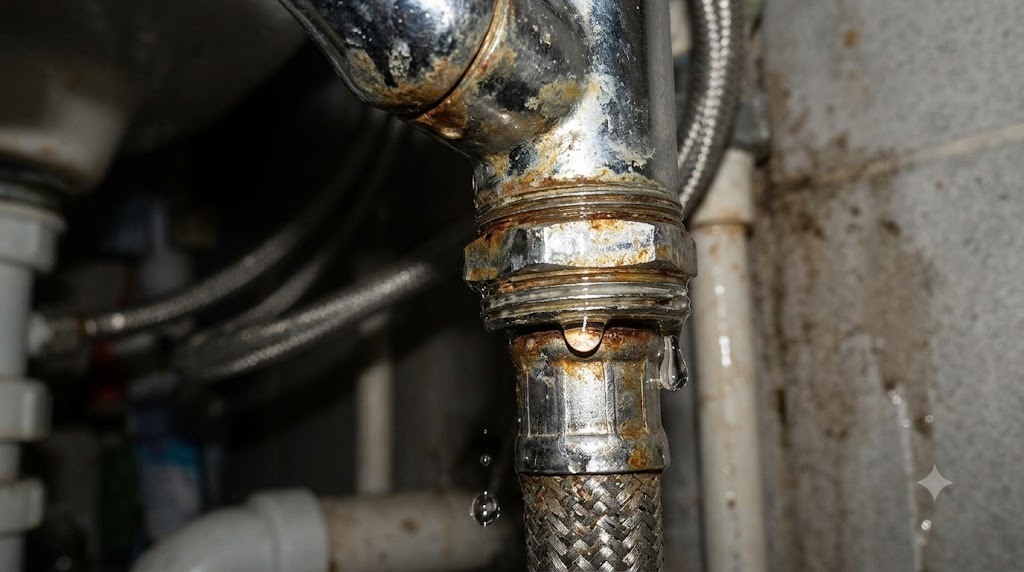
A leak doesn’t always mean you need a new hose. First, identify exactly where the water is escaping.
| Where the leak appears | Possible cause | What to check |
|---|---|---|
| Between faucet and adapter | Wrong threads, missing washer, uneven seating | Compatibility, washer placement, thread alignment |
| At the quick connector | Collar not fully locked or damaged seal | Locking mechanism and connector condition |
| At the washer inlet | Loose fitting, damaged gasket, cracked inlet | Correct connector and manufacturer tightening instructions |
| Along the hose | Split, puncture, or worn material | Replace with a compatible hose |
| At the drain hose | Loose clamp, poor positioning, or damaged hose | Drain connection and secure routing |
Leak at the faucet adapter
Turn off the faucet before adjusting the fitting. Check whether the adapter matches the faucet threads and whether the correct sealing washer is present.
Don’t keep tightening a mismatched adapter. You can damage the faucet finish or threads without solving the leak.
Leak at the washer inlet
Inspect the hose washer and connector for damage. Align the threads carefully and tighten according to the manual.
Avoid applying plumber’s tape or sealant unless the manufacturer specifically instructs you to use it. Some hose connections rely on a rubber washer rather than the threads themselves to create a watertight seal.
Leak from the hose body
Replace a hose with a split, bulge, exposed reinforcement, or damaged connector. Tape and household glue aren’t reliable repairs for a pressurized water line.
If a connector repeatedly leaks despite correct installation, stop using the washer until you identify and correct the problem.
Check out guide on Portable Washing Machine water leakage problems and how to fix it.
Can You Use a Portable Washing Machine Hose on Any Kitchen Faucet?
No. Compatibility depends on the faucet outlet, adapter design, washer inlet, and installation instructions.
A standard threaded faucet may be straightforward. A pull-down faucet, recessed aerator, or smooth spout can require a different solution. Before ordering, ask these questions:
- Does the faucet have removable aerator threads?
- What are the thread diameter and type?
- Does the adapter include the necessary gasket?
- Does the washer support this kind of temporary connection?
- Can the hose reach without pulling, kinking, or creating a trip hazard?
- Can the drain hose be secured to an appropriate drain?
If the manufacturer doesn’t support your faucet type, don’t force a connection just because an adapter seems to fit.
Safety Tips for Apartments, RVs, and Small Homes
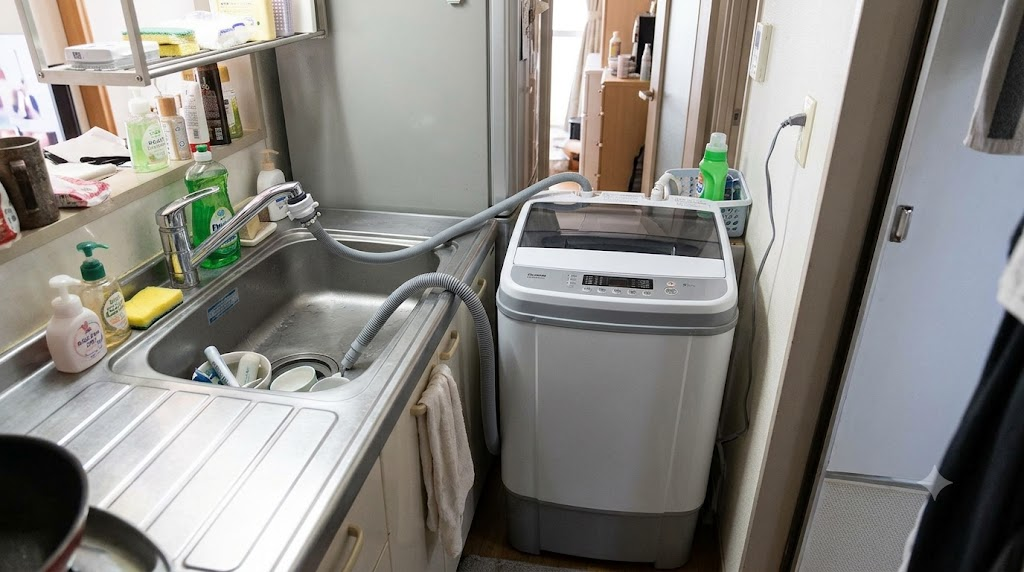
A portable washer can be convenient in a small space, but even a minor leak can damage flooring, cabinets, or the apartment below you.
For apartment renters
- Check your lease or building rules before installing permanent plumbing connections.
- Keep the washer on a stable, level surface.
- Inspect connections during use and turn off the water supply after laundry.
- Don’t leave a temporary faucet hookup unattended.
For RV and camper owners
- Check the RV’s plumbing specifications and water-pressure limits.
- Use only fittings rated for the actual water-supply conditions.
- Secure the washer and hoses for travel; disconnect and store them as instructed.
- Never assume an RV faucet is compatible with a standard kitchen adapter.
For college students and small-space households
- Use a drain arrangement that can handle the washer’s discharge.
- Keep hoses away from walkways and sharp edges.
- Protect nearby electrical outlets from splashes.
- Confirm that the floor can support the machine and its water load.
For parents, pet owners, and vacation-rental hosts
- Keep hoses and connectors out of reach where possible.
- Check for loose fittings before each use.
- Avoid leaving a washer running while the property is unattended.
- Give guests clear instructions for shutting off the water.
Always follow the appliance’s electrical and water-supply instructions. If water reaches an electrical outlet or power cord, don’t touch wet electrical equipment; shut off power safely if you can and seek qualified help.
Common Buying Mistakes to Avoid
A cheap adapter can become an expensive purchase if it damages the faucet or causes a leak. Check these details before clicking Buy.
- Buying by appearance alone: Two fittings can look alike but use different thread sizes.
- Ignoring the rubber washer: A missing, worn, or incorrectly seated gasket can cause leaks.
- Assuming every hose is interchangeable: Washer inlet connectors and pressure requirements vary.
- Choosing an extension without checking compatibility: Extra length doesn’t help if the connector or pressure rating is wrong.
- Ignoring water temperature: Follow your washer’s permitted temperature range. Some portable models recommend cold-water operation when using a single-faucet adapter.
- Overtightening the connector: Excessive force can damage plastic fittings and faucet threads.
- Forgetting the drain hose: A secure water inlet doesn’t prevent a drain overflow.
The BLACK+DECKER portable-washer manual, for example, describes a two-part quick-connect adapter and recommends cold-water washes for the specified single-faucet arrangement. That is a model-specific instruction, not a universal rule for every portable washer.
How to Choose a Reliable Replacement Hose
Use this checklist to compare replacement hoses and adapter kits.
| Buying criterion | What to look for | Why it matters |
|---|---|---|
| Compatibility | Exact washer model or confirmed connector match | Reduces the risk of buying the wrong fitting |
| Hose length | Measured route with enough slack | Prevents strain and kinks |
| Seals | Correct-size washers or O-rings | Helps prevent leaks |
| Materials | Durable hose and fittings suited to the application | Reduces premature wear |
| Pressure rating | Manufacturer’s specified operating range | Helps ensure safe use with the intended water supply |
| Temperature rating | Suitable for the washer’s permitted water temperature | Prevents damage from unsuitable water temperatures |
| Replacement parts | Available manufacturer-approved components | Makes future repairs easier |
| Instructions | Clear diagrams and connection details | Makes setup less confusing |
Don’t pay extra just because a listing says “heavy duty,” “universal,” or “leakproof.” Look for measurable specifications and a compatibility statement you can verify.
Warranty, Certifications, and Customer Support
Check whether the hose or adapter comes with a written warranty, a return policy, and accessible manufacturer support.
Certifications also need context. A certification for an electrical appliance does not automatically establish that its hose or faucet adapter is suitable for every plumbing installation. Likewise, an Energy Star rating or BEE label isn’t a substitute for verifying hose compatibility. Those programs address different aspects of product performance.
For U.S. buyers, look for applicable product safety and plumbing compliance information where relevant, and ask the manufacturer if the listing doesn’t explain what has actually been certified.
decide what to buy, not just someone who already has the correct adapter in hand. They don’t establish that every competing article lacks these details, nor do they guarantee better rankings; that would require a fuller content audit and actual search-performance data.
Frequently Asked Questions
1. Are portable washing machine hoses universal?
No. Hoses differ in length, inlet connector, sealing method, pressure rating, and temperature rating. An adapter that fits your faucet may still be incompatible with your washer.
2. Can I connect a portable washer to a regular kitchen faucet?
Sometimes. The faucet needs a compatible outlet and adapter, and the washer must support that connection method. Many standard threaded faucets are easier to adapt than pull-down spray faucets.
3. Do I need to remove the faucet aerator?
Often, yes, when using a screw-on faucet adapter. However, some faucets have recessed or specialized aerators, and some connection systems use different methods. Follow the faucet and washer instructions.
4. Why does my portable washer adapter keep falling off?
The adapter may not match the faucet, the connector may not be fully locked, or a retaining component may be damaged. Stop using it until the connection is secure. Don’t rely on tape or glue to hold a pressurized fitting in place.
5. Can I use a garden hose for a portable washing machine?
Don’t assume a garden hose is suitable. Its connectors, sealing method, pressure characteristics, and materials may differ from those required by your washer. Use a garden hose only if the washer manufacturer explicitly approves the specific hose and connection arrangement.
6. How long should a portable washing machine hose be?
There is no single correct length. Measure the route from the water source to the washer and allow enough slack to avoid tension and kinks. Check the manufacturer’s guidance before using an extension.
7. Should I leave the faucet connected when the washer isn’t running?
For a temporary faucet connection, it’s prudent to shut off the water after use unless the manufacturer specifies otherwise. A hose or adapter can fail even when the washer is idle.
8. Can I use a portable washer in an apartment without washer hookups?
Possibly, if the appliance’s installation requirements, building rules, faucet connection, electrical supply, and drain arrangement permit it. Check with your landlord or property manager before making modifications.
9. How do I know whether I need a new hose or just a new adapter?
If the hose body is damaged or its connector leaks despite correct installation, replace the hose. If the hose is in good condition but doesn’t connect securely to the faucet, you may need a compatible adapter. Inspect both parts before ordering.
10. Where can I find the correct replacement hose?
Start with the washer’s model number and owner’s manual. Check the manufacturer’s replacement-parts information, then compare any third-party alternative against the original specifications. Avoid buying solely from a generic product title.
Final Buying Advice
The best portable washing machine hose is the one that fits both your washer and your water connection, seals correctly, and meets the manufacturer’s requirements.
Before you buy, identify your faucet type, check the thread dimensions, verify the washer-side connector, and confirm the permitted water-supply arrangement. If the faucet has an unusual shape or a pull-down spray head, get confirmation from the manufacturer rather than forcing a universal adapter to fit.
A few minutes spent checking compatibility can save you from unnecessary purchases, frustrating leaks, and a very unwelcome puddle on laundry day.
Author bio: The CompactHomeHub editorial team covers portable washing machines and practical laundry solutions for small homes, apartments, and mobile living. Product-specific hands-on testing claims should be included only when supported by documented testing and actual use.
Recommended Reading:
- Are Portable Washing Machines Worth It? Ultimate Verdict
- 17 Common Laundry Mistakes and How to Avoid Them
- 3 Ways to Use a Portable Washer Without a Washer Hookup: Easy Setup Guide
- Portable Washing Machine Leaking Water: 9 Causes and How to Fix It

Sourabh researches and writes about home appliances, kitchen gadgets, and common appliance problems to help readers make smarter buying decisions. He specializes in Portable washing machines and appliance troubleshooting guides.
At compactHomeHub, Sourabh focuses on creating easy-to-understand content that simplifies technical appliance issues into practical solutions. His goal is to help users save time, avoid costly mistakes, and choose the right appliances with confidence.
3 thoughts on “Portable Washing Machine Hose: Faucet Adapter Guide”
Comments are closed.