

Rain starts falling just as the washing machine finishes.
You look outside, see a sky that has apparently decided to ruin laundry day, and suddenly you’re wondering where on earth you’re going to put 10 pounds of wet clothes. You don’t need a backyard, perfect weather, or even a clothes dryer to get the job done.
The trick is understanding that how to dry your laundry indoors isn’t really about making the room hotter. It’s about removing water from the clothes and then giving that moisture somewhere to go.
A drying rack, good airflow, sensible spacing, and moisture control can make a surprisingly big difference. And if you’re in an apartment, dorm, basement, RV, or small home, the right setup can be much more practical than constantly running a full-size dryer.
Here’s exactly how to do it.
How to Dry Your Laundry Indoors
The fastest practical method is to remove as much water as possible during the wash, spread clothes apart on a drying rack, and move air continuously across the fabric while controlling room humidity.
For most homes, this means:
- Run an extra spin cycle if your washer allows it.
- Take clothes out immediately after washing.
- Shake each item out before hanging.
- Leave space between garments.
- Use a drying rack rather than piling clothes on furniture.
- Run a fan to move air across the laundry.
- Use a dehumidifier when the room is humid or poorly ventilated.
- Use a bathroom exhaust fan or open a window when outdoor conditions make ventilation helpful.
- Turn thick items periodically so both sides dry.
- Don’t put clothing directly on a space heater or radiator.
- Dry large or heavy items separately when possible.
- Don’t leave laundry damp for an unnecessarily long time.
The most important principle is simple: less water in the clothes + more moving air + lower humidity = faster drying.

Why Clothes Take So Long to Dry Indoors
When you hang wet clothes outside, wind continuously carries moisture away from the fabric. Indoors, that water has nowhere to go unless you provide a path.
As laundry dries, water evaporates from the fabric and enters the surrounding air. If the air becomes humid, evaporation slows down. That’s why adding more heat isn’t always the answer.
For example, imagine hanging a wet towel in a small bathroom with the door and window closed. The towel releases moisture into the room, the humidity rises, and eventually the air becomes less effective at accepting more water vapor.
Now put the same towel in a room with:
- A fan moving air
- Lower humidity
- More space around the towel
- Some ventilation
The drying process can be dramatically better. This is also why simply turning up the thermostat isn’t necessarily the smartest solution.
The Best Indoor Drying Setup for Different Homes
| Situation | Recommended setup | Why it works |
|---|---|---|
| Small apartment | Folding rack + fan | Cheap, portable and space-efficient |
| Humid apartment | Rack + fan + dehumidifier | Controls both airflow and moisture |
| Basement | Rack + dehumidifier + airflow | Helps manage naturally damp conditions |
| Dorm room | Compact rack + fan | Minimal space and easy storage |
| Family home | Large rack + multiple zones | Handles larger laundry volumes |
| Winter drying | Rack + fan + controlled heat | Improves evaporation without direct heating |
| Occasional rainy day | Folding rack + natural ventilation | No need for permanent equipment |
| Frequent indoor drying | Quality rack + hygrometer + dehumidifier | Better long-term moisture control |
| Heavy towels | Large rack + extra spin + strong airflow | Removes water before and during drying |
12 Ways to Dry Your Laundry Indoors
1. Run an Extra Spin Cycle Before Drying
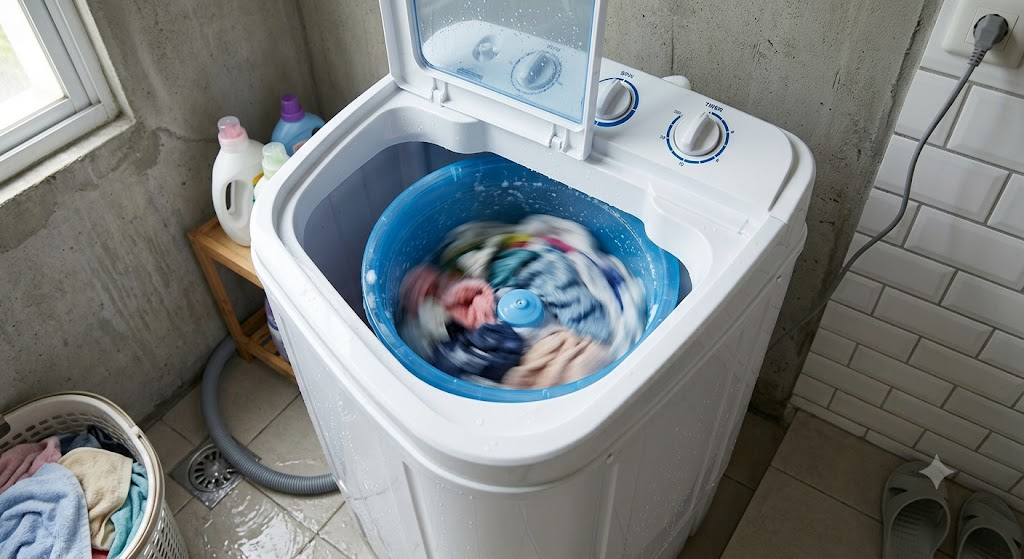
If your washing machine has a separate Spin or Drain & Spin option, use it when appropriate for the fabric and load. This is one of the easiest ways to reduce indoor drying time because you’re removing water before the clothes ever reach the drying rack.
Why it helps
Your drying rack doesn’t remove water. It only gives the water in the clothing a chance to evaporate. The less water remaining after washing, the less work evaporation has to do.
Try this
After the normal wash:
- Select an additional spin cycle.
- Use a fabric-appropriate spin speed.
- Remove laundry immediately afterward.
- Shake garments before hanging.
Don’t assume the highest available spin speed is appropriate for every fabric. Delicates, wool, and certain specialty garments may require gentler treatment.
2. Don’t Overload the Drying Rack
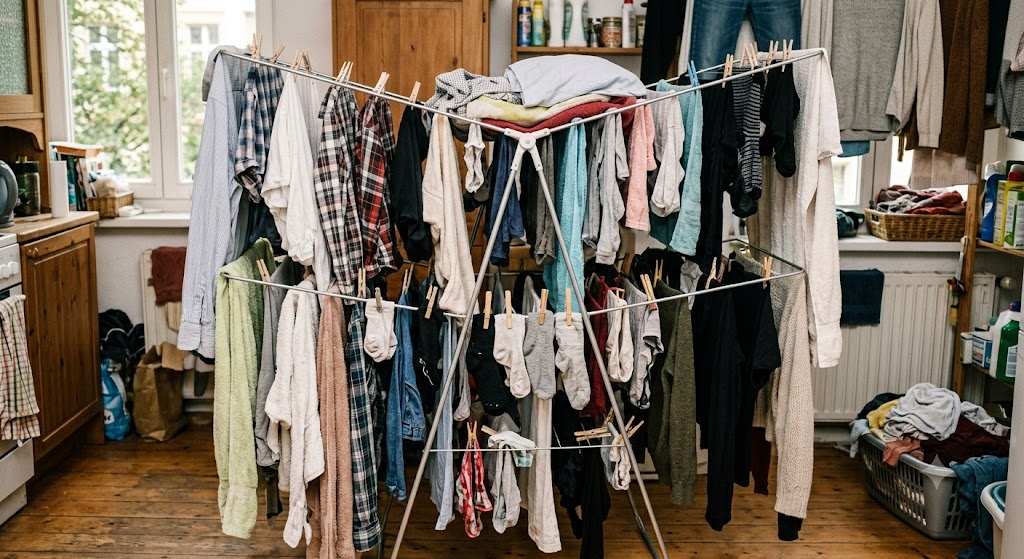
This is probably the most common indoor-drying mistake. People buy a large rack and then try to cover every rail with wet clothes.
The problem?
The garments touch each other, airflow drops, and thick areas stay damp. Instead, think of your drying rack as an airflow system. Leave visible gaps between:
- T-shirts
- Pants
- Towels
- Sheets
- Sweatshirts
- Jackets
If you have enough laundry to completely cover one rack, two moderately loaded racks can sometimes work better than one overloaded rack.
That’s because the goal isn’t maximum clothing per square foot. It’s maximum useful airflow around each garment.
3. Use a Fan But Position It Correctly
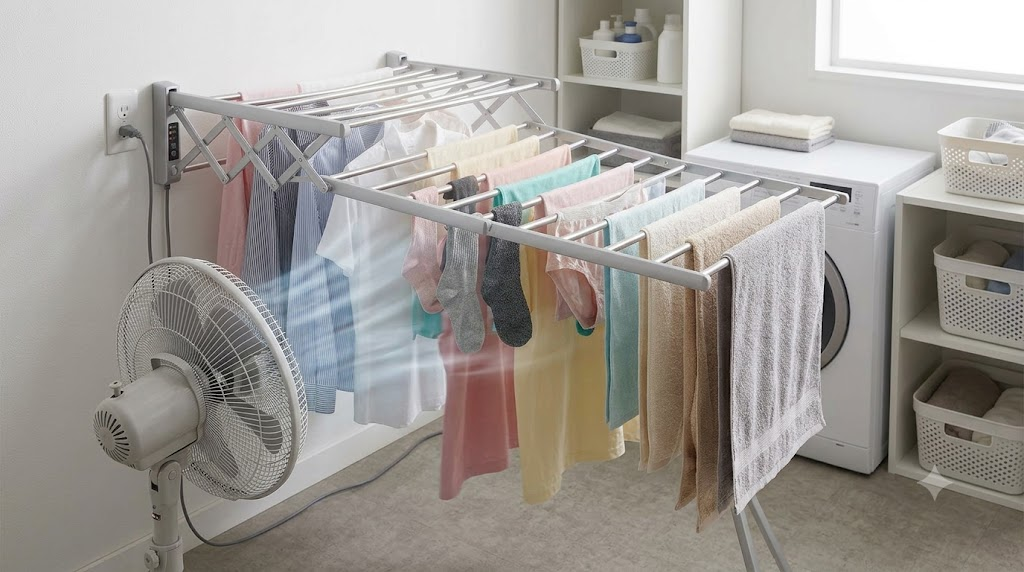
A fan is one of the cheapest ways to improve indoor drying. But don’t simply point it at the wall and hope for the best. Place the fan several feet away from the rack so air moves through the clothing.
An oscillating fan can be particularly useful because it changes the direction of airflow instead of blasting one section continuously.
Best setup
Put the rack:
Rack → several feet of clearance → fan
Keep enough space for air to move around the garments. You don’t need hurricane-force airflow. A steady breeze is usually more useful than an extremely powerful blast aimed at one shirt.
Community discussions about indoor drying frequently mention the combination of a drying rack and fan, particularly for apartments and spaces without outdoor clotheslines.
4. Use a Dehumidifier in Humid Rooms
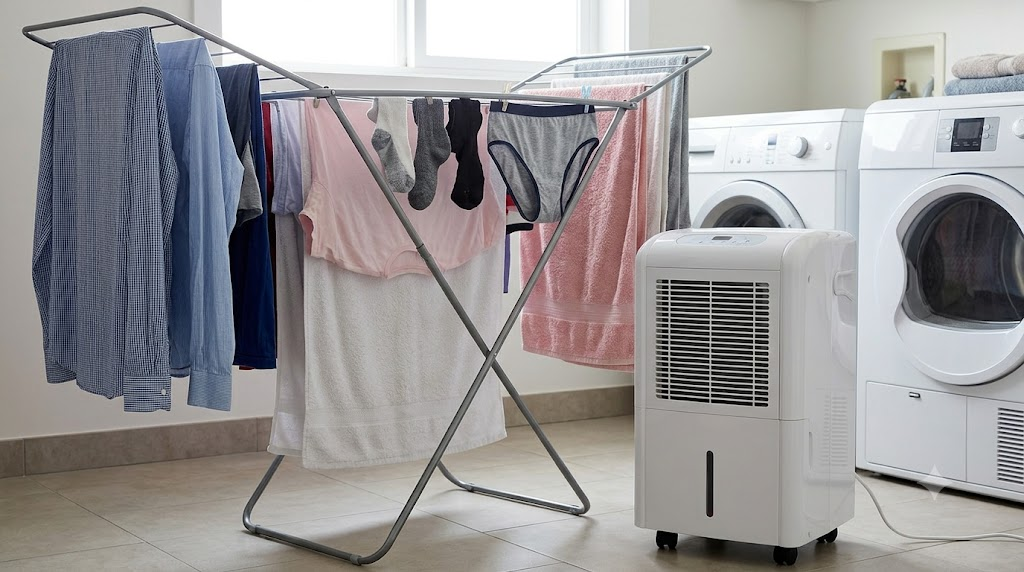
If your home already has high humidity, a dehumidifier can be one of the most useful additions to an indoor drying setup. A fan moves moisture away from the clothing.
A dehumidifier goes one step further: it removes moisture from the room air. That creates a better environment for continued evaporation.
When a dehumidifier makes the most sense
Consider one if you:
- Frequently dry laundry indoors
- Live in a humid climate
- Have a basement laundry area
- Have limited ventilation
- Notice condensation on windows
- Notice a persistent musty smell
- Live in a small apartment
The EPA recommends keeping indoor humidity below 60%, with 30%–50% generally considered ideal. A simple hygrometer can help you see whether humidity is becoming a problem rather than guessing.
A useful setup
Place the drying rack in a suitable room and operate the dehumidifier according to its instructions. Close the room enough for the dehumidifier to work effectively, but don’t create unsafe conditions or block required airflow around the appliance.
5. Ventilate the Room
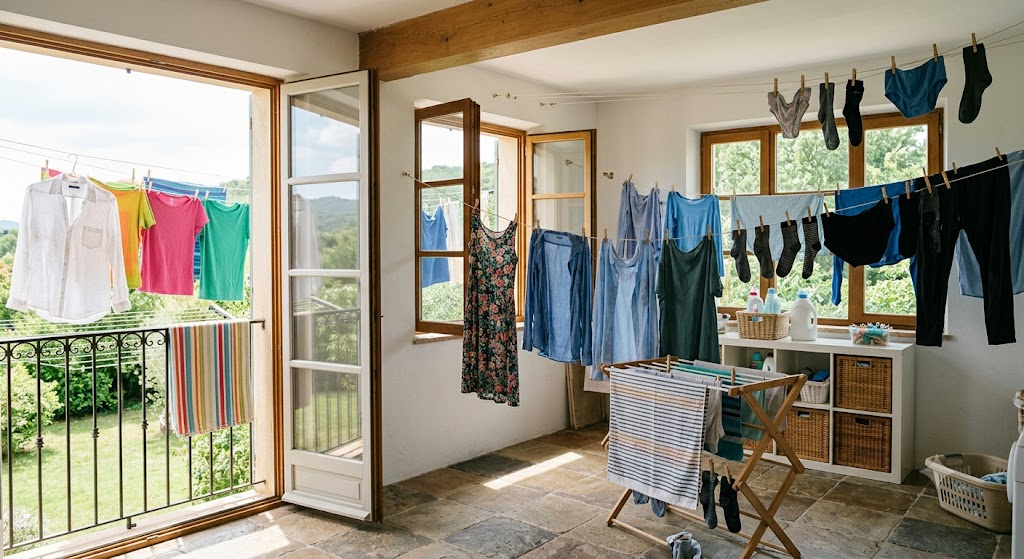
Ventilation is particularly useful when outdoor air is suitable for bringing down indoor moisture.You can use:
- A cracked window
- A bathroom exhaust fan
- A laundry-room exhaust fan
- Cross-ventilation through two openings
- Your home’s HVAC system, where appropriate
But there’s an important catch.
Opening a window isn’t automatically helpful.
If it’s extremely humid outside, you’re potentially bringing more moisture into the room. That’s why a hygrometer is useful. It lets you stop guessing. The EPA specifically recommends ventilation and moisture control as part of managing indoor humidity and condensation.
6. Choose the Right Room
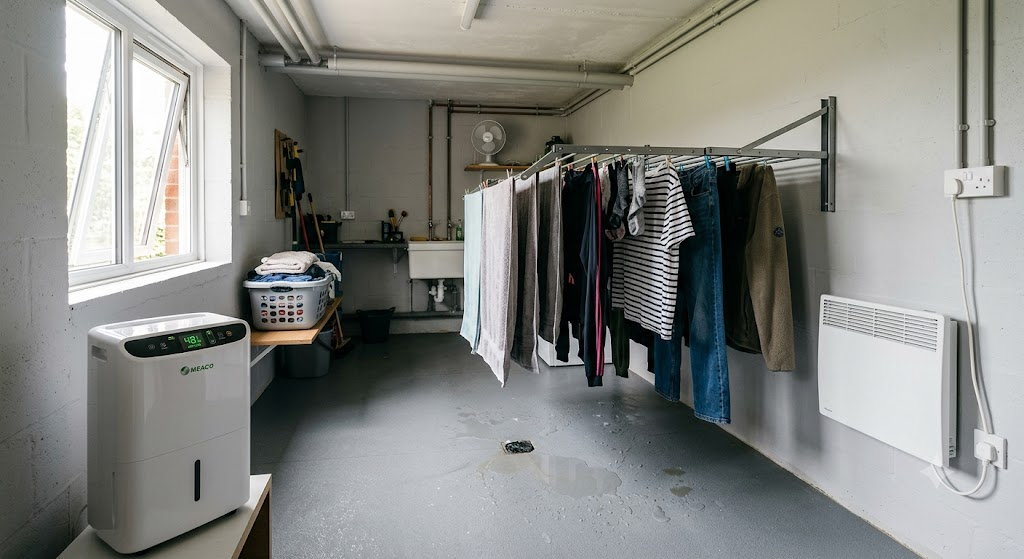
Not every room is equally good for indoor laundry drying.
Better choices
A good drying room generally has:
- Reasonable airflow
- Enough space around the rack
- Good ventilation or humidity control
- A floor that can tolerate occasional drips
- Enough clearance from heaters and electrical equipment
A laundry room, spare room, or well-ventilated living area can work.
Be careful with bedrooms
If you have another option, avoid making your bedroom the permanent drying room. You’re adding moisture to a space where you spend many hours sleeping. If you must dry laundry there occasionally, control the humidity and ventilate the room appropriately.
7. Hang Shirts on Hangers
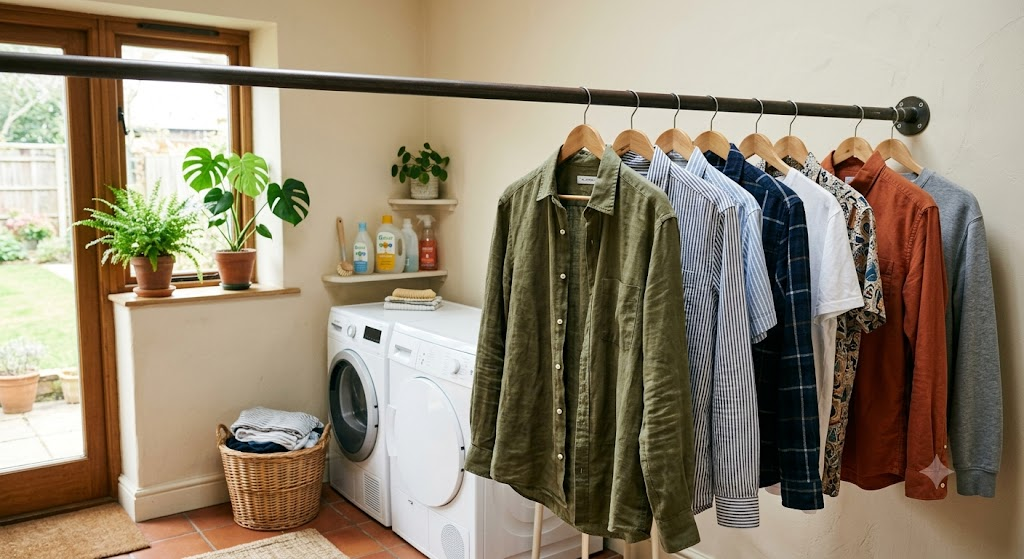
You don’t need to put every item on the drying rack. Shirts, blouses, dresses, and lightweight jackets can often dry efficiently on hangers.
This provides several advantages:
- Saves rack space
- Keeps garments separated
- Helps maintain their shape
- Can reduce wrinkles
- Makes it easier to move clothes once dry
Use sturdy plastic or suitable wooden hangers, depending on the garment. Avoid hanging wet, heavy clothing from anything that isn’t designed to support the load.
8. Turn Thick Clothes Inside Out
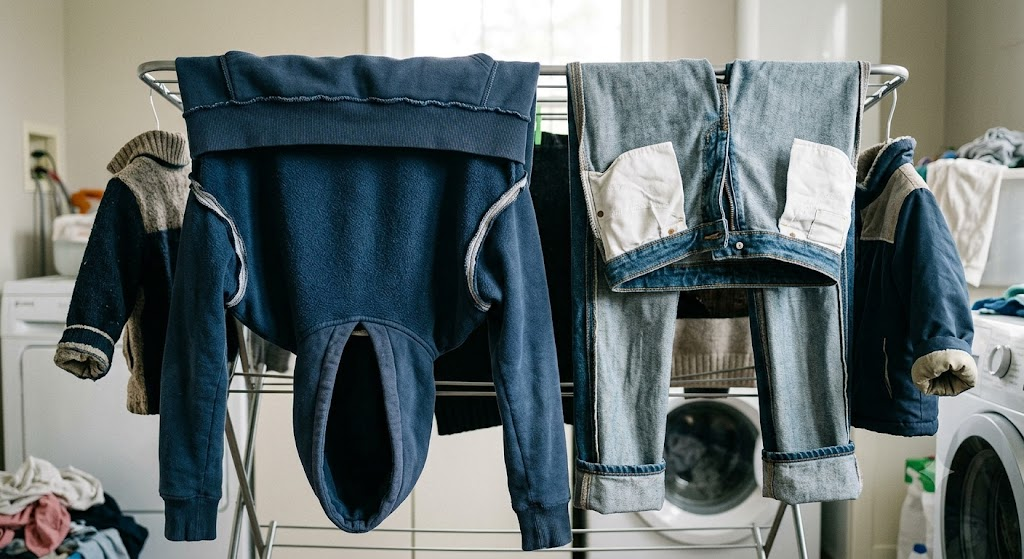
Heavy garments are notorious for looking dry on the outside while remaining damp in places you can’t easily see. Pay attention to:
- Pockets
- Waistbands
- Cuffs
- Underarms
- Seams
- Hood interiors
- Thick collars
- Waist areas of jeans
Turn garments periodically so different areas receive airflow. For thick sweaters or garments that can stretch, follow the care label and consider drying them flat when recommended.
This isn’t glamorous laundry advice. It’s just the difference between “dry” and “I put this on and immediately discovered the waistband is still wet.”
9. Dry Towels Separately From Lightweight Clothes
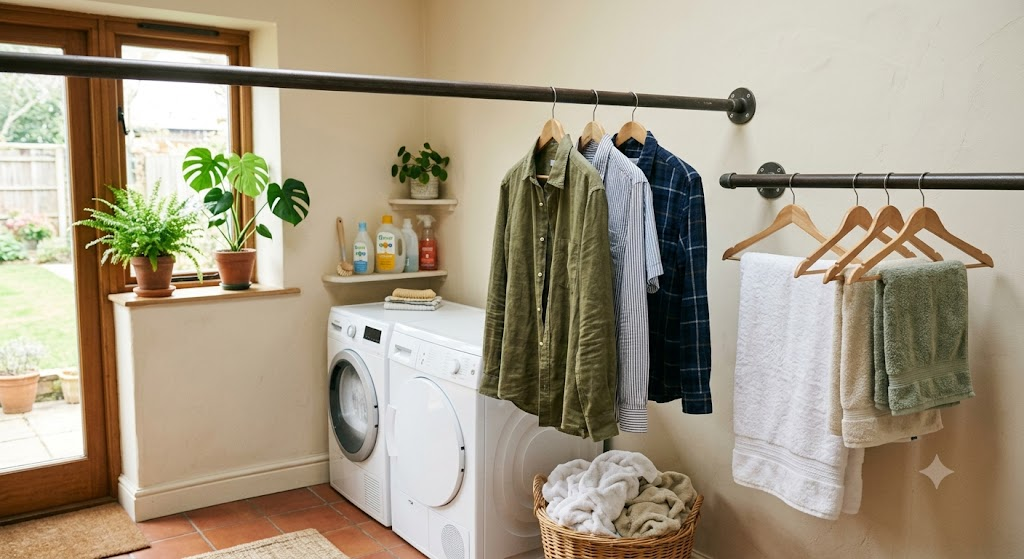
Towels hold a lot more water than thin T-shirts. If you put several large towels on a rack with a full load of clothing, the towels can stay damp for much longer and increase the moisture released into the room.
Instead:
- Run an extra spin.
- Give towels plenty of space.
- Use a large rack or multiple racks.
- Keep air moving around them.
- Rotate them periodically.
If you own a clothes dryer, using it selectively for heavy items while air-drying lightweight clothing can be a practical compromise.
10. Use a Heated Drying Rack Carefully
Heated drying racks can be useful when you need more speed but don’t want to run a full-size dryer. They’re particularly interesting for:
- Apartments
- Winter laundry
- Small loads
- Delicate clothing
- Homes without a dryer
But don’t assume “heated” automatically means “better.” You still need airflow. A heated rack that is overloaded with clothes can still dry slowly.
Look for:
- Stable construction
- Adequate drying area
- Foldable storage
- Appropriate electrical safety certification for the U.S. market
- Clear maximum-load instructions
- A suitable warranty
- Automatic shutoff or timer features where appropriate
Never cover electrical heating equipment with blankets or other materials unless the manufacturer explicitly designs the product for that use.
11. Don’t Put Clothes Directly on a Space Heater
This deserves its own warning because it’s an easy shortcut with a bad downside. Don’t drape wet clothes directly over a portable space heater. You can restrict airflow, overheat the appliance, damage clothing, or create a fire hazard.
Instead, keep your drying rack at a safe distance from heat sources and follow the heater manufacturer’s clearance requirements. The goal is warm air around clothes, not clothes touching a heating appliance.
12. Use Your Air Conditioner’s Dry Mode When Available
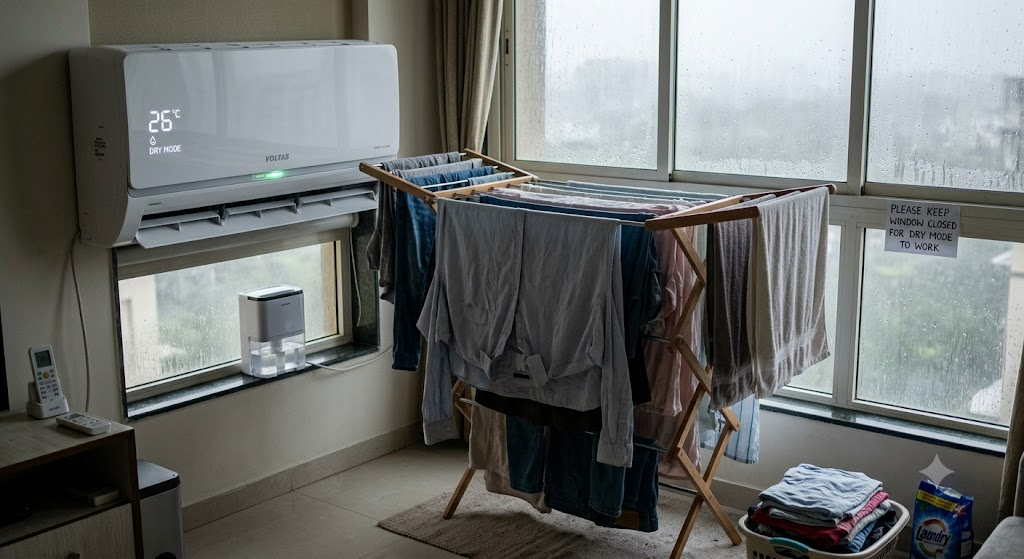
If your home has an air conditioner with a dedicated Dry or dehumidification mode, it can sometimes help reduce indoor moisture. This can be particularly useful during humid weather.
An air conditioner doesn’t need to make the room freezing cold for it to help manage humidity, but the exact operation depends on the HVAC system. For humid conditions, combine appropriate humidity control with airflow around the drying rack.
13. Don’t Leave Wet Laundry Sitting in the Washer
One of the easiest ways to create a laundry smell is to wash clothes and then forget about them. Wet clothes sitting in a closed washing machine aren’t getting meaningful airflow. Move them to the drying rack as soon as practical after the cycle finishes.
If laundry already smells musty, simply drying it again may not solve the underlying problem. You may need to rewash it and investigate whether the washer itself needs cleaning.
Which Indoor Drying Method Is Best?
Here’s how I’d rank the main options for a typical U.S. household.
| Method | Drying speed | Cost | Space | Humidity control | Best for |
|---|---|---|---|---|---|
| Basic drying rack | Medium | Low | Medium | Poor | Occasional drying |
| Rack + fan | Fast | Low | Medium | Poor | Most households |
| Rack + dehumidifier | Fast | Medium | Medium | Excellent | Humid homes |
| Heated rack | Fast | Medium | Medium | Limited | Cold weather |
| AC Dry mode + rack | Fast | Medium | Low | Good | Humid climates |
| Tumble dryer | Very fast | Higher | High | Excellent if properly vented | Large/frequent loads |
| Rack + fan + dehumidifier | Very fast | Medium–High | Medium | Excellent | Frequent indoor drying |
The important thing is that the best method isn’t necessarily the most expensive one. For many people, a decent drying rack and an inexpensive fan will solve most of the problem.
What to Look for in an Indoor Drying Rack
Don’t buy a rack simply because the product page says it has “extra-large capacity.”
Look at the design.
1. Drying space
More hanging area is useful, but only if clothes can remain separated.
2. Rail spacing
Closely packed rails may limit airflow.
3. Stability
A rack loaded with wet towels becomes much heavier than an empty rack.
Look for sturdy feet and a frame that doesn’t wobble easily.
4. Foldability
If you live in an apartment, storage matters almost as much as drying capacity.
5. Vertical design
Tower racks can make better use of limited floor space.
6. Wheels
Wheels can be useful if you need to move a fully loaded rack.
But make sure they lock securely.
7. Rust resistance
Wet laundry means repeated exposure to moisture. Poor-quality metal components can eventually become an annoyance.
8. Maximum load
Don’t confuse the number of drying feet or rails with actual load capacity. A rack may have plenty of hanging space but still have a modest weight limit.
How We Would Evaluate an Indoor Drying Product
For a genuine hands-on product review, we’d evaluate more than the product’s advertised capacity. A useful testing process would include:
- Measuring setup time
- Measuring folded and unfolded dimensions
- Checking stability with progressively heavier loads
- Testing everyday shirts, pants and towels
- Checking whether garments touch when fully loaded
- Measuring airflow around the rack
- Checking noise from fans or powered drying equipment
- Monitoring indoor humidity with a hygrometer
- Checking how easily the rack folds and stores
- Inspecting joints, wheels and rails after repeated use
- Checking packaging and assembly instructions
- Reviewing warranty coverage
- Looking for U.S.-appropriate electrical safety certification on powered products
That approach produces more useful information than simply repeating “large capacity” from a manufacturer’s product page.
How to Prevent the Musty Smell
The musty smell usually becomes a problem when laundry stays damp for too long or the drying environment has poor airflow and excessive moisture. The solution isn’t necessarily more detergent. Focus on the drying process.
Do this
- Use an appropriate spin cycle.
- Don’t overload the washer.
- Remove laundry promptly.
- Separate garments on the rack.
- Keep air moving.
- Control humidity.
- Dry thick areas completely.
- Clean the washing machine regularly.
- Don’t put clothes away while they’re still damp.
If you repeatedly see condensation on windows or walls while drying laundry, treat that as a moisture-control warning rather than simply accepting it as normal. EPA guidance recommends reducing indoor humidity and addressing condensation promptly.
Can You Dry Laundry Indoors Without a Dryer?
Absolutely. In fact, indoor air drying can be a practical solution for people who:
- Live in apartments
- Don’t have a dryer
- Want to reduce dryer use
- Have delicate clothing
- Have limited outdoor space
- Deal with frequent rain or snow
A dryer is convenient because it removes moisture from clothing quickly and, when properly installed and vented, manages the moisture as part of the appliance’s design. The U.S. Department of Energy regulates residential clothes-dryer energy performance and efficiency standards.
Is Indoor Air Drying Bad for Your Home?
Not automatically. The bigger issue is uncontrolled indoor moisture. Drying laundry adds water vapor to your home. If the space is well ventilated or dehumidified, that moisture can be managed.
If you’re routinely drying several loads in a closed room and the humidity remains high, you’re creating a much less desirable environment. EPA guidance recommends indoor relative humidity below 60%, ideally 30%–50%.
A $10–$50 hygrometer can therefore be more useful than guessing whether your home is “too humid.”
The 30-Minute Indoor Laundry Routine
If you want a simple routine, use this:
Step 1: Finish the wash.
Step 2: Run an extra spin when appropriate.
Step 3: Remove clothes immediately.
Step 4: Shake each garment.
Step 5: Hang everything with gaps.
Step 6: Put heavier items where airflow is strongest.
Step 7: Start a fan.
Step 8: Check room humidity.
Step 9: Add ventilation or a dehumidifier if necessary.
Step 10: Rotate thick garments during drying.
Step 11: Check pockets, seams, cuffs and waistbands before folding.
Step 12: Put clothes away only when completely dry.
Once you’ve done this a few times, it becomes almost automatic.
Common Indoor Laundry-Drying Mistakes
Avoid these:
- Overloading the drying rack
- Hanging wet clothes directly against each other
- Drying everything in one tiny closed room
- Ignoring high humidity
- Leaving clothes in the washer
- Putting clothing directly on heaters
- Drying thick towels in a crowded rack
- Using excessive heat on delicate fabrics
- Assuming an open window always improves drying
- Putting clothes away while slightly damp
Frequently Asked Questions
How long does laundry take to dry indoors?
It depends on fabric thickness, room temperature, humidity, airflow, garment spacing and how much water remains after the spin cycle. Lightweight shirts can dry considerably faster than towels, jeans and sweatshirts.
Is it better to use a fan or dehumidifier?
They solve different problems. A fan improves airflow around the clothing, while a dehumidifier removes moisture from the room air. Using both can be particularly effective when indoor humidity is high.
Should I open a window when drying clothes indoors?
Only when outside conditions make ventilation useful. If outdoor air is already very humid, opening the window may not help much. A hygrometer can help you make the decision based on actual indoor humidity.
Can I dry clothes in the bathroom?
Yes, but ventilation matters. A bathroom exhaust fan can help remove moisture, and you should avoid leaving the room humid after drying.
Can I dry clothes overnight indoors?
You can, provided the drying setup is safe and the room has appropriate airflow and moisture control. Don’t leave clothing touching heaters or block vents and electrical equipment.
What’s the cheapest way to dry clothes indoors?
A basic folding drying rack plus a fan is one of the simplest low-cost setups. If humidity is high, a dehumidifier may provide a bigger improvement than simply increasing fan speed.
Does indoor drying cause mold?
Indoor drying itself doesn’t automatically cause mold. The concern is excessive, uncontrolled moisture. Maintaining appropriate indoor humidity and dealing with condensation can reduce moisture-related problems. EPA recommends keeping indoor relative humidity below 60%, ideally around 30%–50%.
Final Verdict: The Best Way to Dry Laundry Indoors
The best overall setup for most households is a well-spaced drying rack combined with an ordinary fan. If your home is humid, add a dehumidifier.
If you’re dealing with cold weather and need more speed, consider a heated drying rack, while following the manufacturer’s safety instructions.
If you’re drying large family loads every day, a tumble dryer may simply be more practical.
The key isn’t to chase one magic drying hack.
It’s to control three things:
Remove water → move air → control humidity.
Get those three right, and rainy laundry days become much less annoying.
Recommended Reading:
- 10 Best Portable Washing Machine
- 17 Small Laundry Room Ideas That Make Room for a Portable Washer
- 20 Ways to Dry Your Laundry in a Small Apartment
- 10 Best Portable Washer and Dryer for Apartments Without Hookups 2026

Sourabh researches and writes about home appliances, kitchen gadgets, and common appliance problems to help readers make smarter buying decisions. He specializes in Portable washing machines and appliance troubleshooting guides.
At compactHomeHub, Sourabh focuses on creating easy-to-understand content that simplifies technical appliance issues into practical solutions. His goal is to help users save time, avoid costly mistakes, and choose the right appliances with confidence.
2 thoughts on “How to Dry Your Laundry Indoors Faster: 13 Easy Methods That Actually Work”