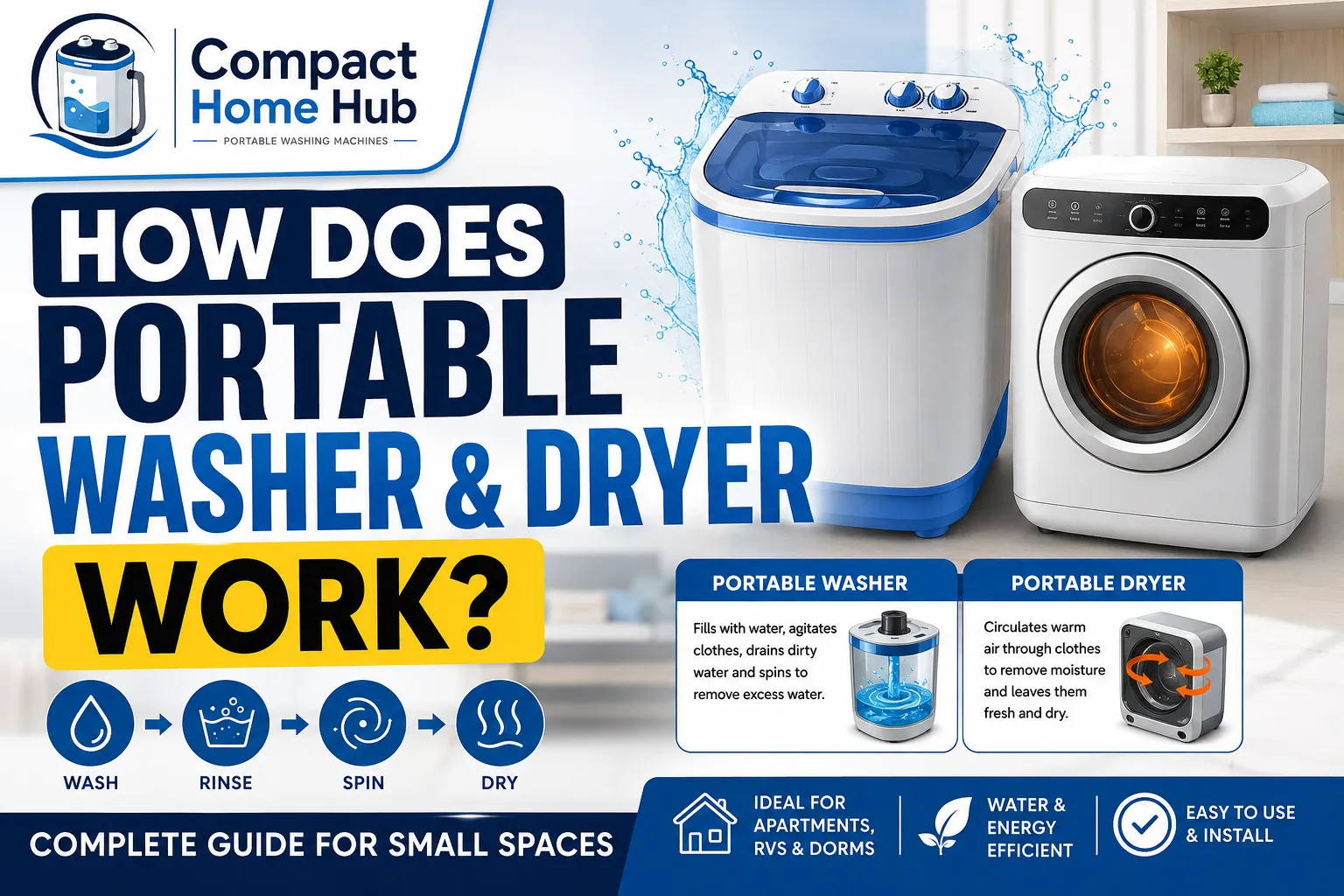
If you’ve been looking at portable washers and dryers online, you’ve probably noticed how compact and convenient they seem. What many people don’t realize is how these small machines clean and dry clothes so effectively despite their size. In this guide, you’ll learn exactly how does portable washer and dryer work, how each stage of the laundry process functions, and whether these machines are the right solution for your apartment, RV, dorm room, or tiny home.
If you’re new to compact laundry appliances, start by learning what is a portable washing machine before understanding how portable washer and dryer systems operate.
How Does Portable Washer and Dryer Work?
Key Takeaways
- Portable washers clean clothes by filling a compact drum with water, mixing detergent, agitating fabrics, draining dirty water, and spinning clothes to remove excess moisture.
- Portable dryers remove moisture by circulating heated air through clothes while venting or condensing humid air, depending on the dryer type.
- Twin tub portable washers separate washing and spinning into two tubs, while fully automatic models complete the entire cycle automatically.
- Most portable washers connect to a standard kitchen or bathroom faucet and drain wastewater into a nearby sink.
- Portable laundry machines generally consume less water and electricity than traditional full-size washing machines.
- Choosing the right portable washer depends on available space, laundry volume, plumbing access, and your budget.
- Regular maintenance helps improve cleaning performance and extends the life of your portable washer and dryer.
What Is a Portable Washer and Dryer?
A portable washer and dryer is a compact laundry system designed to wash and dry clothes using the same basic principles as traditional laundry machines while requiring less space, water, and electricity.
Unlike conventional laundry appliances, portable models are lightweight, easy to move, and ideal for places where installing a full-size washing machine isn’t practical. They are especially popular among apartment renters, RV owners, college students, and people living in tiny homes.
For example, if you rent an apartment without laundry hookups, a portable washer can connect directly to your kitchen sink using a faucet adapter. After washing, the wastewater drains back into the sink through a flexible drain hose.
Main Components of a Portable Washer
Although sizes vary, most portable washers include the following components:
- Wash drum
- Water inlet hose
- Faucet adapter
- Drain hose
- Control panel
- Electric motor
- Agitator or impeller
- Spin basket (on twin tub models)
Each component performs a specific role during the wash cycle, working together to remove dirt while using minimal resources.
Main Components of a Portable Dryer
Portable dryers are equally simple in design. Most include:
- Heating element
- Drum
- Air circulation fan
- Moisture exhaust or condenser
- Lint filter
- Temperature controls
These components help circulate warm air around wet clothes until the remaining moisture evaporates.
Portable Washer vs Traditional Washing Machine
| Feature | Portable Washer | Traditional Washer |
|---|---|---|
| Installation | Faucet connection | Permanent plumbing |
| Capacity | 0.9–3.5 cu. ft. | 4–6 cu. ft. |
| Water Usage | Lower | Higher |
| Electricity Usage | Lower | Higher |
| Mobility | Portable | Stationary |
| Best For | Apartments, RVs, Dorms | Houses, Large Families |
According to the U.S. Environmental Protection Agency, WaterSense-certified washing machines can reduce water usage by around 20% compared to conventional models. — Source: EPA, 2024
Types of Portable Washer and Dryer Systems
Different portable laundry systems suit different lifestyles.
1. Manual Portable Washer: A manual portable washer uses hand-powered rotation instead of electricity.
Best for:
- Camping
- Emergency situations
- Off-grid cabins
2. Electric Portable Washer: An electric portable washer performs washing automatically after connecting to electricity and water.
Ideal for:
- Apartments
- Small homes
- Students
3. Twin Tub Portable Washer:
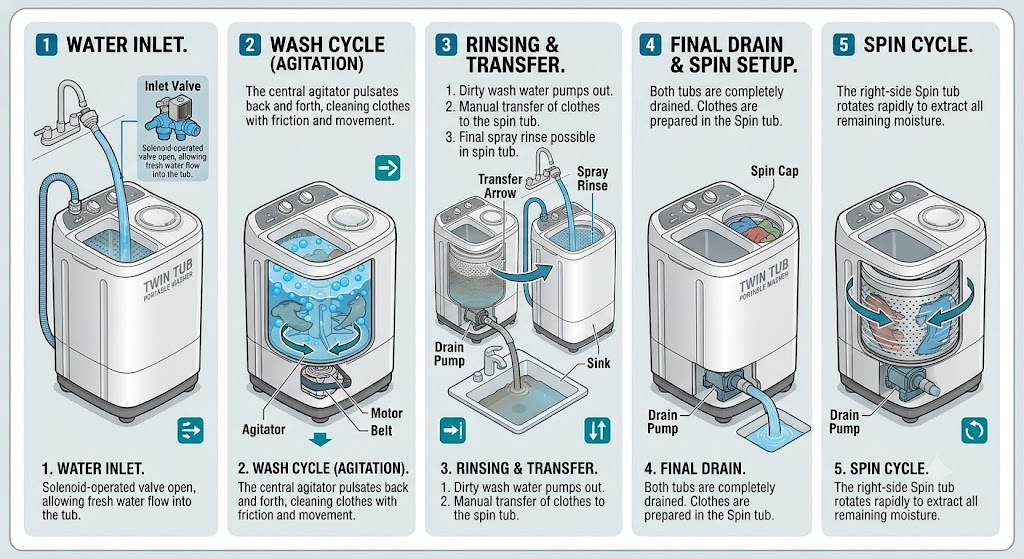
A twin tub portable washer separates the washing and spinning functions into two independent tubs, allowing users to transfer clothes manually.
This design often washes clothes faster because you can wash one load while another is spinning.
Fully Automatic Portable Washing Machine
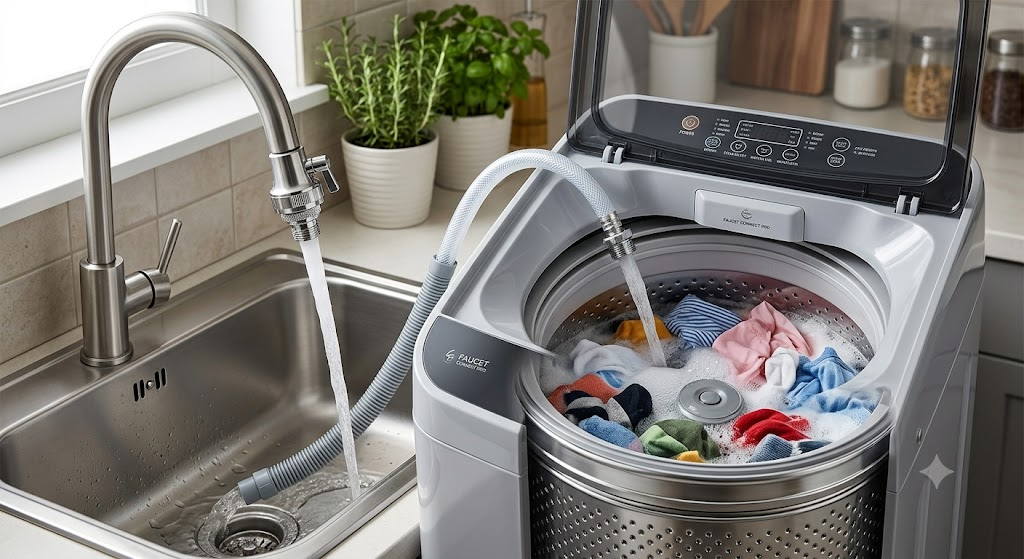
Fully automatic models perform:
- Washing
- Rinsing
- Draining
- Spinning
with little user intervention. Simply load clothes, add detergent, choose a program, and press Start.
Portable Dryer
Portable dryers are available in several styles:
- Compact vented dryers
- Ventless dryers
- Condenser dryers
- Spin dryers
- Heated drying cabinets
Each type removes moisture differently, which we’ll explain later in this guide. If you want to know full details about portable washine machine then you can read What Is a Portable Washing Machine?
Why Are Portable Washer and Dryer Important?
Portable washer and dryer systems make laundry possible in places where traditional machines cannot be installed.
For millions of renters and travelers, these compact appliances eliminate frequent trips to laundromats while providing greater convenience and control over laundry schedules.
According to the U.S. Census Bureau, nearly 36% of Americans live in rental housing, where installing permanent laundry appliances is often impossible. — Source: U.S. Census Bureau, 2024
Let’s explore why portable laundry machines continue to grow in popularity.
1. They Save Valuable Space
Portable washers occupy significantly less floor space than traditional washing machines.
Most models are narrow enough to fit inside closets, bathrooms, or kitchen corners. For example, many compact washers measure less than 20 inches wide, making them suitable for studio apartments.
2. They Reduce Laundry Costs
Portable laundry machines can lower long-term laundry expenses by reducing trips to laundromats.
A typical laundromat wash-and-dry cycle may cost $5–10 per load, depending on location. For a household washing four loads every week, annual laundry expenses can easily exceed $1,000. Owning a portable washer helps eliminate much of that recurring cost.
3. They Use Less Water
Portable washing machines generally require less water than standard washers because of their smaller drum capacity.
Most compact washers use approximately 8–20 gallons (30–75 liters) per wash, depending on load size. By comparison, many older traditional washers use over 30 gallons per cycle. According to ENERGY STAR, certified washing machines use approximately 25% less energy and 33% less water than standard models. — Source: ENERGY STAR, 2024
4. They Consume Less Electricity
Portable washers usually require less electricity because they wash smaller loads using compact motors.
Most electric portable washers consume between 200–500 watts, making them relatively inexpensive to operate. For many apartment residents, this translates into lower electricity bills over time.
5. They Are Perfect for Small Living Spaces
Portable laundry systems work particularly well in:
- Apartments
- Tiny homes
- RVs
- Dormitories
- Vacation cabins
- Boats
For example, RV owners often choose compact washers because they fit inside existing cabinets while consuming minimal water from onboard tanks.
6. They Offer Greater Convenience
Instead of carrying heavy laundry baskets across town, you can wash clothes whenever it’s convenient. This flexibility benefits:
- Remote workers
- Busy professionals
- Families with young children
- Elderly users
- College students
Having laundry available at home also allows you to wash smaller loads more frequently instead of waiting for laundry day.
How Does a Portable Washer Work?
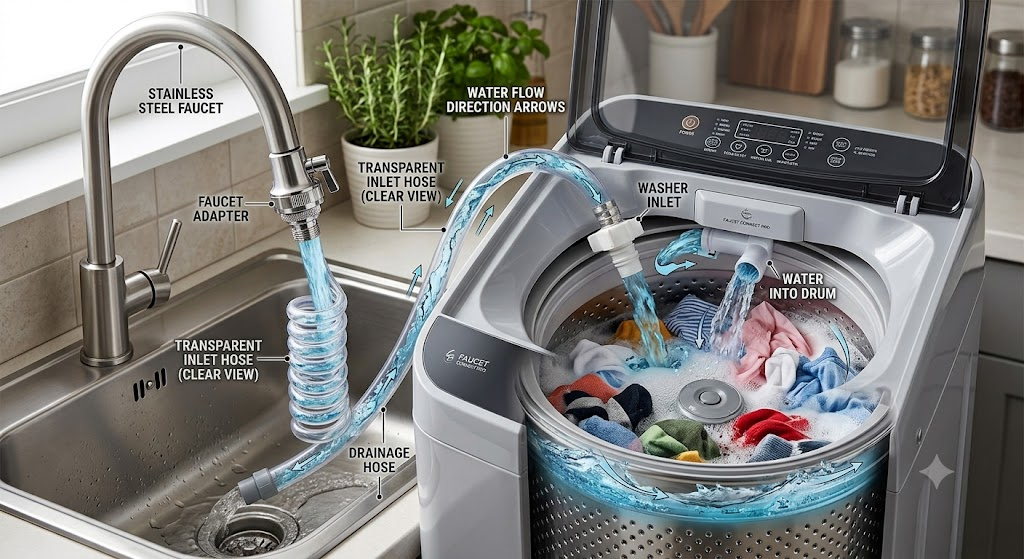
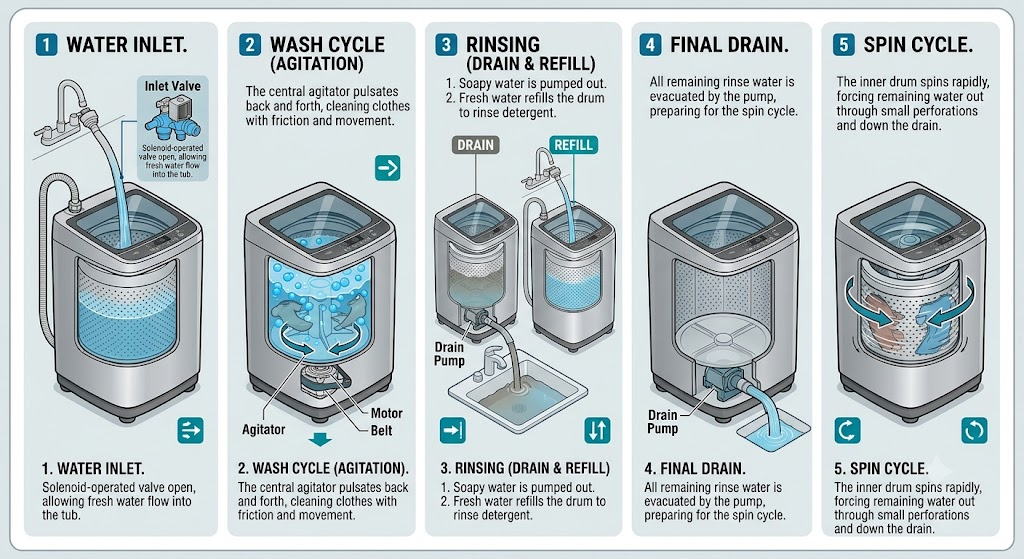
A portable washer works by filling its drum with water, mixing detergent, agitating clothes to remove dirt, draining the dirty water, and spinning garments to remove excess moisture.
Although portable washers are much smaller than traditional machines, the cleaning process follows the same fundamental principles. Instead of relying on sheer size, they use efficient drum movement, controlled water flow, and concentrated wash cycles to clean clothes effectively.
Portable laundry appliances are designed to be energy efficient. Learn how much electricity a portable washer uses before selecting a model.
Understanding each stage of the wash cycle helps you choose the right machine, use it correctly, and get the best cleaning results.
Step 1: Water Enters the Machine
Water enters a portable washer through an inlet hose connected to a household faucet.
Most electric portable washers include a universal faucet adapter that attaches to a kitchen or bathroom sink. Once connected, turning on the tap allows fresh water to flow into the machine through the inlet hose.
For example, many apartment users connect the washer to a standard threaded kitchen faucet in less than five minutes, eliminating the need for permanent plumbing.
Step 2: How Does a Portable Washer Mix Water and Detergent?
A portable washer mixes water and detergent by filling the wash tub to the selected water level before the motor begins the wash cycle.
Next, you add a HE (High-Efficiency) detergent or the detergent recommended by the manufacturer. Because portable washers use less water than full-size machines, only a small amount of detergent is needed. Using too much detergent creates excess foam, reduces cleaning performance, and may leave residue on clothes.
For example, most portable washers require only 1–2 tablespoons of HE detergent for a normal load.
Why HE Detergent Is Recommended
HE detergent produces fewer suds while cleaning efficiently in low-water environments. Benefits include:
- Better rinsing
- Less detergent residue
- Reduced water consumption
- Improved machine performance
- Longer appliance lifespan
Step 3: How Does a Portable Washer Clean Clothes?
A portable washer cleans clothes by moving fabrics through soapy water, allowing friction and detergent to lift dirt, stains, and oils from the fibers.
The cleaning action depends on the machine’s washing mechanism.
Agitator Portable Washers
An agitator is a central spindle with fins that twists clothes back and forth. Advantages:
- Strong stain removal
- Excellent for towels and jeans
- Faster cleaning
Potential drawbacks:
- Slightly rougher on delicate fabrics
Impeller Portable Washers
An impeller is a low profile rotating plate located at the bottom of the drum.
Advantages:
- Gentler on clothes
- More usable washing space
- Lower water usage
- Quieter operation
Ideal for:
- T-shirts
- Sportswear
- Baby clothes
- Delicates
According to ENERGY STAR, modern high-efficiency impeller washers generally use less water and energy than traditional agitator models while maintaining effective cleaning performance. — Source: ENERGY STAR, 2024
Step 4: What Happens During the Wash Cycle?
The wash cycle repeatedly moves clothes through detergent solution until dirt is loosened and suspended in the water.
The motor rotates the drum or agitator in alternating directions, creating mechanical action that removes soil from fabric. Typical wash cycle:
- Water fills the drum.
- Detergent dissolves.
- Clothes become saturated.
- Agitator or impeller moves fabrics.
- Dirt separates from fibers.
- Dirty water holds suspended particles.
For lightly soiled clothes, a wash cycle usually lasts 10–20 minutes, while heavily soiled loads may require 30–40 minutes depending on the selected program.
Step 5: How Does the Drain Cycle Work?
The drain cycle removes dirty wash water from the machine through a drain hose connected to a nearby sink or drain.
After washing is complete, a small drain pump or gravity in some manual models pushes wastewater out through the drain hose. For example, apartment users typically place the hose securely inside a kitchen sink before starting the drain cycle. This prevents spills and allows wastewater to flow directly into the household plumbing.
Why Proper Drain Hose Placement Matters
Incorrect placement can lead to:
- Water leaks
- Overflow
- Slow drainage
- Machine interruptions
Always secure the hose before beginning the wash cycle.
Step 6: How Does the Spin Cycle Remove Water?
The spin cycle removes excess water by rotating clothes at high speed, creating centrifugal force that pushes water out of the fabric.
Although clothes are not completely dry after spinning, they contain much less moisture than after washing. Typical spin speeds:
| Machine Type | Typical Spin Speed |
|---|---|
| Manual Portable Washer | 300–500 RPM |
| Twin Tub Portable Washer | 800–1,300 RPM |
| Fully Automatic Portable Washer | 700–1,200 RPM |
Higher spin speeds generally shorten drying time because more water is extracted before clothes enter the dryer.
How Does a Portable Dryer Remove Moisture from Clothes?
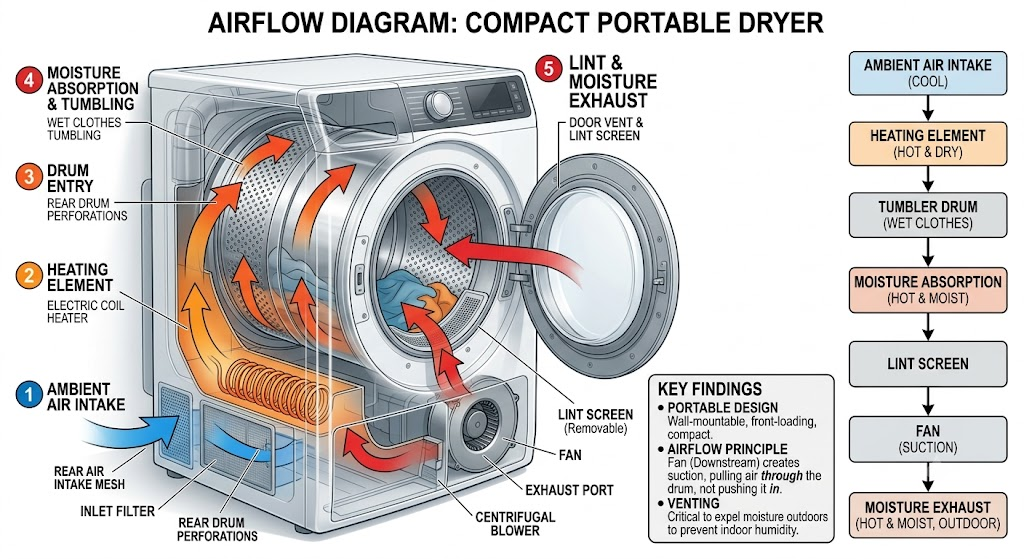
A portable dryer dries clothes by circulating heated air through damp fabrics while venting or condensing moisture, depending on the dryer type.
Unlike a spin cycle, which removes liquid water mechanically, a dryer removes the remaining moisture through controlled airflow and heat.
Let’s explore how each stage works.
1. Heating Element
The heating element warms incoming air before it enters the drying drum.
Once heated, air circulates around the clothes, causing water trapped inside fabric fibers to evaporate. Portable dryers generally operate at lower temperatures than many full-size models, helping reduce fabric wear.
2. Air Circulation
Air circulation distributes warm air evenly around the load to speed up drying.
An internal fan continuously moves heated air through the drum. Benefits include:
- Faster drying
- More even heat distribution
- Reduced damp spots
- Improved drying efficiency
3. Moisture Removal
Moisture removal occurs when warm air absorbs water from clothing and carries it out of the machine.
How this happens depends on the dryer type.
4. Vented Portable Dryer
A vented dryer pushes humid air outdoors through an exhaust hose.
Advantages:
- Faster drying
- Lower humidity indoors
- Simple airflow design
Best for:
- Homes with window venting
- Garages
- Laundry rooms
5. Ventless Portable Dryer
A ventless dryer cools moist air inside the machine, converting water vapor into liquid water before collecting or draining it.
Advantages:
- No exterior vent required
- Easier apartment installation
- Flexible placement
Trade-off:
- Slightly longer drying times
6. Condenser Dryer
A condenser dryer condenses steam into water using a heat exchanger. Collected water is stored in a removable tank or sent directly to a drain. Suitable for:
- Apartments
- Condominiums
- Rental properties
7. Heat Pump Portable Dryer
Heat pump dryers recycle warm air instead of continuously heating new air.
Advantages:
- Excellent energy efficiency
- Lower operating costs
- Gentle fabric care
According to ENERGY STAR, heat pump dryers can use up to 50% less energy than conventional electric dryers. — Source: ENERGY STAR, 2024
What Happens During the Complete Portable Laundry Process?
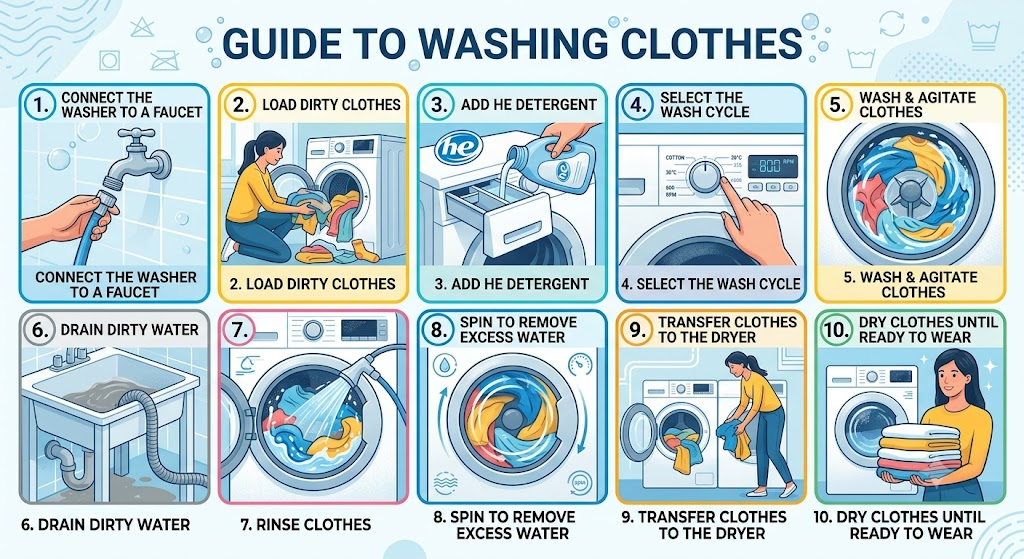
The complete portable laundry process includes washing, rinsing, spinning, and drying clothes in a sequence that removes dirt and moisture efficiently.
Below is the typical workflow for a portable washer and dryer system.
| Step | What Happens |
|---|---|
| 1 | Connect the washer to a faucet |
| 2 | Load dirty clothes |
| 3 | Add HE detergent |
| 4 | Select the wash cycle |
| 5 | Wash and agitate clothes |
| 6 | Drain dirty water |
| 7 | Rinse clothes |
| 8 | Spin to remove excess water |
| 9 | Transfer clothes to the dryer (or start combo drying cycle) |
| 10 | Dry clothes until ready to wear |
Example Weekly Laundry Routine
A small household might use the following schedule:
- Monday – Everyday clothing
- Wednesday – Towels
- Friday – Bedsheets
- Sunday – Sportswear and delicates
Running smaller, more frequent loads helps maximize the efficiency of portable machines while avoiding overloading.
What Types of Portable Washer and Dryer Systems Are Available?
Portable washer and dryer systems are available in several designs to suit different spaces, budgets, and laundry needs.
Each type offers unique advantages depending on how often you wash clothes and where you live. Before buying any model, read our portable washing machine buyer’s guide to understand capacity, hookups, portability, and important buying factors.
| Type | Best For | Main Advantage |
|---|---|---|
| Manual Portable Washer | Camping | No electricity required |
| Twin Tub Washer | Apartments | Fast washing and spinning |
| Fully Automatic Washer | Families | One-touch operation |
| Portable Spin Dryer | Small loads | Quick water removal |
| Compact Electric Dryer | Apartments | Efficient drying |
| Washer-Dryer Combo | Tiny homes | Saves floor space |
Do Portable Washers Need Plumbing?
Most portable washers do not require permanent plumbing because they connect temporarily to a household faucet and drain into a sink.
This simple setup makes portable machines especially attractive for renters and anyone who cannot modify existing plumbing.
Basic Installation Requirements
You’ll typically need:
- Standard electrical outlet
- Kitchen or bathroom faucet
- Faucet adapter
- Water inlet hose
- Drain hose
- Nearby sink or floor drain
Installation usually takes 5–10 minutes once the faucet adapter is in place.
How Much Water Does a Portable Washer Use?
Portable washers typically use between 8 and 20 gallons (30–75 liters) of water per wash cycle, depending on capacity and wash program.
Smaller loads naturally require less water, making portable machines a practical choice for households aiming to reduce water consumption. You should also know how much water a portable washer uses to estimate the total cost of every wash cycle.
According to ENERGY STAR, certified washers save approximately 3,000 gallons of water annually compared with older standard models. — Source: ENERGY STAR, 2024
How Much Electricity Does a Portable Washer and Dryer Consume?
Portable washers and dryers generally consume less electricity than full-size laundry appliances because they handle smaller loads with compact motors and heating systems.
Typical power consumption:
| Appliance | Average Power |
|---|---|
| Portable Washer | 200–500 W |
| Compact Dryer | 1,000–1,500 W |
| Spin Dryer | 150–350 W |
Lower energy usage can contribute to reduced household electricity bills, particularly for singles, couples, and small families with modest laundry needs. If you’re planning to run your washer from campground power or a portable power station, see how much electricity a portable washer uses in real-world conditions.
Can a Portable Washer and Dryer Replace a Full-Size Laundry Machine?
A portable washer and dryer can replace a full-size laundry machine for individuals, couples, and small households, but they may not be ideal for large families with heavy laundry needs.
Whether a portable system is enough depends on your laundry habits, available space, and expectations.
For example, a couple living in a one-bedroom apartment may only need to wash three or four loads per week. A 1.8–2.5 cubic foot portable washer can easily handle that workload. On the other hand, a family of five washing bulky blankets, comforters, and sports uniforms every day will likely benefit from a full-size washer.
When a Portable Washer Is the Better Choice
Choose a portable washer if you:
- Live in an apartment or rental home
- Have limited laundry space
- Want to avoid laundromat costs
- Need a machine for an RV or camper
- Wash small to medium loads regularly
- Want lower water and electricity consumption
Many compact models are designed for both RVs and apartments. Check out our list of the best portable washing machines for apartments for additional options.
When a Full-Size Washer Is the Better Choice
A traditional washer is usually the better option if you:
- Have permanent laundry hookups
- Wash large loads frequently
- Need to clean king-size bedding
- Have a family of four or more
- Want the fastest laundry turnaround
Neither option is universally better the right choice depends on your living situation and laundry volume.
What Clothes Can You Wash in a Portable Washer?
Portable washers can safely clean most everyday clothing as long as the load stays within the manufacturer’s recommended capacity.
Suitable items include:
- T-shirts
- Jeans
- Shirts
- Socks
- Undergarments
- Baby clothes
- Towels
- Pillowcases
- Gym wear
- Light jackets
Most portable washers can also wash bed sheets, although larger sheet sets may need to be washed separately.
Clothes to Avoid
Avoid washing:
- Heavy comforters
- Large rugs
- Sleeping bags
- Oversized winter coats
- Extremely bulky blankets
These items may overload the motor or reduce cleaning effectiveness.
How Long Does a Portable Washer and Dryer Take?
Most portable washers complete a wash cycle in 15–40 minutes, while portable dryers generally require 30–90 minutes depending on the dryer type and fabric thickness.
The following table provides a general guideline.
| Appliance | Typical Time |
|---|---|
| Wash Cycle | 15–40 minutes |
| Rinse Cycle | 5–10 minutes |
| Spin Cycle | 5–10 minutes |
| Portable Dryer | 30–90 minutes |
| Spin Dryer | 2–5 minutes |
For example, lightly soiled office clothes usually finish much faster than thick towels or denim jeans.
What Are the Advantages and Limitations of Portable Washer and Dryer Systems?
Portable washer and dryer systems offer convenience and efficiency, but they also have capacity and speed limitations compared with full-size appliances.
Understanding both sides helps you choose realistically.
| Advantages | Limitations |
|---|---|
| Saves space | Smaller capacity |
| Lower water usage | More loads required |
| Lower electricity usage | Longer drying for large items |
| Easy installation | Cannot wash oversized bedding |
| Portable | Requires manual setup before each use |
| Ideal for renters | Some models require manual water filling |
According to the National Multifamily Housing Council, apartment living continues to increase across North America, contributing to growing demand for compact appliances. — Source: NMHC, 2024
How Do You Maintain a Portable Washer and Dryer?
Regular maintenance keeps portable washers and dryers running efficiently while preventing odors, mold, and mechanical problems.
Fortunately, maintenance takes only a few minutes after each wash.
Portable Washer Maintenance Checklist
✔ Clean the lint filter (if equipped)
✔ Leave the lid open after washing
✔ Wipe the drum dry
✔ Empty remaining water
✔ Clean the drain hose monthly
✔ Inspect faucet connections
✔ Run a drum cleaning cycle every month
Portable Dryer Maintenance Checklist
✔ Clean the lint filter after every load
✔ Check the exhaust hose regularly
✔ Wipe the inside of the drum
✔ Remove dust around air vents
✔ Inspect power cords
According to the U.S. Fire Administration, failure to clean dryer lint is one of the leading causes of dryer-related fires. — Source: USFA, 2024
Common Mistakes to Avoid
Avoiding a few common mistakes can improve cleaning performance and extend the life of your portable laundry machine.
Many first-time users unintentionally reduce washing efficiency by overloading the drum or using too much detergent.
Avoid These Mistakes
- Overloading the washer
- Using regular detergent instead of HE detergent
- Forgetting to secure the drain hose
- Skipping regular cleaning
- Drying oversized loads
- Ignoring manufacturer weight limits
- Leaving wet clothes inside overnight
By following the manufacturer’s recommendations, you can reduce wear on the motor and improve washing results.
What’s Next? How to Choose the Right Portable Washer and Dryer
Choosing the right portable washer and dryer starts with understanding your space, laundry habits, and utility requirements.
Before buying, compare machines based on more than just price.
1. Capacity
Choose a washer that matches your weekly laundry volume.
- 1–2 people: 0.9–1.6 cu. ft.
- 2–3 people: 1.6–2.3 cu. ft.
- 3–4 people: 2.3–3.5 cu. ft.
2. Available Space
Measure:
- Width
- Height
- Depth
- Door clearance
- Faucet location
- Drain access
Even a few inches can make a difference in small apartments.
3. Washing Programs
Look for useful cycles such as:
- Normal
- Heavy
- Delicate
- Quick Wash
- Soak
- Spin Only
4. Energy Efficiency
Look for:
- ENERGY STAR certification
- Lower water consumption
- Efficient spin speed
- Delay start
- Auto load sensing
These features help reduce utility costs over time.
5. Accessories Worth Buying
Helpful accessories include:
- Faucet adapter kit
- Replacement inlet hose
- Drain hose extension
- Laundry cart
- HE detergent
- Drying rack
- Lint remover
- Portable washer stand
FAQs: How Does Portable Washer and Dryer Work?
Do portable washers clean clothes as well as regular washers?
Yes. Portable washers clean everyday clothing effectively when used within their recommended load capacity and with the correct detergent.
Do portable washers need special plumbing?
No. Most portable washers connect temporarily to a kitchen or bathroom faucet and drain into a nearby sink.
Can portable dryers completely dry clothes?
Yes. Compact electric dryers can dry clothes completely, although drying times are usually longer than those of full-size dryers.
Can I wash blankets in a portable washer?
Light blankets are usually acceptable, but oversized comforters and heavy quilts may exceed the machine’s capacity.
Are portable washer and dryer combos worth buying?
Yes. Combo units save floor space and simplify laundry, making them a practical option for apartments, RVs, and tiny homes.
Conclusion
Portable washer and dryer systems provide an efficient way to do laundry in homes where traditional machines aren’t practical. They work by using the same core washing and drying principles as full-size appliances water, detergent, agitation, spinning, and heated airflow but in a compact, space-saving design.
If you live in an apartment, RV, dorm room, or tiny house, a portable laundry system can save space, reduce utility costs, and eliminate frequent trips to the laundromat. By choosing the right capacity, installing the machine correctly, and performing regular maintenance, you can enjoy reliable laundry performance for years.
If you’re still deciding which model to buy, explore our detailed buying guides and product reviews to find the best portable washing machine for your specific needs.
Recommended Reading:
- How to Connect a Sink Adapter for Portable Washer
- What Is a Portable Washing Machine?
- How Does a Portable Washing Machine Work? Step-by-Step
- Portable Washing Machine Buyers Guide

Sourabh researches and writes about home appliances, kitchen gadgets, and common appliance problems to help readers make smarter buying decisions. He specializes in Portable washing machines and appliance troubleshooting guides.
At compactHomeHub, Sourabh focuses on creating easy-to-understand content that simplifies technical appliance issues into practical solutions. His goal is to help users save time, avoid costly mistakes, and choose the right appliances with confidence.