

Wet clothes can take over a small apartment fast. One load of laundry later, your dining chairs are covered with shirts, a drying rack is blocking the hallway, and your bedroom feels like a laundry room. If you don’t have a dryer or outdoor space, finding a place to dry everything can be frustrating. But you don’t need a large laundry room to make it work.
With the right setup, walls, doors, ceilings, closets, shower rods, windows, and unused corners can become practical drying spaces without sacrificing valuable floor space.
In this guide, we’ll cover 20 ways to dry your laundry in a small apartment, including foldable racks, wall-mounted systems, retractable clotheslines, over-the-door racks, heated drying racks, fans, dehumidifiers, and simple tricks to speed up drying.
Whether you live in a studio, rent a small apartment, or simply want to keep wet laundry from taking over your living space, these ideas can help you create a drying setup that fits your home and your routine.
What Are the Best Ways to Dry Your Laundry in a Small Apartment?
The best ways to dry your laundry in a small apartment are foldable drying racks, wall-mounted racks, retractable clotheslines, over-the-door racks, shower-rod hangers, ceiling-mounted drying racks, hanging rods, and a drying rack placed near a fan or dehumidifier.
If you have a balcony, use vertical or retractable drying equipment to preserve walking space. If you don’t have a balcony, a wall-mounted rack, bathroom drying area, or over-the-door system can work better. For the fastest indoor drying, combine good spacing between garments with airflow and humidity control.
The trick isn’t finding one magical drying product. It’s creating a drying setup that disappears when you’re done with it.
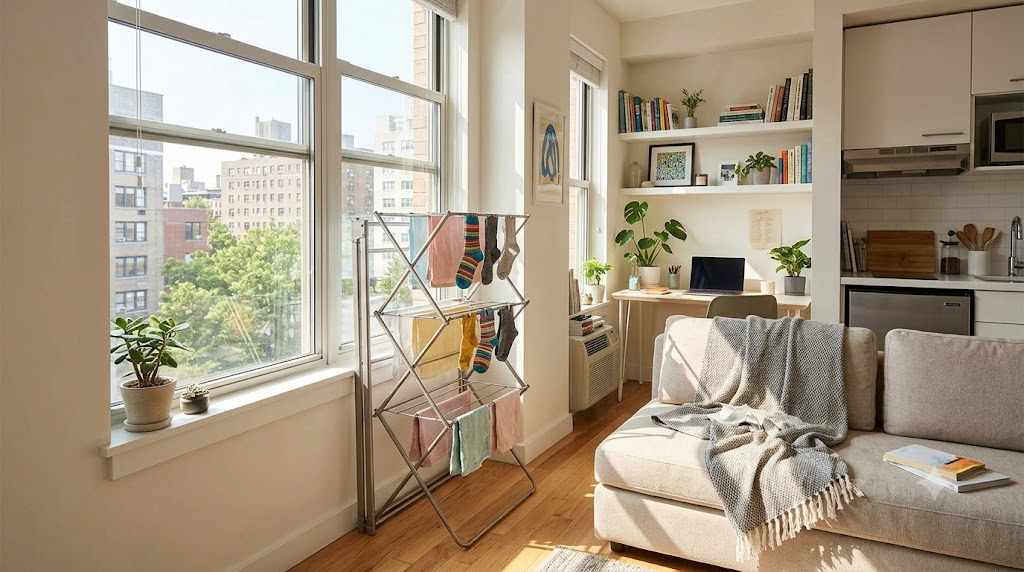
Why Drying Laundry Is Difficult in a Small Apartment
A small apartment creates three separate problems:
- You don’t have much floor space.
- Wet clothes release moisture into the room.
- You still need enough airflow around each garment to dry it properly.
A large freestanding drying rack may technically solve the first problem, but it can create another one. Suddenly you’re walking around a forest of wet T-shirts just to reach the kitchen.
That’s why the best Ways to Dry Your Laundry In a Small Apartment usually involve using vertical space, temporary spaces, or equipment that folds away.
Quick Comparison: 20 Ways to Dry Laundry in a Small Apartment
| Method | Space Used | Setup | Drying Speed | Best For |
|---|---|---|---|---|
| Foldable drying rack | Floor | Easy | Medium | Most apartments |
| Wall-mounted drying rack | Wall | Easy–Moderate | Medium | Tiny rooms |
| Retractable clothesline | Wall-to-wall | Moderate | Medium | Renters |
| Over-the-door drying rack | Door | Very easy | Medium | No floor space |
| Tension rod inside a closet | Bathroom | Very easy | Medium | Shirts and small loads |
| Ceiling-mounted pulley rack | Ceiling | Moderate | Fast | High ceilings |
| Tension rod inside a closet | Wall/closet | Moderate | Medium | Hangers |
| Accordion drying rack | Wall | Moderate | Medium | Narrow spaces |
| Window drying rack | Window | Easy–Moderate | Fast | Sunny apartments |
| Balcony rack | Balcony | Easy | Fast | Outdoor drying |
| Ladder drying rack | Floor/wall | Easy | Medium | Small loads |
| Flat mesh sweater drying rack | Floor | Easy | Fast | Cold weather |
| Drying net | Vertical/overhead | Easy | Medium | Sweaters/delicates |
| Mesh sweater rack | Small footprint | Easy | Medium | Delicates |
| Bathtub drying setup | Bathroom | Very easy | Medium | Large garments |
| Fan-assisted drying | Existing rack | Easy | Fast | Indoor laundry |
| Dehumidifier drying | Existing rack | Easy | Fast | Humid apartments |
| Extra spin cycle | Washer | Very easy | Faster | Any laundry |
| Towel-roll moisture removal | No equipment | Easy | Faster | Emergency drying |
| Laundromat/compact dryer | No home drying space | Moderate | Very fast | Large loads |
Our Evaluation Methodology
This guide evaluates small-apartment laundry drying methods based on five practical factors: floor-space usage, drying airflow, setup effort, renter-friendliness, and suitability for different types of clothing.
We do not claim to have physically tested every drying product mentioned here. Where a method involves a specific installation, always check the manufacturer’s weight limits and your lease or building rules before installing it.
Best Ways to Dry Laundry Based on Your Apartment
| Your Situation | Recommended Method | Example |
|---|---|---|
| No floor space | Wall-mounted drying rack | View on Amazon → |
| Renter | Over-door rack or retractable line | View on Amazon → |
| Balcony available | Vertical balcony rack | View on Amazon → |
| High ceiling | Ceiling pulley rack | View on Amazon → |
| Humid apartment | Rack + dehumidifier | View on Amazon → |
| Cold climate | Heated drying rack | View on Amazon → |
| Lots of shirts | Hanging rod | View on Amazon → |
| Delicate sweaters | Flat mesh drying rack | View on Amazon → |
| No drilling allowed | Foldable rack | View on Amazon → |
| Very small loads | Shower rod or over-door rack | – |
| Large family loads | Multiple racks or laundromat | View on Amazon → |
| Need clothes fast | Extra spin + fan/dehumidifier | View on Amazon → |
| Studio apartment | Retractable or fold-away solution | View on Amazon → |
20 Ways to Dry Your Laundry in a Small Apartment
1. Use a Foldable Drying Rack
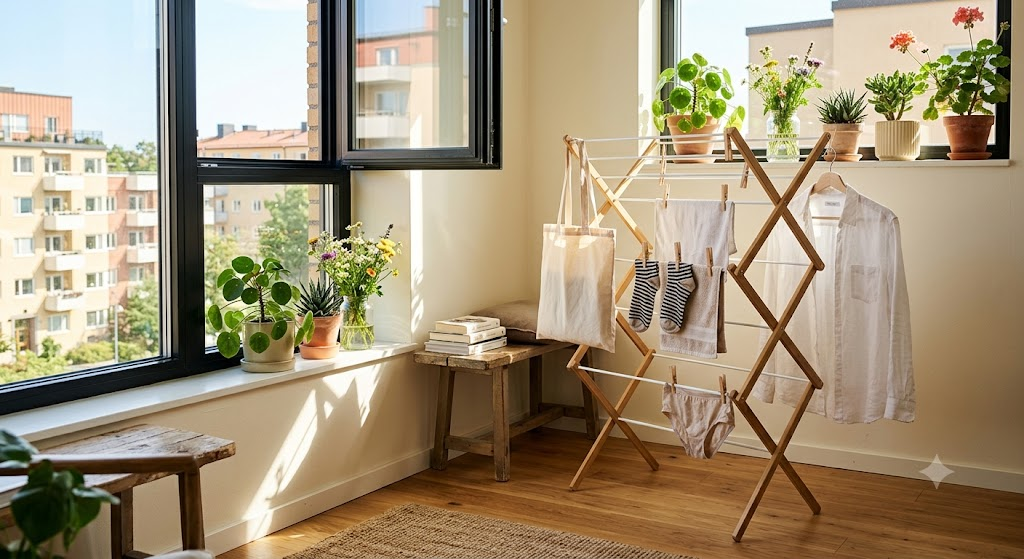
A foldable drying rack remains one of the easiest solutions for apartment living. Open it when laundry comes out of the washer, hang your clothes, and fold it flat when everything is dry. The major advantage is flexibility. You don’t have to permanently dedicate part of your apartment to laundry.
Benefits:
- Works without drilling
- Easy to move between rooms
- Folds away for storage
- Handles everyday shirts, pants, towels, and underwear
- Available in different widths
Example: Place the rack near a sunny window during the day and fold it against a wall at night.
Buy it if: You want the simplest all-purpose solution.
Skip it if: You have almost no usable floor space.
2. Install a Wall-Mounted Drying Rack
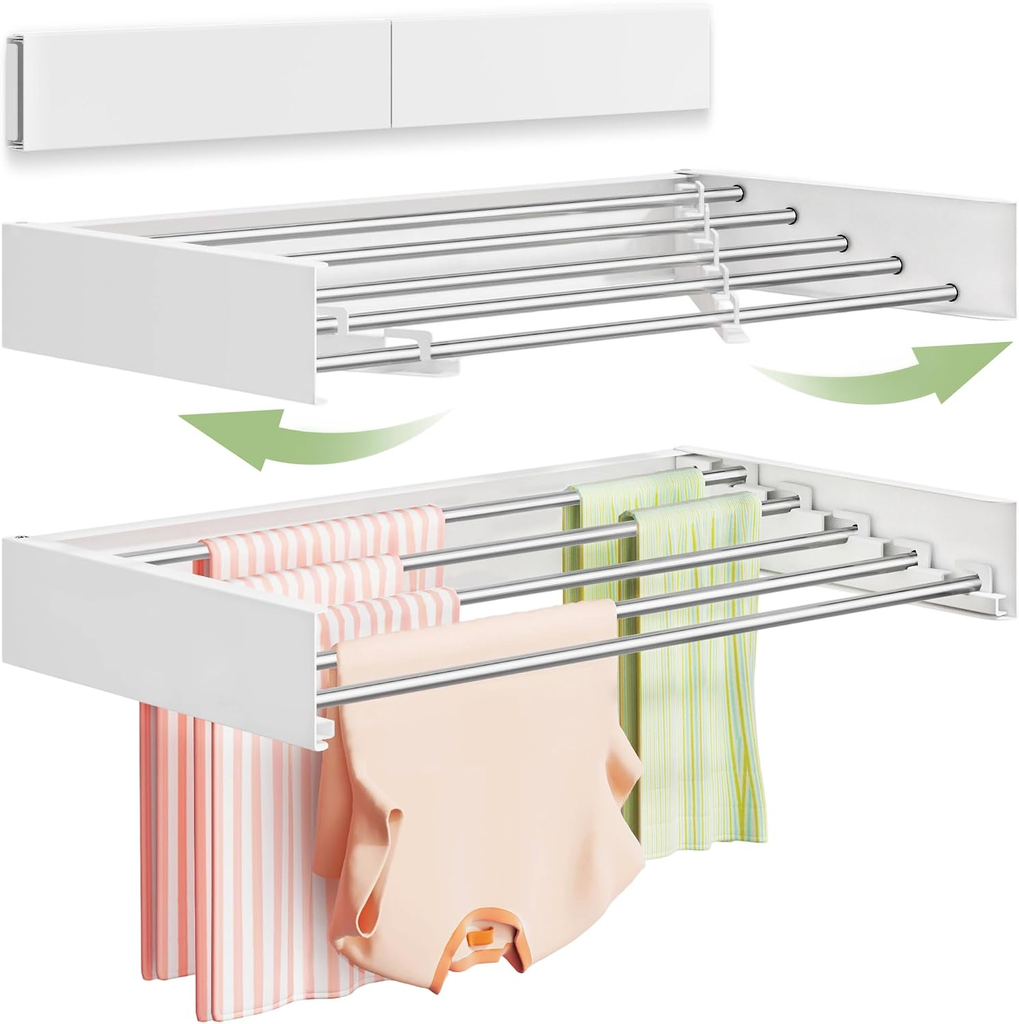
Wall-mounted drying racks are excellent when floor space is more valuable than wall space. Many designs fold against the wall when they’re not being used. A narrow bathroom, laundry corner, hallway, or bedroom wall can become a temporary drying station.
Benefits:
- Saves floor space
- Can disappear against the wall
- Useful for frequent laundry
- Works well in narrow rooms
Before drilling, check your lease and make sure the wall can safely support the installation.
Buy it if: You do laundry frequently and can permanently dedicate a wall.
Skip it if: You’re renting and can’t drill or modify the wall.
3. Try a Retractable Clothesline
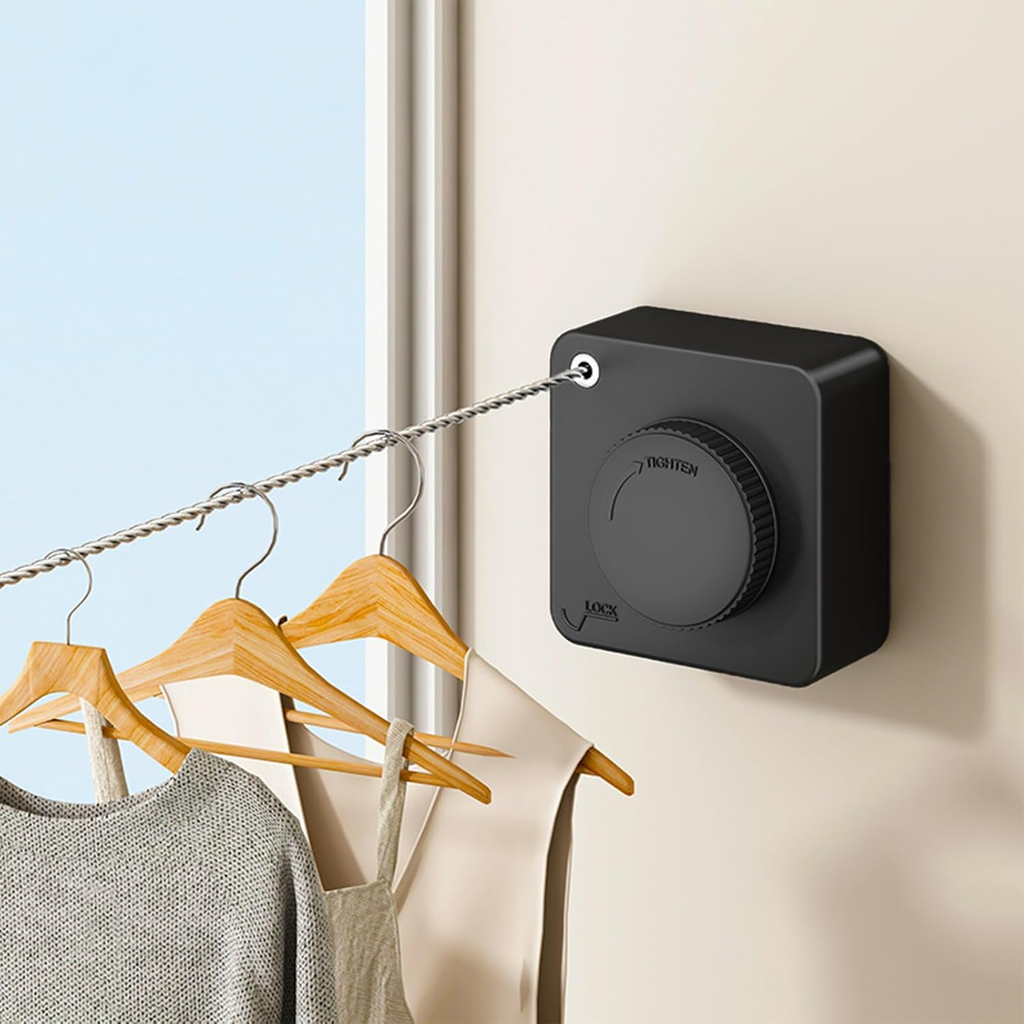
A retractable clothesline is useful when you want a clothesline only when laundry is actually drying. The line pulls out when needed and retracts when you’re finished. This can work particularly well across a bathroom or between two suitable walls. The important issue is tension. A line that’s overloaded with wet jeans and towels can sag considerably.
Benefits:
- Very little storage space
- Inexpensive compared with permanent drying systems
- Good for renters when installed without permanent modifications
- Keeps the floor clear
Buy it if: You need occasional drying capacity.
Skip it if: You regularly dry very heavy loads.
4. Use an Over-the-Door Drying Rack
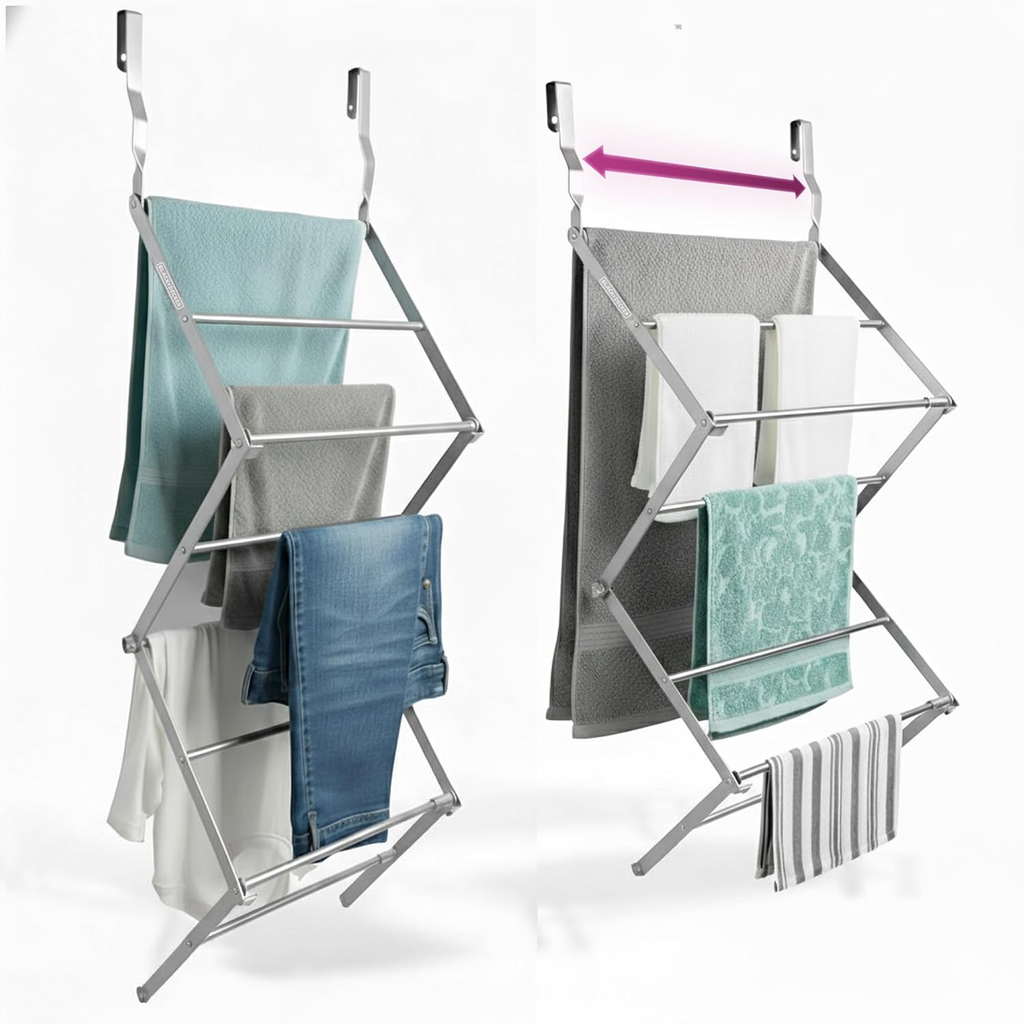
Your doors are probably doing far less work than they could. An over-the-door rack can turn a bedroom, bathroom, or closet door into a temporary drying station. This is especially useful for lightweight clothing.
However, check the door clearance before buying. A rack that prevents the door from closing is less clever than it looks in the product photo.
Benefits:
- Almost no floor space
- Easy to install
- Usually renter-friendly
- Easy to remove
Example: Hang workout clothes on a bathroom door after washing them.
Buy it if: You’re desperately short on floor space.
Skip it if: Your doors are unusually narrow or can’t accommodate additional thickness.
5. Hang Clothes From the Shower Rod
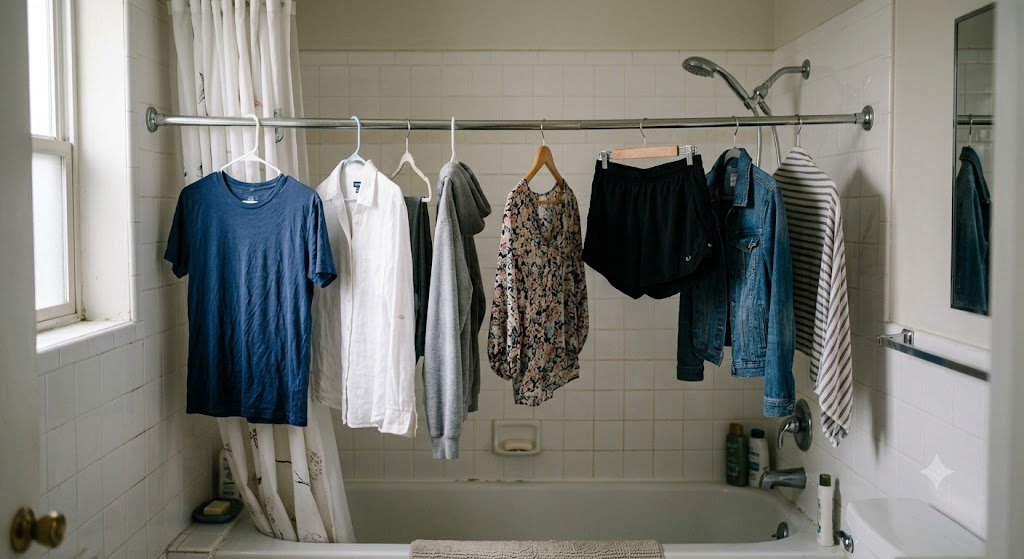
You already have a horizontal bar in the bathroom. Why buy another one?
Use sturdy hangers on the shower rod to dry shirts, blouses, dresses, and other lightweight garments. This works best when the bathroom has good ventilation. After showering, don’t immediately pack the bathroom with wet laundry. The extra moisture from the shower plus wet clothing can make drying painfully slow.
Buy it if: You need a zero-installation solution.
Skip it if: Your bathroom stays damp for long periods.
6. Install a Ceiling-Mounted Pulley Drying Rack
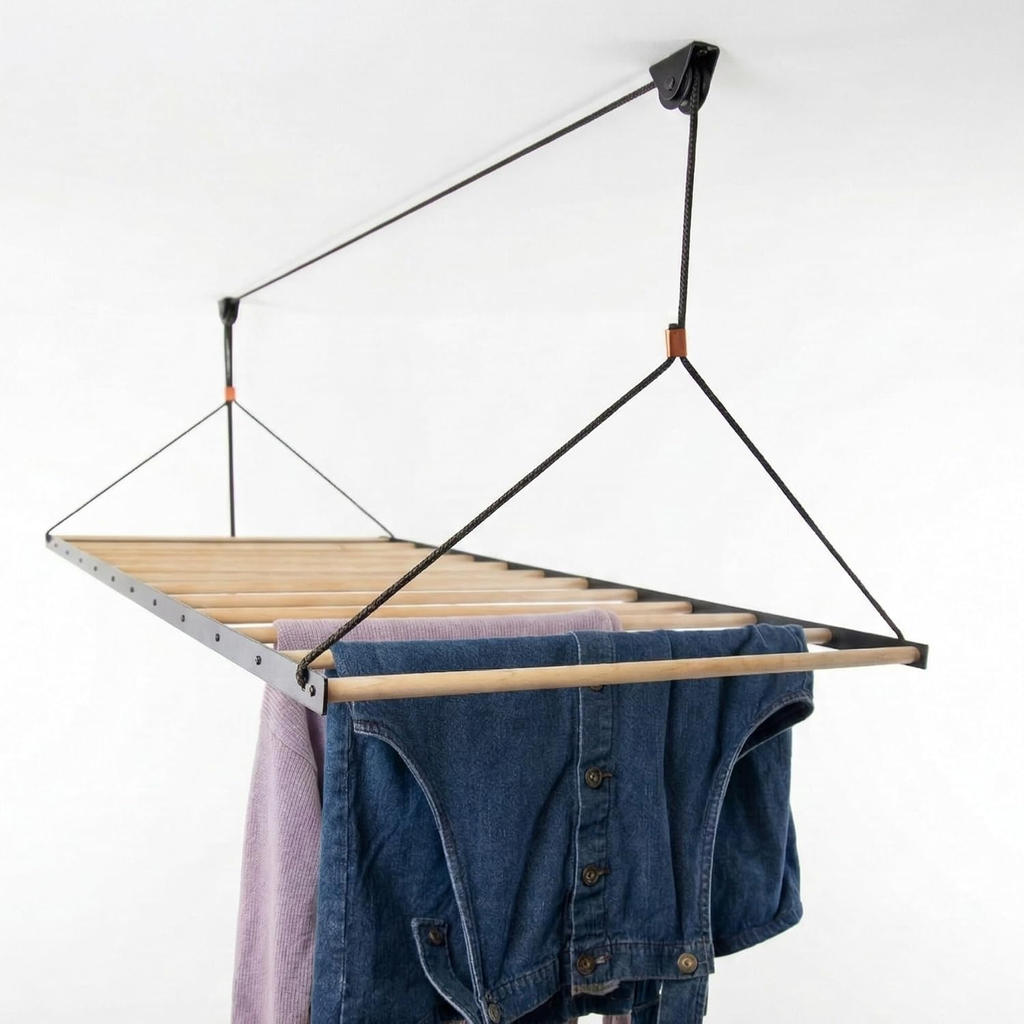
If your apartment has high ceilings, look up. A ceiling-mounted pulley rack uses overhead space that otherwise goes unused. You lower it to load clothes and raise it afterward.
This can provide substantial drying capacity without sacrificing floor area. The downside is installation. You need secure mounting and sufficient ceiling strength.
Benefits:
- Excellent use of vertical space
- Keeps laundry away from the floor
- Can handle multiple garments
- Particularly useful in narrow apartments
Buy it if: You have high ceilings and want a semi-permanent solution.
Skip it if: Your lease prohibits ceiling modifications.
7. Add a Wall-Mounted Hanging Rod
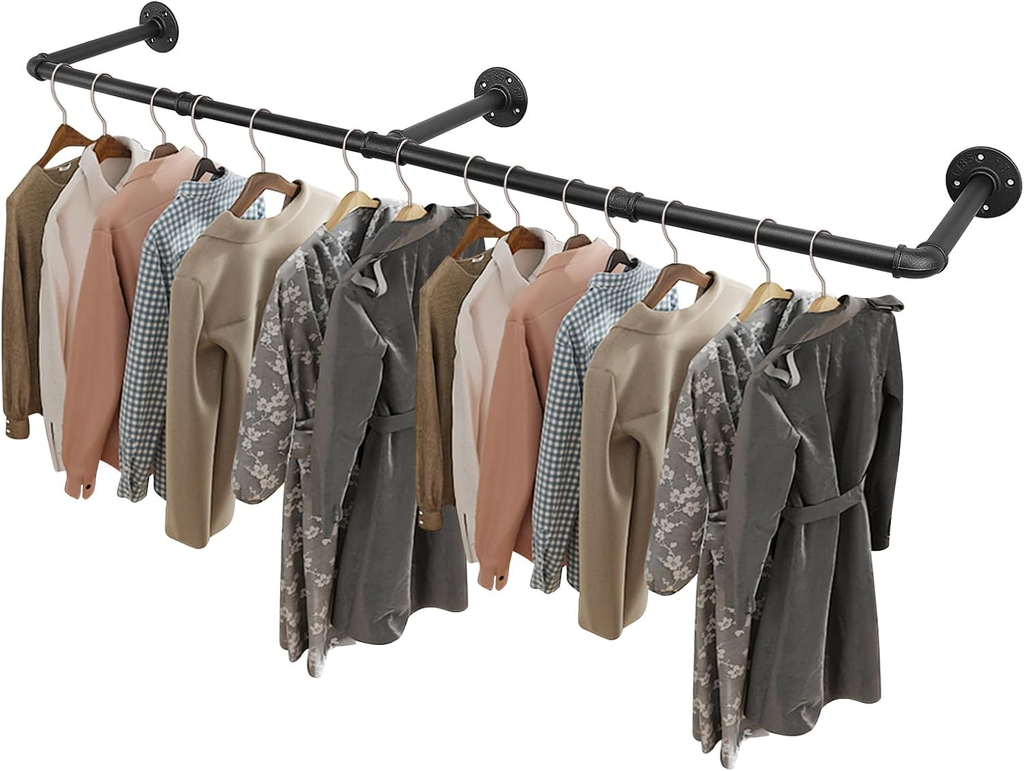
A simple wall mounted hanging rod can be surprisingly useful. Put shirts on hangers directly on the rod instead of spreading them across a drying rack. This improves spacing and can reduce wrinkles. A rod inside a laundry closet, near a window, or above a washer can become a dedicated drying area.
Example: Wash five work shirts and place them on hangers immediately after the final spin.
8. Use an Accordion-Style Drying Rack
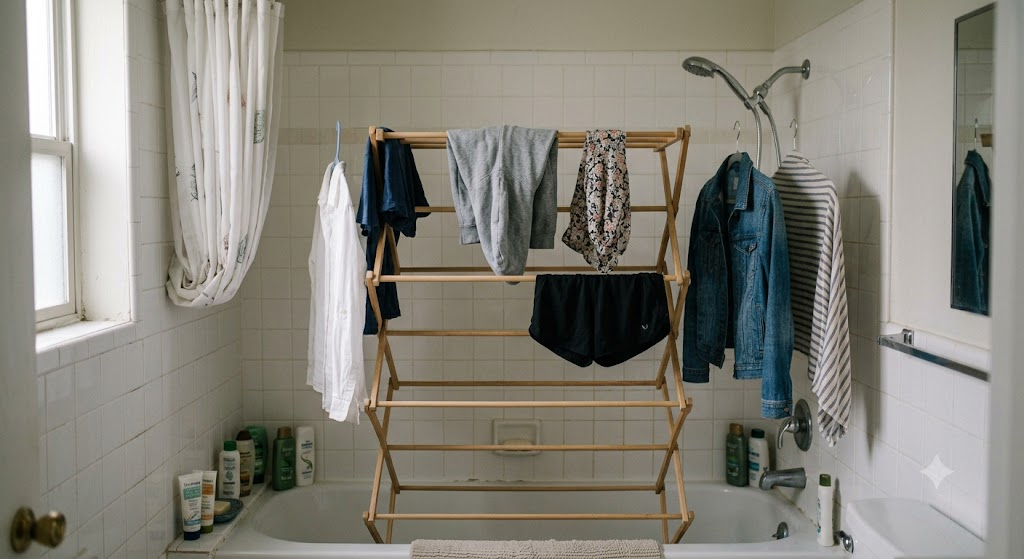
Accordion racks fold against the wall and expand when you need them. They’re particularly useful in narrow bathrooms and utility spaces. They’re not ideal for huge loads, but they’re excellent for a few shirts, children’s clothes, or smaller laundry batches.
Buy it if: You want permanent drying capacity in a narrow area.
Skip it if: You routinely dry large loads of towels and bedding.
9. Use a Window-Mounted Drying Rack
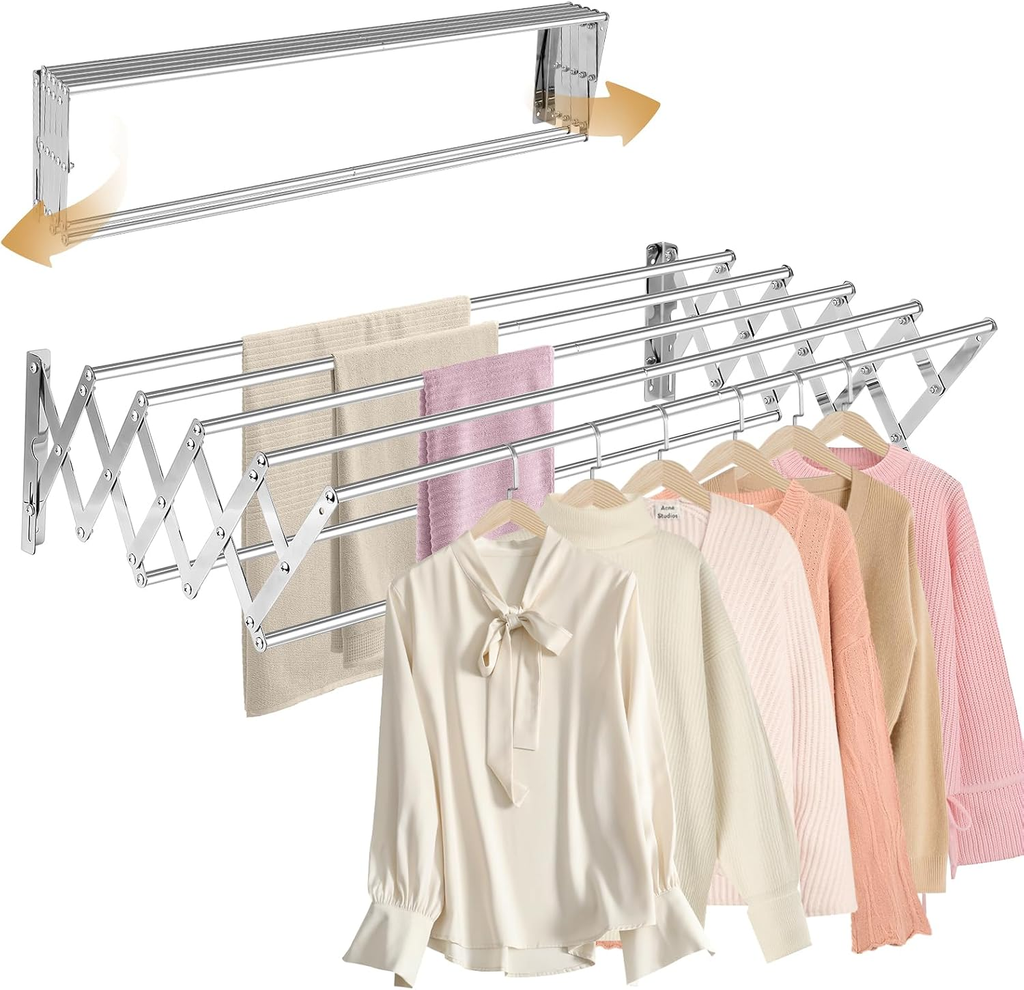
A sunny window can become your apartment’s mini outdoor drying zone. Window-mounted racks use the space around the window while leaving most of the room untouched.
Natural sunlight and airflow can help, although direct sunlight isn’t ideal for every fabric. Dark or brightly colored clothing may fade more quickly with repeated strong sun exposure, so check the care label for sensitive garments.
Best for:
- T-shirts
- Cotton clothing
- Small loads
- Items that benefit from good airflow
Buy it if: You have a suitable window with safe mounting options.
Skip it if: The window doesn’t provide enough clearance or your building restricts external installations.
10. Use Your Balcony Vertically
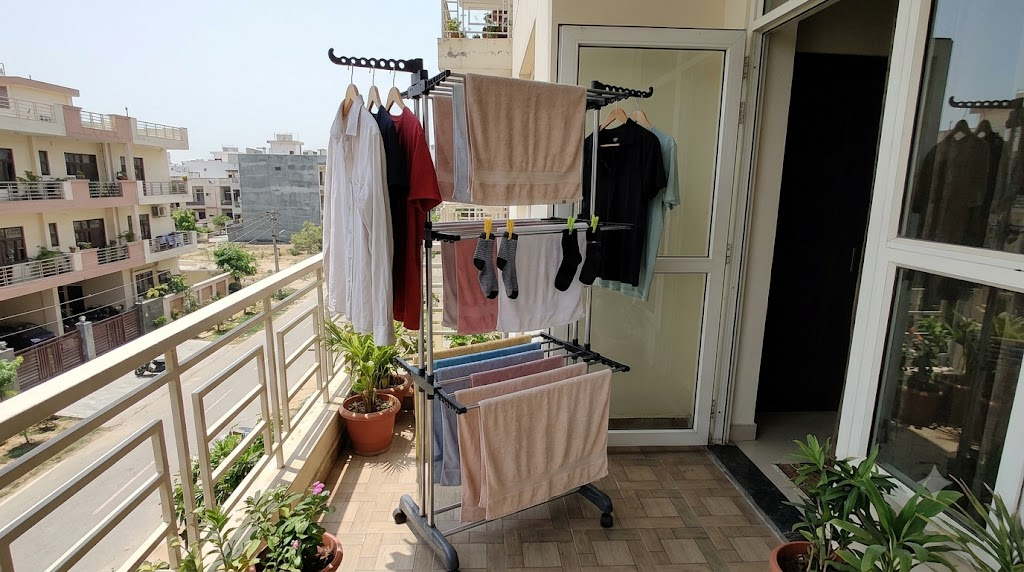
A balcony doesn’t need to become a permanent laundry jungle. Use vertical drying racks, retractable lines, or wall-mounted drying systems to maximize the space. The goal is to preserve the walking area.
Instead of putting a wide rack directly in the middle of the balcony, place drying equipment along the wall or railing where appropriate and permitted.
Example: A narrow vertical rack can hold several shirts while leaving enough room to access the rest of the balcony.
Important: Follow your apartment association, landlord, and local building rules before attaching anything to exterior walls or railings.
11. Turn a Ladder Into a Drying Station
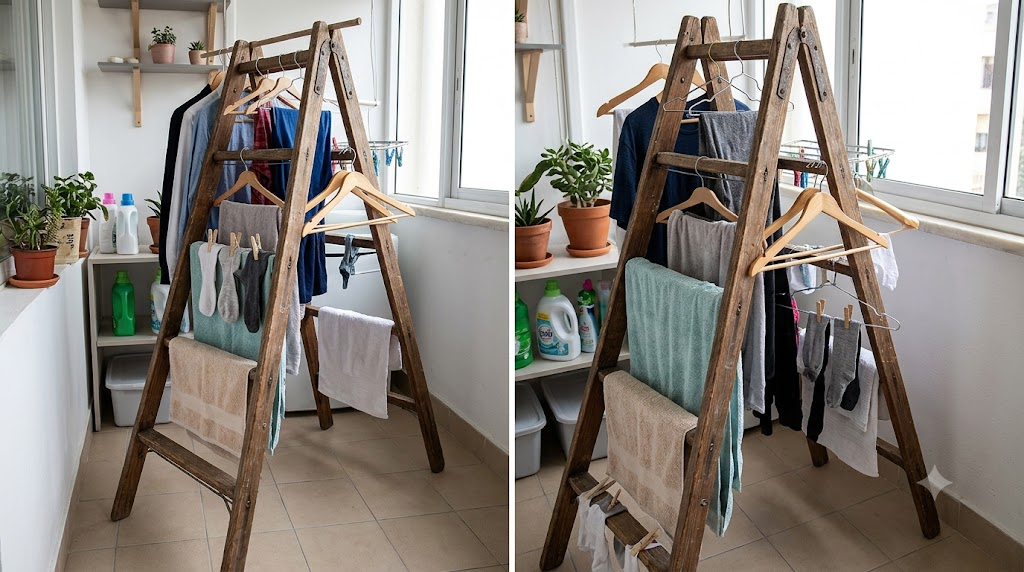
A small leaning ladder can act as a temporary hanging rack. Use it for lightweight clothes on hangers or small towels. It’s not the most efficient method for a large family load, but it can be surprisingly useful when your normal rack is already full.
Buy it if: You already own a decorative ladder.
Skip it if: You have children or pets who could knock it over.
12. Try a Heated Drying Rack
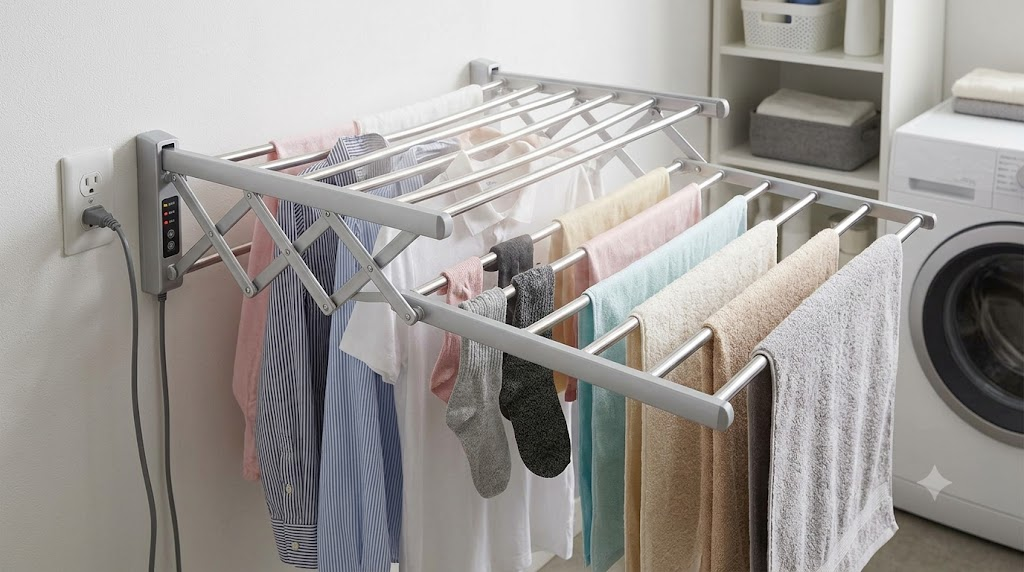
A heated drying rack adds gentle heat to the drying process. It’s useful during cold weather or when outdoor drying isn’t practical.
But don’t assume heated means instant. Clothing still needs sufficient airflow and spacing. Also consider operating cost, electrical safety, and the manufacturer’s instructions.
Buy it if: You frequently struggle with slow indoor drying during cold or damp weather.
Skip it if: You already have excellent airflow and don’t need faster drying.
13. Use a Mesh Drying Net for Sweaters
Sweaters and delicate clothing shouldn’t always hang from a normal hanger. A wet sweater can stretch under its own weight.
A flat mesh drying net supports the garment while allowing air to circulate around it. This is particularly useful for wool, knitwear, and other items whose care labels recommend flat drying.
Benefits:
- Helps maintain garment shape
- Doesn’t require much space
- Good for delicate clothing
- Can often be folded away
14. Use a Small Mesh Sweater Rack
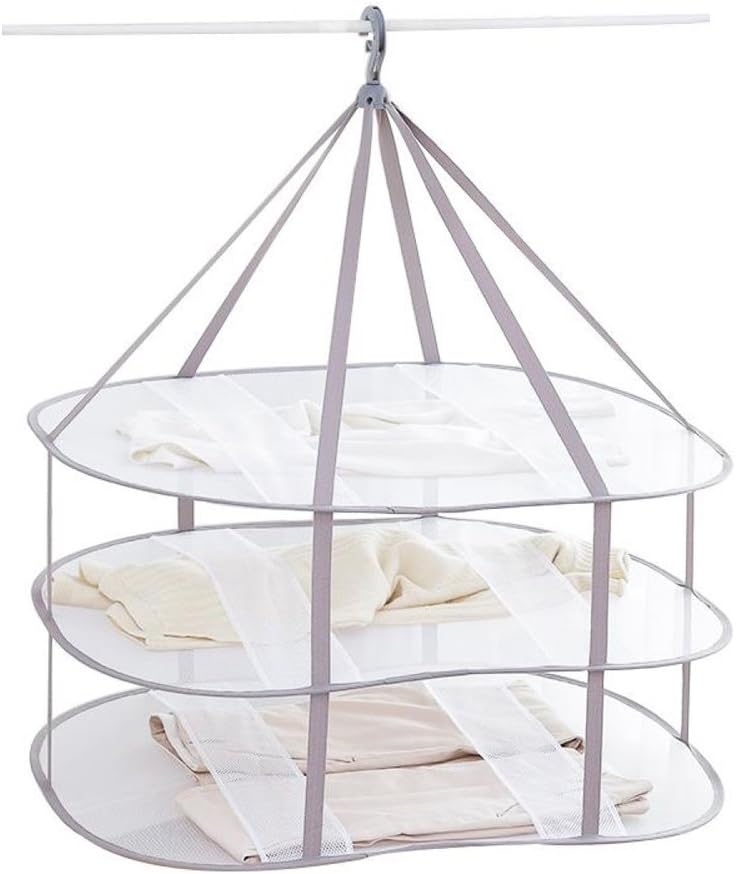
A compact mesh drying rack for sweater is another option for delicate items. Unlike a normal rack, it lets you dry clothing horizontally.
Use it for sweaters, bras, swimwear, and other garments where hanging may distort the shape. Always follow the care label because fabric-care requirements vary.
15. Use the Bathtub When You Need Extra Space
The bathtub can become a temporary drying area when you’re dealing with larger garments. Place a suitable rack across or beside the tub, or use a safe hanging arrangement designed for the space.
The advantage is obvious: dripping water has somewhere to go. But don’t block the only bathroom access for hours if someone needs to use it.
Best for:
- Towels
- Larger shirts
- Delicates
- Items that may drip initially
16. Put a Fan Near Your Drying Rack
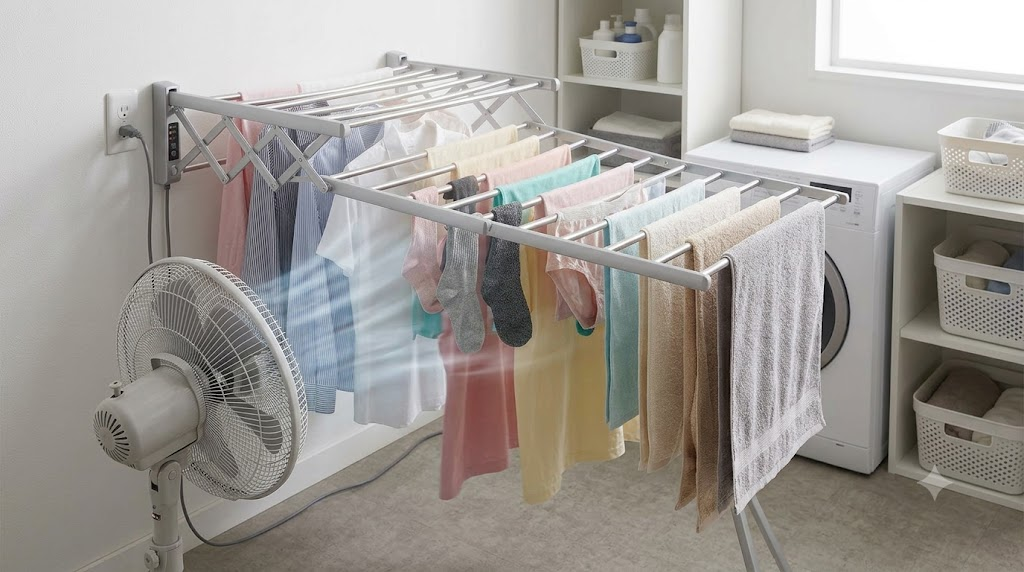
This is one of the easiest ways to speed up indoor drying without buying another laundry appliance. A fan helps move air around wet clothing. Don’t point it at one tightly packed section and expect miracles. Spread garments out first.
For example:
Poor setup: Ten shirts packed tightly together.
Better setup: Ten shirts spaced apart with air moving between them.
The second arrangement gives the fan a much easier job.
Buy it if: You already own a fan.
Skip it if: Your clothes are packed tightly together and you aren’t willing to improve spacing.
17. Use a Dehumidifier in a Closed Drying Room
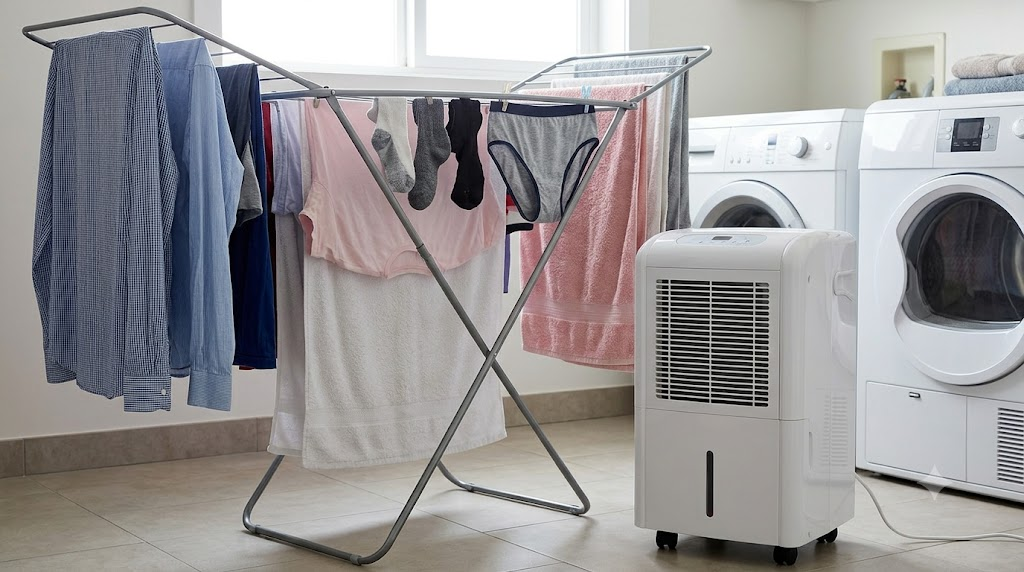
A dehumidifier can be especially useful when your apartment is humid. Instead of allowing moisture from wet clothes to remain in the whole apartment, you can place the drying rack in a suitable room and use the dehumidifier to remove moisture from the air.
Keep doors and windows configured according to the dehumidifier manufacturer’s guidance and the conditions in your home. This can be highly effective, but electricity costs matter.
Buy it if: Humidity is your main drying problem.
Skip it if: Your apartment already has dry air and good natural ventilation.
18. Run an Extra Spin Cycle Before Hanging
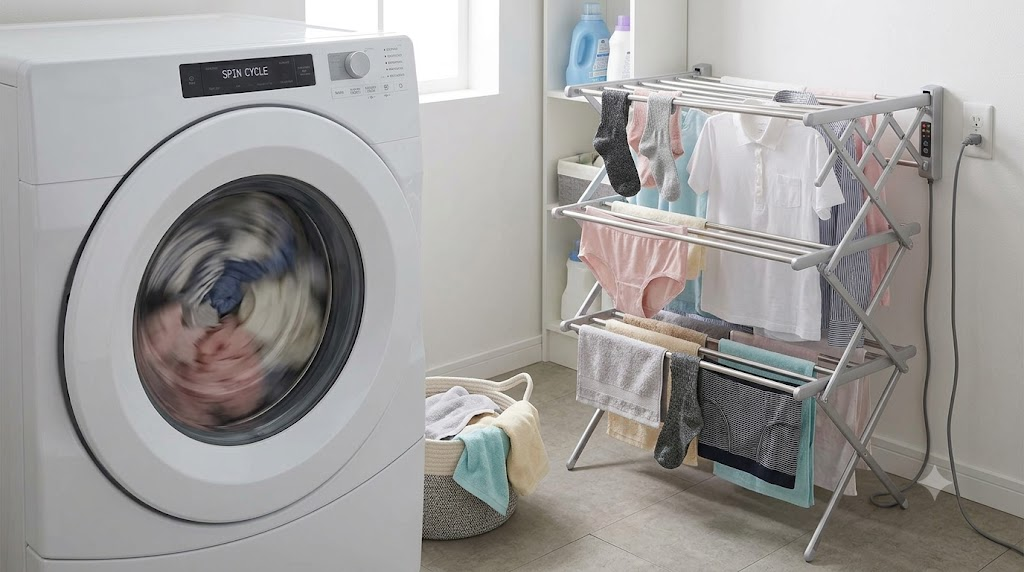
This isn’t technically a drying method, but it may be one of the most useful tricks in this entire guide. The less water your clothes contain when they leave the washer, the less moisture has to evaporate during air drying.
If your washing machine has a suitable spin option, use it according to the garment and machine instructions. This is particularly useful when you don’t have access to a dryer.
Example: Instead of taking heavily saturated clothes directly from the wash and hanging them, use an appropriate additional spin cycle first.
Benefits:
- No additional drying equipment
- Costs little or nothing beyond normal machine operation
- Can reduce indoor drying time
- Works with almost any drying setup
If you’re using a portable washer, learn how to run the wash and spin stages correctly before moving clothes to your drying rack.
19. Use a Towel-Roll Trick When You’re in a Hurry
Need one shirt dry quickly for tomorrow morning?
Lay the damp garment flat on a clean, dry towel. Roll the towel with the garment inside and press down gently. The towel can absorb some surface moisture. Unroll the garment and then hang it somewhere with good airflow.
This won’t replace a dryer, but it can help when you have one item that needs a head start. Don’t aggressively twist delicate fabrics because that can stretch or damage them.
20. Use a Laundromat or Compact Dryer for Large Loads
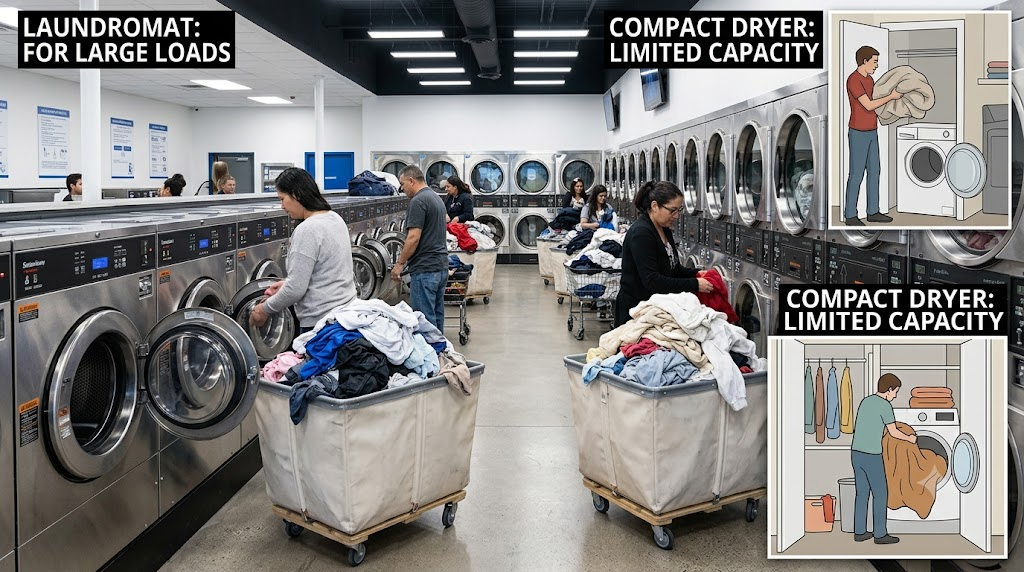
Sometimes the best apartment drying solution is not drying at home. If your apartment has almost no suitable drying space, using a laundromat dryer for towels, sheets, blankets, or large loads may make more sense.
You can then air-dry smaller, everyday items at home. This hybrid approach can reduce the amount of drying equipment you need to keep in your apartment.
Example:
- Dry towels and bedding at a laundromat.
- Air-dry shirts and underwear at home.
- Use a small rack for delicate garments.
This is often more practical than trying to force every piece of laundry into a tiny bathroom.
The Most Important Rule: Give Wet Clothes Room to Breathe
You can own the most expensive drying rack in the world and still get poor results if your clothes are packed together. Air needs to move around the fabric.
Try these simple habits:
- Leave gaps between shirts.
- Don’t fold thick towels over themselves unnecessarily.
- Use hangers for shirts when possible.
- Turn thicker garments occasionally.
- Avoid piling wet clothes on top of each other.
- Keep the drying rack away from walls when practical.
- Use airflow when indoor drying is slow.
A smaller load spread across a good drying area can dry better than a large load crammed onto a supposedly high-capacity rack.
How to Prevent That Damp Laundry Smell
That unpleasant “wet towel” smell usually means your clothes stayed damp too long. The solution isn’t simply adding more detergent.
Try this sequence:
Wash → Spin → Remove immediately → Spread out → Add airflow → Control humidity
Don’t leave finished laundry sitting inside the washer for hours if you can avoid it. Also clean your washing machine according to the manufacturer’s maintenance instructions. A dirty washer can contribute to unpleasant odors.
How to Dry Clothes Faster in a Small Apartment
If speed matters, combine several methods instead of relying on one.
For example:
Fast indoor setup
- Run an appropriate spin cycle.
- Remove clothing immediately.
- Shake each item out.
- Hang garments with space between them.
- Place the rack near good airflow.
- Run a fan.
- Use a dehumidifier if humidity remains high.
- Rotate thicker garments if necessary.
This combination is generally more effective than simply turning up the heat.
Where Should You Put a Drying Rack in a Small Apartment?
The best location depends on airflow, humidity, and available space.
Good locations
- Near a window
- Near a balcony door
- In a well-ventilated bathroom
- Near an existing fan
- In a dedicated laundry corner
- Along an unused wall
Locations to think twice about
- Directly against a wall
- In a completely closed, humid room
- In front of heating equipment
- Blocking an exit
- Where dripping water can damage flooring
- Anywhere the rack can easily be knocked over
Your goal is not simply to find somewhere the rack fits. You need to find somewhere air can move around the clothes.
What Not to Do When Drying Laundry Indoors
Some apartment drying shortcuts create more problems than they solve.
- Don’t cover every radiator or heat source with clothing
- Don’t overcrowd the rack
- Don’t ignore indoor humidity
- Don’t dry everything in the bedroom
- Don’t install hardware without checking your lease
Which Drying Method Is Best for You?
You don’t need multiple drying systems. You probably need one primary method and one backup.
For most small apartments, a practical combination is:
- Primary: Foldable or wall-mounted drying rack
- Backup: Retractable clothesline or over-door rack
- Speed booster: Fan
- Humidity control: Dehumidifier when necessary
- Large-load solution: Laundromat dryer
This gives you flexibility without turning your apartment into a permanent laundry room.
The right portable-washer accessories can also make a compact laundry setup easier to manage.
Frequently Asked Questions
What is the best way to dry clothes in a small apartment?
A foldable drying rack is the best all-around option for most apartments. If floor space is limited, consider a wall-mounted rack, retractable clothesline, or over-the-door drying rack.
How can I dry clothes indoors without a dryer?
Use a drying rack, clothesline, shower rod, wall-mounted rack, or hanging rod. Improve drying speed by using a good spin cycle and increasing airflow with a fan.
How do I dry clothes without making my apartment humid?
Improve ventilation, avoid overcrowding the drying rack, and consider using a dehumidifier when indoor humidity is high. Drying fewer loads at a time can also help.
Is it okay to dry clothes in a bedroom?
It can be possible, but a well-ventilated area is generally preferable. Wet laundry adds moisture to the air, so monitor humidity and provide adequate airflow.
How do I dry clothes quickly in a small apartment?
Run an appropriate spin cycle first, then spread clothes apart on a rack. Add a fan for airflow and use a dehumidifier when humidity is a major problem.
Can I dry clothes on a shower rod?
Yes, especially lightweight garments. Make sure the bathroom has adequate ventilation and don’t overload the rod.
Are heated drying racks worth it?
They can be useful if you frequently deal with cold or damp conditions and need faster indoor drying. However, they use electricity, so compare that operating cost with your other options.
How do I dry sweaters without stretching them?
Check the garment care label. For items that recommend flat drying, use a mesh drying net or flat drying rack instead of hanging the sweater from a hanger.
How can I dry laundry without taking up floor space?
Use vertical solutions such as wall-mounted racks, ceiling-mounted racks, retractable clotheslines, over-the-door racks, or hanging rods.
What should I do if my laundry still smells damp after drying?
Reduce drying time, improve airflow, avoid overcrowding, and don’t leave wet clothes sitting in the washer. Also clean the washing machine according to its maintenance instructions.
Final Verdict
The best Ways to Dry Your Laundry In a Small Apartment aren’t necessarily the most expensive ones.
For most people, a foldable drying rack is the best starting point because it requires no permanent installation and can be stored when not needed. If floor space is extremely limited, a wall-mounted rack, retractable clothesline, or over-the-door rack makes better use of vertical space.
If slow drying is your main problem, don’t immediately buy a bigger rack. First improve the laundry itself: use an appropriate spin cycle, separate garments, create space between items, improve airflow, and control humidity.
And if your apartment simply can’t handle large amounts of wet laundry, there’s nothing wrong with a hybrid approach. Air-dry everyday clothes at home and use a laundromat dryer for towels, sheets, and bulky loads.
The goal isn’t to make your apartment look like a laundry room. It’s to make laundry disappear from your living space as quickly and safely as possible.
Recommended Reading:
- 10 Best Portable Washing Machine
- 3 Ways to Use a Portable Washer Without a Washer Hookup
- 10 Best Portable Washer and Dryer for Apartments Without Hookups 2026
- Can a Portable Washing Machine Wash Blankets & Sheets?

Sourabh researches and writes about home appliances, kitchen gadgets, and common appliance problems to help readers make smarter buying decisions. He specializes in Portable washing machines and appliance troubleshooting guides.
At compactHomeHub, Sourabh focuses on creating easy-to-understand content that simplifies technical appliance issues into practical solutions. His goal is to help users save time, avoid costly mistakes, and choose the right appliances with confidence.