If your Portable Washing Machine Not Filling with Water, don’t assume the washer is broken. With portable washers, the problem can be very different from a standard full-size washing machine. Some portable models connect directly to a faucet, while others require you to manually add water. A blocked faucet adapter, kinked hose, low water flow, incorrect cycle setting, or a faulty inlet valve can all stop the washer from filling.
The good news is that many filling problems can be diagnosed in a few minutes without taking the machine apart.
Portable Washing Machine Not Filling with Water Solution
If your portable washing machine isn’t filling with water, first check whether your model is designed for manual filling or faucet connection. Then check the faucet, adapter, inlet hose, hose filter, water pressure, lid position, and selected cycle.
If you hear the machine trying to fill but no water enters, the inlet valve or filter may be blocked. If the washer doesn’t even attempt to fill, the lid switch, control system, or cycle setting may be responsible. Unplug the washer before inspecting electrical components, and don’t bypass a safety switch.
Why a Portable Washing Machine May Not Fill With Water
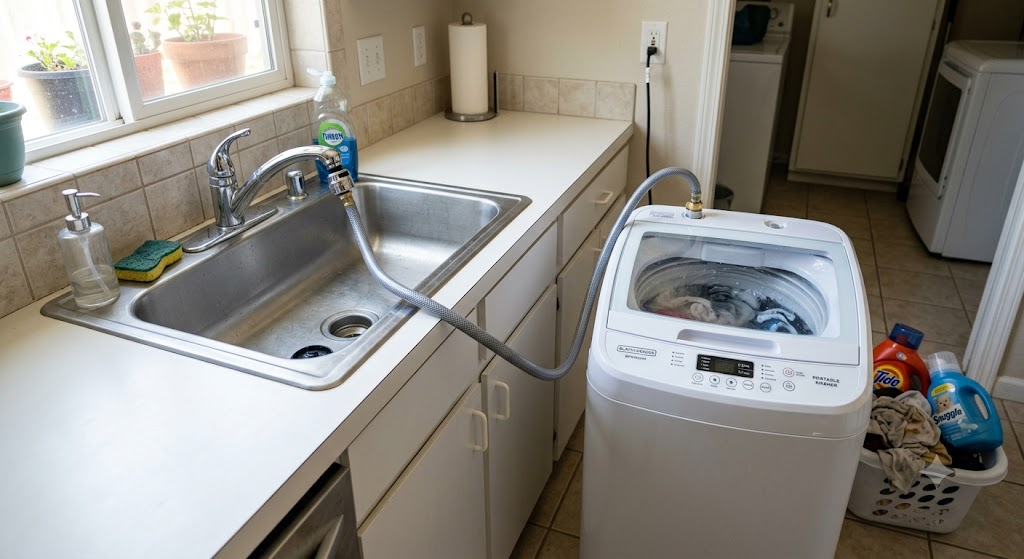
Portable washers are designed differently from full-size washers. That’s important because you shouldn’t automatically apply troubleshooting advice written for a conventional washer.
For example, a compact twin-tub washer may have a simple water inlet where you connect a hose or pour water directly into the wash tub. Another portable washer may use a faucet adapter and an internal inlet valve.
Here are the most common causes:
- Faucet is turned off or not supplying enough water
- Faucet adapter is loose or clogged
- Inlet hose is kinked
- Hose filter or inlet screen is dirty
- Water pressure is too low
- Wrong wash cycle or water-level setting is selected
- Lid isn’t properly closed
- Internal inlet valve is stuck or defective
- Water-level sensor or pressure switch has a problem
- Electrical or control-board failure
The first few checks are usually simple and don’t require tools.
1. Check Whether Your Portable Washer Needs Manual Filling
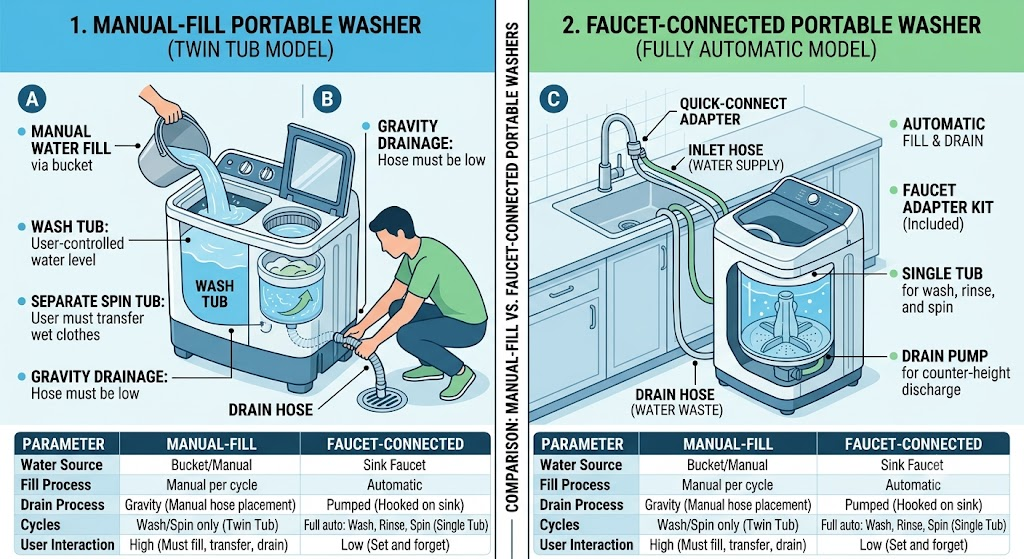
This is the first thing many troubleshooting guides miss.
Not every portable washing machine automatically pulls water from a faucet. Some compact and twin-tub models require you to add water manually using a bucket, pitcher, or hose.
If your washer has no automatic water inlet, there is nothing to “fix” in terms of automatic filling. You simply need to add the recommended amount of water before starting the wash.
Check your owner’s manual for phrases such as:
- Manual water filling
- Add water manually
- Water inlet
- Faucet connection
- Automatic water supply
- Water level
For example, if you have a portable twin-tub washer with a manual-fill wash tub, waiting for water to enter automatically won’t accomplish anything. The machine may be working exactly as designed.
Benefit: Identifying the filling method first prevents you from wasting time trying to repair a feature your washer doesn’t have.
For RV owners, choosing a portable washer designed for limited space and water connections can make setup much easier.
2. Make Sure the Faucet Is Fully Open
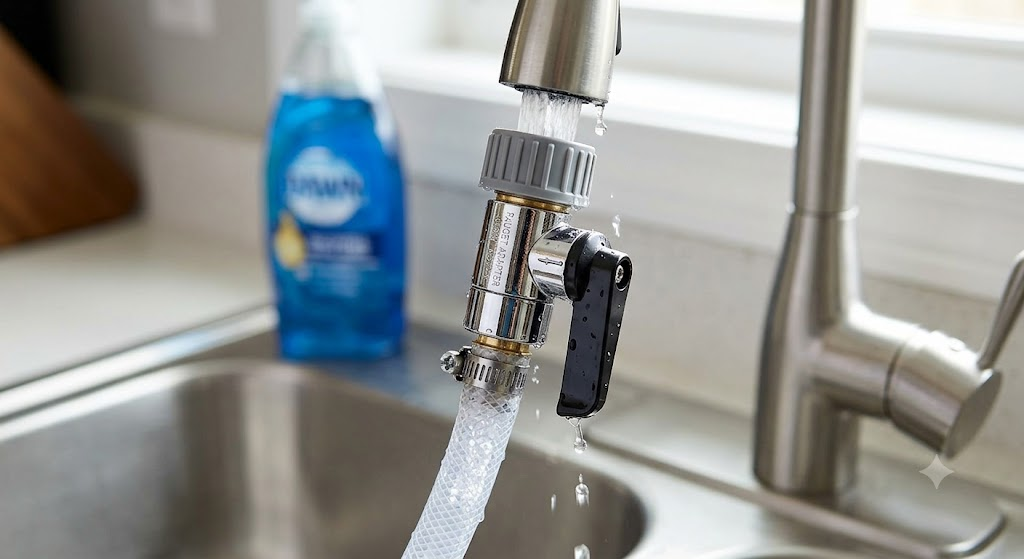
If your portable washer connects to a sink or utility faucet, start with the obvious. Make sure the faucet is completely open. If the faucet adapter has its own valve, make sure that valve is open too.
This can happen surprisingly easily after:
- Moving the washer
- Cleaning the laundry area
- Disconnecting the hose
- Using the sink for another task
- Installing a new faucet adapter
Turn on the faucet without connecting the washer and check the water flow. If the water barely comes out, the washer isn’t necessarily the problem.
If the problem started immediately after installation, review your portable washing machine setup to make sure the water connection and hose are installed correctly.
Quick test: Run the faucet into a bucket for a few seconds. Strong, steady flow is a good sign. Weak flow suggests a faucet, plumbing, or water-pressure problem.
3. Inspect the Portable Washer’s Faucet Adapter
This is particularly important with portable washing machines because many models use a faucet adapter rather than a permanent plumbing connection.
The adapter can become:
- Loose
- Cross-threaded
- Clogged with mineral deposits
- Damaged
- Incorrectly installed
- Connected to an incompatible faucet
Remove the adapter and inspect the opening. Look for dirt, rust particles, white mineral deposits, or anything blocking the small water passage.
If your kitchen faucet has an aerator that needs to be removed before installing the washer adapter, make sure the adapter is installed according to the manufacturer’s instructions. Don’t force an adapter onto a faucet. A poor connection can leak or restrict water flow.
New insight for portable washers: A faucet can have perfectly good water pressure while the washer receives almost no water because the adapter itself is restricting the flow.
4. Check the Inlet Hose for Kinks
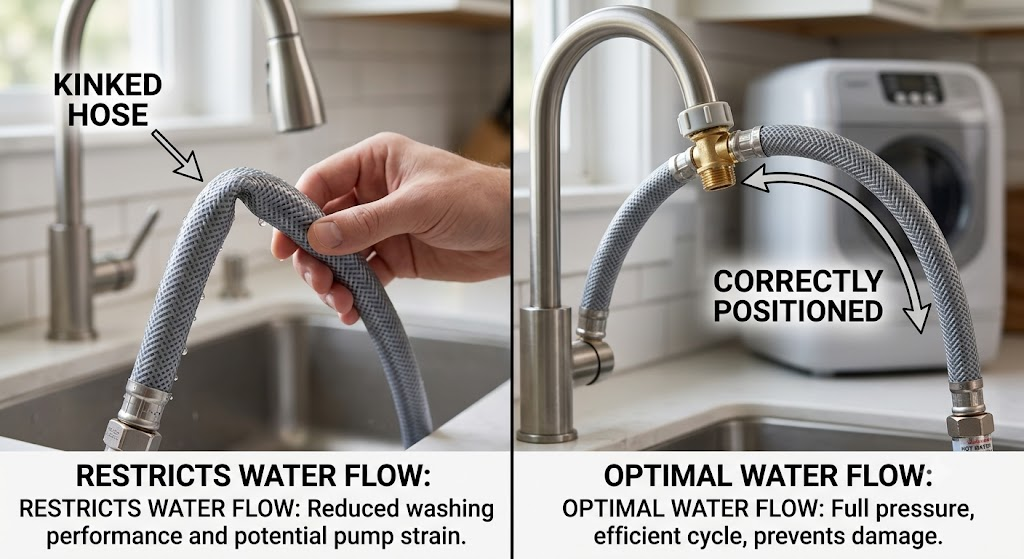
Portable washers get moved around much more often than traditional washers. That’s convenient, but it also makes their hoses easier to bend or pinch. Look at the entire inlet hose from the faucet to the washer.
Watch for:
- Sharp bends
- Twists
- Pinched sections
- Crushing against a wall
- Hose loops that are too tight
- Damaged or bulging sections
Straighten the hose and make sure it has a smooth path.
For example, if you push a portable washer against the wall after connecting it, the back of the machine may compress the hose. Water flow can drop dramatically even though the faucet is fully open.
Kinked or restricted inlet hoses are also among the basic checks recommended for conventional washers.
5. Clean the Inlet Filter or Screen
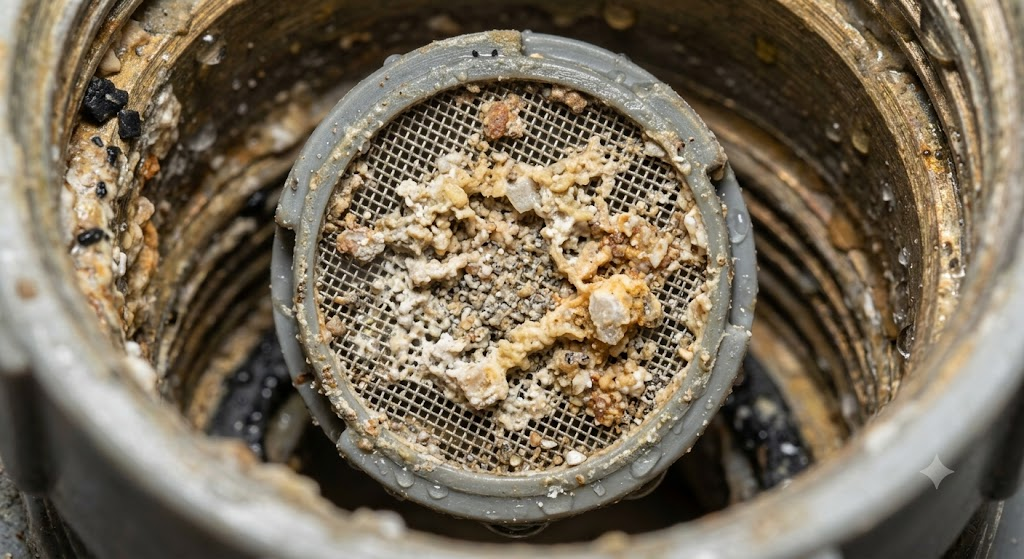
If your portable washer has an automatic water inlet, it may have a small filter or mesh screen designed to keep dirt and sediment out of the valve. Over time, the screen can collect:
- Sand
- Rust
- Mineral deposits
- Pipe sediment
- Small debris
A clogged screen can cause slow filling or prevent water from entering altogether.
How to check it safely
- Unplug the washer.
- Turn off the water supply.
- Disconnect the inlet hose.
- Locate the inlet screen.
- Inspect it for visible debris.
- Gently clean accessible buildup with a soft brush.
- Reconnect everything securely.
- Turn the water supply back on.
- Check for leaks before running a cycle.
Don’t poke aggressively at a delicate screen or remove a filter that the manufacturer says should remain in place.
Sears specifically warns that removing inlet screens can create a flooding risk, while other troubleshooting guidance recommends gently cleaning accessible screens.
6. Check Water Pressure
Your portable washing machine needs adequate water flow to fill properly. A simple way to test the water supply is to disconnect the washer’s inlet hose and briefly run water from the faucet into a bucket. If the flow is strong, reconnect the hose and test the washer. If the flow is weak, check another faucet in your home.
If other faucets also have weak flow
The problem may be your home’s water supply rather than the washer. Possible causes include:
- Low household water pressure
- A partially closed shutoff valve
- Plumbing restrictions
- Temporary water-service problems
- Sediment buildup
If only the washer’s faucet has weak flow, investigate that faucet or its adapter. Low household water pressure is a recognized cause of slow or failed washer filling.
Benefit: Testing the faucet first tells you whether you’re dealing with a plumbing problem or an appliance problem before you start replacing parts.
7. Check the Lid or Door
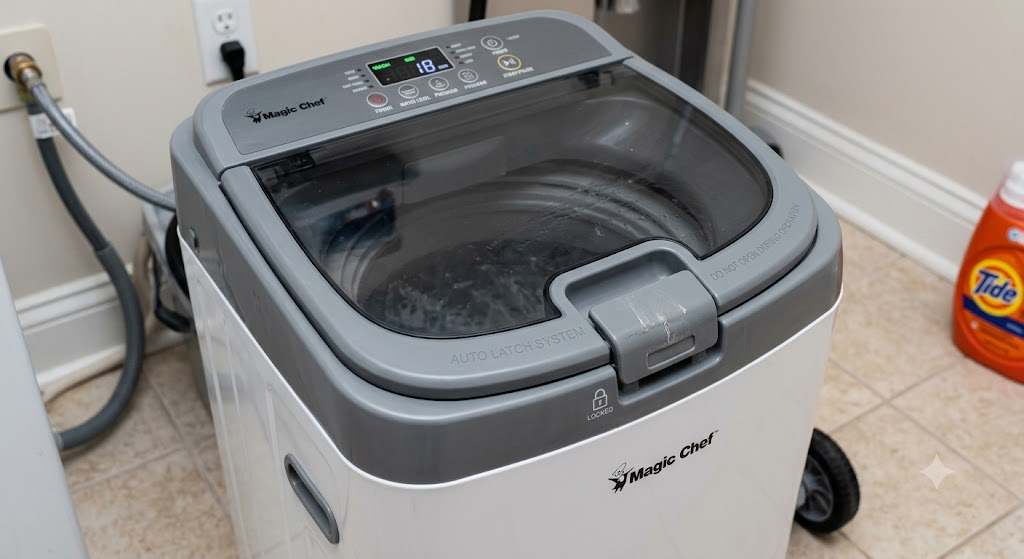
Some portable washing machines won’t begin a wash or fill with water unless the lid is properly closed.
Close the lid firmly and make sure:
- Nothing is caught between the lid and tub
- The lid isn’t sitting crooked
- The latch isn’t visibly damaged
- The lid switch isn’t obviously broken
Don’t try to defeat or bypass the safety switch. A lid switch exists to prevent the washer from operating under unsafe conditions. Conventional washers commonly refuse to fill when the lid isn’t properly closed or the lid switch isn’t working. Portable models vary, so check your owner’s manual before assuming your machine has a lid switch.
8. Check the Water-Level or Wash Setting
Your portable washer may not behave the way you expect if you’ve selected a particular cycle or water level.
Check whether your model has:
- Low/medium/high water levels
- Wash and rinse settings
- Normal or delicate cycles
- Manual water-level controls
- Separate wash and spin controls
On some twin-tub machines, the wash and spin functions are controlled separately. Turning the wrong control can make it appear that the washer isn’t filling. Also check whether the machine has finished a previous cycle or is waiting for another control to be selected.
Example: If you’re using a twin-tub portable washer and the selector is still set to spin, adding water to the wash tub won’t cause the spin side to fill because that’s not how the machine is designed to operate.
9. The Water Inlet Valve May Be Faulty
If your portable washer automatically draws water and you’ve confirmed that the faucet, adapter, hose, filter, lid, and settings are fine, the inlet valve becomes a stronger suspect.
The inlet valve opens when the washer receives the signal to fill. If the valve is clogged, stuck, worn out, or electrically defective, water may not enter the machine. One useful clue is sound.
If the washer hums but no water enters
The machine may be attempting to open the valve, but water can’t pass through.
Possible causes include:
- Clogged inlet screen
- Restricted hose
- Low water pressure
- Stuck valve
- Failed inlet valve
A humming washer with no incoming water is also identified as a useful symptom when diagnosing conventional washing-machine fill problems. Don’t immediately buy a replacement valve. Confirm your exact portable washer model and part compatibility first.
10. A Water-Level Sensor or Control Problem May Be Stopping the Fill
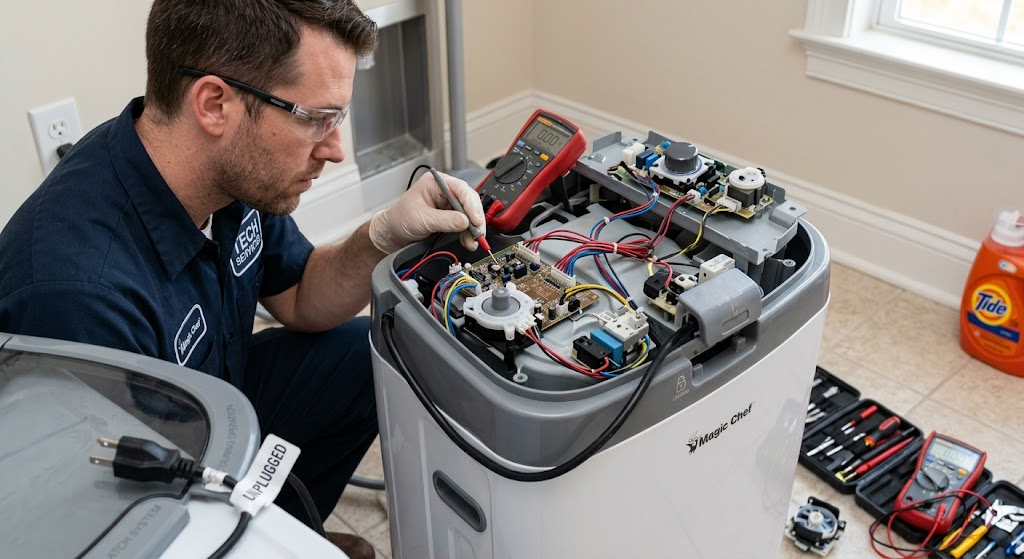
If the washer has already been checked for water-supply problems, the issue may be inside the machine.
A water-level sensor or pressure switch helps the washer determine how much water is present. If it gives an incorrect signal, the machine may behave as though the tub already contains enough water. A control board can also fail to send the proper signal to the inlet valve.
Possible signs include:
- Washer skips the filling stage
- Washer fills on one cycle but not another
- Washer stops filling unexpectedly
- Error code appears
- Washer behaves differently after being unplugged and restarted
- Water level seems inconsistent
These are not good “guess and replace parts” situations. The pressure switch, wiring, control board, and related components may require electrical testing.
Sears and Bob Vila both identify pressure switches, timers/control systems, and wiring as possible causes after basic water-supply checks have been eliminated.
Portable Washing Machine Not Filling With Water: Symptom Guide
The symptom can tell you where to start.
| What You Notice | Most Likely Areas to Check |
|---|---|
| No water and no sound | Cycle setting, lid, power, control system |
| Humming but no water | Faucet, hose, filter, inlet valve |
| Water enters very slowly | Hose, faucet adapter, filter, water pressure |
| Water starts then stops | Water-level sensor, pressure system, control |
| Washer works sometimes | Loose connection, restricted flow, valve or control issue |
| Only one water temperature works | Supply connection, valve, hose or setting |
| Water leaks around connection | Faucet adapter, hose gasket or connection |
| Manual-fill washer doesn’t fill | Add water according to the manufacturer’s instructions |
This symptom-first approach is more useful than simply replacing parts in a random order. BlueStars Parts also recommends diagnosing the washer according to whether it doesn’t fill, fills slowly, hums, stops mid-cycle, or fills on only one side.
A Simple 10-Minute Troubleshooting Sequence
If you want the fastest approach, follow these steps in order:
- Confirm the washer’s filling method. Is it automatic or manual?
- Check power. Make sure the washer is plugged in securely.
- Open the faucet completely.
- Inspect the faucet adapter.
- Straighten the inlet hose.
- Check the inlet filter/screen.
- Test water flow from the faucet.
- Close the lid securely.
- Check the selected cycle and water-level setting.
- Listen for humming when the washer should fill.
If the problem remains after these checks, stop before opening electrical components unless you’re qualified to work on appliances.
If your portable washer fills normally but leaves water behind after the cycle, check our guide on why a portable washing machine is not draining.
What You Should Not Do
A few shortcuts can turn a small problem into an expensive one.
Don’t bypass the lid switch
The safety mechanism is there for a reason.
Don’t run the washer with a leaking connection
A small leak can quickly become a flooded laundry area.
Don’t remove an inlet screen aggressively
You can damage the valve or create a water leak.
Don’t test live electrical components unless you know what you’re doing
Electrical diagnosis can expose you to dangerous voltage. Unplug the washer before inspecting internal components.
Don’t buy parts based only on appearance
Portable washers often look similar while using different components. Use the exact model number when ordering replacement parts.
When Should You Call a Repair Professional?
You can safely handle basic checks such as the faucet, hose, adapter, accessible filter, and settings.
Call a qualified appliance technician if:
- The inlet valve appears defective
- The washer repeatedly shows an error code
- The washer has damaged wiring
- The control board may have failed
- The machine overfills
- The washer trips a breaker
- You smell burning or see melted wiring
- The machine leaks from inside the cabinet
- Basic troubleshooting hasn’t solved the problem
If you see burning, smoke, exposed wires, or repeated electrical trips, stop using the washer. Don’t keep restarting it hoping it’ll magically behave.
If the repair cost starts approaching the price of a new compact washer, compare affordable portable washing machines before making a decision.
How to Prevent Portable Washer Filling Problems
Portable washing machines need a little more attention because they’re frequently moved, disconnected, and reconnected.
A few simple habits can help:
- Keep the inlet hose straight.
- Don’t crush the hose against a wall.
- Inspect the faucet adapter periodically.
- Clean accessible inlet screens when needed.
- Don’t leave the washer connected to a questionable faucet.
- Check hoses for cracks or damage.
- Follow the manufacturer’s water-level instructions.
- Disconnect and store hoses properly if you move the washer frequently.
- Don’t ignore slow filling. It can be an early warning of a restriction.
The biggest benefit is simple: catching a restricted hose or dirty filter early is much cheaper than replacing an inlet valve or calling a technician.
How This Guide Goes Beyond Typical Washing Machine Troubleshooting Guides
Most general washer troubleshooting articles focus on conventional top-load or front-load machines. For example, Bob Vila covers lid switches, water supplies, inlet screens, switches, electronic controls, water flow, and damaged wiring. Sears similarly moves from basic checks into inlet valves, pressure switches, wiring, and timer diagnostics. BlueStars provides a useful symptom-based approach covering valves, hoses, filters, water pressure, settings, and control components.
HomeTechTool adds useful points such as detergent-residue blockage and frozen pipes.
However, a portable washing machine needs a more specific approach. The first question isn’t always “Which internal component failed?” It’s “Does this washer even use automatic water filling?”
That’s why this guide starts with manual versus automatic filling, then covers portable-specific faucet adapters, frequent hose movement, compact washer controls, and the practical distinction between water-supply problems and internal washer problems.
That distinction can save you from buying a replacement part you never needed.
FAQs
Why is my portable washing machine not filling with water?
Start by checking whether your model requires manual filling. For faucet-connected models, check the faucet, adapter, inlet hose, filter, water pressure, lid, and cycle setting. If those are fine, an inlet valve, water-level sensor, or control problem may be responsible.
Why is my portable washer humming but not filling?
A humming sound can indicate that the washer is attempting to open its water inlet valve. Check the faucet, adapter, hose, inlet screen, and water pressure first. If water still doesn’t enter, the inlet valve may be defective.
Can low water pressure stop a portable washing machine from filling?
Yes. Weak water flow can cause slow filling or prevent the washer from filling correctly. Test the faucet independently to determine whether the problem is with your home’s water supply or the washer.
Do portable washing machines need both hot and cold water connections?
Not necessarily. Portable washer designs vary. Some use only a cold-water connection, while others may have different requirements. Check your model’s manual rather than assuming it needs two hoses.
How do I know whether the washer or faucet is the problem?
Disconnect the washer’s inlet hose and briefly test the faucet into a bucket. Strong water flow suggests the washer, adapter, hose, or inlet filter deserves closer inspection. Weak flow points toward the faucet or household water supply.
Should I replace the inlet valve myself?
Only if you’re comfortable working on appliances and your manufacturer’s instructions support the repair. Because the valve involves both water and electrical connections, many homeowners are better off having a technician handle the replacement.
Final Verdict
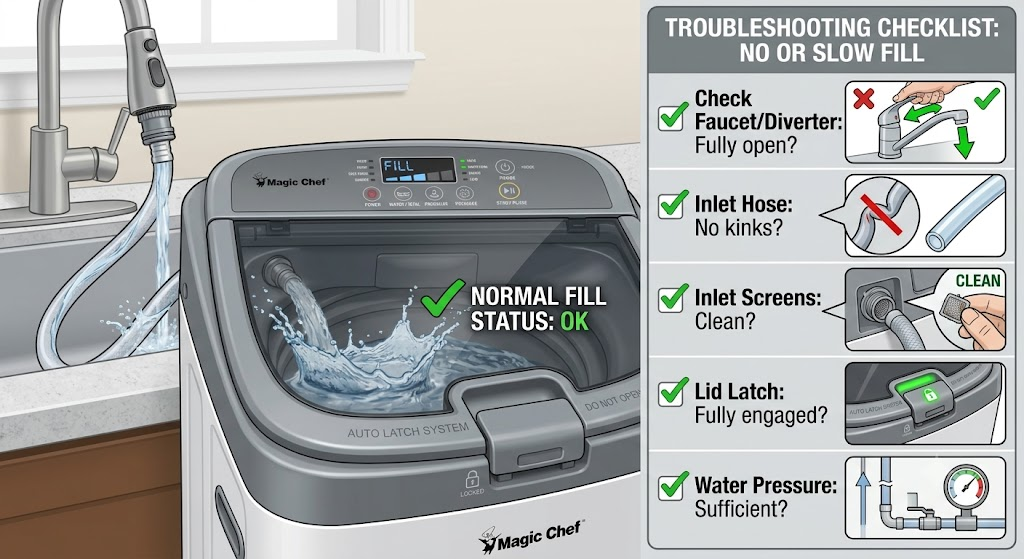
A Portable Washing Machine Not Filling with Water doesn’t automatically mean you’ve got an expensive repair on your hands.
Start with the boring stuff because it solves a surprising number of problems: confirm the washer’s filling method, open the faucet, inspect the adapter, straighten the hose, clean the accessible filter, check water pressure, close the lid, and verify the cycle.
If the washer still won’t fill, listen to what it’s doing. A humming sound, intermittent filling, error code, or complete silence can each point toward a different problem.
The important thing is not to start replacing expensive parts before you’ve ruled out simple water-flow restrictions. And if the problem involves wiring, the control board, or internal electrical testing, know when to stop and call a professional.
Recommended Reading:
- How to Fix Portable Washing Machine Vibration
- Portable Washing Machine Not Draining? 10 Ways to Fix It
- How to Clear a Portable Panda Washer E1 Error Without Calling Support
- Portable Washing Machine Not Spinning? 10 Causes & Easy Fixes

Sourabh researches and writes about home appliances, kitchen gadgets, and common appliance problems to help readers make smarter buying decisions. He specializes in Portable washing machines and appliance troubleshooting guides.
At compactHomeHub, Sourabh focuses on creating easy-to-understand content that simplifies technical appliance issues into practical solutions. His goal is to help users save time, avoid costly mistakes, and choose the right appliances with confidence.